
Most people design a room from the ground up — flooring, furniture, rugs, accessories — and then, almost as an afterthought, pick a light fixture that fits the leftover budget. This is the single most common decorating mistake there is. Lighting isn’t the finishing touch. It’s the backbone. The right fixture doesn’t just illuminate a room — it defines it, elevates it, and tells you instantly what the space is all about. Here’s how to choose lighting that genuinely makes a statement, room by room, without second-guessing yourself.
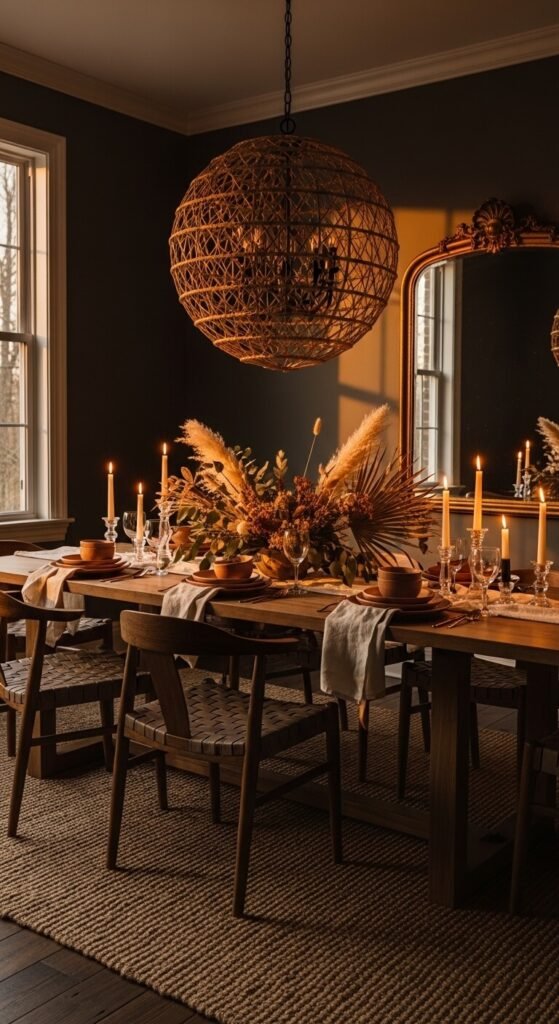
Understand the Three Layers of Light
Before you shop for a single fixture, you need to understand how professional designers actually think about lighting. Every well-lit room uses three distinct layers — and a statement fixture is only one piece of the puzzle.
- Ambient lighting — the base layer. This is your primary overhead light source that illuminates the room generally. Think ceiling fixtures, recessed lighting, and chandeliers.
- Task lighting — the functional layer. Focused light for specific activities — reading lamps, under-cabinet kitchen lights, vanity lighting in a bathroom, a desk lamp in a home office.
- Accent lighting — the mood layer. Directional light that highlights architecture, artwork, or features. Picture lights, wall sconces, track lighting, and LED strip lights all live here.
A room with only overhead lighting feels flat and harsh. A room that layers all three feels warm, dimensional, and considered. Your statement fixture belongs in the ambient layer — but it needs task and accent light supporting it to truly shine.
Size Your Fixture Correctly — It Matters More Than You Think
An undersized light fixture is one of the most common and most deflating decorating mistakes. A chandelier that’s too small for a dining table, a pendant that’s dwarfed by a kitchen island, a ceiling fixture that barely registers in a large living room — these choices make even beautiful fixtures disappear.
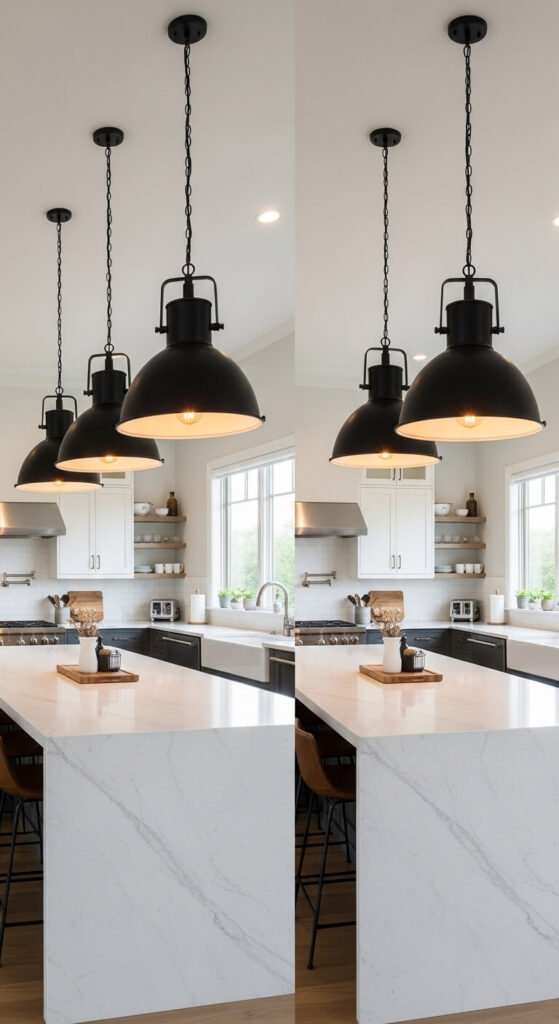
Here are the sizing rules to follow:
- For a chandelier over a dining table: Add the room’s length and width in feet — the sum in inches is roughly the right chandelier diameter. For a 12 x 14-foot room, aim for a fixture around 26 inches wide.
- For pendant lights over a kitchen island: One pendant for every two feet of island length. Hang them 30–36 inches above the countertop surface.
- For an entryway chandelier: It should hang with at least 7 feet of clearance from the floor. In a two-story foyer, go large and dramatic — the height demands it.
- For bedroom ceiling fixtures: Leave at least 7 feet from floor to the bottom of the fixture. In rooms with low ceilings, a flush-mount or semi-flush works better than anything that hangs.
When in doubt, go slightly larger than feels comfortable. Fixtures almost always look smaller once they’re installed and surrounded by walls, furniture, and space.
Match the Fixture Material to Your Room’s Mood
A fixture’s material and finish does as much visual work as its shape. Choosing the wrong finish for your room’s existing palette is what makes a room feel slightly off — even when you can’t immediately identify why.
Here’s a quick guide to materials and the moods they create:
- Brushed brass or aged gold — warm, sophisticated, and timeless. Works in traditional, transitional, modern glam, and even some Scandinavian spaces.
- Matte black — clean, grounding, and endlessly versatile. One of the easiest finishes to mix with almost any existing palette.
- Polished nickel or chrome — cool, crisp, and refined. Ideal for modern, contemporary, or art deco-inspired rooms.
- Natural rattan, wicker, or wood — organic, warm, and relaxed. Beautiful in coastal, bohemian, farmhouse, and Japandi-style spaces.
- Antique bronze or unlacquered brass — storied and characterful. Perfect for moody, layered, or maximalist rooms that love patina.
- Smoked glass or colored glass shades — dramatic and unexpected. Adds color and translucency that changes completely when the light is turned on.
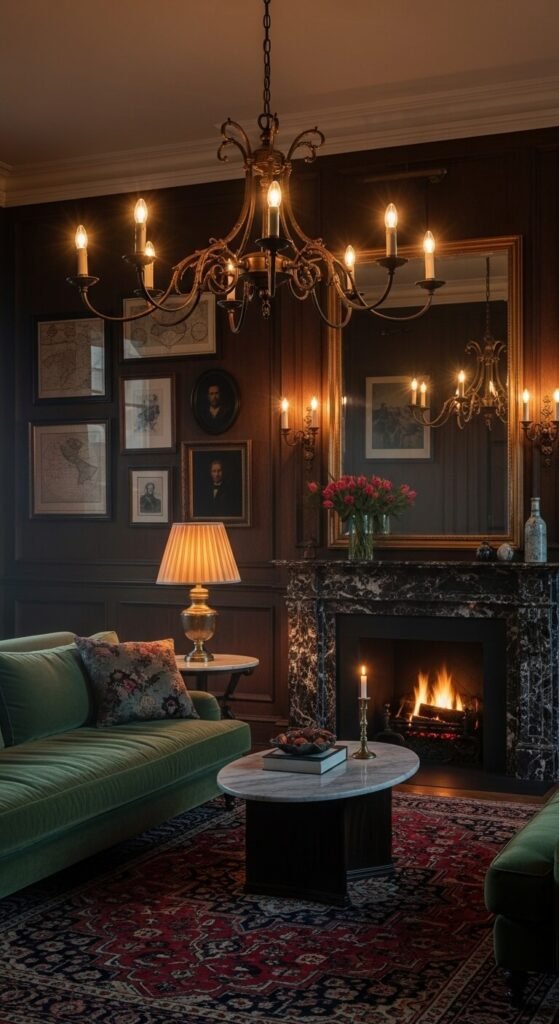
Try to echo your fixture’s finish at least once elsewhere in the room — in door hardware, picture frames, a faucet, or a decorative object. It creates intentional cohesion without being matchy-matchy.
Choose the Right Fixture for Each Room’s Function
Every room has a different job — and the right lighting fixture supports that function while still making a visual impact. Here’s how to think through each space:
Living Room Go for warmth and ambiance over brightness. A statement chandelier or large semi-flush fixture overhead, paired with floor lamps and table lamps on dimmers, creates a room that works for both lively evenings and quiet nights.
Dining Room This is where you can be most daring. A dramatic pendant or chandelier hung low over the table — 30 to 34 inches above the surface — immediately makes the room feel intentional and intimate. Size up and go bold.
Kitchen Function and style have to co-exist here. Pendants over the island handle task lighting with style. A statement flush-mount or semi-flush in the center of the room keeps the overall ceiling clean while still contributing to the aesthetic.
Bedroom Soft, layered light is everything in a bedroom. A beautiful ceiling fixture (even a simple one) combined with bedside sconces or lamps creates a cocoon-like atmosphere that a single overhead light never achieves.
Bathroom Vanity lighting is the most functional lighting decision in your home — and one of the most neglected. Side-mounted sconces at eye level flatter far better than overhead strips. Choose a fixture with warm-toned bulbs and a finish that ties into your faucet and hardware.
Don’t Underestimate the Power of the Bulb
A spectacular fixture with the wrong bulb is a missed opportunity. The bulb determines the color temperature of the light — and color temperature changes everything about how a room feels.
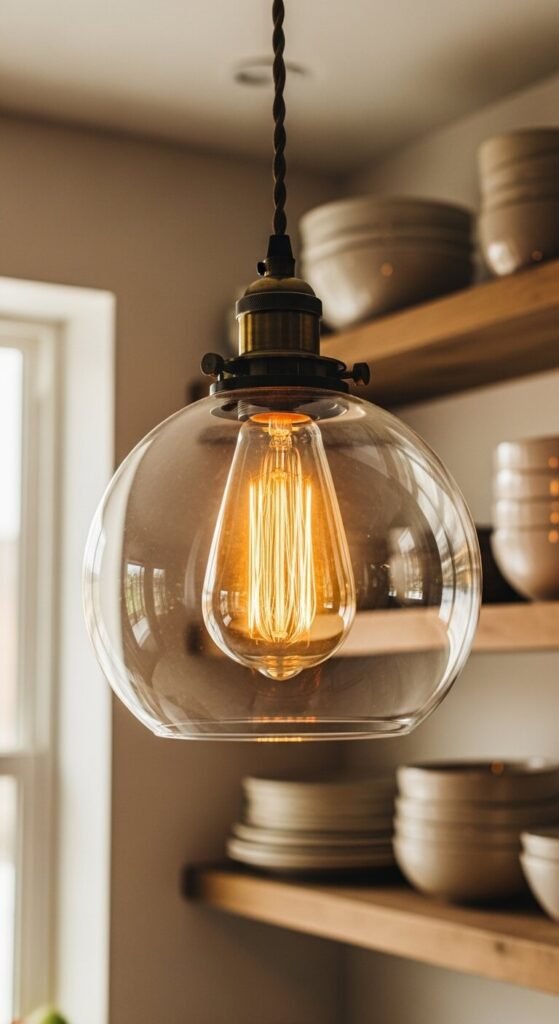
- 2700K–3000K (warm white) — the gold standard for living rooms, dining rooms, and bedrooms. Flattering, cozy, and inviting.
- 3000K–3500K (soft white) — good for kitchens and bathrooms where you need clarity without harshness.
- 4000K and above (cool white or daylight) — best reserved for garages, laundry rooms, and workspaces. Too clinical for living areas.
Always install dimmers wherever possible. The ability to adjust light levels throughout the day is worth far more than any single fixture upgrade.
The Takeaway
Great lighting is the difference between a house and a home — between a room that’s simply furnished and one that genuinely feels alive. Choose fixtures that are slightly bolder than feels safe, size up, layer your light sources, and pay attention to the bulb.
Save this article for your next renovation or room refresh — and the next time you’re standing in a lighting showroom or scrolling at midnight, come back to these principles. The perfect fixture is out there. You just need to know what you’re looking for. 💡✨