
Here’s a truth most people learn the hard way: the wrong curtains can make even the most beautiful room look unfinished, cramped, or just plain cheap. And the right curtains? They can make a builder-grade window look like something out of an architectural magazine. The difference usually has nothing to do with price — it’s about proportion, fabric, and a few designer rules that nobody talks about enough. Ready to stop guessing and start getting it right?
Hang Them High, Hang Them Wide
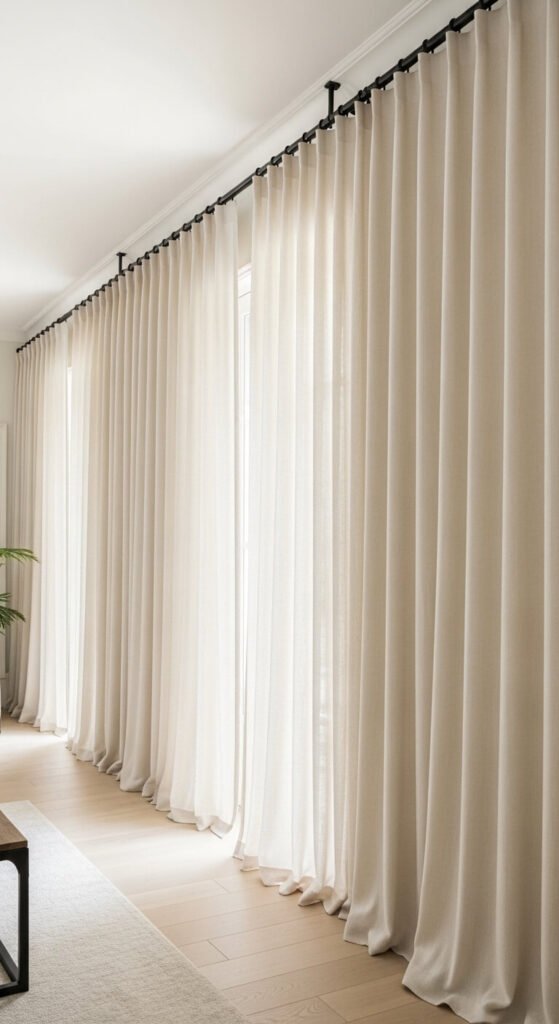
If there’s one curtain rule that will instantly transform your windows, it’s this one. Most people hang curtains too low and too narrow — and it makes every window look smaller and every ceiling look shorter.
Here’s what to do instead:
- Mount your rod 4–6 inches below the ceiling (or crown molding), not just above the window frame. This draws the eye upward and makes your ceilings feel dramatically taller.
- Extend the rod 8–12 inches beyond the window frame on each side. When the curtains are open, they stack off the glass entirely — letting in maximum light and making the window appear much wider.
- This one change alone can make a standard apartment window look like a grand architectural feature.
It costs nothing extra. It just requires hanging the hardware in a different spot. Do this first, and everything else builds on it.
Choose the Right Length — And Commit to It
Curtain length is not a “whatever looks fine” decision. There are three acceptable lengths, and each one sends a very different visual message.
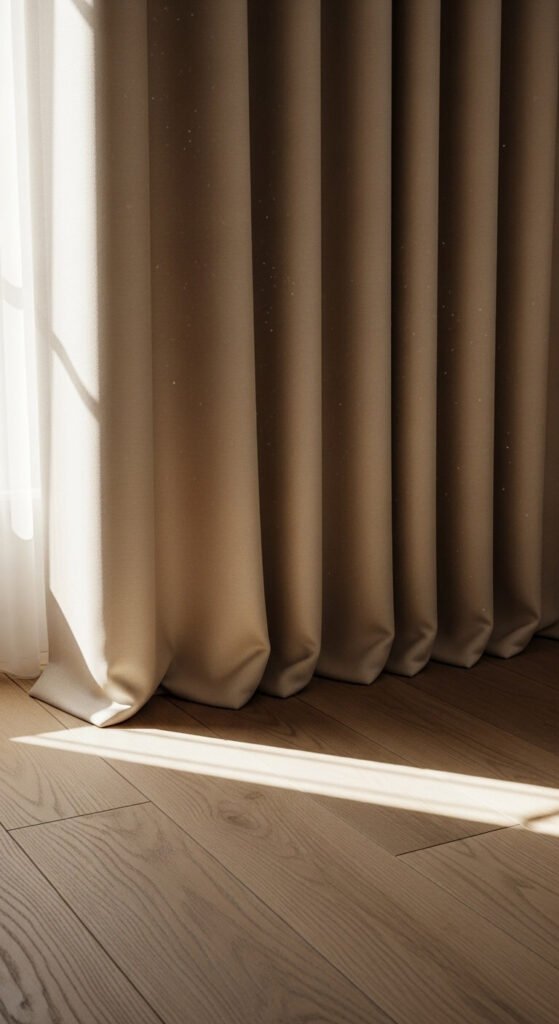
- Puddle (1–3 inches on the floor): Luxurious, romantic, and dramatic. Works beautifully in formal living rooms, dining rooms, or bedrooms going for a moody, editorial feel. Requires high-quality fabric to look intentional rather than just too long.
- Barely touching (just grazing the floor): The most universally flattering and practical option. Clean, tailored, and sophisticated in almost any style of home.
- Floating (half an inch above the floor): Works well in high-traffic spaces, kids’ rooms, or anywhere that practicality matters. Slightly more casual in appearance.
What you should never do: leave curtains hovering awkwardly 2–4 inches above the floor. That length communicates “too short” rather than “intentional,” and it visually chops the room in half.
Fabric Is Everything
The fastest way to make curtains look cheap is to choose the wrong fabric. Thin, synthetic, or stiff panels catch light poorly, hang awkwardly, and wrinkle in all the wrong ways.
Fabrics that always read as expensive:
- Linen — The gold standard for a reason. It hangs beautifully, softens with age, and works in every style from coastal to contemporary.
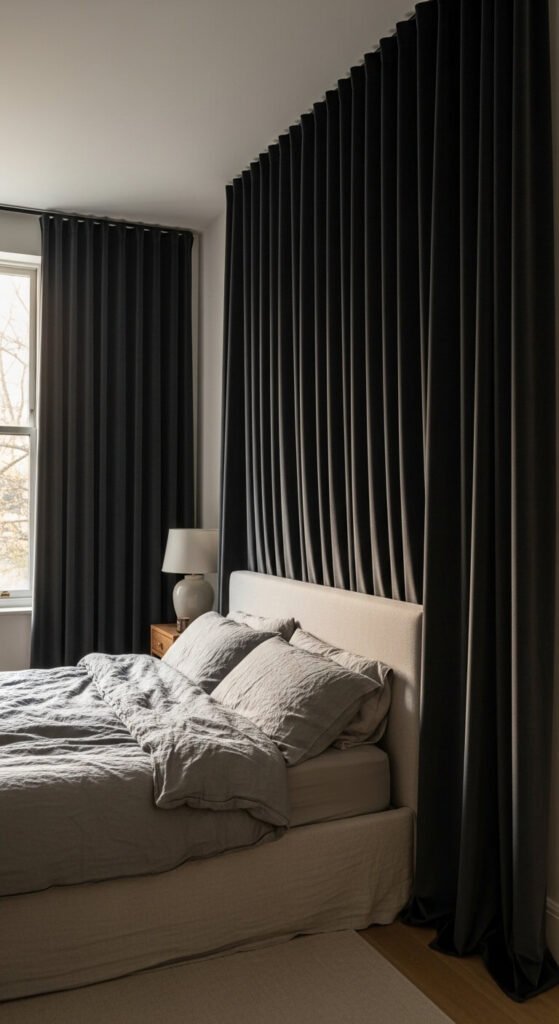
- Velvet — Rich, dramatic, and incredibly light-blocking. Perfect for bedrooms and moody living spaces.
- Silk or faux silk — Lustrous and formal, ideal for dining rooms or spaces where you want serious elegance.
- Cotton canvas — Crisp, structured, and endlessly versatile for casual or modern spaces.
Whatever fabric you choose, make sure you’re buying enough fullness. Curtain panels should be 1.5 to 2.5 times the width of your window when gathered. Skimpy, flat panels that barely cover the window are one of the most common — and most costly-looking — curtain mistakes.
Get the Color and Pattern Right
Curtains don’t need to be bold to be beautiful — but they do need to be intentional.
- Tone-on-tone with walls: Curtains in the same color family as your walls create a seamless, elongated look that makes a room feel larger and more cohesive. A cream curtain on a cream wall is quietly stunning.
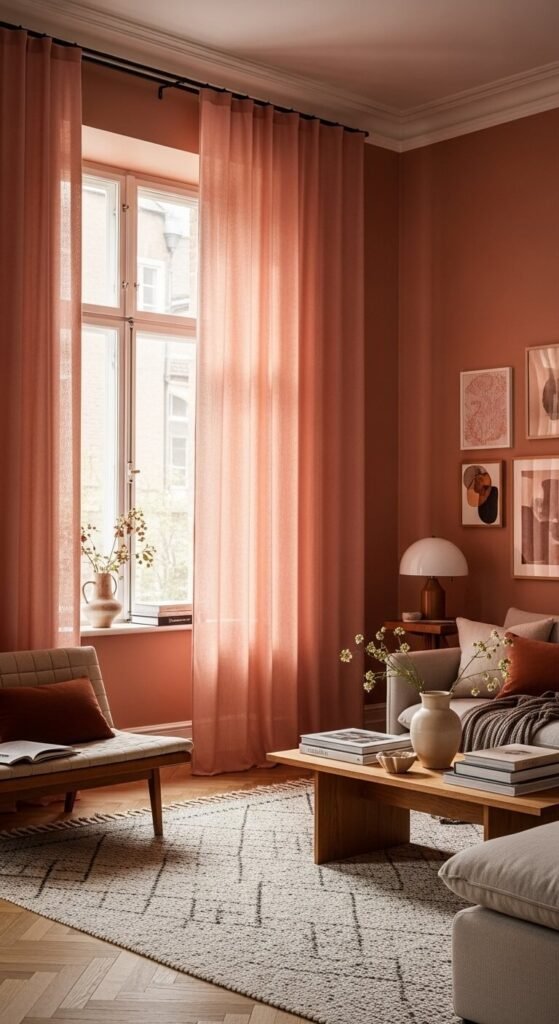
- Soft contrast: If your walls are a medium tone, slightly lighter or slightly deeper curtains in the same temperature (warm or cool) add dimension without visual noise.
- Pattern: If you’re going patterned, keep the scale appropriate to the window size. A large-scale print on a small window feels overwhelming; a delicate pattern on a grand window gets lost entirely.
The safest investment? Neutral linen or cotton in a soft, warm tone. It works with almost every color palette, never dates, and photographs beautifully — which is always a good sign.
Don’t Forget the Hardware
Curtain rods and rings are the jewelry of your window treatment — and cheap hardware undermines even the most beautiful fabric.
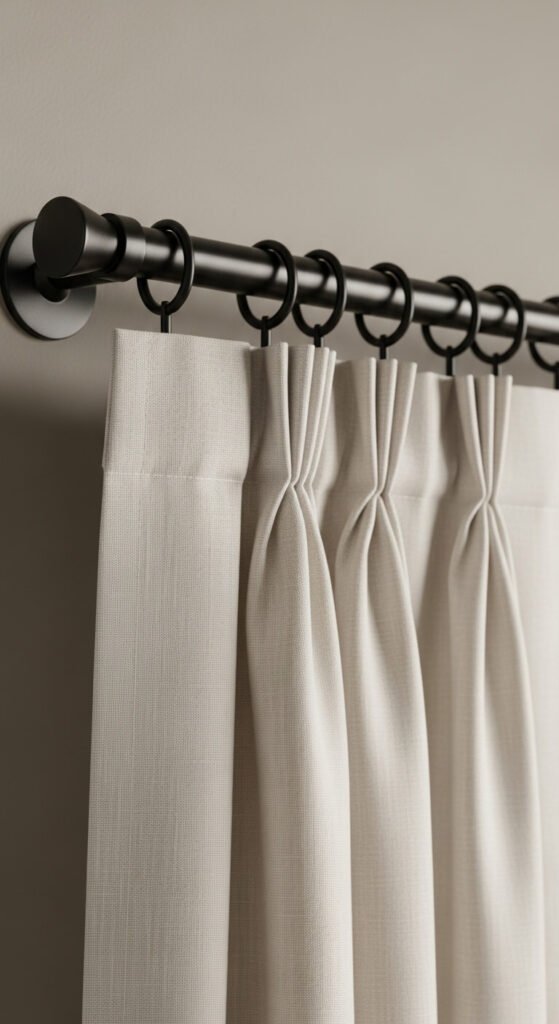
- Finials matter. A simple, clean ball or cylinder finial in matte black, brushed brass, or satin nickel always reads as more elevated than ornate decorative ends.
- Thick rods (1–1.5 inch diameter) look more substantial and expensive than thin, wobbly ones.
- Coordinate your hardware finish with other metals in the room — light fixtures, door handles, cabinet pulls. Consistency across finishes is one of those details that separates a designed room from a decorated one.
- For a truly seamless look, consider ceiling-mounted tracks or invisible rods that allow fabric to skim the wall with no visible hardware at all.
The Takeaway
Expensive-looking curtains aren’t about spending more — they’re about making smarter decisions. Hang high and wide, commit to the right length, invest in quality fabric with enough fullness, choose your color with intention, and finish with hardware that earns its place on the wall.
Save this article before your next curtain shopping trip — because the right window treatment doesn’t just dress the window. It dresses the entire room. 🪟