
Most people buy artwork backwards. They find a piece they think looks nice, bring it home, hang it on the wall, and then spend the next three years vaguely unsatisfied without being able to explain why. The problem isn’t taste — it’s process. Choosing art that genuinely reflects who you are isn’t about knowing the right galleries or having a design degree. It’s about slowing down long enough to understand what you actually respond to, and then trusting that response completely. Here’s how to do exactly that.
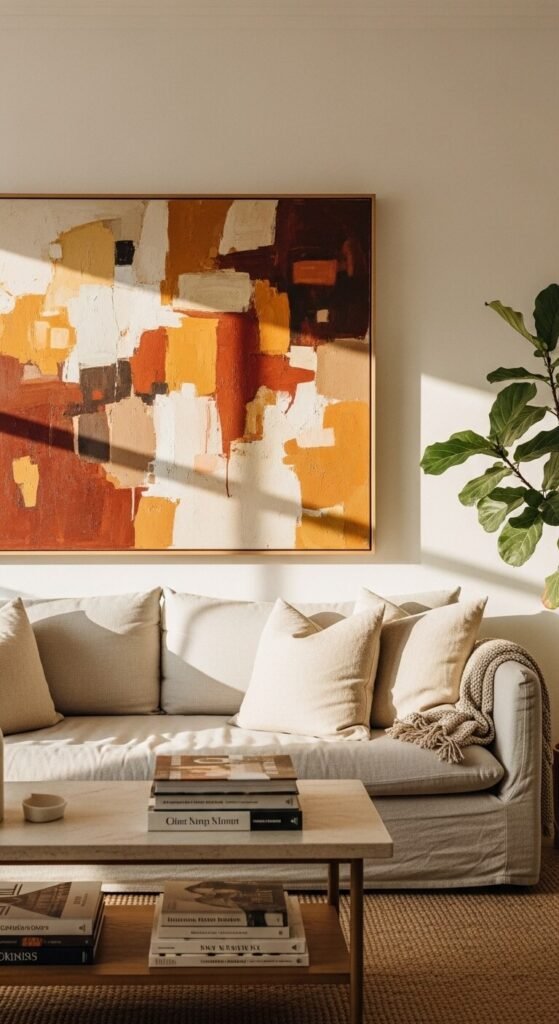
Start By Figuring Out What You’re Actually Drawn To
Before you buy a single thing, do some research — not into art, but into yourself. Pull up Pinterest, scroll through Instagram saves, or flip through a shelter magazine and pay attention to what makes you stop.
Ask yourself honestly:
- Do I stop more on bold, graphic pieces with strong shapes and high contrast — or on soft, layered work with subtle color and texture?
- Am I drawn to subject matter — landscapes, botanicals, portraits, abstracts — or does subject matter matter less to me than mood?
- Do I love color or do I gravitate toward work that is mostly neutral with one or two quiet tones?
- Does heavily textured work appeal to me — thick paint, mixed media, collage — or do I prefer clean, flat surfaces?
Save ten to fifteen images that genuinely excite you. Then look at them as a group. Patterns will emerge. Those patterns are your artistic identity — and they’re the only brief you need when you start looking for art to buy.
Understand the Difference Between Art You Like and Art That Belongs in Your Home
This distinction matters more than people realize. You can admire a neon-lit conceptual installation in a gallery and have zero desire to live with it. You can find a moody, dark oil painting intellectually fascinating and know immediately it would make your bedroom feel oppressive.
The right question isn’t do I like this? — it’s do I want to wake up to this every day?
Art you live with works differently than art you visit. It becomes part of the rhythm of your home. So when evaluating a piece:
- Imagine it in the specific room you’re buying for — not in the gallery or on a white website background
- Consider the light in that room — moody, dark work absorbs light. Bright, warm pieces reflect it back
- Think about how it will feel at 7am and at 10pm, in good moods and tired ones
The art that belongs in your home is the art that still feels right in all of those moments.
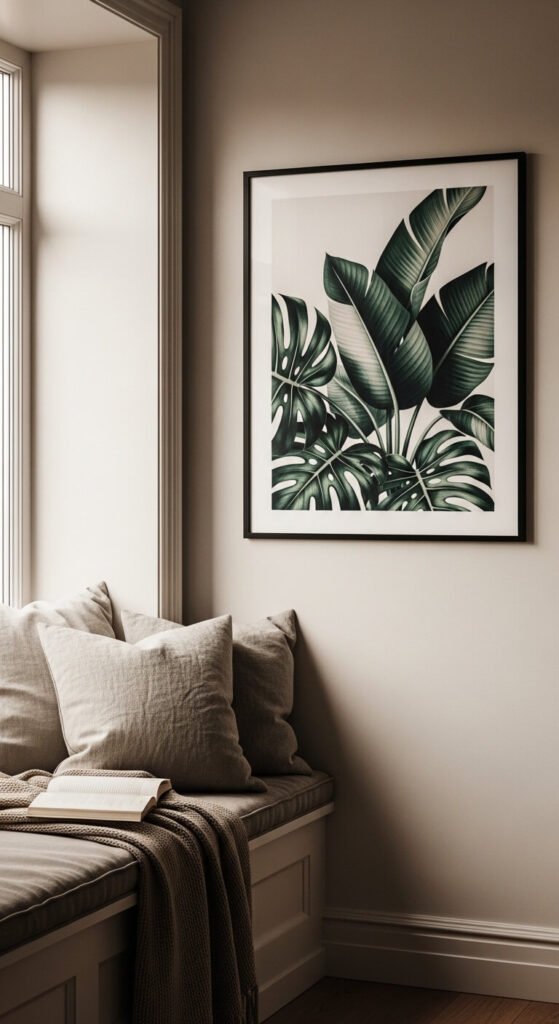
Learn the Basic Rules of Scale and Placement
Even a perfect piece of art can fall flat if it’s the wrong size for the wall or hung at the wrong height. These are the guidelines that most designers use — and they’re simple enough to apply anywhere.
On sizing:
- Art above a sofa should be roughly two-thirds the width of the sofa — not wider, and not so small it looks like a postage stamp
- For a gallery wall, the overall arrangement should follow the same two-thirds rule as a single large piece
- When in doubt, go bigger — undersized art is one of the most common and most visible decorating mistakes
On hanging height:
- The center of the artwork should sit at 57–60 inches from the floor — roughly eye level for the average person
- Above furniture, hang art 4–6 inches above the top of the piece so it reads as connected rather than floating
On groupings:
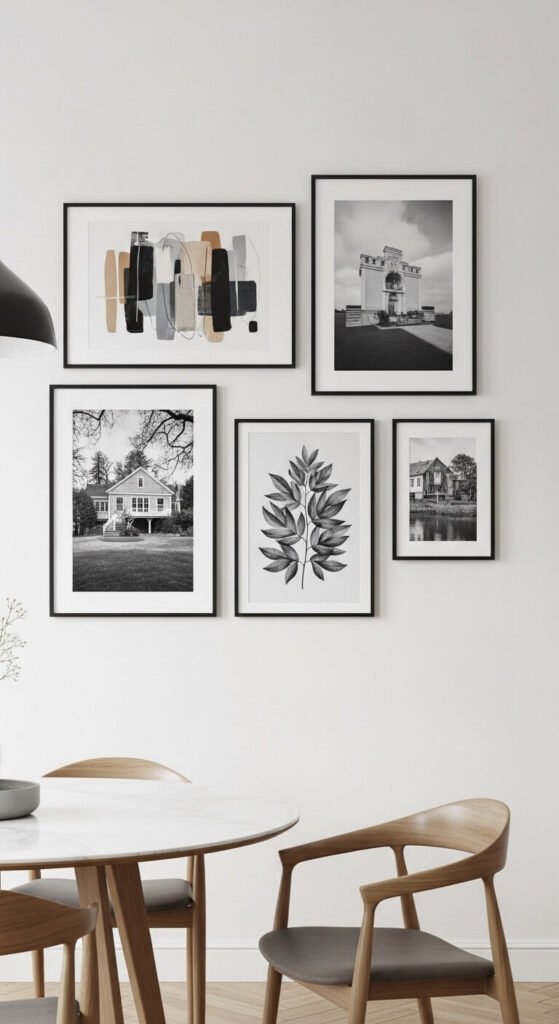
- Odd numbers — three, five, or seven pieces — almost always arrange more naturally than even numbers
- Vary sizes within the grouping but keep the frames or mounts consistent for cohesion
Know Where to Actually Find Art You Love
You don’t need a gallery budget or a dealer relationship. Great art at every price point is genuinely accessible right now.
Under $100:
- Society6, Redbubble, and Minted — printable and physical prints from independent artists
- Etsy — original work, prints, and vintage finds. Search by color or style for fast results
- Your own photography — a well-shot travel photo or a close-up of something beautiful, printed large at a local print shop, is often more personal than anything you can buy
$100–$500:
- Saatchi Art and Artfinder — curated originals from emerging artists worldwide
- Local art fairs and open studio events — you meet the artist, hear the story, and often pay far less than gallery prices
- Thrift stores and estate sales — vintage oil paintings, watercolors, and framed prints at a fraction of retail
The best rule: Buy original when you can. Even a small original piece — a 5×7 painting on paper — has a presence and energy that a print of the same image rarely replicates.
Don’t Wait Until You Find the “Perfect” Piece
Here’s where a lot of people get stuck. They decide they need art, can’t find exactly the right thing immediately, and leave their walls blank for two years waiting. Blank walls aren’t neutral — they just look unfinished.
A few practical approaches when you haven’t found the one yet:
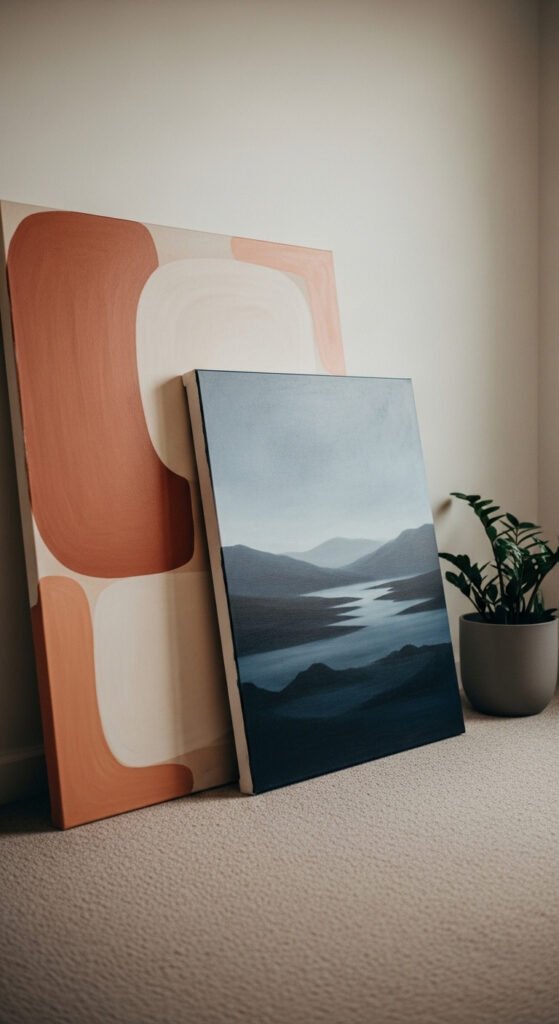
- Lean art against the wall instead of hanging it — it looks intentional and lets you audition pieces without commitment
- Use a large mirror as a placeholder that actually improves the room while you search
- Frame something you already love — a page from a book, a map, a botanical illustration, a piece of fabric — anything meaningful and flat
The art on your walls should evolve over time anyway. What reflects you at 28 might not reflect you at 38. That’s not a problem. That’s the point.
The Art You Choose Is the Story You Tell
Every piece you put on your wall says something about what you value, what moves you, and how you see the world. That’s not a small thing. It’s actually the most personal part of decorating — more personal than paint colors or furniture choices, because it’s purely about feeling rather than function.
Trust your instincts. Buy what genuinely stops you. Ignore what you think you’re supposed to like. And give yourself permission to build your collection slowly, one meaningful piece at a time.
Save this article for your next art search — and share it with anyone who’s been staring at a blank wall wondering where to start.