
Walking into a room should feel effortless. You shouldn’t have to navigate an obstacle course or wonder where to sit. Yet so many homes have furniture arrangements that block pathways, crowd conversations, or waste valuable space. The problem isn’t the furniture itself—it’s the placement.
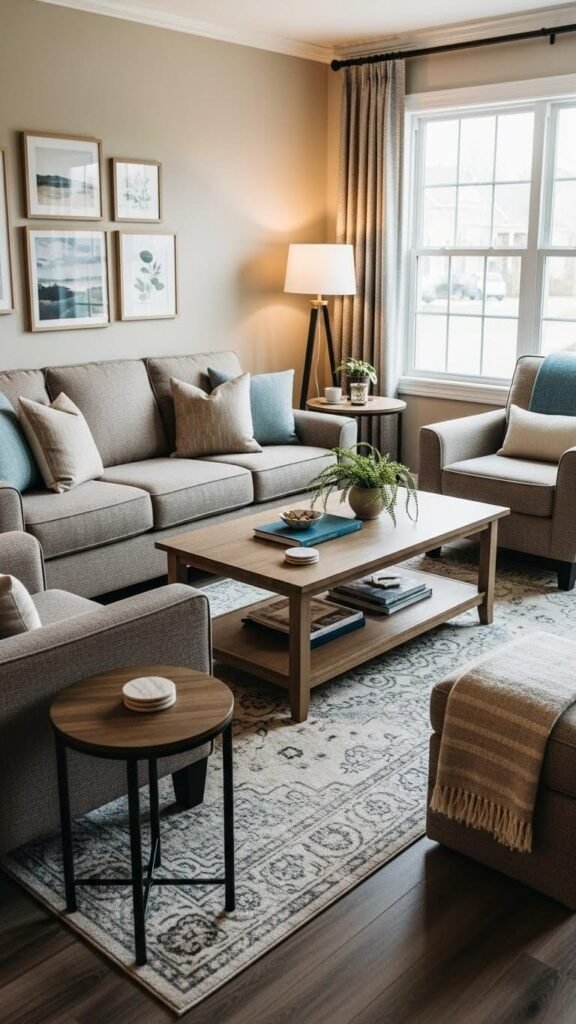
Good furniture arrangement creates natural flow, defines purpose, and makes every room feel balanced and intentional. Whether you’re working with a spacious great room or a cramped studio, these principles will help you arrange furniture like a professional designer.
Start With Your Room’s Focal Point
Every room needs an anchor—a clear focal point that draws the eye and organizes everything else around it. This is where furniture arrangement begins.
Common focal points:
- Fireplace (the classic choice)
- Large window with a view
- TV or entertainment center
- Built-in shelving or architectural feature
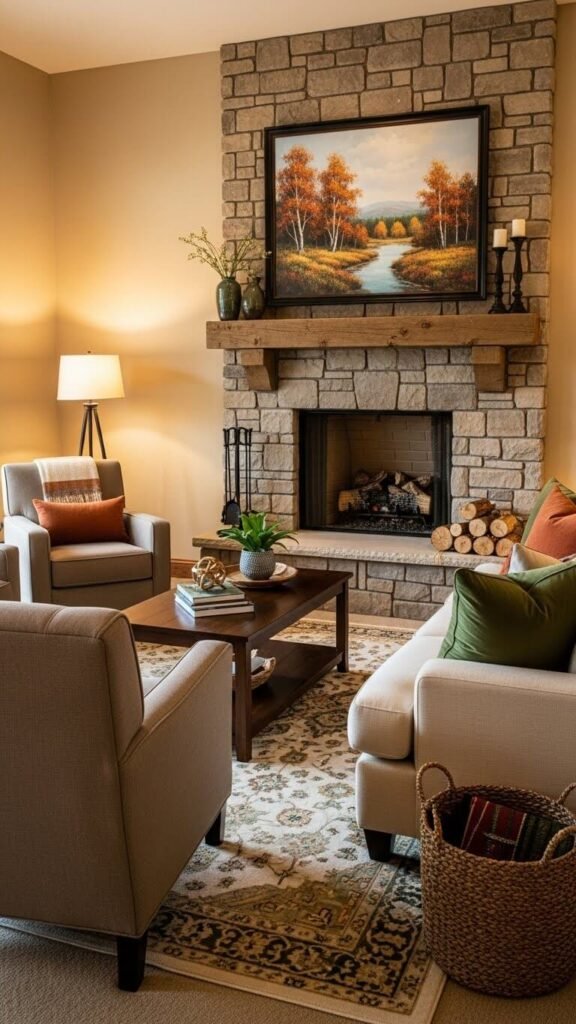
If your room lacks an obvious focal point, create one. A large piece of art, an accent wall, or a beautiful console table can serve this purpose.
Once you identify your focal point, arrange your largest piece of furniture (usually a sofa) to face it. Everything else positions around this relationship.
Create Conversation Areas
Furniture should invite people to interact, not sit in isolated corners staring at walls. Arrange seating so people can comfortably talk without shouting across the room.
Conversation area rules:
- Keep seating within 8-10 feet of each other maximum
- Face sofas and chairs toward each other, not all pointed at the TV
- Create an intimate grouping even in large rooms
- Avoid lining all furniture against walls (it feels like a waiting room)
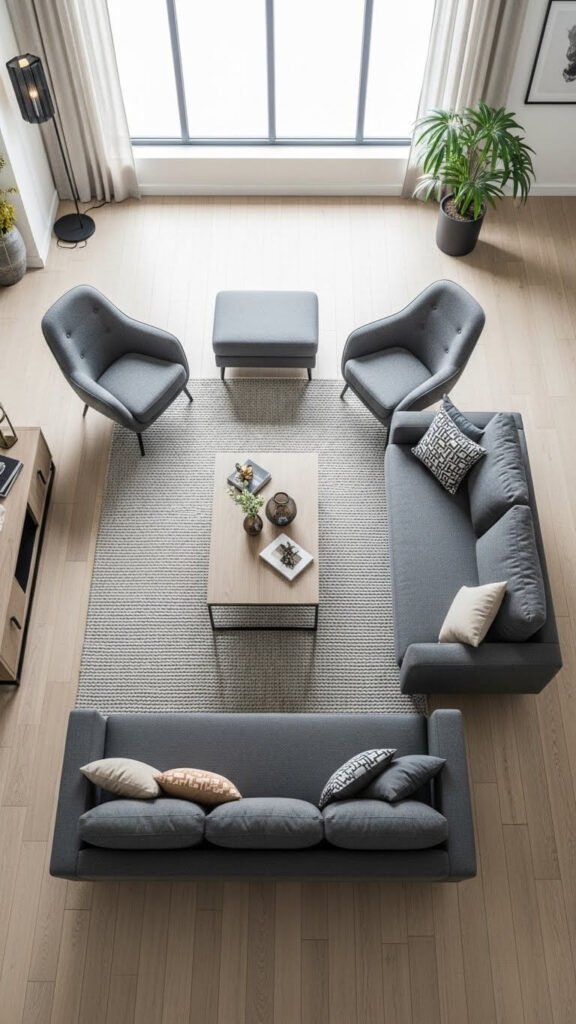
In small rooms, pull furniture slightly away from walls. This counterintuitive trick actually makes spaces feel larger by creating depth and dimension.
For large rooms, create multiple conversation zones instead of one sprawling arrangement that spreads everyone too far apart.
Maintain Clear Traffic Paths
People need 30-36 inches of walking space to move comfortably through a room without turning sideways or bumping into things.
Traffic flow essentials:
- Map the natural paths people walk (from doorway to doorway, entrance to seating)
- Keep these pathways completely clear of furniture
- Don’t force people to walk around the back of the sofa to enter the room
- Position furniture perpendicular or parallel to traffic flow, never diagonal across paths
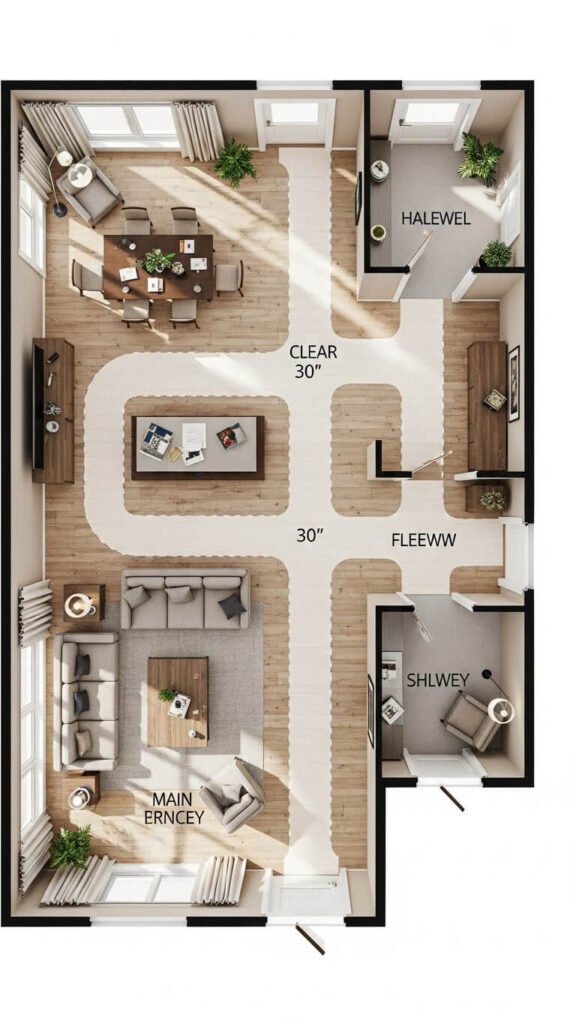
Test your layout by walking through the room multiple times. If you’re squeezing between pieces or taking an indirect route, rearrange until the path feels natural.
High-traffic rooms like family rooms need wider paths (36+ inches). Formal living rooms can work with 30 inches since they’re used less frequently.
Balance Visual Weight
Visual weight refers to how heavy or substantial furniture appears. Proper balance prevents rooms from feeling lopsided or top-heavy.
Achieving balance:
- Distribute large pieces evenly—don’t cluster all heavy furniture on one side
- Mix furniture heights throughout the space
- Balance a tall bookshelf on one wall with a tall plant or floor lamp on the opposite side
- Pair bulky pieces with lighter, more delicate items
If you have a massive sectional on one wall, balance it with substantial art, a large mirror, or a tall plant on the other side. The room should feel evenly weighted when you scan it.
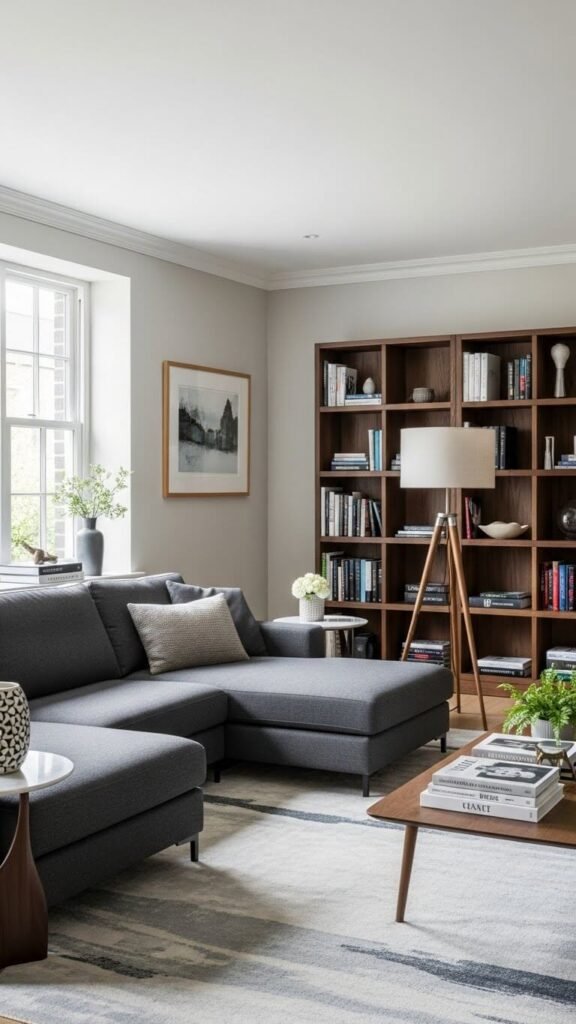
Color also affects visual weight. Dark furniture feels heavier than light pieces, so distribute dark items throughout the room rather than grouping them together.
Leave Breathing Room Between Pieces
Furniture needs space around it to look intentional rather than crammed. Proper spacing makes rooms feel organized and allows each piece to shine.
Spacing guidelines:
- Sofa to coffee table: 14-18 inches (close enough to reach your drink)
- Coffee table to opposite chair: 30-36 inches (for leg room and walking)
- Side table to sofa: 0-2 inches away (within easy reach)
- TV to seating: Multiply screen size by 1.5-2.5 for ideal viewing distance
Don’t push all furniture against walls in an attempt to maximize floor space. Floating furniture actually creates better flow and makes rooms feel more curated.
Leave at least 3-6 inches between furniture and walls. This small gap prevents that “pushed up against the walls” look.
Scale Furniture To Your Room Size
The wrong-sized furniture ruins even the best arrangement. Too small and everything looks scattered; too large and the room feels suffocating.
Size guidelines:
- Living room sofa: Should be 2/3 the length of your longest wall
- Coffee table: Should be 2/3 the length of your sofa
- Dining table: Leave 36-48 inches around all sides for chair pullout and walking
- Bedroom bed: Leave 24-36 inches on each side for bedside tables and walking
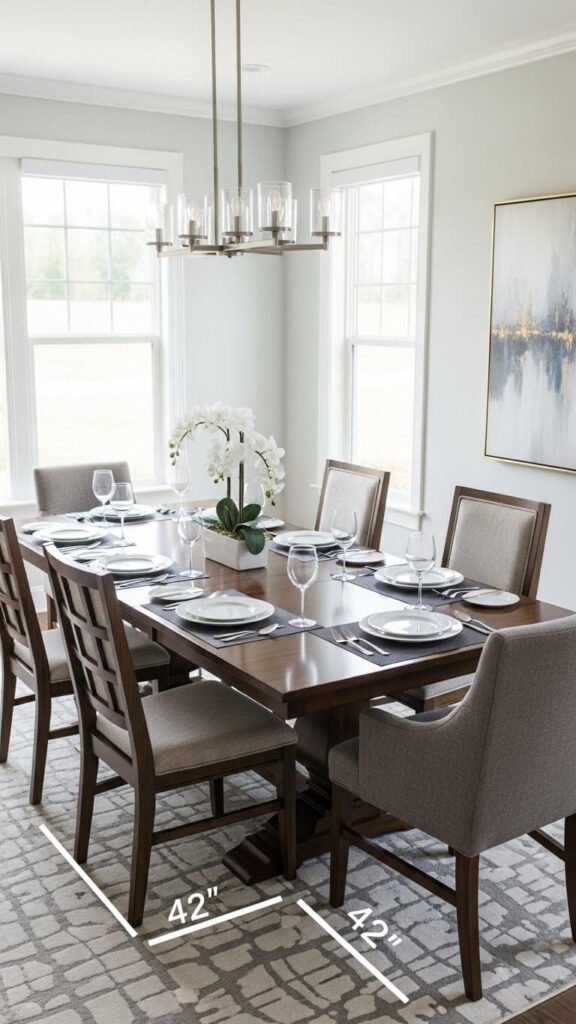
Measure your room and sketch a basic floor plan before buying furniture. Most people choose pieces that are too small, making rooms feel unanchored and incomplete.
One large-scale sofa makes more impact than three small pieces floating aimlessly. Don’t be afraid of substantial furniture in properly scaled proportions.
Define Zones In Open Floor Plans
Open-concept spaces need definition to prevent them from feeling like one big, purposeless room. Use furniture placement to create distinct zones.
Zone-defining strategies:
- Position the back of a sofa to separate living and dining areas
- Use a bookshelf or console table as a subtle room divider
- Anchor each zone with its own area rug
- Angle furniture slightly to delineate spaces without walls
Each zone should have a clear purpose: conversation area, work space, dining area, reading nook. Arrange furniture to support that specific function.
Maintain consistent traffic flow between zones. Pathways should connect spaces naturally, not force awkward navigation.
Angle Furniture For Interest
Rooms with all furniture pushed against walls or perfectly parallel feel rigid and boring. Subtle angles add energy and guide traffic flow naturally.
Strategic angling:
- Float a sofa away from the wall and angle it slightly toward the focal point
- Position chairs at 45-degree angles to the sofa for conversation
- Angle a desk in a corner to maximize wall space for shelving
- Place a bed on an angle in a large bedroom (only if space allows)
Angling works best in larger rooms. Small spaces need furniture parallel to walls to maximize every inch.
Use angles sparingly—one or two angled pieces create interest. Too many angles create chaos.
Test Before Committing
Before drilling holes or declaring your arrangement final, live with it for a few days. The best layout on paper might not work in real life.
Testing checklist:
- Walk through the room multiple times at different times of day
- Sit in every seat to test sightlines and comfort
- Watch TV from each seating position
- Make sure lighting reaches all seating areas
- Check that you can access outlets, windows, and doors easily
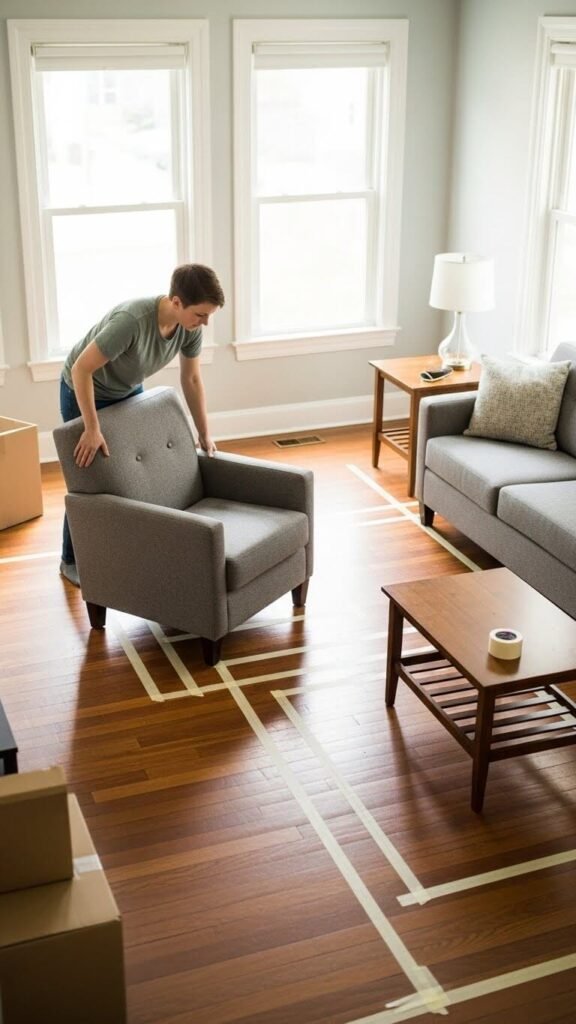
Use painter’s tape to mark furniture positions on the floor before moving heavy pieces. This lets you visualize arrangements without the physical strain of constant rearranging.
Don’t be afraid to adjust. Even professional designers tweak layouts multiple times before getting them perfect.
Conclusion
Perfect furniture arrangement isn’t about following strict rules—it’s about creating flow that works for how you actually live. Start by identifying your focal point, create conversation areas with appropriate spacing, and maintain clear walking paths throughout.
The best layout serves your daily life. If something isn’t working, move it. Furniture arrangement isn’t permanent, and even small adjustments can dramatically improve how a room feels and functions.
Save this guide and refer back to it next time you’re stumped by a room that just doesn’t feel right. Sometimes the solution is as simple as pulling the sofa away from the wall or angling a chair differently. Your furniture has potential—it just needs the right arrangement to shine!