
Plants do something no paint color, throw pillow, or piece of furniture can fully replicate — they bring a space to life in a way that feels genuinely alive, because it is. The right plant decor arrangement doesn’t just sit on a shelf looking green. It cleans the air, softens hard surfaces, adds texture and scale, and makes a room feel like somewhere a person actually lives. Whether you have a sun-drenched conservatory or a single north-facing window, there is a plant arrangement that works for your space, your schedule, and your budget. This list covers 30 of the most beautiful, practical, and easy-to-achieve plant decor ideas — from bathroom humidity lovers to dramatic living room statement plants — all chosen because they genuinely improve the spaces they live in.
1. The Fiddle Leaf Fig Statement Corner
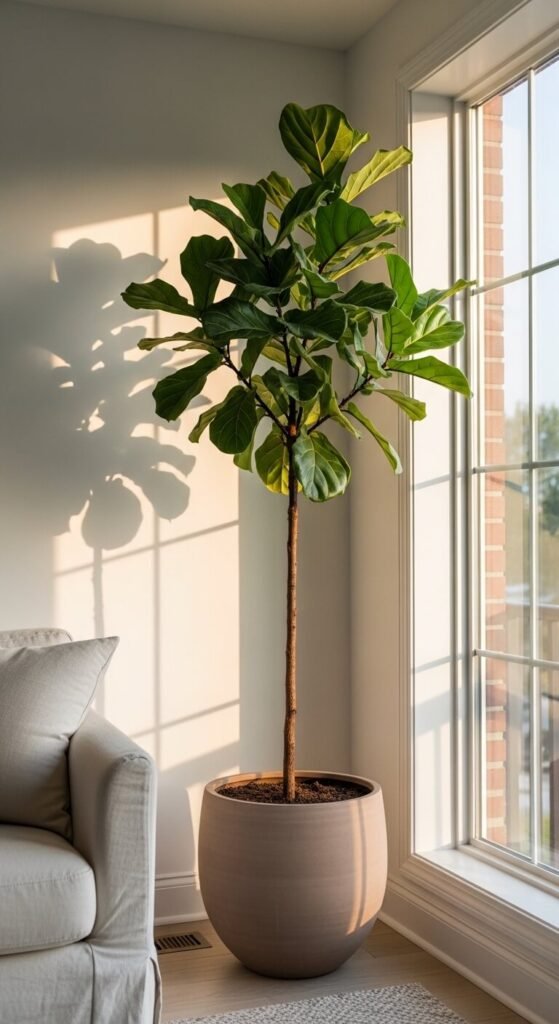
The fiddle leaf fig is the undisputed anchor plant of modern interior design.
One large specimen in the right corner transforms an ordinary room into something that looks genuinely designed. Place it beside a south or east-facing window where it gets bright, indirect light for most of the day.
Buy a smaller plant and let it grow — nursery fiddle leafs start around $15–$30. Use a large pot with drainage and a saucer underneath. Water only when the top two inches of soil are dry. This plant rewards patience and consistent care with dramatic, room-changing results.
2. Trailing Pothos Shelf Cascade
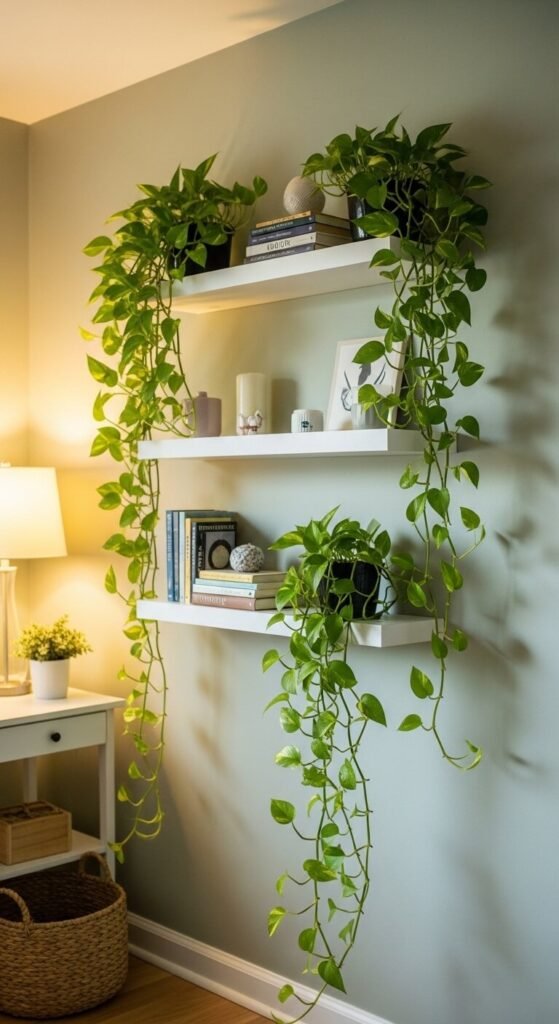
Pothos is the most forgiving, most beautiful trailing plant you can own.
A single cutting placed in a pot on a high shelf will eventually cascade three to four feet downward, creating a living curtain of glossy green leaves. Buy one plant, propagate cuttings into water, and multiply it across every shelf in the room for free.
Golden pothos tolerates low light, irregular watering, and almost total neglect. Marble queen and neon varieties offer different visual tones — from cream-streaked to bright chartreuse. Full plants cost $5–$15 at most garden centers.
3. Bathroom Humidity Garden
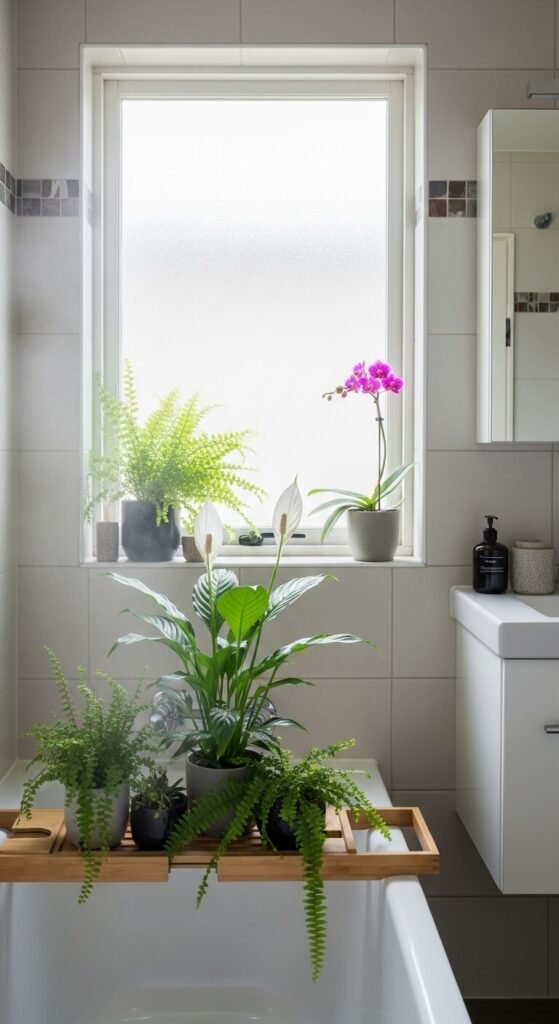
Your bathroom is already a greenhouse — it just doesn’t know it yet.
High humidity and consistent warmth make bathrooms ideal for plants that struggle elsewhere in the home. Peace lilies, Boston ferns, orchids, and spider plants all thrive in steamy conditions without much additional care.
Place a peace lily on a shelf near the window — it tolerates low light and actually filters indoor air pollutants like ammonia and benzene. A small fern on the vanity costs under $8 at most garden centers. No green thumb required in a bathroom environment.
4. Kitchen Herb Window Garden
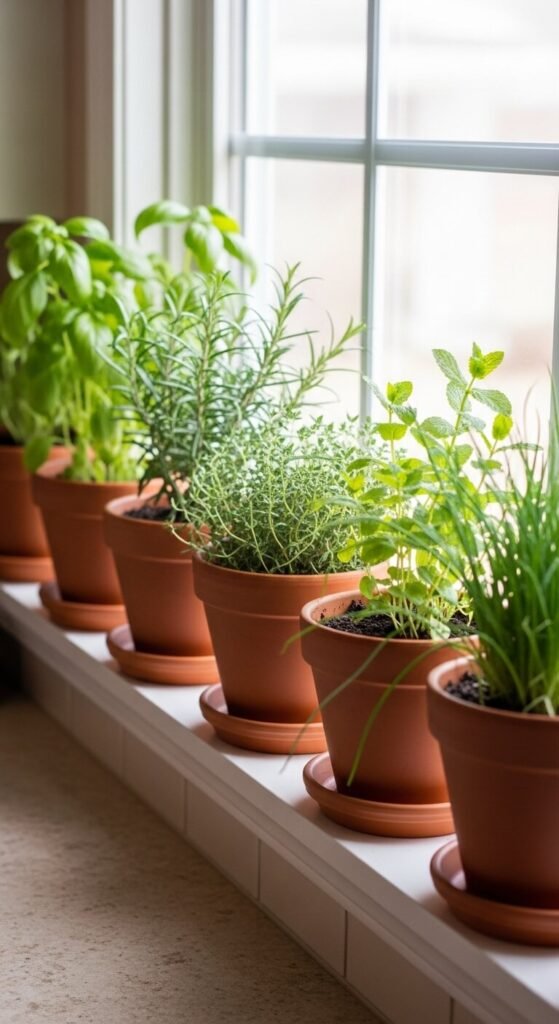
A kitchen herb garden is the most functional plant decor arrangement you can create.
Fresh herbs on the windowsill look beautiful and get used every day. Basil, rosemary, thyme, and mint all grow well in small terracotta pots with a sunny south-facing window. They cost $2–$4 each as seedlings from a grocery store or garden center.
Group them in matching pots for a tidy, intentional look. Use a small tray underneath to catch water. Snipping them regularly actually encourages fuller, bushier growth — so the more you cook with them, the better they look.
5. Monstera as a Living Room Focal Point
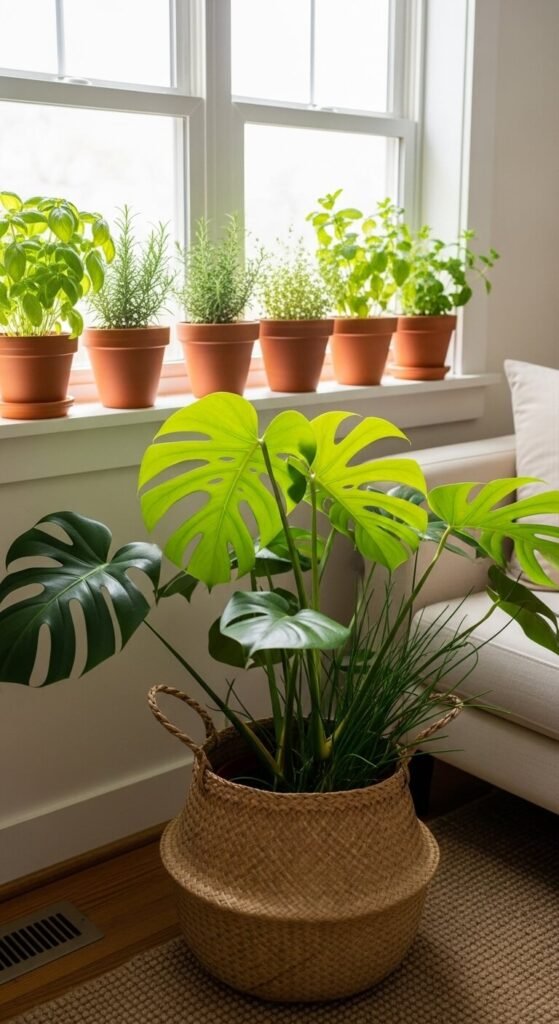
No plant makes a room feel more lush and tropical than a mature monstera.
The split, perforated leaves are architectural in a way that almost no other houseplant matches. A medium monstera in a woven basket or large ceramic pot works as a standalone focal point — you don’t need anything else on that wall.
Start with a small plant ($10–$25 at a garden center) and give it a moss pole to climb as it matures. Monstera grows quickly in bright indirect light and rewards monthly fertilizing with new leaves every few weeks during growing season.
6. Snake Plant Entryway Pair
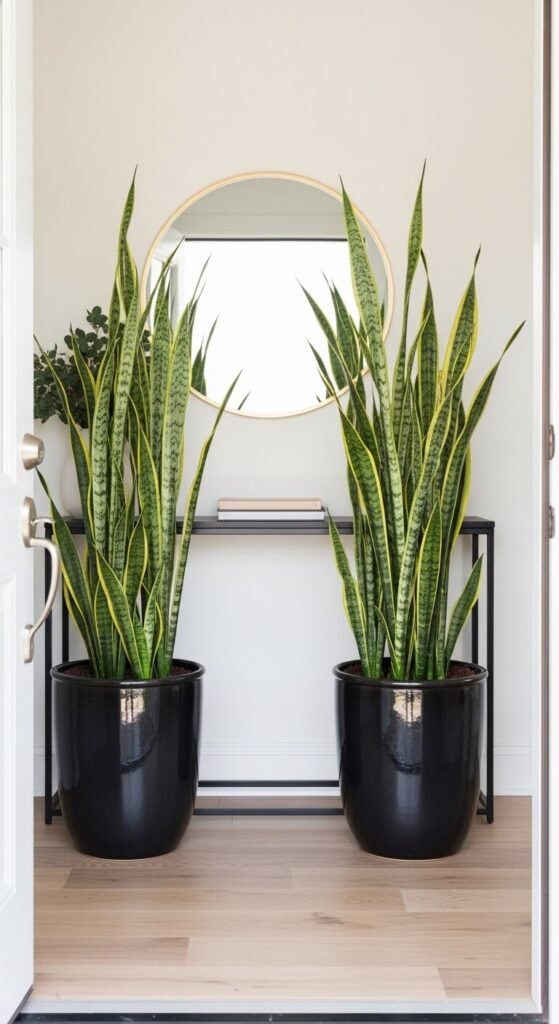
Two identical plants flanking a console table or doorway is one of the simplest, most dramatic plant arrangements available.
Snake plants — also called sansevieria — are ideal for this because they grow tall and upright, hold their shape without staking, and survive in almost any light condition including very low light entryways.
Buy two plants the same height and pot them identically. Symmetry is the whole point here. Snake plants cost $10–$30 depending on size, tolerate irregular watering, and filter airborne toxins while looking sculptural and sharp.
7. Hanging Macramé Plant Display
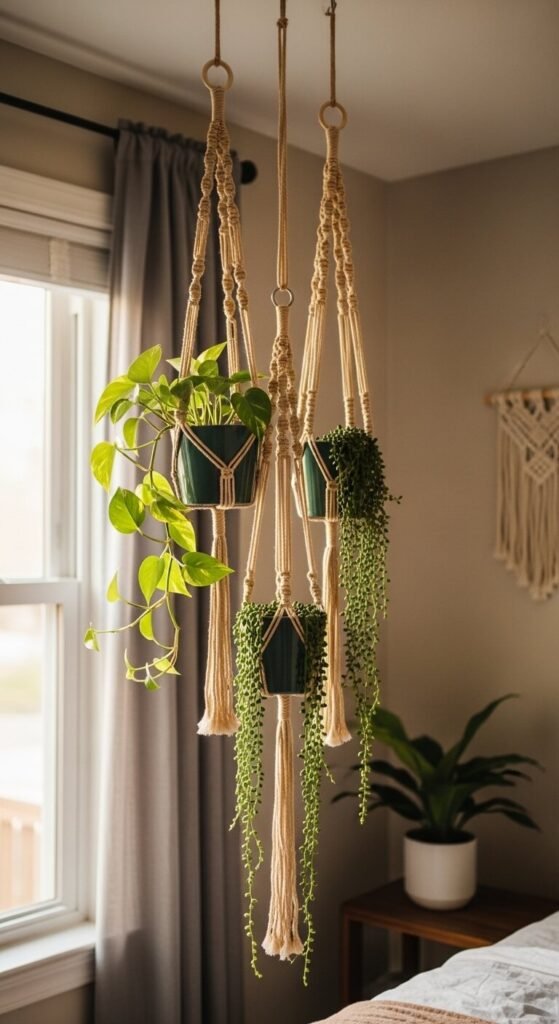
Hanging plants solve the problem of too many plants and too little surface space.
Macramé hangers suspend plants at eye level or above, drawing the eye upward and creating vertical interest that shelves and tables can’t. They work in living rooms, bedrooms, bathrooms, and any space with a ceiling hook or curtain rod to hang from.
Buy pre-made macramé hangers on Etsy or at HomeGoods for $10–$25 each. Or make your own with basic cotton rope — tutorials take about 30 minutes and the materials cost under $8. String of pearls and trailing pothos are the best choices for hanging arrangements.
8. Succulent Windowsill Collection
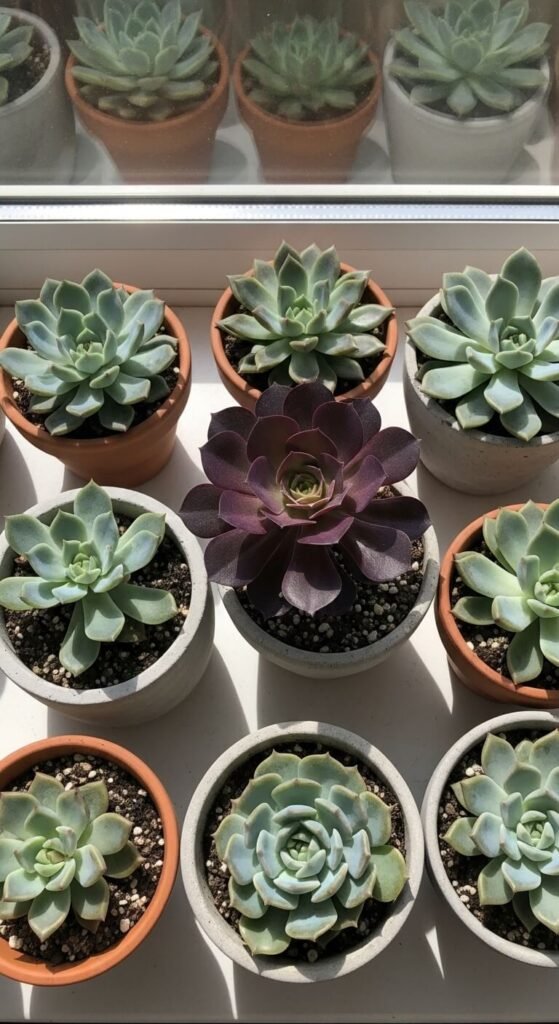
Succulents are the most beginner-friendly, most visually satisfying plant collection you can build on a windowsill.
They come in dozens of colors, shapes, and sizes — and a curated collection on a sunny sill looks like living sculpture. Echeveria rosettes, stacked crassulas, sprawling sedums, and spiky haworthias all pair beautifully together.
Individual succulents cost $2–$6 each. Repot them in terracotta for the best drainage and a cohesive look. A south-facing window is ideal, but bright east or west exposures work well too. Water once every two to three weeks in summer, less in winter.
9. Bedroom Air-Purifying Trio
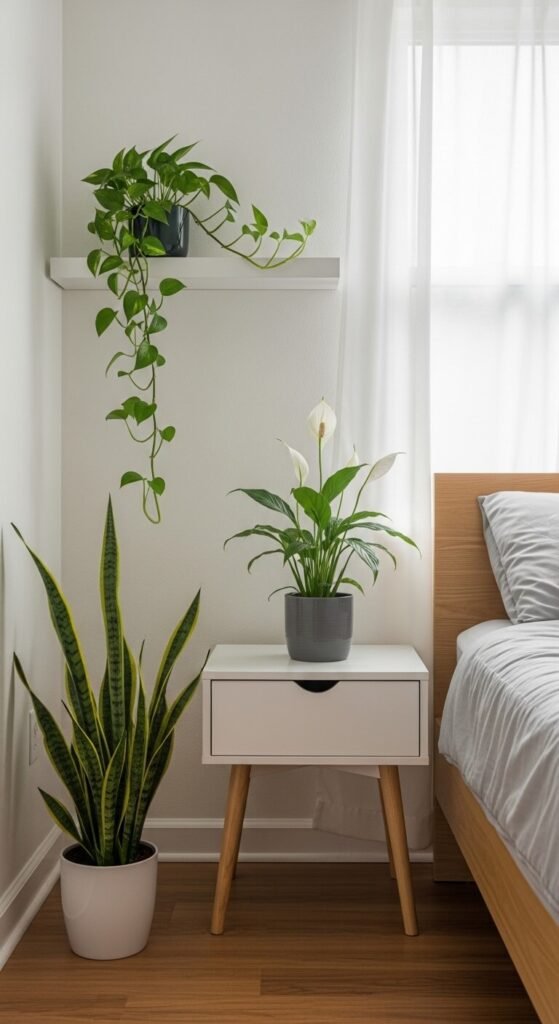
Three specific plants in the bedroom actively improve your sleep environment.
Snake plants release oxygen at night rather than during the day — making them one of the few plants that genuinely benefit a sleeping space. Peace lilies filter airborne chemicals, and pothos absorbs carbon monoxide and other pollutants.
Arrange them at different heights for visual interest — one on the floor, one on the nightstand, one on a shelf. No bright light required for any of these three. Total cost for all three plants: $25–$40. The return in air quality and aesthetics is far greater than the investment.
10. Living Wall Panel on a Blank Wall
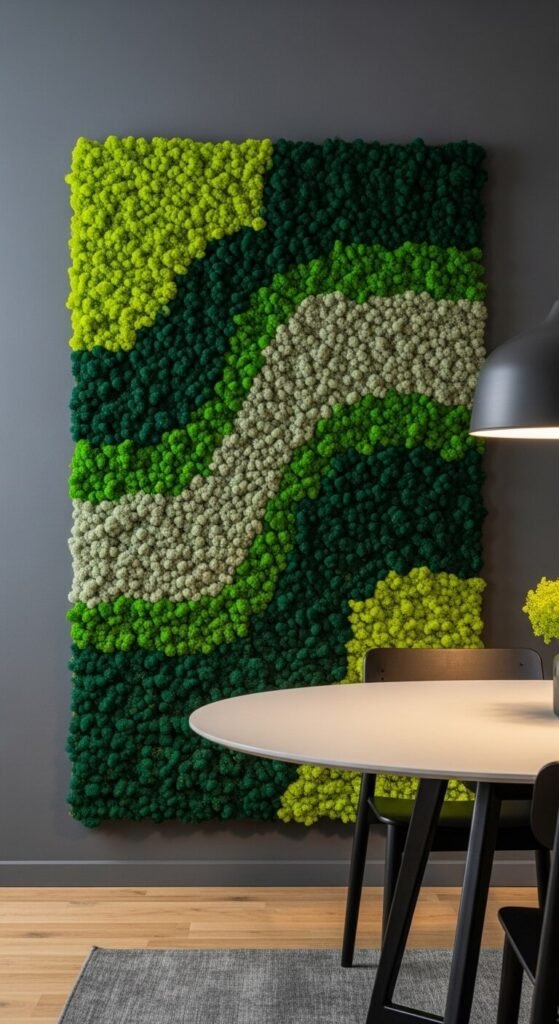
A moss wall panel turns a blank wall into a living, breathing design feature — without a single watering session.
Preserved moss walls use real moss that’s been treated to stay green and soft indefinitely without water, soil, or light. They’re perfect for dark walls, low-light spaces, or anyone who wants the look of a living wall without the maintenance.
DIY moss wall kits are available on Amazon and Etsy for $40–$120 depending on size. Arrange different moss varieties — sheet moss, reindeer moss, ball moss — in a shadow box frame or directly on the wall using liquid nails.
11. Bedroom Hanging Ivy Canopy
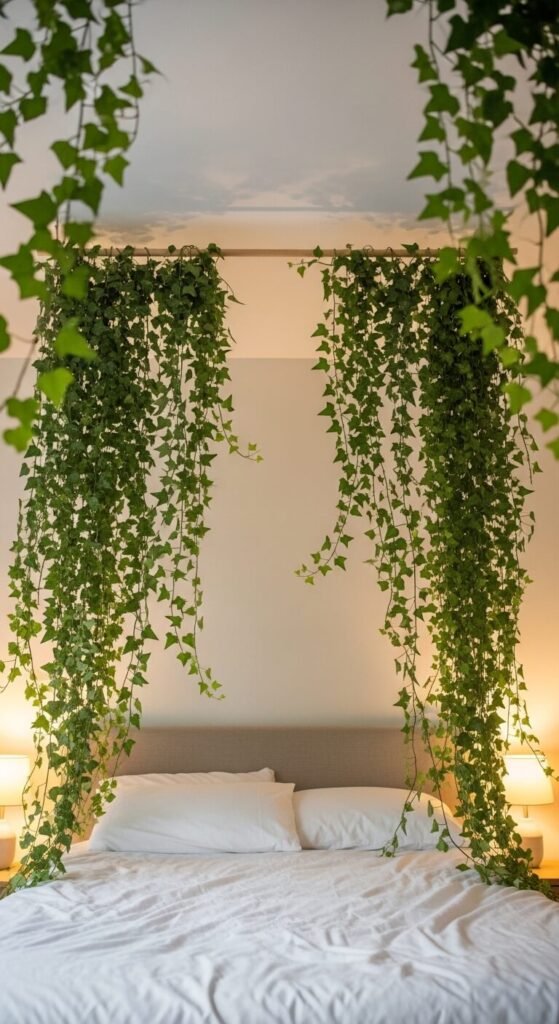
Draping trailing ivy above a bed creates one of the most romantic, organic canopy effects in home decorating.
Mount a slim wooden dowel or curtain rod directly to the wall above the headboard. Hang potted ivy or long-cut ivy strands from small hooks along the rod and let them cascade down.
English ivy and heartleaf philodendron both trail beautifully and grow quickly. Replace cut strands with rooted cuttings every few months to keep the arrangement full and lush. A single ivy plant costs $5–$12 and produces more than enough trailing growth to fill the entire display.
12. Terrarium Coffee Table Centerpiece
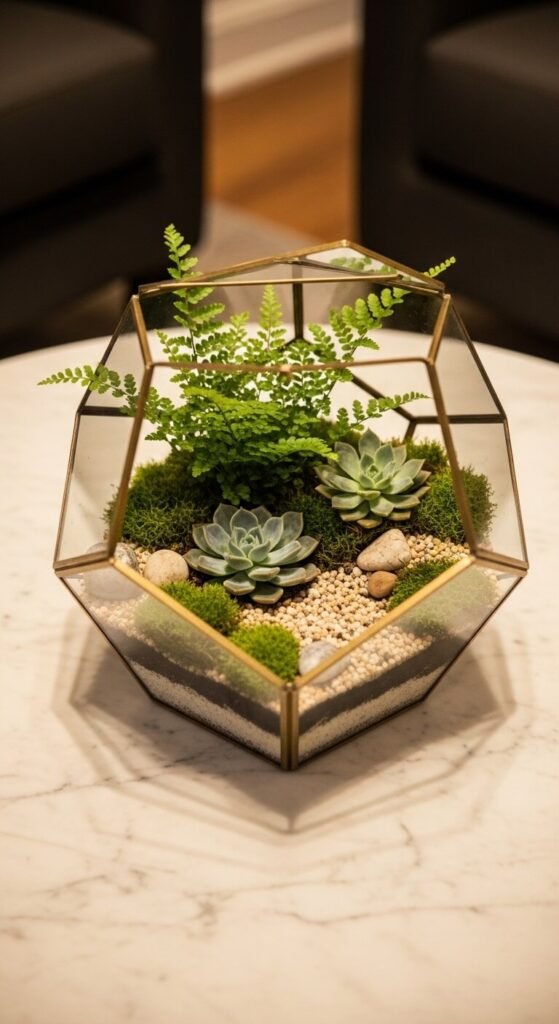
A glass terrarium on a coffee table is a contained world that requires almost no maintenance once assembled.
Closed terrariums create their own moisture cycle and thrive on nothing but indirect light. Open terrariums work beautifully for succulents and cacti that prefer drier conditions. Either style looks extraordinary on a coffee table or dining table as a living centerpiece.
Geometric brass-framed terrariums cost $20–$60 at HomeGoods, TJ Maxx, or Amazon. Fill with activated charcoal, potting mix, and small plants from your local nursery. Total project cost: $35–$80. Lasts years with minimal attention.
13. Staircase Step Plant Display
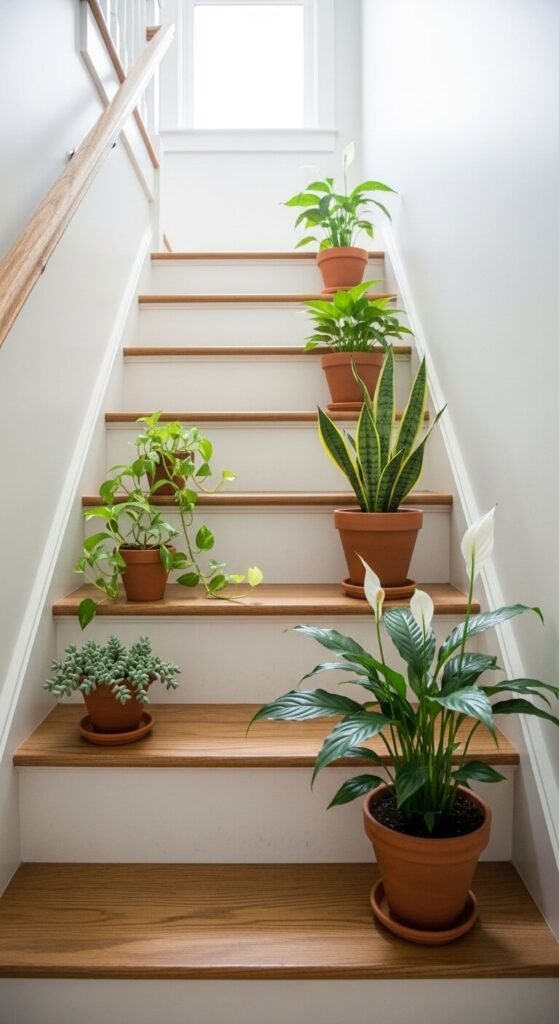
Using each step of a staircase as a planter shelf is one of the most creative uses of underutilized space in a home.
Start with smaller plants at the top and graduate to larger ones at the bottom, following the diagonal line of the stairs. It creates a cascading green display that looks fully intentional and costs almost nothing to arrange.
Use terracotta pots in matching sizes for cohesion. Stick to low-maintenance plants that tolerate variable light — pothos, snake plants, and ZZ plants all work well. Rearrange seasonally to keep the display looking updated and to rotate plants toward better light.
14. Kitchen Island Herb Basket Display
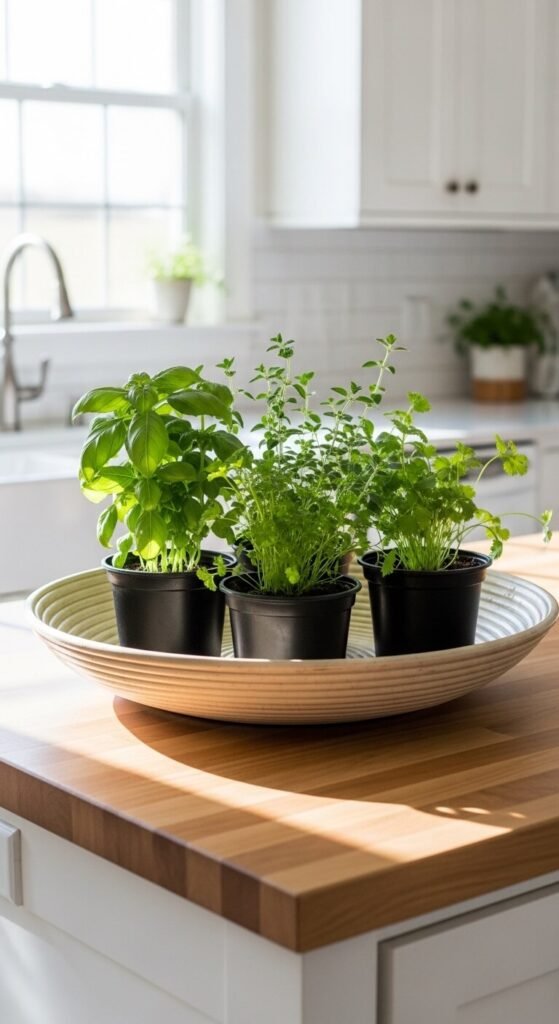
A woven basket on the kitchen island holding potted herbs is both a decorating choice and a culinary tool.
Group three to five herb pots inside a wide, shallow basket to keep them contained, mobile, and styled. You can move the whole arrangement to the windowsill for more light during the day and bring it back to the island for visual impact.
Line the basket with a cloth napkin to protect from moisture. Rotate herbs out when they’re past their peak and replace with fresh seedlings from the grocery store for $2–$3 each. This arrangement takes five minutes to assemble and looks completely intentional.
15. Vintage Ladder Plant Stand
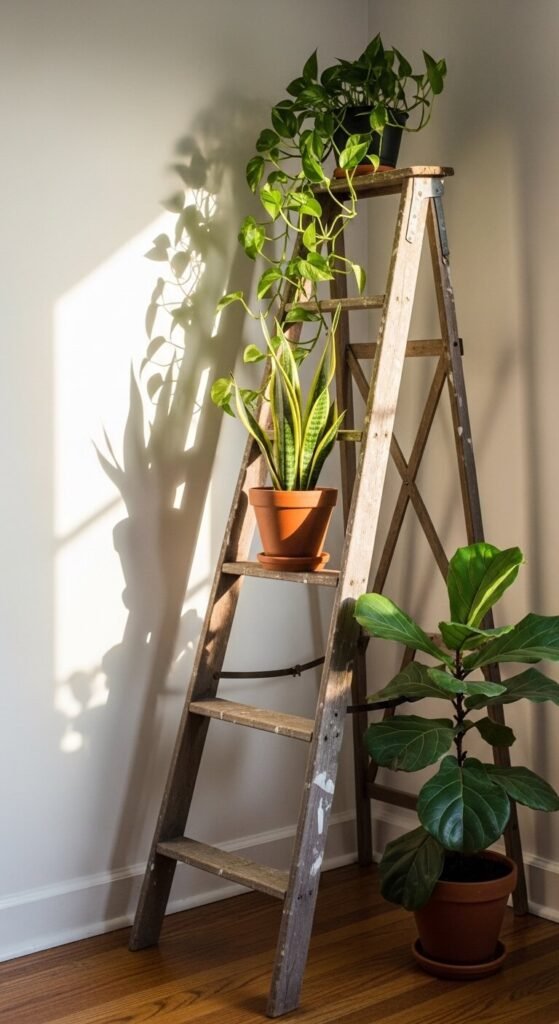
A vintage wooden ladder is one of the most affordable and most stylish plant stands available.
Lean it against any wall and use each rung as a shelf for a different plant. The varying heights create natural visual layering, and the ladder itself adds warmth and texture to the space without any assembly or installation.
Find old wooden ladders at flea markets, estate sales, and Facebook Marketplace for $10–$40. Paint it or leave it raw depending on your interior style. Four to six plants on a ladder costs less than a single purpose-built plant stand and looks considerably more interesting.
16. ZZ Plant Dark Corner Rescue
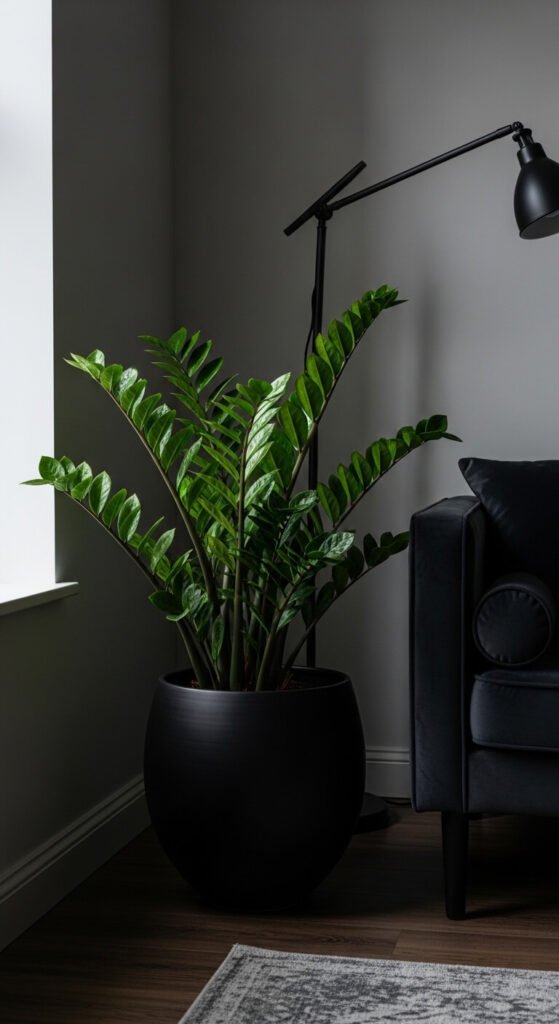
The ZZ plant is the answer to every dark, windowless corner that defeats every other plant.
It grows in almost complete darkness. It survives weeks without water. And it looks like it was chosen deliberately — deep, glossy, architectural leaves that suit modern, minimal, or moody interiors particularly well.
A ZZ plant in a matte black or deep green pot looks stunning in a dim corner that would kill almost any other plant. Water once a month in low-light conditions. Nursery ZZ plants cost $12–$35 depending on size, and they genuinely require almost no care once placed.
17. Balcony Container Garden
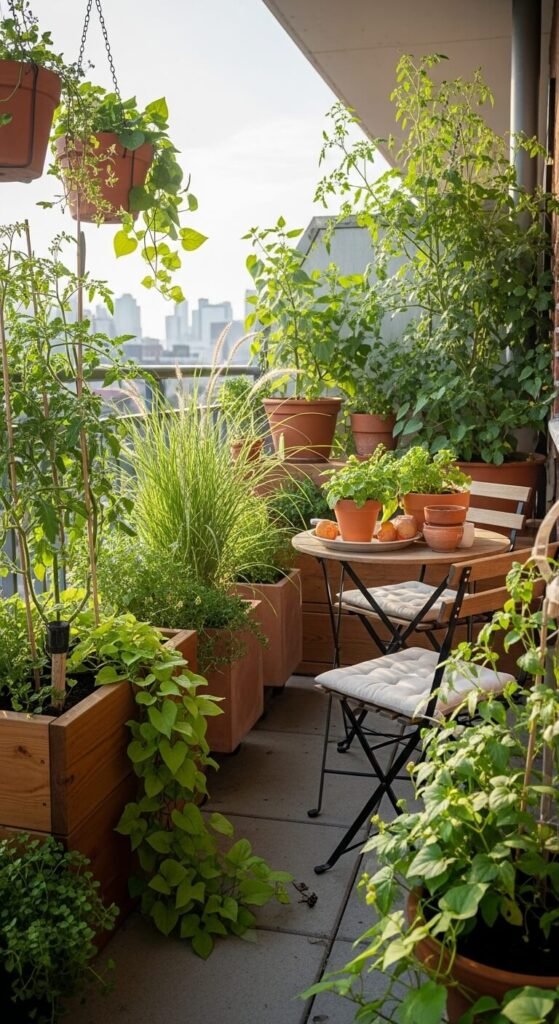
Even the smallest balcony can become a thriving garden with container planting.
Use a mix of large terracotta pots, wooden planter boxes, and hanging baskets to create a layered, abundant feel. Grow vegetables, herbs, flowering annuals, and ornamental foliage together for a display that’s both beautiful and productive.
Railing planters attach to balcony railings without drilling and create instant vertical greenery for $15–$30 per planter. Mix trailing plants at the edges — sweet potato vine, nasturtium, trailing verbena — with upright plants in the center for maximum visual fullness in limited floor space.
18. Propagation Station on a Window Shelf
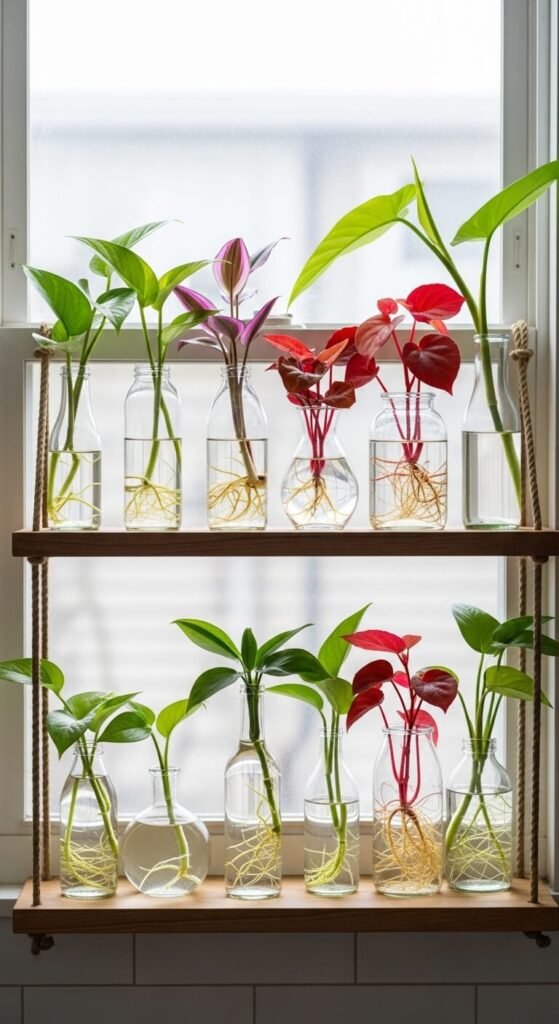
A propagation station is free plant decor that grows itself and looks genuinely beautiful.
Line a sunny window shelf with small glass vessels — old medicine bottles, bud vases, test tubes, or even repurposed spice jars — and fill them with plant cuttings in water. As roots develop, the display changes weekly, giving it a living, evolving quality.
Cuttings cost nothing if you already have plants — or ask neighbors and plant communities for free swaps. Matching vessels keep it looking styled rather than random. Once rooted, pot the cuttings and expand your collection or give them away.
19. Bedroom Dresser Trailing Vine Display
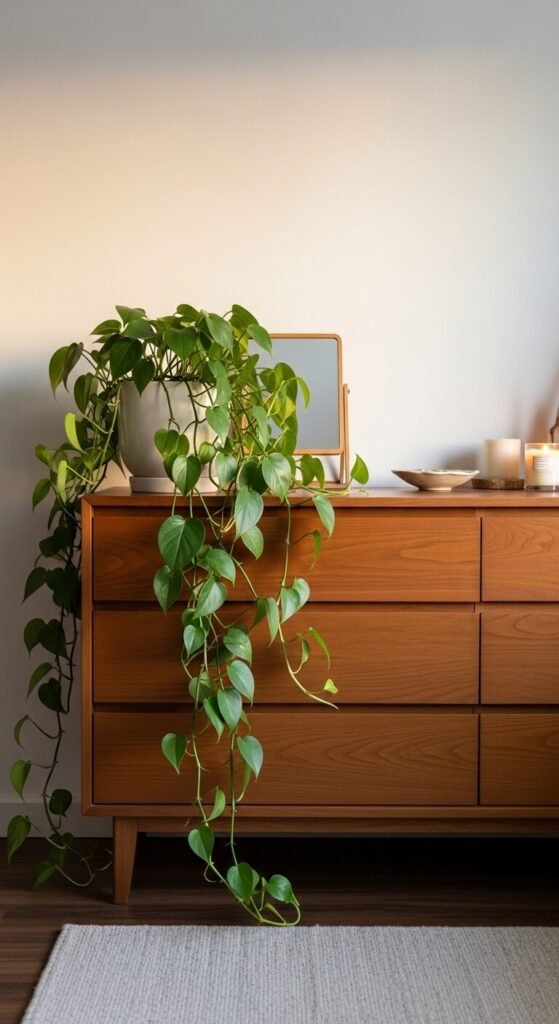
A trailing plant draped across a dresser top is one of the most effortless-looking plant displays you can create.
Place a single large trailing plant at one end of the dresser and let the vines grow naturally across the surface and over the edge. No guides, no training needed — just growth. The longer it grows, the more beautiful it becomes.
Heartleaf philodendron and golden pothos are the best choices — fast growers with long, flexible vines that drape naturally. A 6-inch pot costs $8–$15 and will produce six feet or more of trailing growth within a year.
20. Cactus and Succulent Desert Vignette
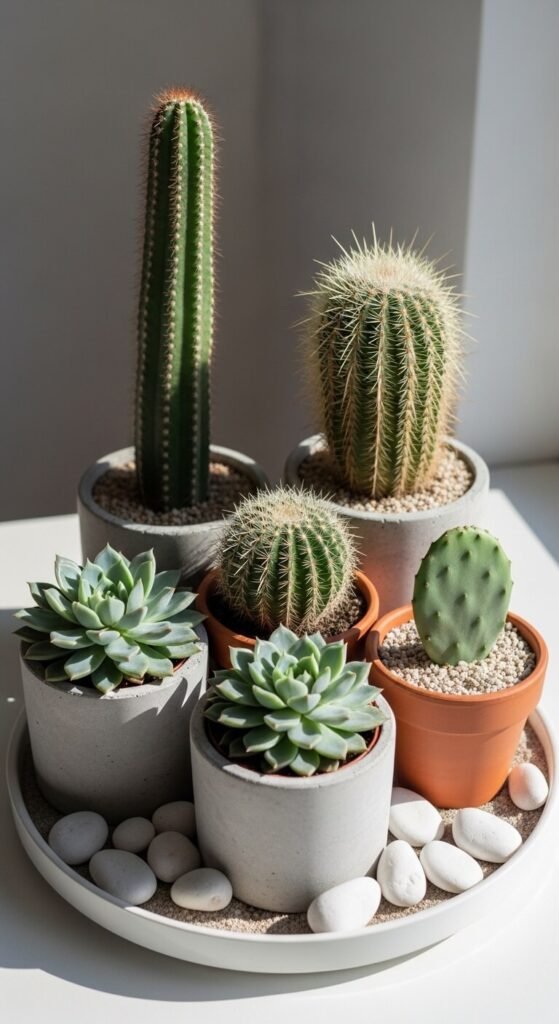
A desert vignette groups cacti and succulents into a small-scale landscape that looks like it belongs in a design magazine.
Choose plants with different shapes — tall and columnar, round and compact, flat and paddle-shaped, rosette-forming — and arrange them at varying heights. Add a layer of decorative sand or fine gravel around the base to complete the desert effect.
Use matching pot materials — all concrete, all terracotta, or all white ceramic — to unify the grouping. Total arrangement cost: $20–$45 depending on plant sizes. Water the whole vignette once every two to three weeks and it will thrive indefinitely.
21. Hanging Air Plant Display on Driftwood
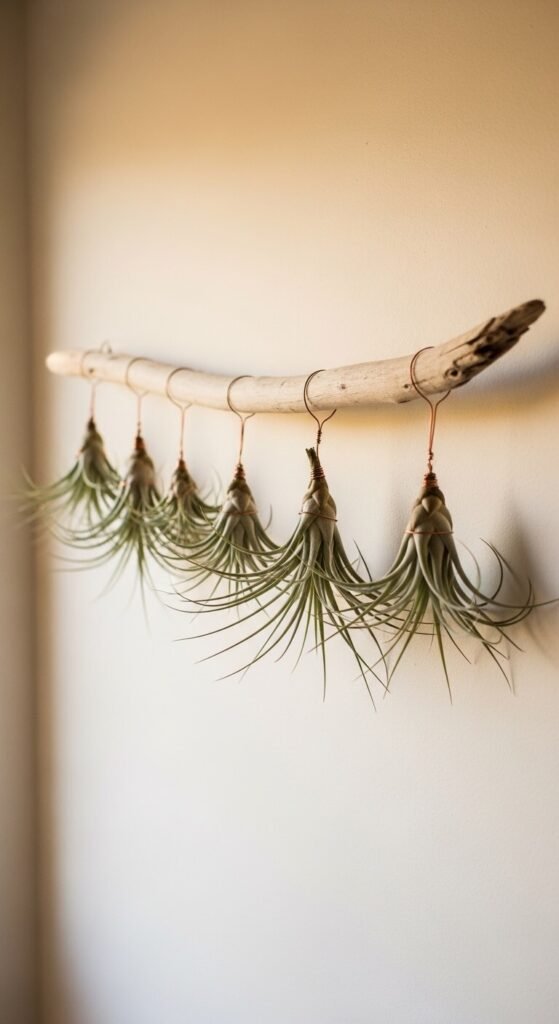
Air plants mounted on driftwood create wall art that’s also alive — with zero soil, zero pots, and near-zero maintenance.
Tillandsia (air plants) attach to almost any surface and absorb water and nutrients through their leaves rather than roots. Wire, glue, or simply rest them on a piece of driftwood mounted to the wall.
Soak air plants in water for 20 minutes weekly, shake off excess, and let them dry upside down before returning to the display. Individual air plants cost $3–$12. A piece of driftwood from a craft store or beach runs $5–$20. The complete installation costs under $60.
22. Reading Nook Plant Surround
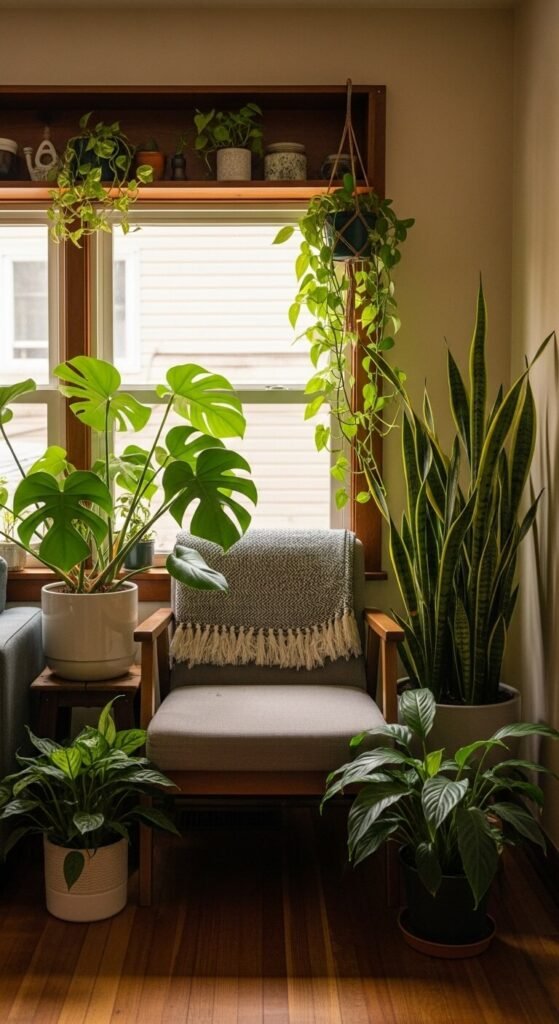
Surrounding a reading chair with plants on three sides creates an immersive, garden-like feel inside the home.
Place one tall plant on each side of the chair, add something on the windowsill above, and hang a trailing plant beside the window. The chair becomes a little pocket of green — quieter, warmer, and more restful than the same chair in a bare corner.
Use plants that tolerate the light available in that specific spot. Snake plants and ZZ plants work in dimmer corners; monstera and pothos prefer brighter spots. The whole arrangement can be built from four to six affordable plants for under $80 total.
23. Dining Table Low Centerpiece with Succulents
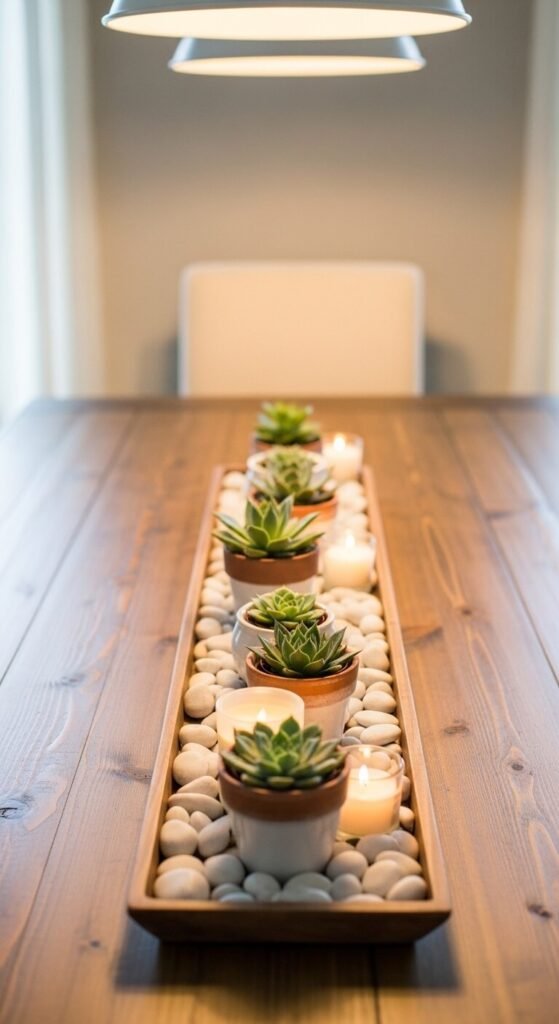
A low tray of succulents running down the center of a dining table is a living centerpiece that stays beautiful for months.
Use a wooden tray or simple box to contain the arrangement and keep it movable. Mix three to five different succulent varieties for visual interest — vary the color, size, and shape within the tray.
Tuck small candles or river stones between the pots to fill gaps and make the arrangement feel full. When plants outgrow the tray, pot them individually and refresh with new small plants from the garden center. Total cost: $30–$50 for a full tray display.
24. Office Desk Plant Trio
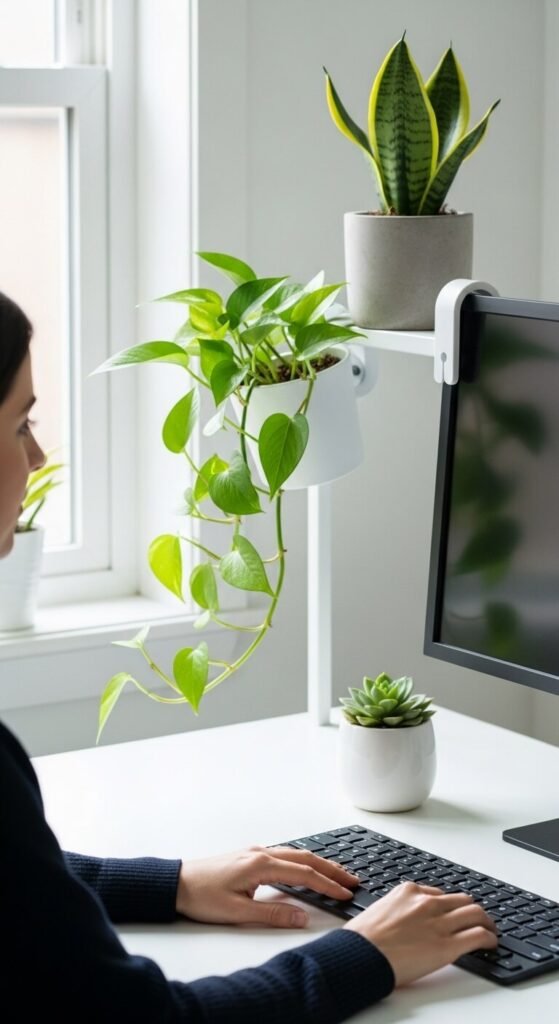
Three plants on a desk — one tall, one trailing, one small — create a layered arrangement that improves both the look and feel of a workspace.
Research consistently links plants in workspaces with reduced stress and improved focus. The arrangement doesn’t require much space — a corner plant, a monitor-mounted planter, and one small pot beside the keyboard is enough.
Monitor clip planters are available on Amazon for $10–$15 and hold small trailing plants directly on the screen edge. Snake plants and ZZ plants handle the lower light common in office corners. Total desk plant setup: $30–$50.
25. Tall Areca Palm as Room Divider
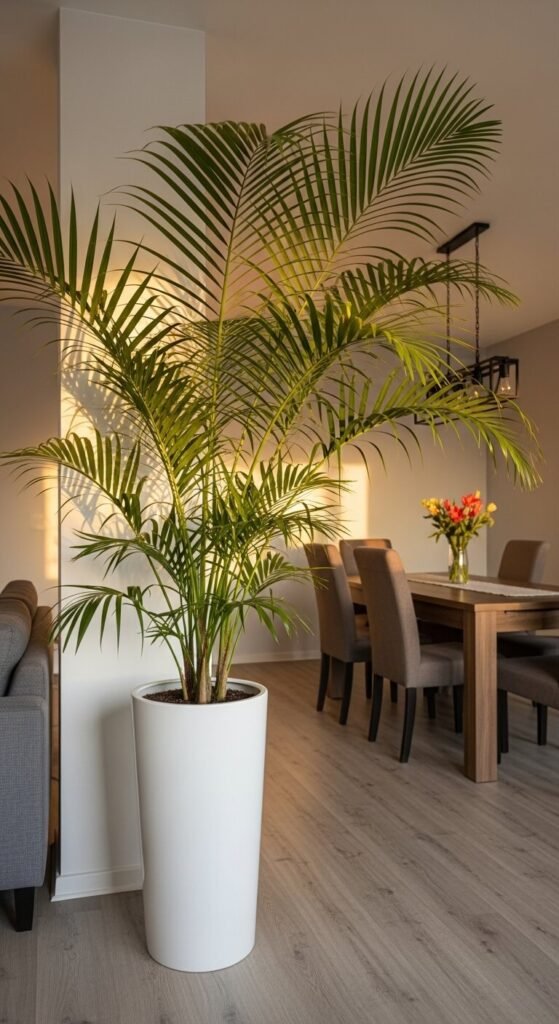
A tall areca palm used as a natural room divider is one of the most graceful ways to zone an open-plan space.
The feathery, arching fronds of an areca palm create a soft visual boundary without the permanence or weight of a physical partition. It defines zones while keeping the space feeling open and connected.
Areca palms grow best in bright, indirect light. Water when the top inch of soil is dry and mist the fronds occasionally to maintain humidity. Large specimens cost $40–$100 at garden centers or big box stores, making them one of the most cost-effective room-defining elements available.
26. Wall-Mounted Ceramic Planter Gallery
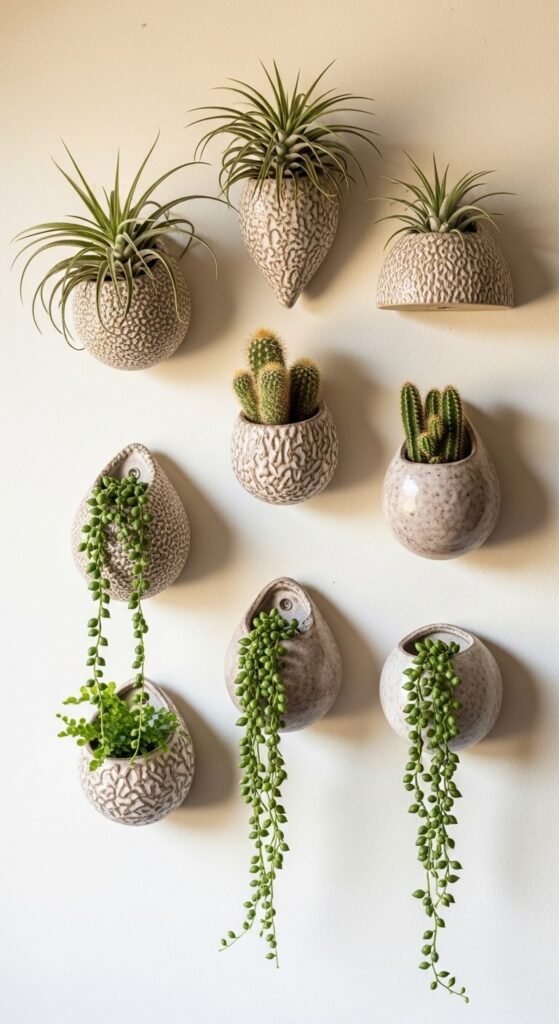
A wall of ceramic planters turns a blank wall into a living installation that doubles as sculpture.
Individual wall-mounted ceramic planters are widely available on Etsy and Amazon for $8–$20 each. Arrange nine to fifteen of them in a loose grid or organic cluster, each holding a different small plant or air plant.
Mix planter shapes — round, teardrop, geometric — while keeping the ceramic finish consistent for cohesion. This arrangement works especially well in kitchens, bathrooms, and hallways where shelf and floor space is limited. Total cost for a nine-planter gallery: $80–$150.
27. Spider Plant Hanging Basket Cluster
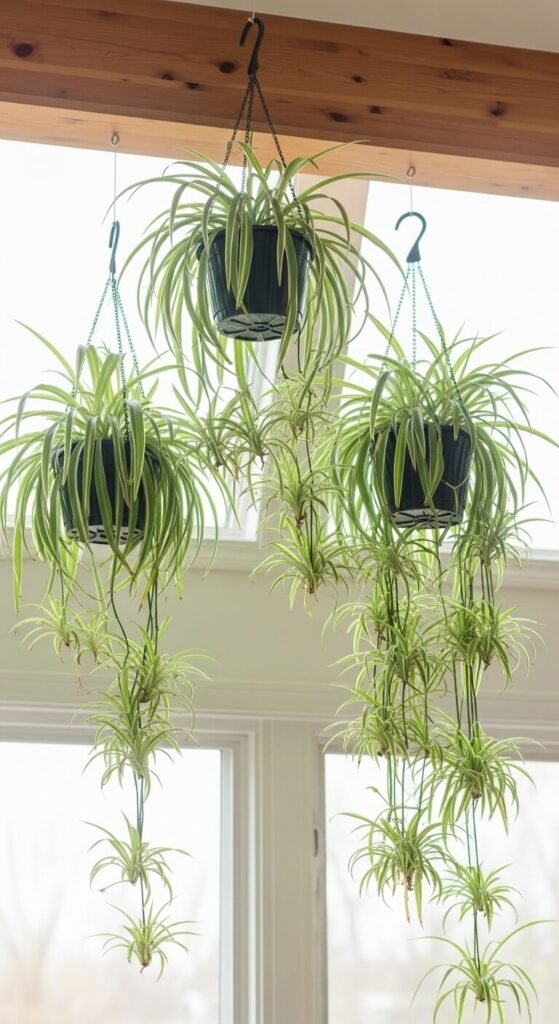
Spider plants are one of the most air-purifying plants available — and the hanging spiderettes make them visually spectacular.
As spider plants mature, they produce long runners tipped with small baby plants that dangle below the pot like a natural cascade. Hang two or three at staggered heights and the effect is lush and layered in a way that grows more beautiful over time.
Spider plants are nearly indestructible. They tolerate irregular watering and a wide range of light conditions. The babies can be propagated into new plants for free — pot a spiderette in soil and it roots within two weeks. Starter plants cost $5–$10.
28. Seasonal Bulb Forcing Display
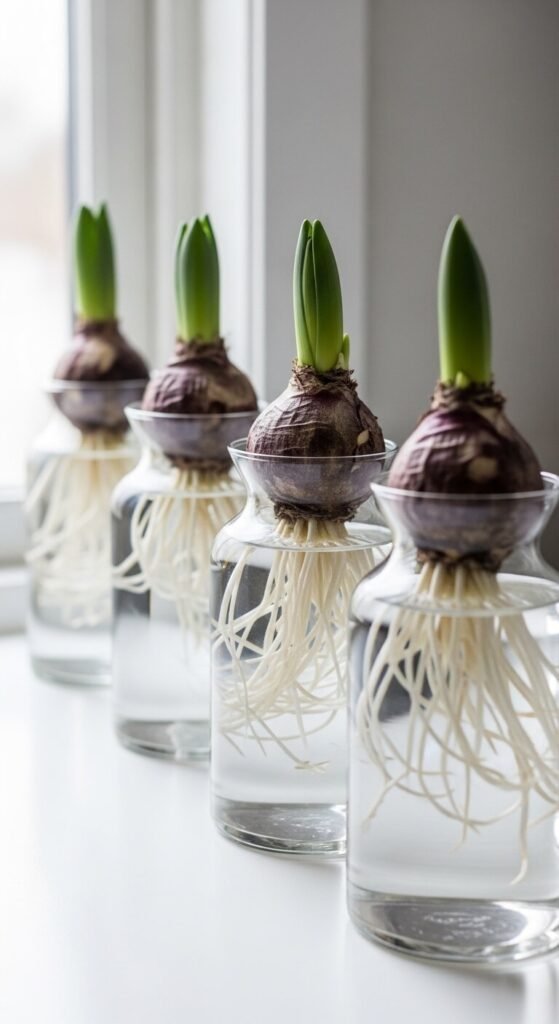
Forcing bulbs in glass vases is one of the most dramatic and affordable plant displays available — and it changes weekly as the plants grow.
Place hyacinth, paperwhite, or amaryllis bulbs in forcing vases or shallow dishes of water and set them in a cool, bright spot. Within two to four weeks, roots develop below and flowers emerge above — and the whole process is visible through the glass.
Forcing vases cost $5–$15 each at garden stores or online. Bulbs run $2–$6 per bulb. The display is temporary but extraordinary, and entirely repeatable season after season with fresh bulbs.
29. Outdoor Planter Box Window Frame
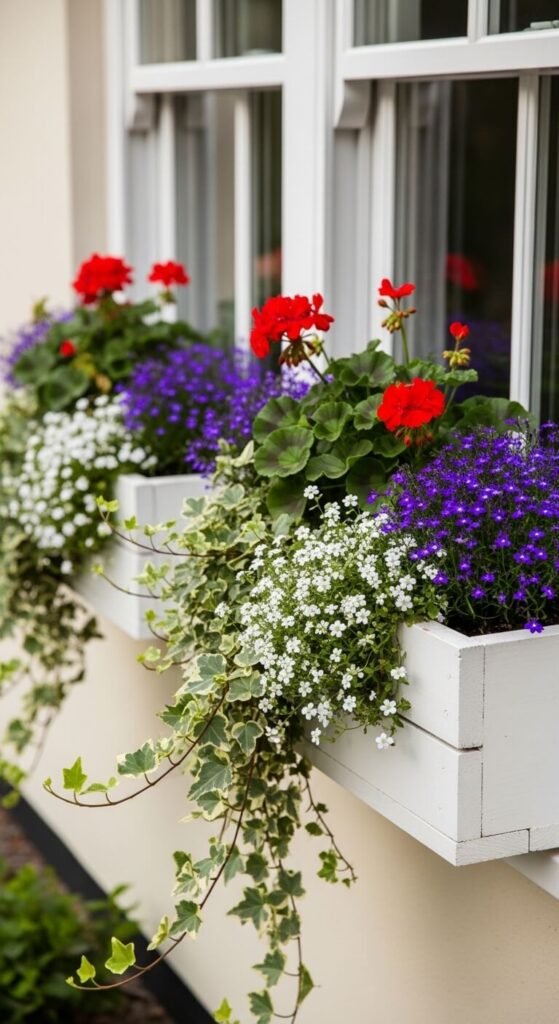
Window boxes filled with trailing and upright plants frame a home’s exterior the way curtains frame a window inside.
Plant in the “thriller, filler, spiller” formula: one tall upright plant in the center, full mounding plants around it, and trailing plants at the edges that spill over the sides. The result looks abundant and intentional with almost no design experience required.
Wooden window boxes cost $20–$50 depending on size. Fill with a mix of annuals and trailing ivy for season-long color. Geraniums, petunias, and bacopa are reliable, affordable performers that fill out quickly and bloom all season.
30. Full Shelfie — The Maximalist Plant Wall
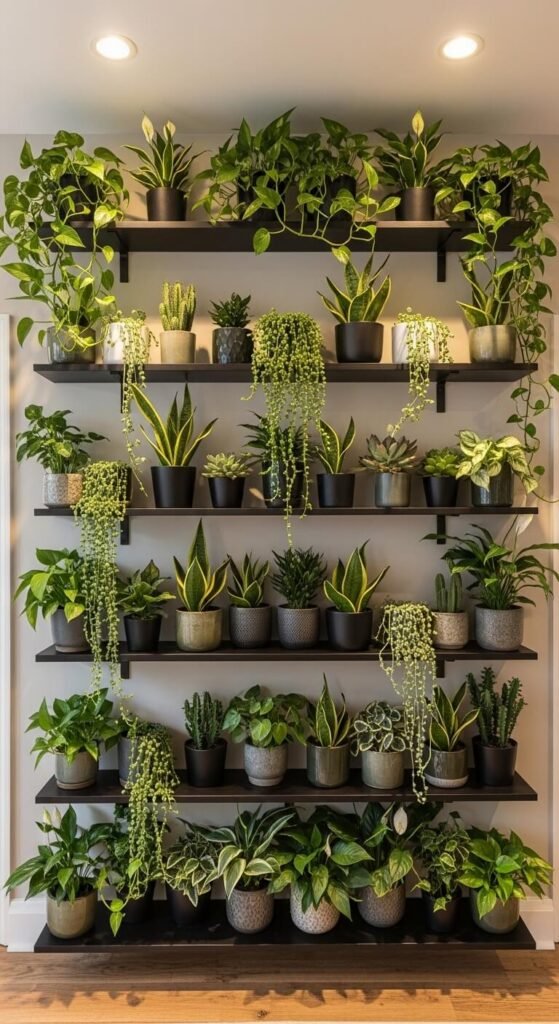
The maximalist plant wall — every shelf, every surface, every ledge covered in living green — is a commitment and a statement.
This is the arrangement for people who genuinely love plants and want their home to reflect that completely. Install floating shelves at multiple heights across one full wall. Fill every shelf with plants at different scales — tall, trailing, small, sculptural.
Group by light requirements rather than aesthetics — place light-hungry plants nearest the window end, and tolerant low-light species on the shadier shelves. Start with twelve to fifteen plants and add as budget allows. The wall grows and evolves over time, and no two versions look the same.
Conclusion
Plants are one of the most accessible, most rewarding, and most genuinely useful tools in home decorating. They clean the air while they sit there looking beautiful. They change a room’s atmosphere in a way that furniture and paint simply cannot. And almost every arrangement on this list can be started this weekend for less than $50. The key is choosing plants that suit your actual light conditions, your lifestyle, and the specific room you’re decorating — and then giving them a placement that lets them do visual work. Start with one arrangement that resonates with you. Get comfortable with that plant, learn what it likes, and then build from there. The most beautiful plant-filled homes didn’t arrive that way overnight. They grew — one pot, one shelf, one trailing vine at a time.