
A well-decorated garden does more than look beautiful — it creates a space where you actually want to spend time. The right decor works with your plants, not against them. It adds texture, draws the eye, and gives your outdoor space a personality that feels intentional rather than accidental. Whether you have a sprawling backyard or a small urban courtyard, there are smart, affordable ways to add character to every corner. These 29 garden decor ideas cover everything from lighting and water features to sculptures, pathways, and container arrangements — all designed to work with the natural beauty already growing around you.
1. Weathered Stone Birdbaths
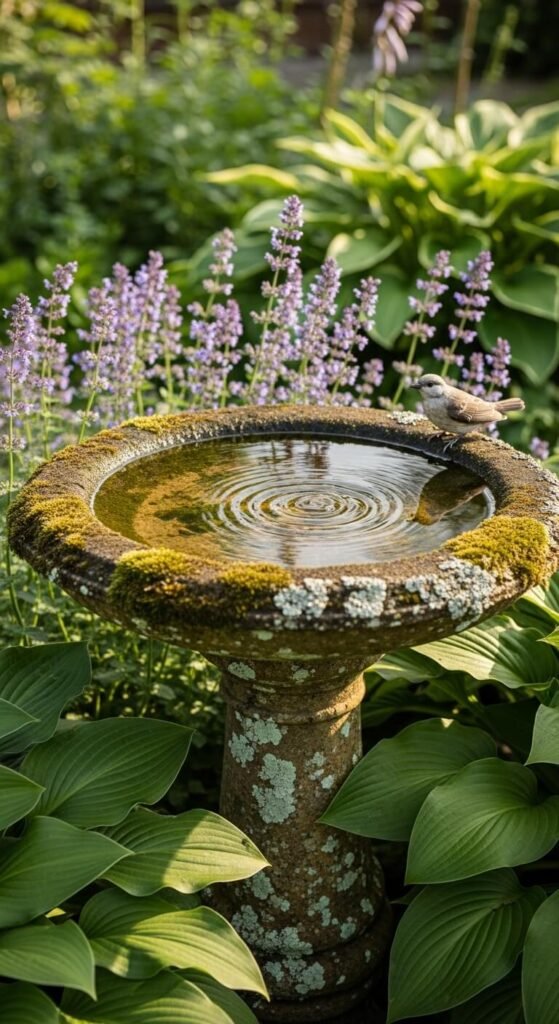
A stone birdbath does double duty — it attracts wildlife and anchors a garden bed visually. Place it at eye level from your most-used seating area so you can watch birds from a comfortable distance. Aged, mossy stone birdbaths look far more natural than new plastic ones. Check antique stores, estate sales, or Facebook Marketplace for old birdbaths at a fraction of retail price. Clean the basin weekly with a stiff brush and refill with fresh water. Even a basic concrete version aged with a yogurt-and-water brushing develops a natural moss patina within a few months.
2. Climbing Roses on Wooden Arches
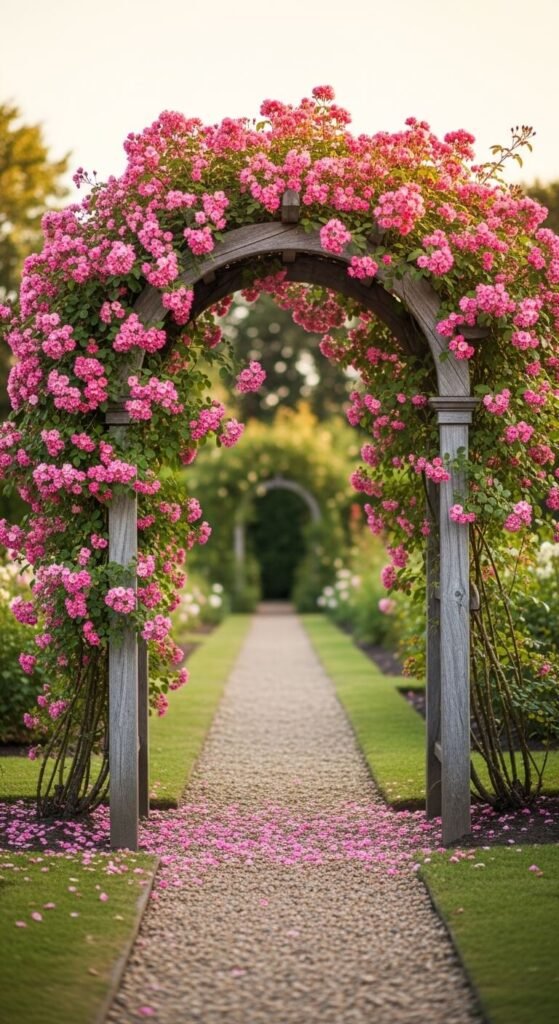
A rose-covered arch is one of the most dramatic garden statements you can make. Position it at a garden entrance or between two garden rooms to create a natural transition point. Cedar or pressure-treated timber arches last for decades and can be built from basic lumber for around $50 in materials. Choose repeat-flowering climbers like ‘New Dawn’ or ‘Zéphirine Drouhin’ for blooms from spring through autumn. Train new canes horizontally along the arch sides — this produces far more flowers than letting canes grow straight up. Tie canes loosely with soft garden twine to avoid damage.
3. Terracotta Pot Clusters
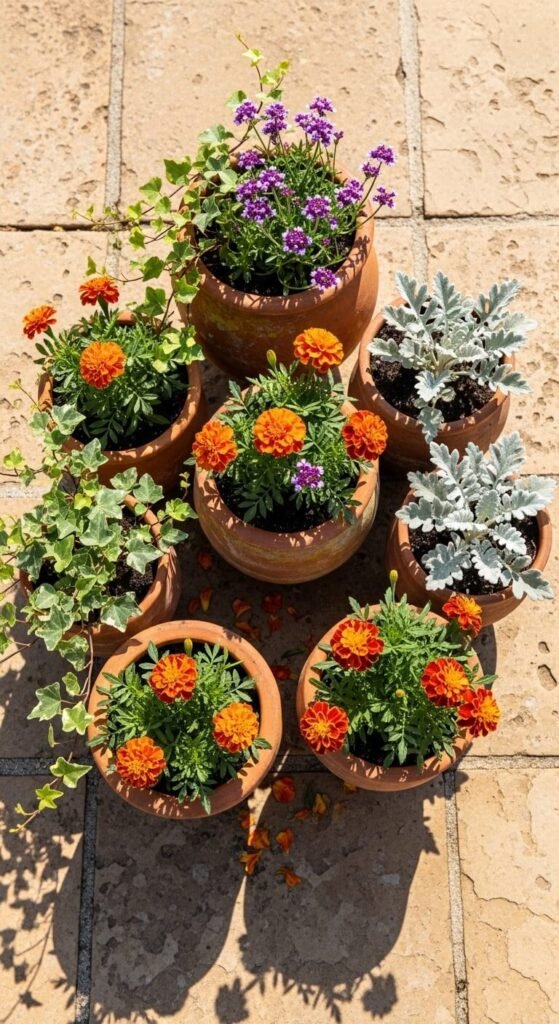
Grouping terracotta pots creates impact that a single pot simply cannot match. Cluster odd numbers — three, five, or seven pots — in varying heights for the most natural arrangement. Use the tallest pot as the back anchor and let trailing plants cascade over the front smaller pots. Terracotta is inexpensive, breathes well for roots, and weathers beautifully over time. Buy plain terracotta pots at garden centers or discount stores and age them yourself by rubbing the outside with live yogurt — moss appears within a few weeks in a shaded, damp spot. Rearrange seasonally for a new look.
4. Solar-Powered Fairy Lights in Trees
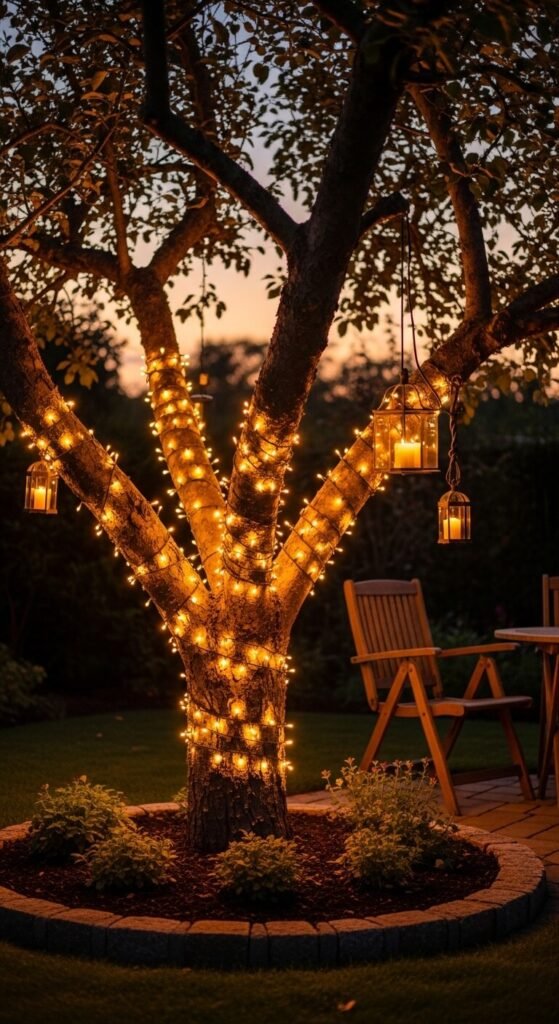
Solar fairy lights transform a garden after dark with almost zero running cost. Wrap them loosely around tree trunks and lower branches for a soft, natural glow rather than draping them in straight lines. Modern solar fairy lights charge fully in six hours of sunlight and run for eight hours overnight. A 100-bulb string costs around $8 online. For best results, place the solar panel where it gets direct afternoon sun. Use warm white rather than cool white bulbs — warm tones look far more natural in a garden setting and blend with the outdoor environment at night.
5. Mossy Stone Stepping Stones
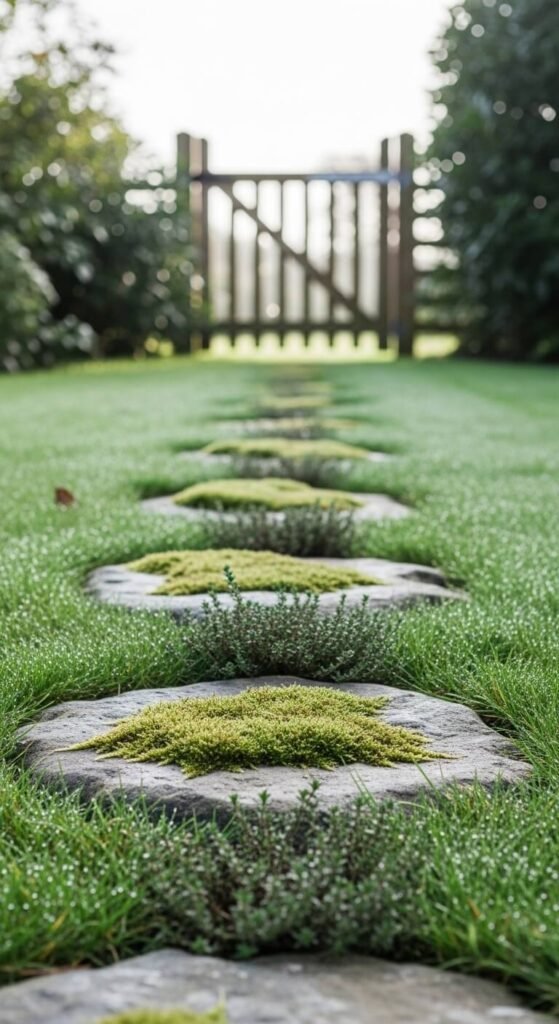
Stepping stones do more than protect your lawn — they create a visual path that draws the eye through the garden. Set them slightly below lawn level so a mower can pass over without catching the edges. Irregular natural flagstone looks far more organic than perfectly round concrete pavers. Plant creeping thyme or mind-your-own-business between the stones for a soft, naturalistic effect. Salvage yards and stone merchants often sell irregular offcuts cheaply. Age new concrete stepping stones quickly by painting on a thick yogurt-and-compost mixture and leaving them in a shaded area for six to eight weeks.
6. Reclaimed Wood Raised Garden Beds
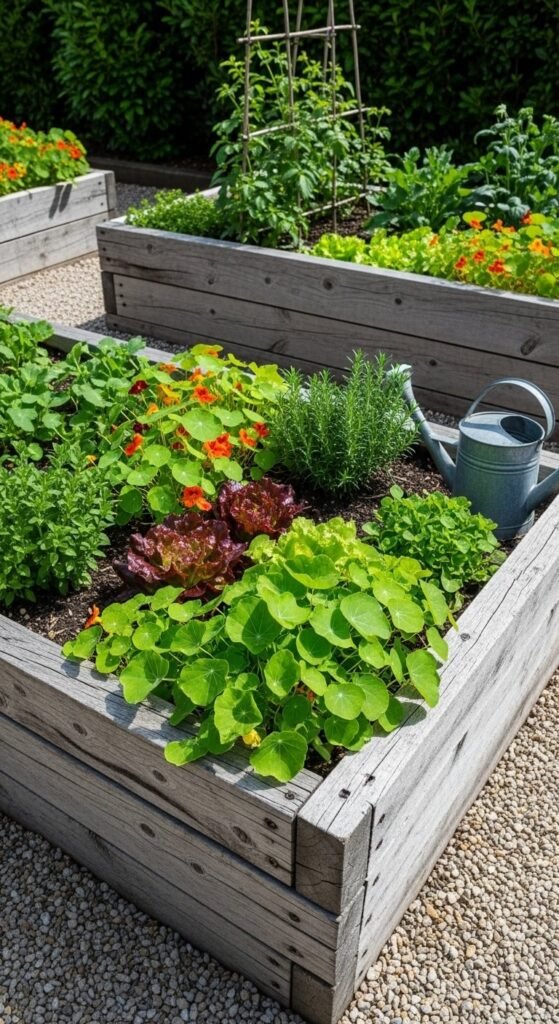
Raised beds built from reclaimed wood add texture and warmth to any garden. Use scaffold boards or old railway sleepers — both are easy to find secondhand and are already the right size for raised bed construction. A simple four-board box with corner posts takes about an hour to build with no special tools. Line the base with cardboard to suppress weeds before filling with a mix of topsoil and compost. The weathered grey of old timber blends naturally into most garden styles. Source reclaimed wood through building salvage companies, online marketplaces, or local demolition sites for very low cost.
7. Cast Iron Garden Sculptures
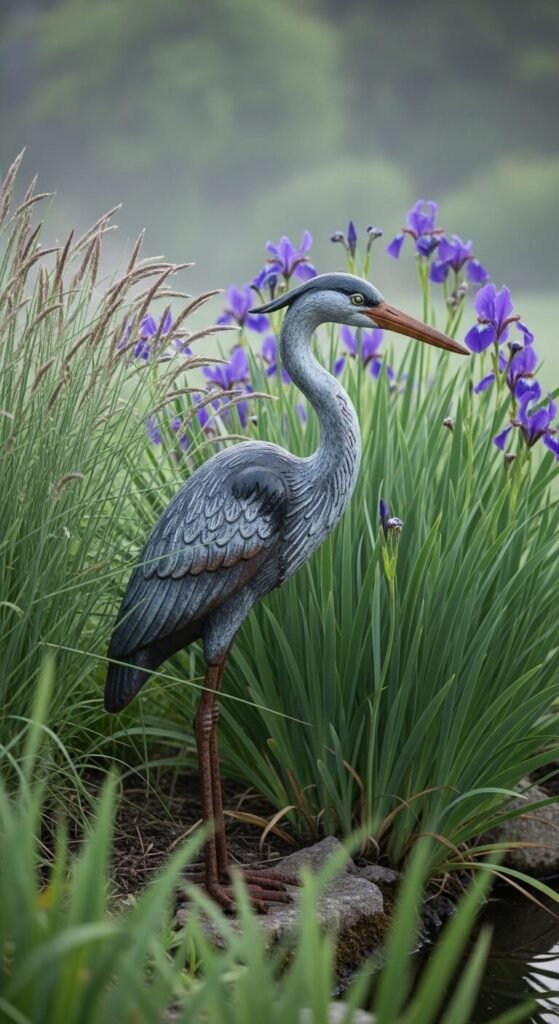
A well-placed cast iron sculpture gives a garden a sense of permanence and character. Choose wildlife subjects — herons, foxes, rabbits, or frogs — that feel like they belong in an outdoor setting rather than looking decorative for its own sake. Position sculptures at the end of a sightline or partially tucked into a border so they feel discovered rather than displayed. Cast iron develops a natural rust patina over time that looks beautiful in a garden. Buy secondhand cast iron pieces from antique fairs or salvage shops — they cost a fraction of new ones and often have better character.
8. Vintage Watering Cans as Planters
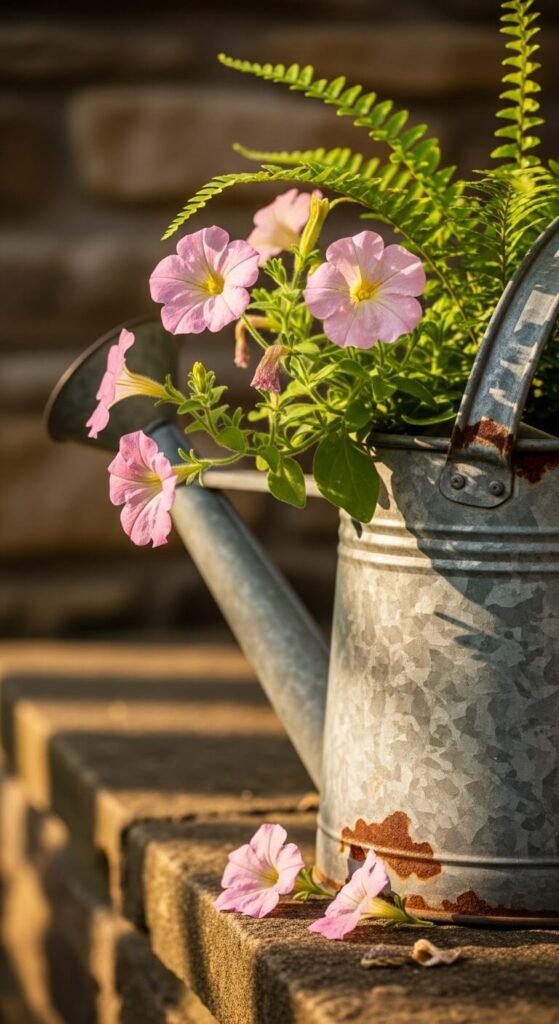
Old watering cans planted with cascading flowers are one of the most charming small-space garden decor ideas. Drill drainage holes in the base before filling with compost and planting. Trailing petunias, ivy-leaved pelargoniums, or lobelia work especially well spilling over the sides. Vintage galvanized cans are widely available at car boot sales, junk shops, and charity stores for around $3 to $8. Even a rusty, dented one with character looks intentional when planted up. Group two or three different sizes together on a wall or step for maximum impact without spending more than $15 total.
9. Bamboo Garden Screens
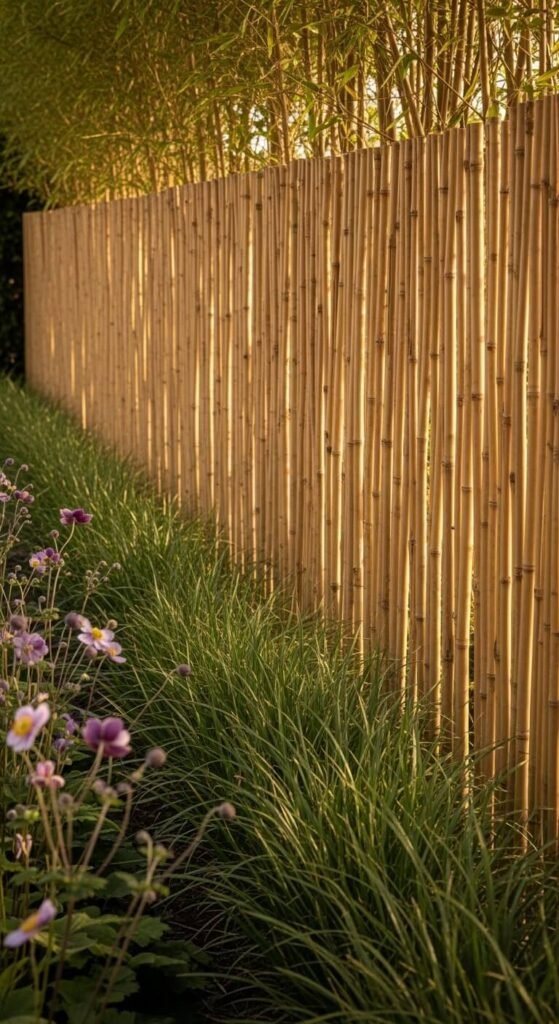
Bamboo screens add instant warmth and a natural backdrop to a garden border. Fix bamboo roll fencing to an existing fence or free-standing posts for a quick transformation. It softens hard brick or concrete boundaries and creates a neutral warm backdrop that makes plant colors pop. Bamboo roll fencing costs around $15 to $25 for a 13-foot roll and lasts four to six years outdoors. Treat it annually with an outdoor wood oil to extend its life. Use it behind a border of ornamental grasses or tall perennials to create layered depth and a sense of enclosure.
10. Copper Garden Edging
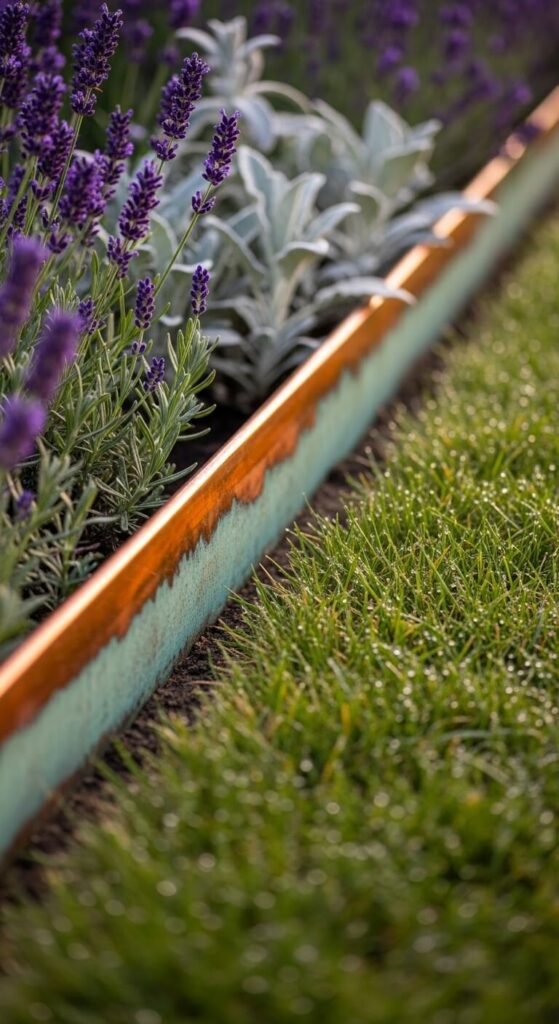
Copper edging gives garden borders a clean, defined edge with a material that improves with age. Press copper strip edging into the soil along bed borders using a rubber mallet — no specialist tools required. The soft orange tone of new copper deepens over time into a beautiful blue-green verdigris that looks genuinely high-end. A 16-foot roll costs around $20 to $30 and is completely reusable if you redesign your borders. Copper also deters slugs naturally — a bonus for anyone with a vegetable patch nearby. It works especially well alongside formal hedges, gravel paths, or a neat lawn edge.
11. Wind Chimes Among the Trees
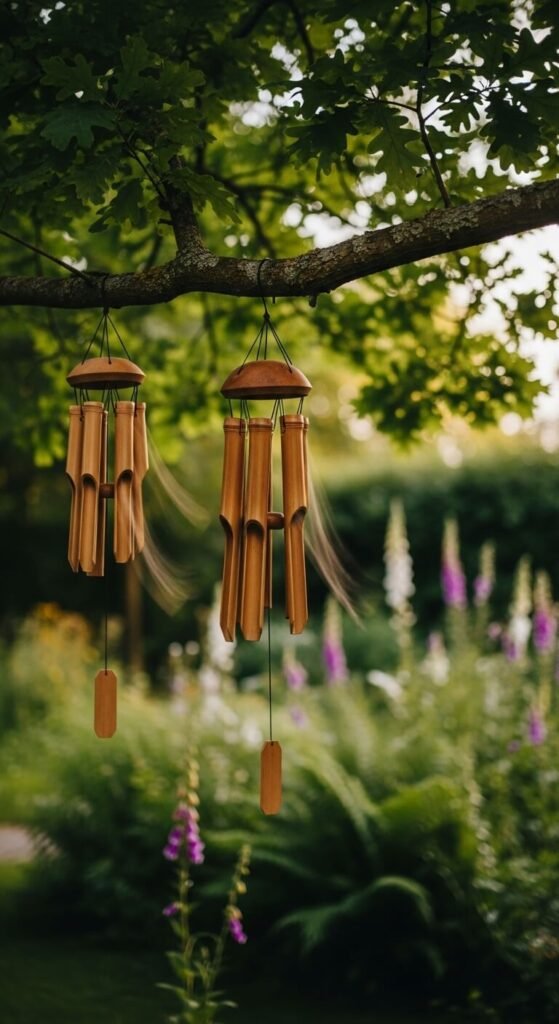
Wind chimes add sound to a garden — and sound is one of the most underused sensory elements in outdoor design. Hang them where they will catch a gentle breeze, ideally near a seating area so you can hear them clearly. Bamboo chimes have a soft, mellow tone that suits naturalistic gardens. Metal chimes carry further and suit more open spaces. Avoid anything too loud or high-pitched near a seating area — the sound should feel calming, not intrusive. Basic bamboo chimes cost around $8 to $15 and last two to three years outdoors before the cord needs replacing.
12. Gravel Zen Garden Corners
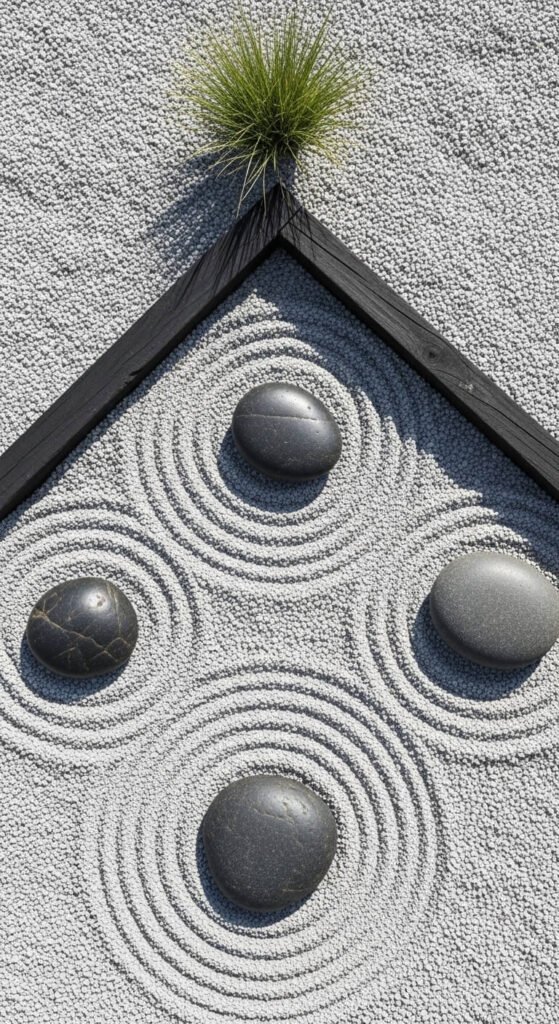
A small zen gravel corner brings calm and structure to even the most informal garden. Use fine decorative gravel raked around a few carefully chosen stones to create a meditative focal point. Confine it with low timber or metal edging to keep the gravel contained. Three smooth river stones in varying sizes look far more deliberate than a scatter of many small pebbles. A 25kg bag of fine gravel costs around $8 and covers a small corner adequately. Rake new patterns whenever you want — it is one of the most adaptable and low-maintenance garden decor features available.
13. Upcycled Ladder Plant Stands
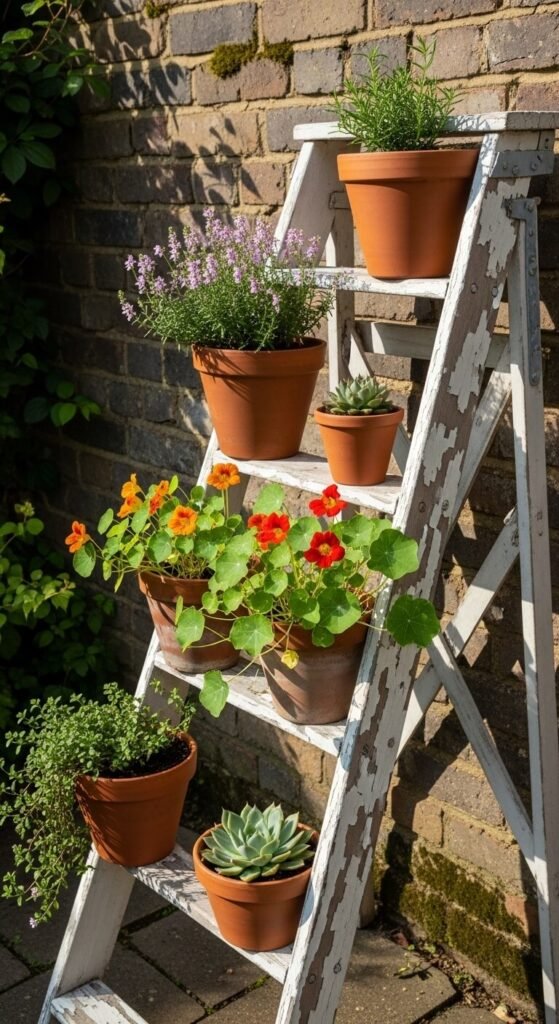
An old wooden ladder propped against a wall makes a charming vertical plant display. Sand it down and apply a coat of exterior paint in a muted tone — chalky white, sage green, or faded blue all work beautifully. Sit terracotta pots on each rung, varying the plants for color and texture. Trailing nasturtiums, herbs, and small succulents all look great at different heights. Old ladders turn up frequently at salvage yards, boot sales, and charity shops for $5 to $15. The height variation draws the eye upward and makes good use of vertical wall space in smaller gardens.
14. Naturalistic Log Piles
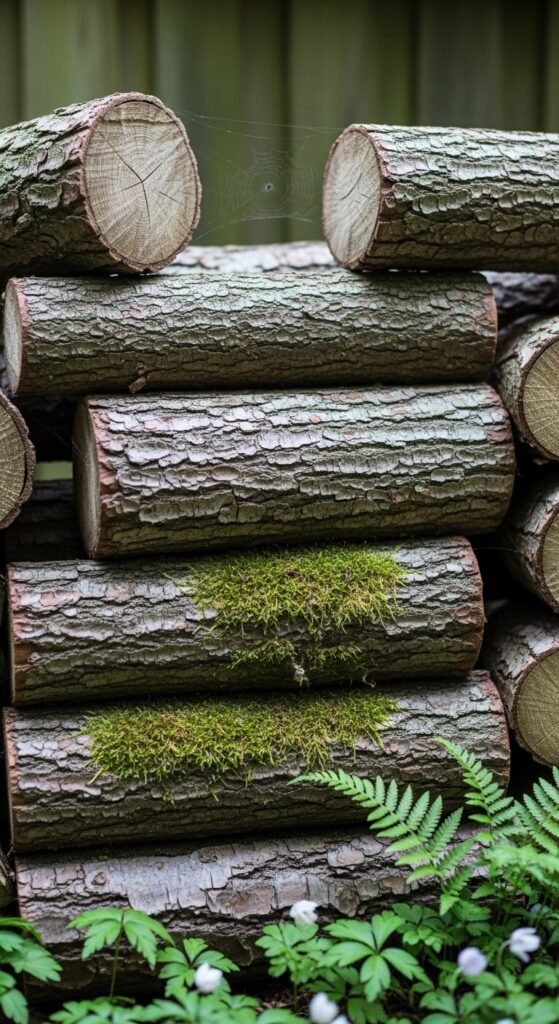
A carefully placed log pile is both a garden decor feature and a wildlife habitat. Stack logs of varying sizes against a shaded fence or wall, leaving gaps between them for insects, beetles, and hedgehogs to shelter in. After a season, moss and ferns will naturally colonize the pile, making it look like it has always been there. Source logs from a tree surgeon — many offer free wood to avoid disposal costs. Plant ferns and wood anemones at the base to complete the woodland aesthetic. This is one of the most ecologically valuable garden additions you can make at zero cost.
15. Galvanized Metal Water Troughs as Planters
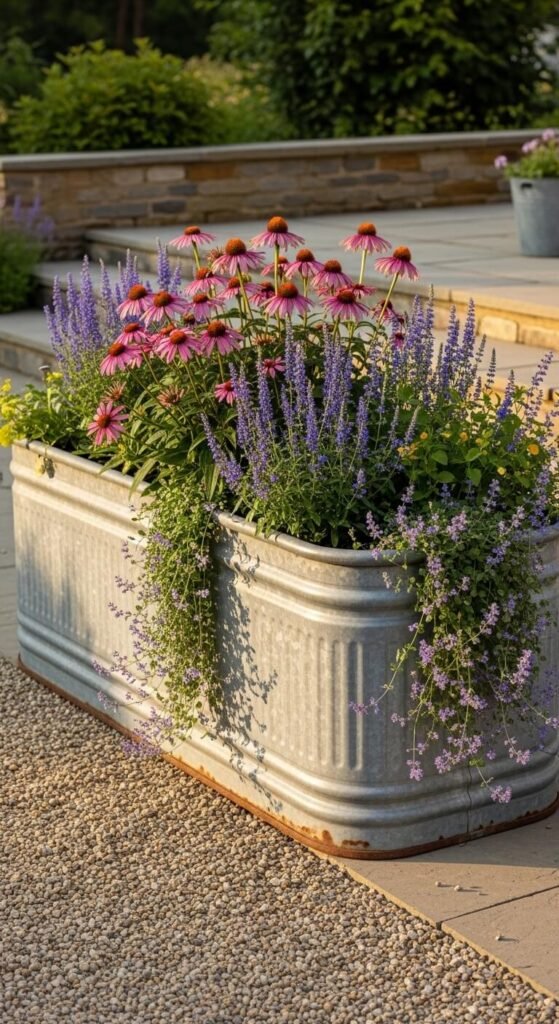
Galvanized metal troughs are one of the most practical and attractive large container choices for a garden. Drill drainage holes in the base before planting — this is the only preparation needed. Fill with a mix of topsoil, compost, and grit for best drainage. Plant densely with perennials for a naturalistic look that improves every year. New galvanized troughs from farm supply stores cost $40 to $80 depending on size. Secondhand ones from farm sales cost much less and already have the aged patina that makes them look beautiful. One large trough planted well becomes a complete garden feature on its own.
16. Rustic Wooden Garden Benches
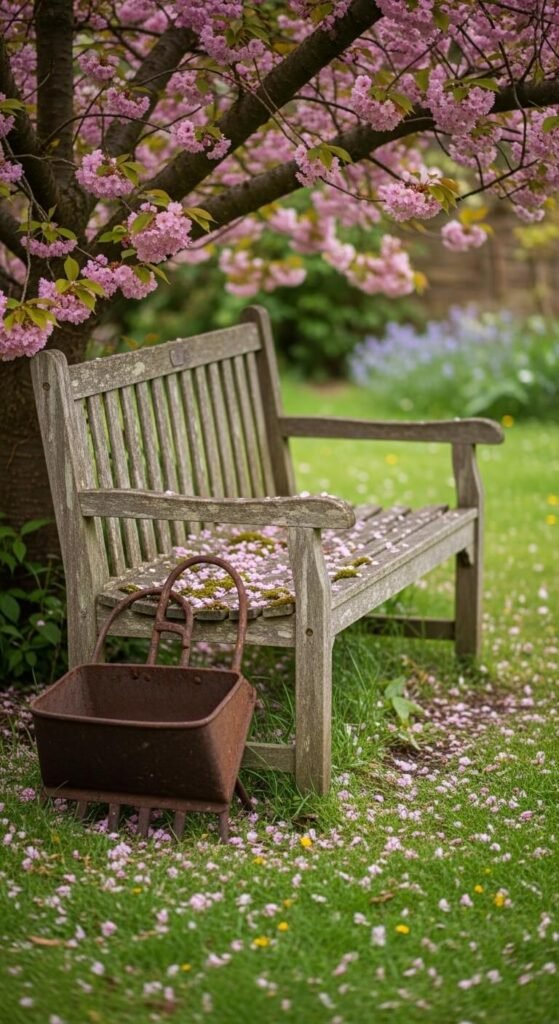
A bench placed thoughtfully in a garden creates a destination — somewhere to walk toward and sit within. Position it facing your best garden view, whether that is a border in full bloom, a water feature, or a mature tree. Hardwood benches last for decades with an annual coat of teak oil. Softwood benches are cheaper but need annual treatment to prevent rot. Reclaimed timber benches from salvage yards or secondhand from local listings cost a fraction of retail prices. Even a simple slab of wood on two log stumps serves the same purpose and looks entirely at home in a naturalistic garden.
17. Bird Feeders and Nesting Boxes
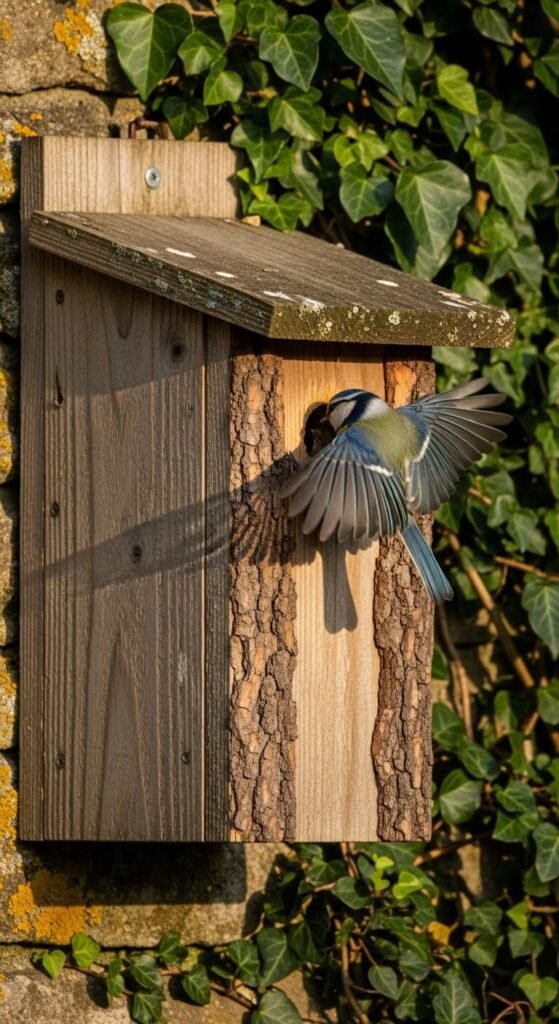
Bird feeders and nesting boxes turn your garden into a living, moving ecosystem. Mount nesting boxes on north or east-facing walls to avoid overheating in summer sun. Position feeders away from fences and walls to reduce cat access. A basic wooden nesting box costs around $10 to $15 and attracts blue tits, great tits, and robins depending on the entrance hole size. Fill feeders with sunflower hearts rather than mixed seed — birds prefer them and there is less mess below the feeder. Watching birds use a space you have created adds a layer of enjoyment that no ornament can replicate.
18. Pebble Mosaic Stepping Pads
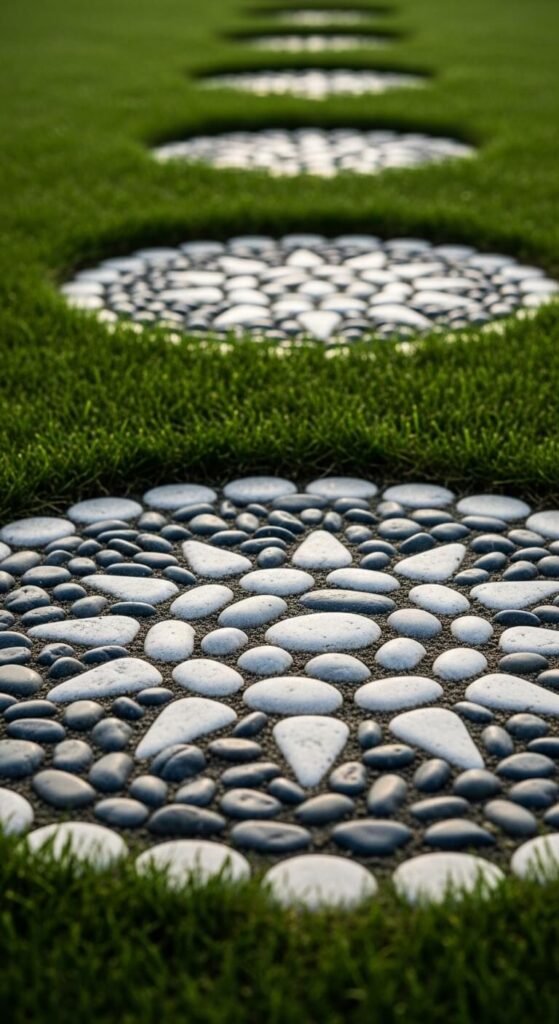
Handmade pebble mosaics are a slow but deeply rewarding garden project. Set smooth river pebbles into mortar within a simple circular or square wooden frame, then set the whole piece into the ground. A simple geometric pattern — a spiral, sunburst, or leaf shape — looks impressive without requiring artistic skill. River pebbles in mixed sizes cost around $5 to $10 for a bag. Mortar mix costs around $5. One mosaic pad takes an afternoon to make and lasts for decades outdoors. Place them at garden junctions or at the edge of a patio to mark the start of a path.
19. Topiary in Weathered Urns
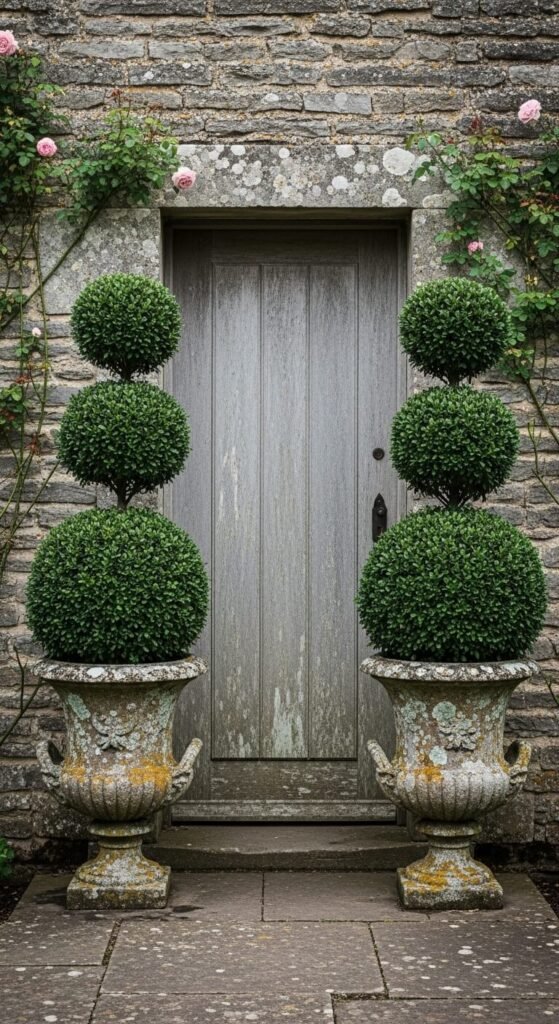
A pair of clipped topiary shapes in matching urns adds instant formal structure to any garden entrance. Box, yew, or privet all respond well to clipping and are readily available as young plants. Start with a young bushy plant, clip it into a rough ball, and refine it each season — a proper sphere takes two to three years to develop. Aged stone or terracotta urns look far more convincing than plastic ones. Secondhand stone urns from garden auctions or salvage yards are available from around $20 each. Clip twice a year — once in late spring and once in late summer — for a tidy form year-round.
20. Dragonfly Metal Wall Art
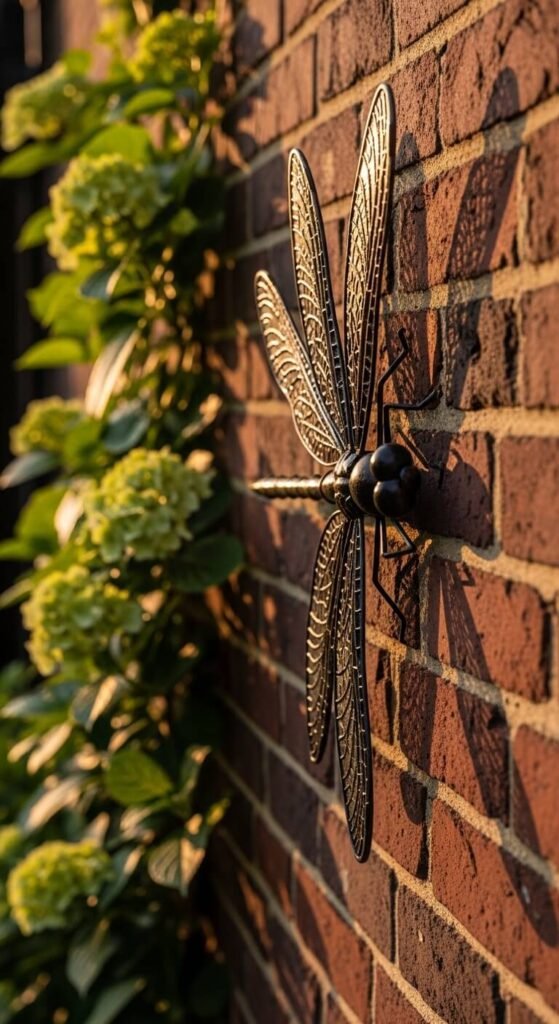
Metal wall art adds dimension to a flat fence or wall without taking up any ground space. Choose a large, simple silhouette — dragonflies, butterflies, herons, and branches all work well at scale. A piece that is too small gets lost on a wide wall. A single bold piece around 24 to 36 inches works far better than several small ones scattered randomly. Powder-coated steel or laser-cut corten steel both weather beautifully outdoors. Prices range from $20 to $60 for online pieces in these sizes. Fix securely with stainless steel screws — rust from regular screws will stain the wall over time.
21. Wildflower Meadow Patches
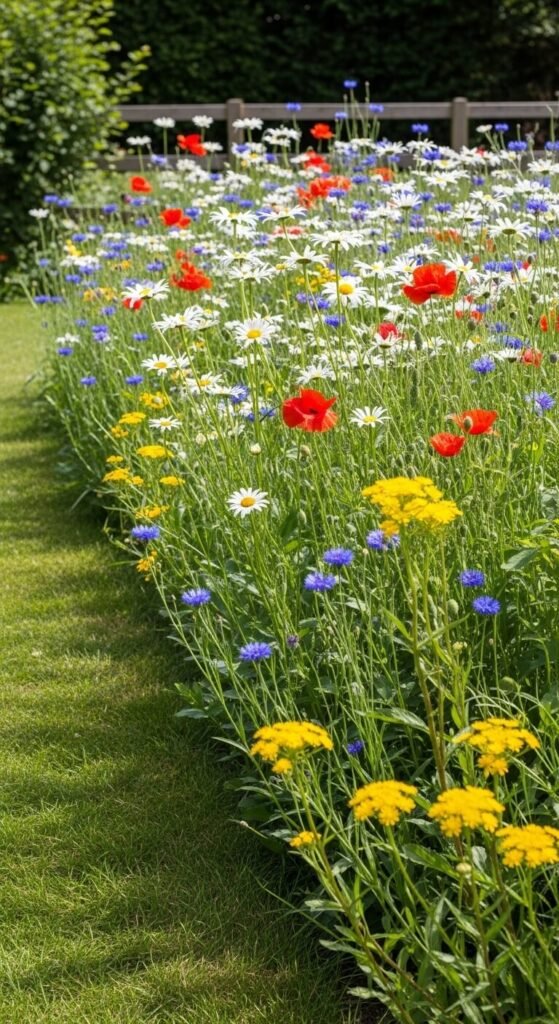
A wildflower patch is the most affordable and ecologically rich garden decor idea on this list. Stop mowing a section of lawn and scatter a wildflower seed mix in early autumn or spring. Annual mixes dominated by poppies, cornflowers, and phacelia bloom in the first year. Perennial mixes take two years but return reliably each season. A 50g pack of wildflower seed costs around $4 and covers a surprisingly large area. Mow a clean edge along one side — this signals that the meadow is intentional rather than neglected. The contrast between tidy lawn and wild blooms looks beautiful from any angle.
22. Hanging Lanterns in Garden Trees
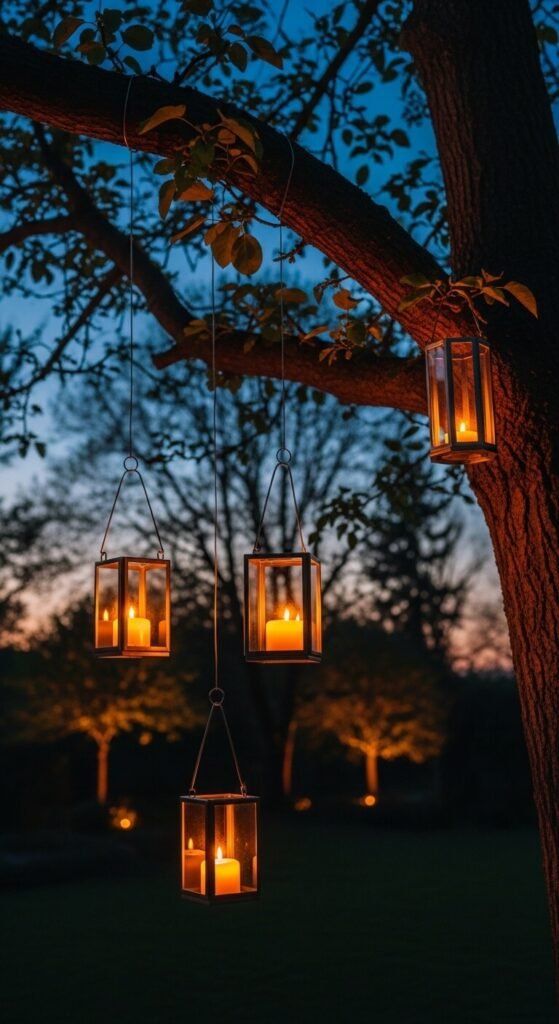
Hanging lanterns in trees create a magical evening atmosphere that no other garden decor can match. Use battery-operated LED candles inside for safety — they flicker convincingly and last for months. Hang them at different heights from the same branch for a collected, organic look rather than placing them evenly spaced. Ornate iron lanterns, plain glass terrariums, and even mason jars with wire handles all work well. Check thrift stores and charity shops for old lanterns at very low prices. A set of three hanging lanterns from the same tree costs around $15 to $30 and transforms a garden evening completely.
23. Herb Spiral Garden Feature
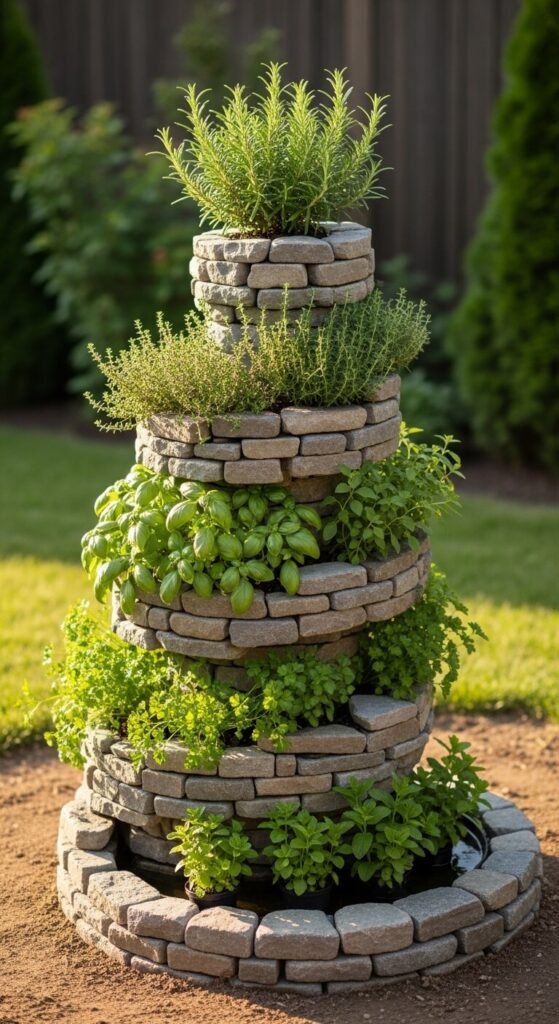
A herb spiral is a practical garden structure that is also genuinely beautiful as a garden feature. Stack natural stone, brick, or timber in a rising spiral pattern about three feet high. The different micro-climates created at each level suit different herbs — drought-tolerant rosemary and thyme at the top, moisture-loving mint at the base. The spiral shape looks sculptural from any angle. Materials can be entirely salvaged: old bricks, broken slate, or rough-cut stone all work. Herbs themselves are inexpensive as small plants or easy to grow from seed. The whole structure costs as little as $20 in materials if you source stone locally.
24. Stone Garden Walls with Planting Pockets
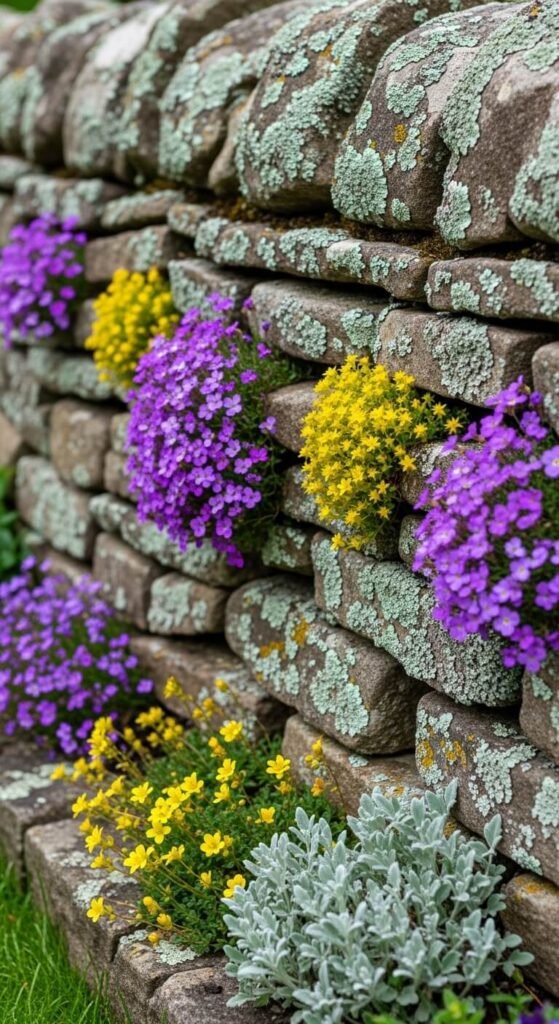
Dry stone walls with plants growing from the cracks are one of the most characterful features a garden can have. Tuck small alpine and rockery plants into gaps when building or repointing a wall — aubrieta, stonecrop, and thyme all thrive in these conditions. Plants soften hard stone edges and make a wall feel like it has been there for generations. If you are building a new wall, use rough irregular stone rather than smooth dressed blocks — it looks far more natural. Even an existing rendered wall can have small pockets carved out for planting at minimal cost.
25. Repurposed Vintage Wheelbarrows
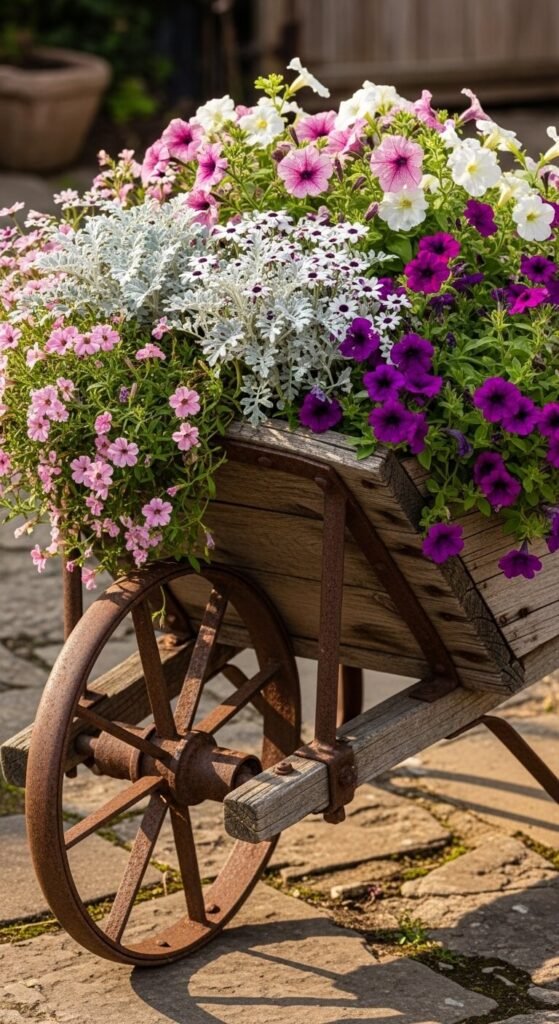
An old wheelbarrow overflowing with cottage garden plants is the kind of thing that makes visitors stop and smile. Drill drainage holes in the base and line with landscape fabric before filling with compost. Plant densely with trailing and mounding flowers for maximum impact. Position it as a focal point at a path junction or beside a gate. Old wooden wheelbarrows with iron wheels turn up at farm auctions and salvage yards for very little money. Even a rusty, broken-wheeled one works perfectly as a static planter — the imperfections add to the character rather than detracting from it.
26. Espalier Fruit Trees on Walls
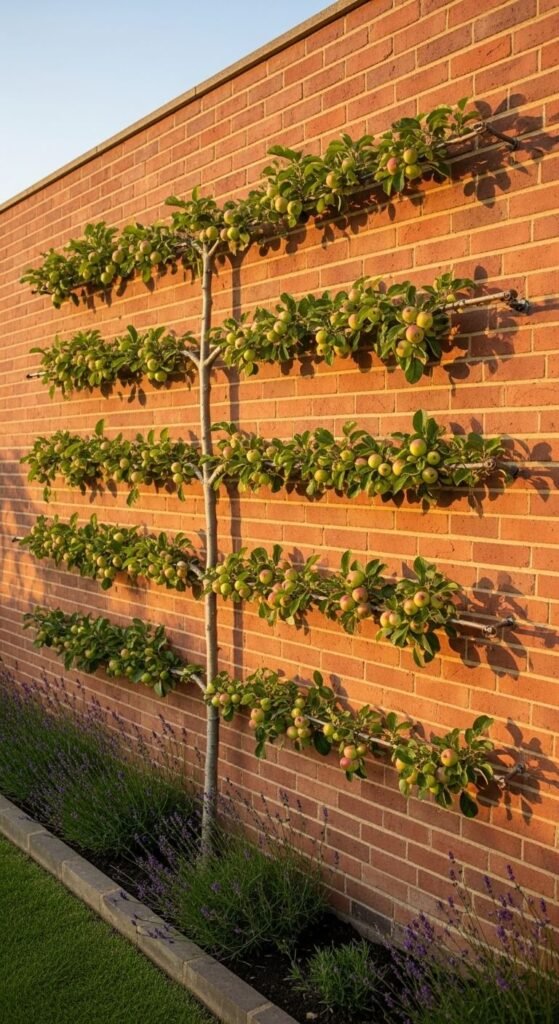
Espalier fruit trees are one of the most practical and striking forms of wall decoration a garden can have. Train young apple, pear, or quince trees flat against a south or west-facing wall, using horizontal wires fixed at 18-inch intervals. The wall reflects heat, ripening fruit earlier than freestanding trees. A young trained espalier costs around $30 to $50 from a nursery. With patience and annual pruning, a mature espalier covers a large wall beautifully within five years. It produces fruit, provides structure in winter when bare, and looks extraordinary in blossom in spring — three seasonal displays from one plant.
27. Garden Mirrors on Boundary Walls
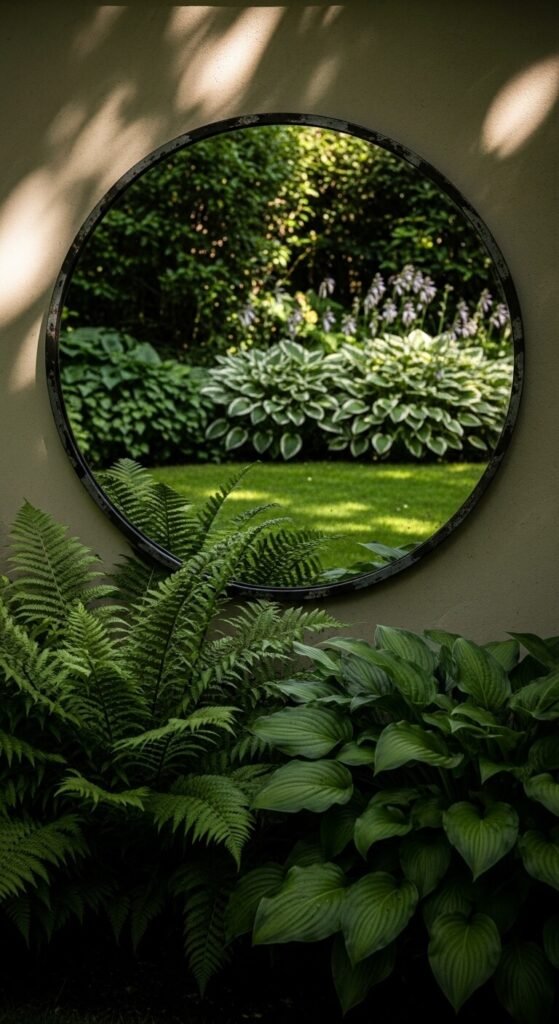
Outdoor mirrors are one of the most effective tricks for making a small garden feel larger. Mount a large round or rectangular mirror on a shaded wall — shade prevents glare and makes the reflection more convincing. The reflection doubles the visible planting in front of it, creating the illusion of a second garden beyond the wall. Use a mirror designed for outdoor use with a sealed frame — indoor mirrors delaminate in wet conditions. A large round outdoor mirror costs around $40 to $80. Position it so it reflects your best planting, not a fence panel or sky.
28. Painted Fence Panel Feature Walls
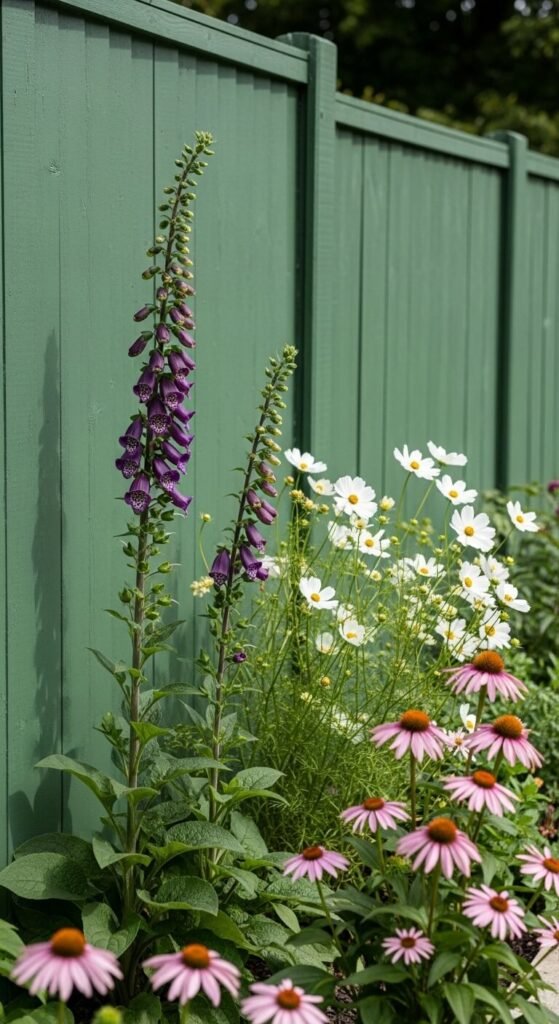
A single panel or run of fence painted in a deep, saturated color becomes a garden feature in its own right. Deep sage green, charcoal, slate blue, or black all work beautifully as backdrops for flowering plants. The contrast between a dark fence and pale flowers is particularly striking. Exterior fence paint costs around $15 to $25 for a tin that covers several panels. Paint just one or two panels behind a key border rather than the whole garden — restraint makes the color feel deliberate rather than overwhelming. The effect is instant and transformative, especially in a smaller garden.
29. Hand-Thrown Ceramic Garden Markers
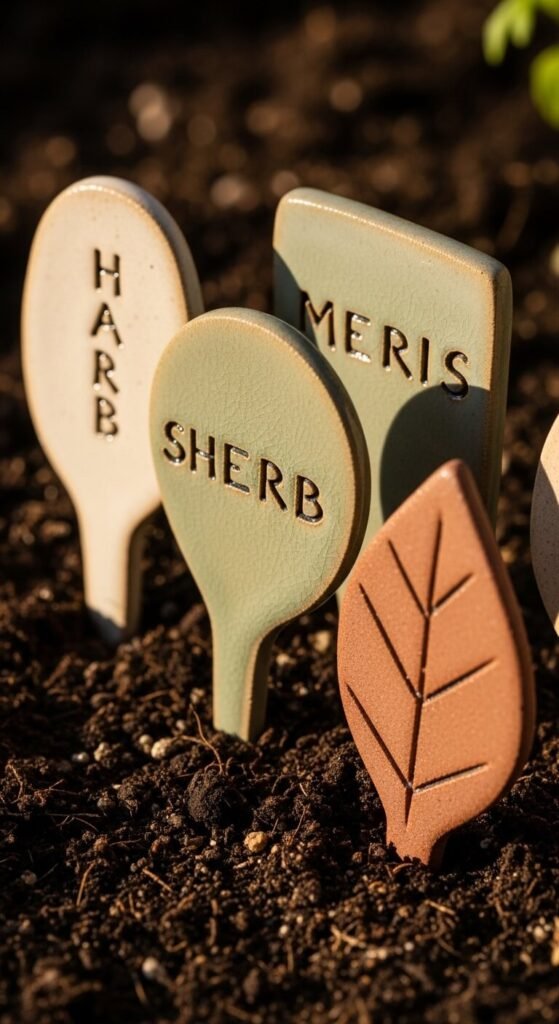
Handmade ceramic plant markers are a small detail that adds a considered, artisan quality to a kitchen garden or border. Make your own from air-dry clay — roll it out, cut into shapes, press in the plant name with a wooden skewer, and let it dry. Seal with a coat of outdoor varnish once dry. A block of air-dry clay costs around $5 and makes 20 to 30 markers. Alternatively, buy hand-thrown ceramic markers from local potters or craft markets for $2 to $5 each. They look a world away from plastic labels and hold up well outdoors through most weather conditions.
Conclusion
A garden that feels truly beautiful is rarely the result of spending a lot of money. It comes from making thoughtful choices — placing a bench where it faces the best view, letting a dry stone wall grow moss and aubrieta, hanging lanterns from a tree on a warm evening. These 29 ideas cover every budget and every garden size, from a tiny urban courtyard to a large country plot. Start with one or two that suit your space right now. Add another element each season. Over time, the layers of texture, light, sound, and planting work together in ways that no single purchase ever could. The best garden decor does not shout — it belongs.