
Coastal decor captures the peace of seaside living without requiring a beachfront address. The style brings salt air, soft breezes, and endless horizons into your everyday space. It’s relaxed, light-filled, and naturally calming. You don’t need expensive nautical antiques or designer furniture. Most coastal elements come from nature walks, thrift stores, and simple paint jobs. The colors—blues, whites, sandy neutrals—mirror the beach itself. Textures like weathered wood, natural rope, and woven fibers add authenticity. This style forgives imperfection. Worn finishes and casual fabrics fit perfectly. Coastal decor works in landlocked homes just as well as waterfront properties. It’s about creating a feeling, not replicating a specific location. These 28 ideas help you build that breezy, barefoot elegance room by room, using budget-friendly materials and easy techniques.
Navy and White Striped Textiles
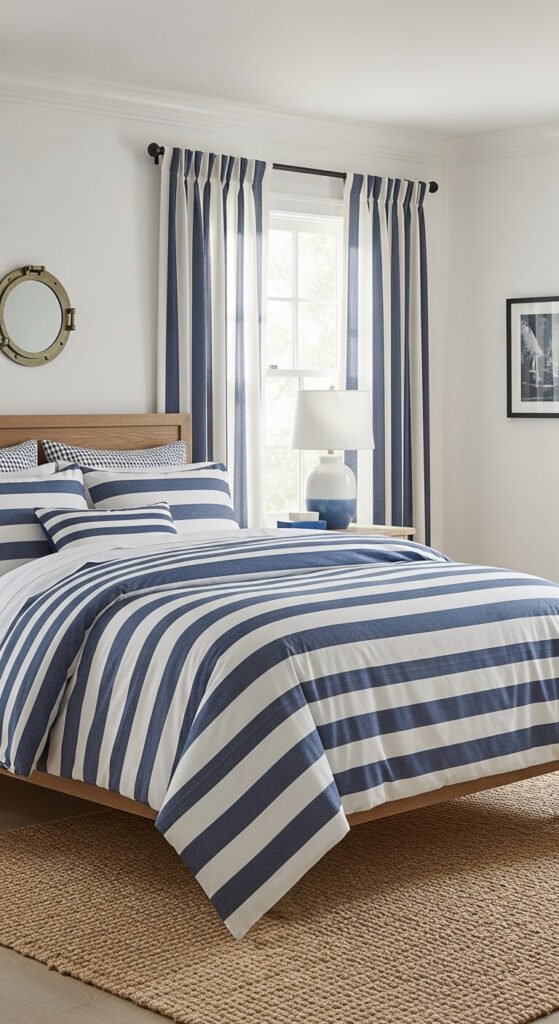
Stripes are coastal decor’s signature pattern. Navy and white combinations feel classic and nautical. Use them on pillows, throws, rugs, and bedding. The graphic lines add visual interest without overwhelming.
Mix stripe widths for dimension. Pair thick stripes on a sofa with thin stripes on pillows. The pattern works in any room. Buy striped fabric for $8-$15 per yard and sew simple pillow covers. No-sew versions use fabric glue. Target and IKEA carry affordable striped textiles. The contrast creates crisp coastal energy that feels both relaxed and polished. Stripes ground spaces while maintaining the airy quality coastal style demands.
Driftwood Accents and Sculptures
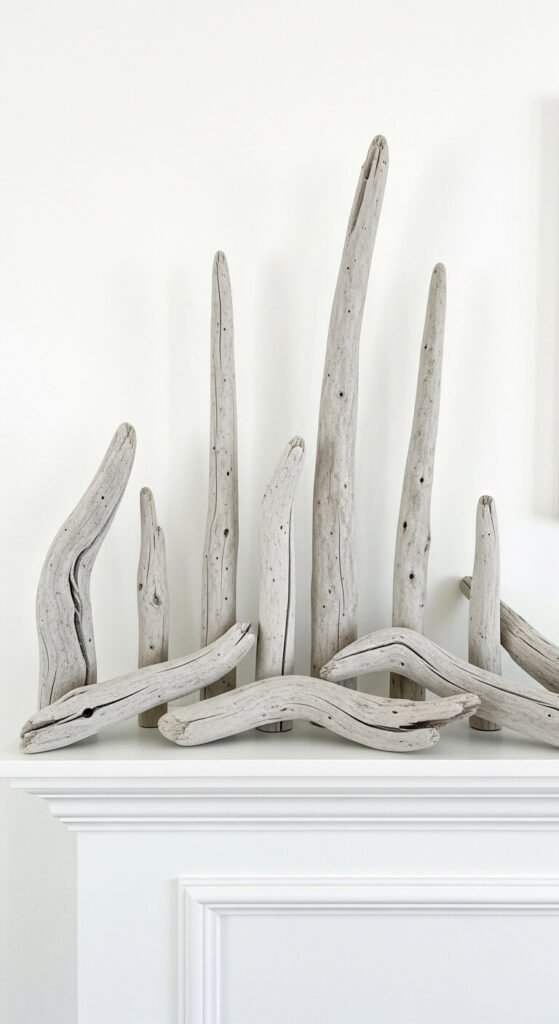
Collect driftwood during beach walks. The bleached, smoothed wood brings authentic coastal texture indoors. Display pieces as-is or build them into functional items.
Large driftwood works as sculpture on mantels or tables. Smaller pieces become drawer pulls, towel hooks, or curtain rod finials. Drill pilot holes and attach with screws. Create a driftwood mirror frame by hot-gluing pieces around a basic mirror. The irregular shapes and pale color add organic beachy texture for zero cost. Rinse collected driftwood and let it dry completely before bringing inside. The weathered finish needs no treatment. Stack pieces in bowls or vases. The natural forms tell stories of tides and time.
Sea Glass Collections in Clear Jars
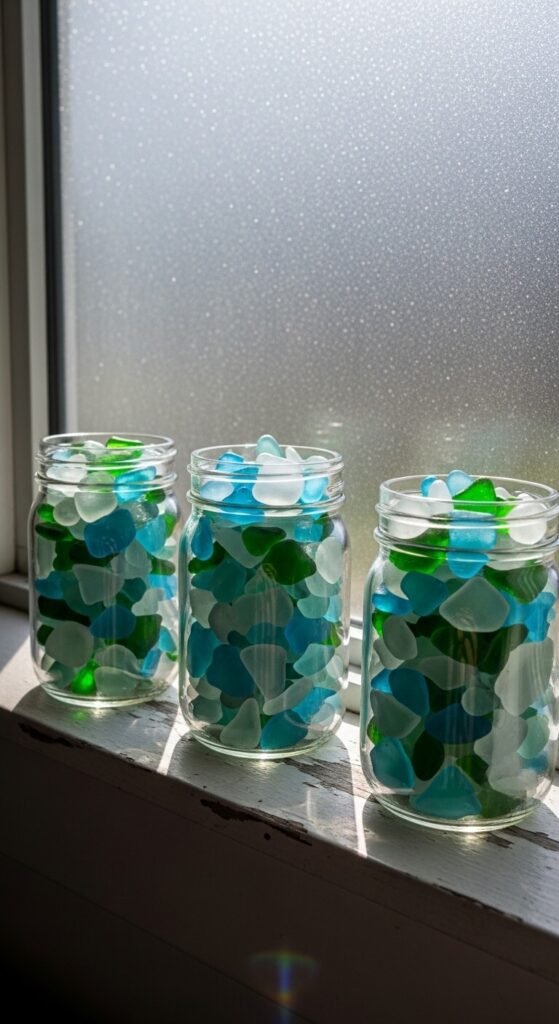
Sea glass—frosted by waves and sand—makes beautiful displays. Collect it on beaches or buy it online for $10-$20 per pound. The soft colors and smooth texture capture the ocean perfectly.
Fill clear glass jars or vases with sea glass. Place them on windowsills where light shines through. The frosted pieces glow beautifully. Sort by color or mix them together. Use sea glass to fill the bottom of candle holders or as decorative filler in apothecary jars. The aqua, green, and white tones bring subtle coastal color without paint or textiles. Kids love hunting for sea glass on beach trips. The collection grows over time, building vacation memories into your decor.
Natural Rope Details Throughout
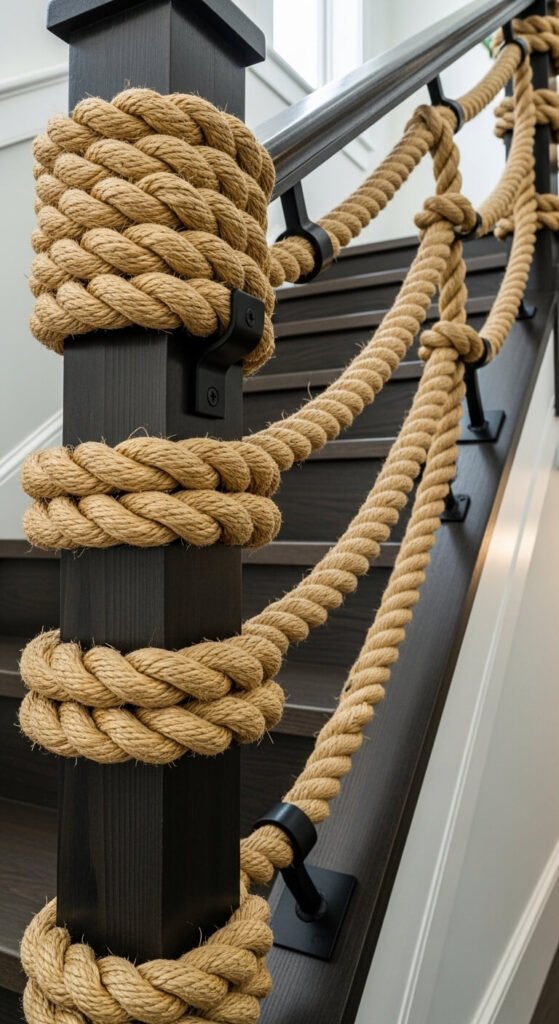
Marine-grade rope adds authentic nautical character. Manila and sisal rope cost $15-$40 for 50 feet. Use it for curtain tiebacks, shelf brackets, drawer pulls, and stair railings.
Wrap rope around vase necks and tie with simple knots. Create rope-framed mirrors by hot-gluing coiled rope around basic frames. The texture and neutral color work with any coastal palette. Thicker rope (1-inch diameter) makes dramatic statements. Thinner rope (1/4-inch) works for delicate details. Learn basic sailing knots online—square knots, bowlines, figure-eights—and incorporate them. The maritime authenticity shows through these functional details. Rope ages beautifully, getting softer and more golden over time.
Weathered Wood Furniture Pieces

Furniture with worn, sun-bleached finishes captures coastal living’s casual elegance. Create this look yourself on thrift store finds or unfinished pieces. The process costs under $30 in materials.
Sand existing furniture lightly. Apply white or pale blue paint. Let dry, then sand edges and high-traffic areas to reveal wood underneath. The technique mimics years of salt air and sunshine. Use different grits of sandpaper for varied effects. Seal with matte polyurethane to protect the finish. This distressed coastal look works on tables, chairs, dressers, and cabinets. The imperfection is the point. Each piece looks lived-in and loved, like furniture from a generations-old beach house.
Coral and Shell Arrangements
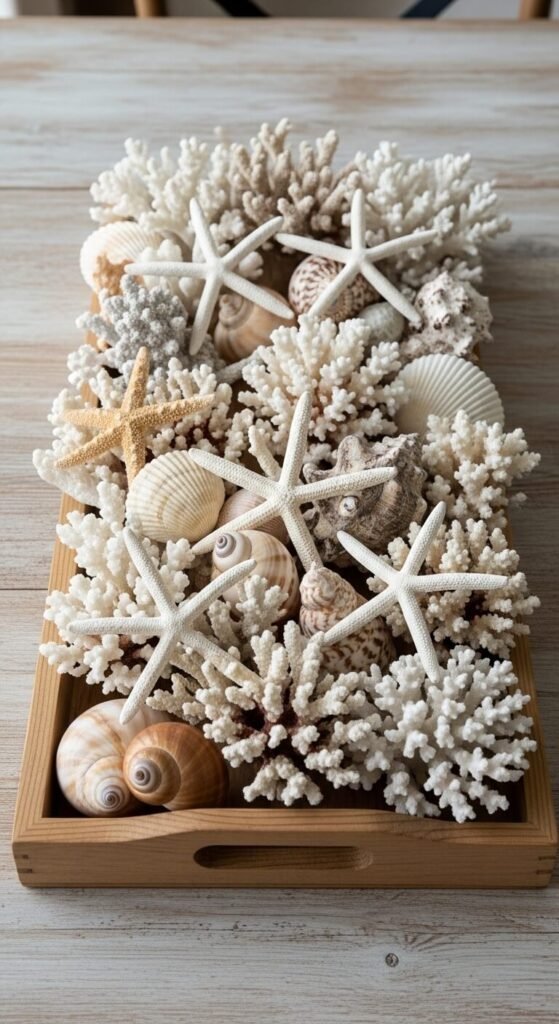
Real or faux coral adds sculptural interest. Pair it with collected shells in bowls, on trays, or atop stacks of books. The natural forms bring the beach indoors literally.
Buy coral pieces at craft stores for $8-$25 or collect shells yourself. Arrange them in groups of three or five. The odd numbers feel more organic. White coral against dark wood creates dramatic contrast. Mix textures—smooth shells with rough coral with spiky urchins. Clean collected shells by soaking in bleach water, rinsing thoroughly, and air-drying. Display on bathroom counters, coffee tables, or bookshelves. The natural beach specimens tell stories and add dimension. Rotate collections seasonally to keep displays feeling curated.
Blue and White Ceramic Collections

Blue and white ceramics bring coastal sophistication. Chinese ginger jars, Mediterranean pottery, and simple striped pieces all work. Thrift stores price them $5-$20 each.
Group collections on open shelves or mantels. The repeated blue and white creates cohesion despite different patterns. Use ginger jars to hold flowers or leave them empty as decorative objects. Stack bowls or plates on stands. The ceramic texture and hand-painted details add artisan quality. Even mixing different shades of blue—navy, cobalt, sky, aqua—works when white grounds them. This approach brings classic coastal elegance that never feels dated. The ceramics work in kitchens, dining rooms, and living spaces equally well.
Nautical Lanterns for Ambient Light

Ship lanterns and maritime lights add functional coastal character. Find vintage ones at antique markets for $20-$60 or buy new reproductions for $25-$80. The metal and glass construction feels authentically nautical.
Place lanterns on porches, hearths, or side tables. Use real candles for flickering light or battery-operated ones for safety. The metal finishes—brass, copper, black—add warmth. Group three different-sized lanterns together for impact. Lanterns work indoors and out. Their portable nature means you can move them seasonally. The maritime lighting creates atmosphere while serving as sculptural decor. Polish brass lanterns or leave them tarnished—both work in coastal spaces.
Light and Breezy Window Treatments
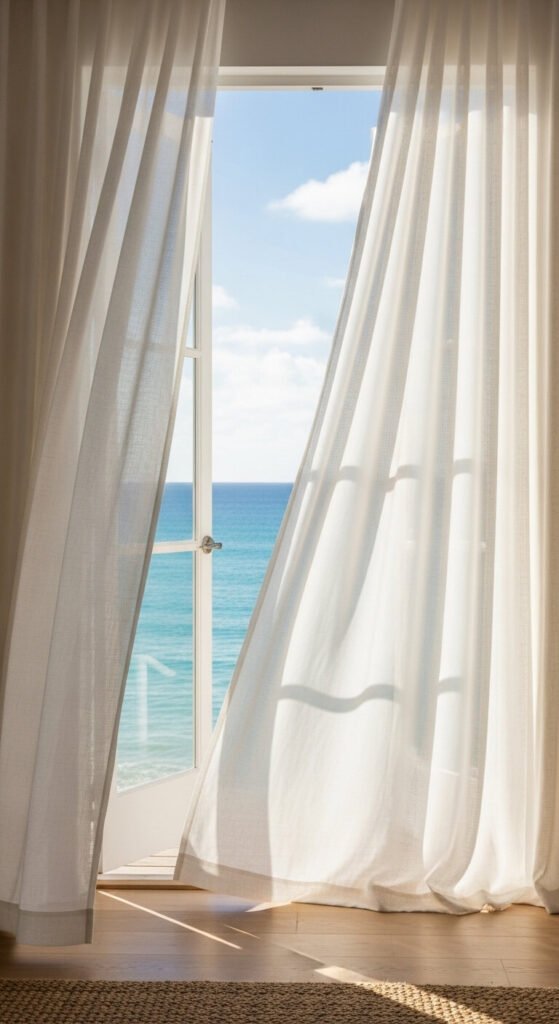
Coastal rooms need light. Replace heavy drapes with sheer white or natural linen panels. The lightweight fabric filters sun while maintaining brightness. Rooms feel larger and more connected to outdoors.
Hang curtain rods high and wide—several inches above and beyond window frames. This makes windows appear larger. White cotton or linen panels cost $20-$40 per panel. Let them puddle slightly on floors for a relaxed look. The fabric moves with breezes, adding life to static rooms. Skip patterns and ornate details. Simple panels on simple rods let natural light dominate. In bathrooms where privacy matters, use bamboo shades under sheer panels for layered function.
Seagrass and Jute Area Rugs

Natural fiber rugs ground coastal rooms without adding color. Jute, seagrass, and sisal cost $80-$300 depending on size. The nubby texture and neutral tones work with any palette.
Layer smaller patterned rugs over natural fiber ones for depth. The neutral base lets you change accent colors seasonally without replacing large pieces. These rugs hide sand and dirt well—perfect for actual beach houses. Vacuum regularly to prevent dust buildup. The organic texture brings earthy coastal grounding. Natural fiber rugs work everywhere from living rooms to bedrooms to porches. They soften hard floors while maintaining the airy quality coastal style demands.
Porthole Mirrors as Focal Points

Porthole-style mirrors bring instant nautical character. The round shape and metal frames reference ship windows. Buy them ready-made for $40-$150 or DIY versions for less.
Hang porthole mirrors in bathrooms, entryways, or bedrooms. The round shape contrasts with rectangular furniture and architecture. For DIY versions, find a round mirror at craft stores ($15-$30) and create a frame using rope glued in concentric circles or painted wood rings. Add metal details with spray paint. The maritime reference reads clearly without being literal. Group three different-sized porthole mirrors together for a gallery wall effect. The metal finishes add warmth and the reflective surfaces bounce light around rooms.
Whitewashed Wood Floors and Ceilings
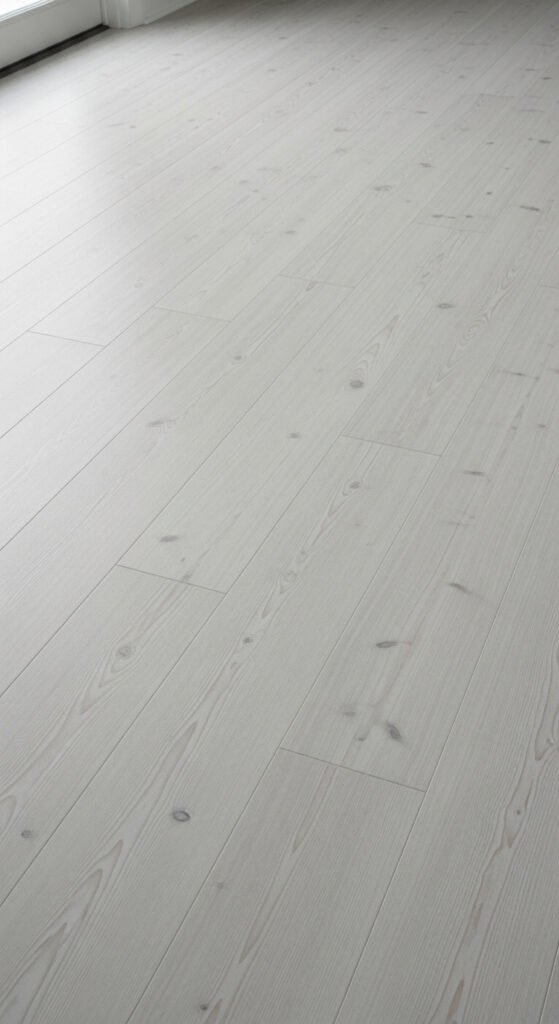
Whitewashed wood creates the quintessential coastal look. The technique lets wood grain show through while lightening the space dramatically. DIY this finish for $40-$60 in materials.
Mix white paint with water (1:3 ratio). Apply to wood floors or ceilings with a brush, working with the grain. Wipe excess with rags. The translucent effect shows wood texture while brightening rooms. Multiple thin coats build opacity gradually. Seal floors with polyurethane for durability. Ceilings can stay unsealed. The bright beachy base makes rooms feel larger and more sun-filled. This technique works on any wood—old or new, rough or smooth. The imperfect finish adds to the coastal authenticity.
Beach Photography and Coastal Art

Skip generic beach art. Choose dramatic ocean photography, seascapes, or abstract pieces in coastal colors. Prints from sites like Etsy or Minted cost $20-$100 framed. Original photos work too.
Frame your own beach photos from vacations. The personal connection matters more than professional quality. Large-scale prints create impact—go as big as your budget allows. Black and white beach photography feels sophisticated. Color versions bring ocean blues and sandy tones directly into rooms. The visual connection to water keeps the coastal theme authentic. Rotate art seasonally or keep it consistent. Either approach works when the images genuinely evoke the coast.
Slipcovered Furniture in White Linen

White slipcovers embody coastal casual living. They’re washable, relaxed, and bright. Buy ready-made slipcovers for $150-$400 or have custom ones made for $300-$800.
Linen and cotton duck work best. The slight wrinkles are part of the charm—coastal style isn’t precious. Slipcovers hide dated furniture underneath. They unify mismatched pieces instantly. Wash monthly to keep them bright. The forgiving practicality makes white furniture livable. Spills and stains wash out. Kids and pets are welcome. Remove covers easily when seasons change. The clean white backdrop lets colorful pillows and throws rotate without reupholstering. This is beach house living at its most relaxed.
Capiz Shell Chandeliers
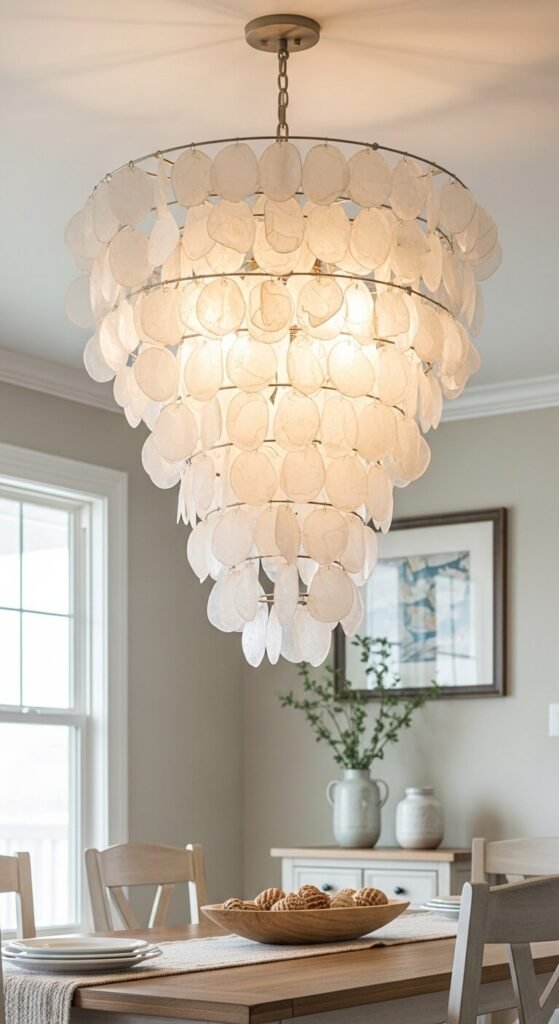
Capiz shell chandeliers catch and refract light beautifully. The layered shells create organic texture and gentle movement. Fixtures range from $100-$500 depending on size and intricacy.
Install them in dining rooms, bedrooms, or entryways. The natural shells feel appropriate in coastal homes without being overly themed. The light filtering through shells creates soft, flattering ambiance. Capiz comes in white, natural, and even tinted versions. Stick to natural colors for authentic coastal vibes. The luminous organic texture adds elegance while maintaining the relaxed coastal aesthetic. These fixtures become focal points that guests always comment on.
Painted Furniture in Coastal Hues

Transform thrift store furniture with coastal paint colors. Soft aqua, seafoam green, weathered blue, and sandy taupe bring ocean hues into rooms. Paint costs $30-$40 per piece including primer and sealer.
Sand furniture lightly for paint adhesion. Apply primer, then two coats of your chosen color. Distress edges lightly if desired. Seal with matte or satin polyurethane. Replace hardware with rope, ceramic, or brass knobs. The color transformation is dramatic. A $40 thrift store dresser becomes a $400-looking coastal statement. The ocean-inspired color creates cohesion across mismatched pieces. Paint nightstands, side tables, chairs, and dressers. The consistent palette unifies your space beautifully.
Outdoor Fabrics Used Indoors

Performance fabrics designed for outdoor use work brilliantly indoors. They’re stain-resistant, fade-proof, and washable. Sunbrella and similar brands cost $20-$40 per yard—comparable to indoor fabrics.
Use outdoor fabrics for pillow covers, cushions, and even upholstery. The durability makes them perfect for high-traffic coastal homes where sand, water, and sun are constant concerns. The color and pattern options have expanded far beyond basic stripes. The practical coastal choice doesn’t sacrifice style for function. Spills wipe clean instantly. Fabrics withstand direct sunlight without fading. This is especially smart for homes with actual beach access where sandy feet and wet swimsuits are daily realities.
Wicker and Rattan Furniture
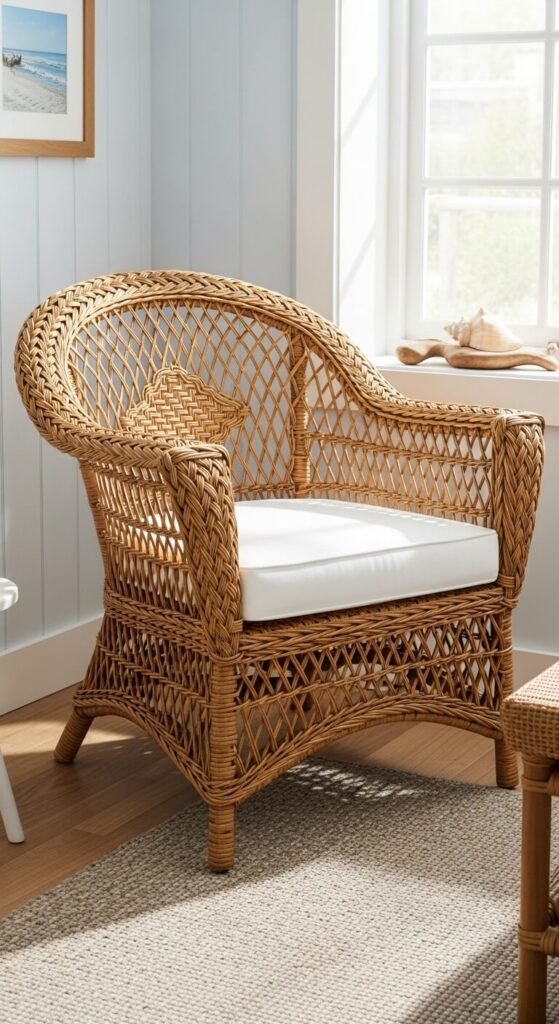
Wicker and rattan bring organic texture and casual comfort. Find pieces at estate sales for $40-$150 or buy new for $200-$600. The woven material feels inherently beachy and relaxed.
Painted white wicker reads more formal. Natural finish feels more casual. Both work in coastal spaces. Add cushions in coastal colors or patterns. Wicker works indoors despite its outdoor reputation. Use it for chairs, side tables, headboards, and storage baskets. The material improves with age—slight loosening and patina add character. The woven texture creates visual interest without pattern. Pair wicker with smoother materials like linen and wood for balanced rooms. This is coastal living room furniture at its most inviting.
Seashell Wreaths for Doors and Walls

DIY shell wreaths cost $20-$40 in materials. Buy a foam wreath form and hot glue collected or purchased shells around it. The process takes 2-3 hours and results in custom coastal art.
Arrange shells by size, color, or type. All-white wreaths feel sophisticated. Mixed shells feel more casual and collected. Add starfish or sand dollars as focal points. Hang wreaths on front doors, over mantels, or on walls as art. Outdoor wreaths withstand weather since shells are naturally durable. The handmade coastal welcome shows effort and creativity. Kids can help glue shells. The project turns beach vacation collections into year-round decor.
Blue Glass Bottle Collections

Colored glass bottles—especially blues and aquas—filter light beautifully. Find them at antique shops for $5-$15 each or buy reproductions for less. The transparent color brings ocean tones directly into spaces.
Group bottles on windowsills where sun shines through. Mix different heights and shades of blue. Use them as bud vases or leave them empty. The glass itself is the decor. Clean vintage bottles with bottle brushes and warm soapy water. The glowing ocean color changes throughout the day as light shifts. This is an easy, affordable way to add consistent coastal color without committing to paint. Collections grow over time as you find special pieces.
Natural Stone and Pebble Displays
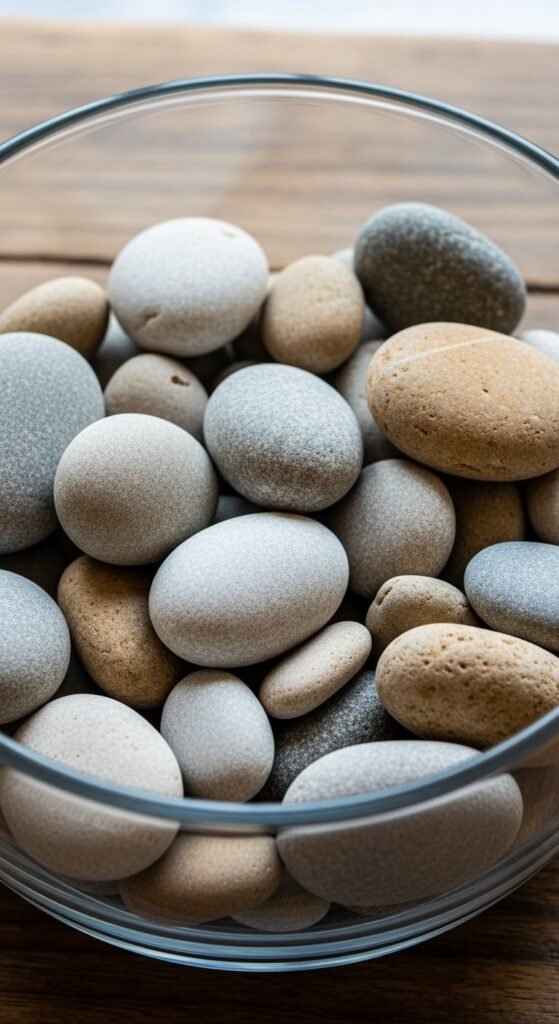
Collect smooth stones and pebbles from beaches. Display them in glass bowls, on trays, or scattered on shelves. The natural materials cost nothing and bring authentic beach texture home.
Larger stones work as bookends. Flat stones stack into cairns. Fill clear vases with smaller pebbles as decorative filler or to stabilize floral stems. The neutral colors and smooth texture add organic coastal calm. Paint stones with simple designs—stripes, dots, words—for customized decor. Kids love this activity. The weight and coolness of real stone feels grounding. These collections remind you of specific beaches and vacations. The memories embedded in found objects matter more than their monetary value.
Rope-Wrapped Table Legs and Bases
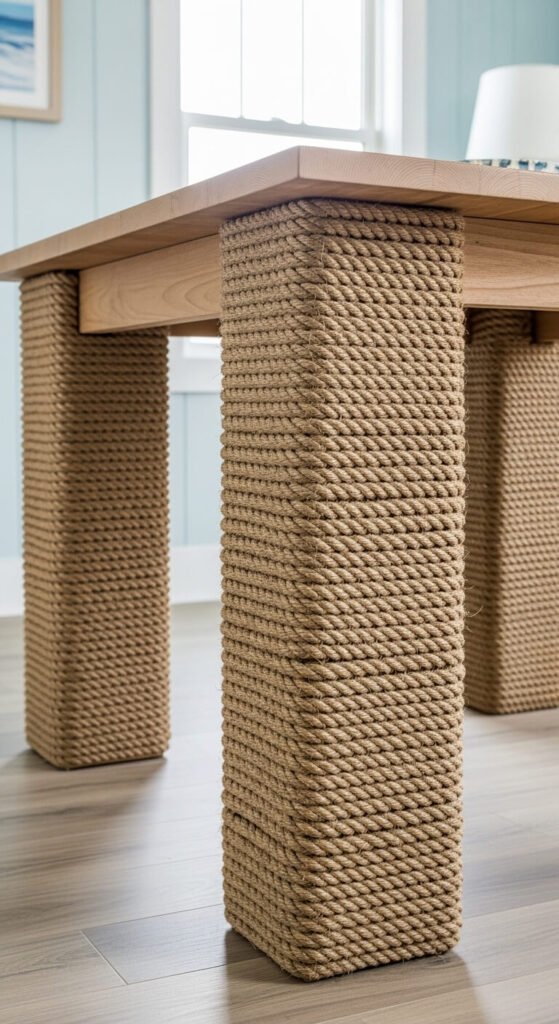
Transform ordinary furniture with wrapped rope. Buy manila or sisal rope for $20-$30 and hot glue it around table legs, lamp bases, or mirror frames. The texture adds instant coastal character.
Start at the bottom and wrap tightly, gluing every few inches. Keep tension consistent for neat appearance. The neutral rope color works with any wood tone. This technique hides damaged or dated furniture legs. Works on dining tables, coffee tables, end tables, and floor lamps. The textural nautical detail communicates coastal style clearly. The DIY project takes 1-2 hours per piece. Rope wears well and can be replaced easily if it loosens or damages over time.
Vintage Oars and Paddles as Wall Art

Old oars and paddles make dramatic wall art. Find them at antique shops for $30-$80 or online. The long, narrow shapes work above sofas, beds, or mantels. They’re unexpected and sculptural.
Mount oars horizontally or cross them for dimension. Leave original paint and weathering—that’s the charm. The maritime equipment displayed decoratively feels authentic rather than themed. Paint oars to match your color scheme if desired, but weathered finishes usually work better. Make sure they’re securely anchored to wall studs—oars are heavy. This works especially well in lake or river houses where the connection feels geographical. The vertical or horizontal lines create strong architectural impact.
Layered White Bedding with Texture
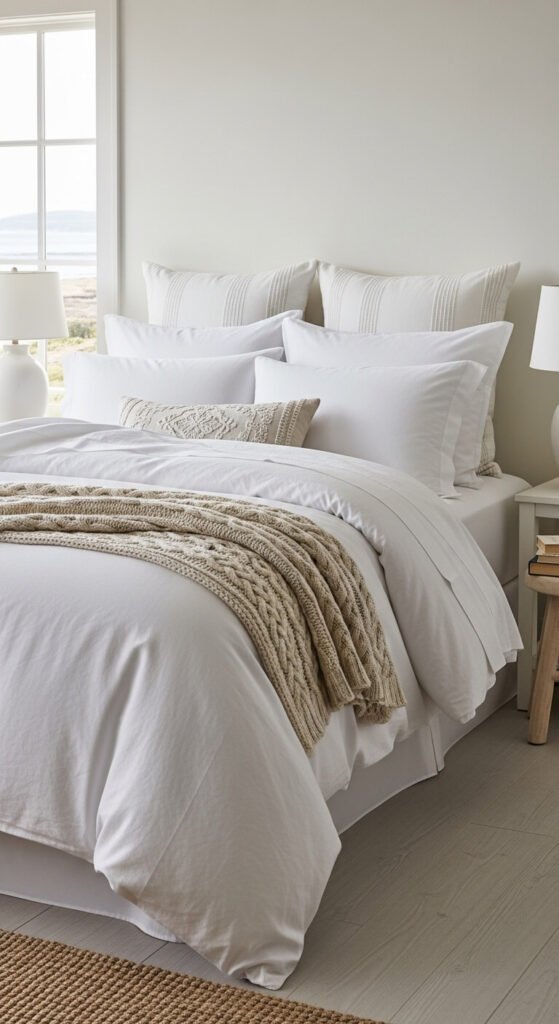
All-white bedding feels clean and coastal. Layer different textures—smooth cotton sheets, nubby linen duvet, cable knit throw, eyelet pillows. The variation creates depth without color.
Mix finishes—matte and sheen, smooth and textured. This prevents all-white from feeling flat. Buy basics at Target or IKEA for $40-$100 per set. Add higher-quality textural pieces gradually. The luxurious white layers invite you in. Nothing feels more vacation-like than crisp white hotel bedding. Bleach whites monthly to maintain brightness. The monochromatic approach simplifies bed-making—everything coordinates. Add subtle blue or tan accents through throw pillows if desired, but white can stand alone beautifully.
Striped Hammock Chairs and Swings
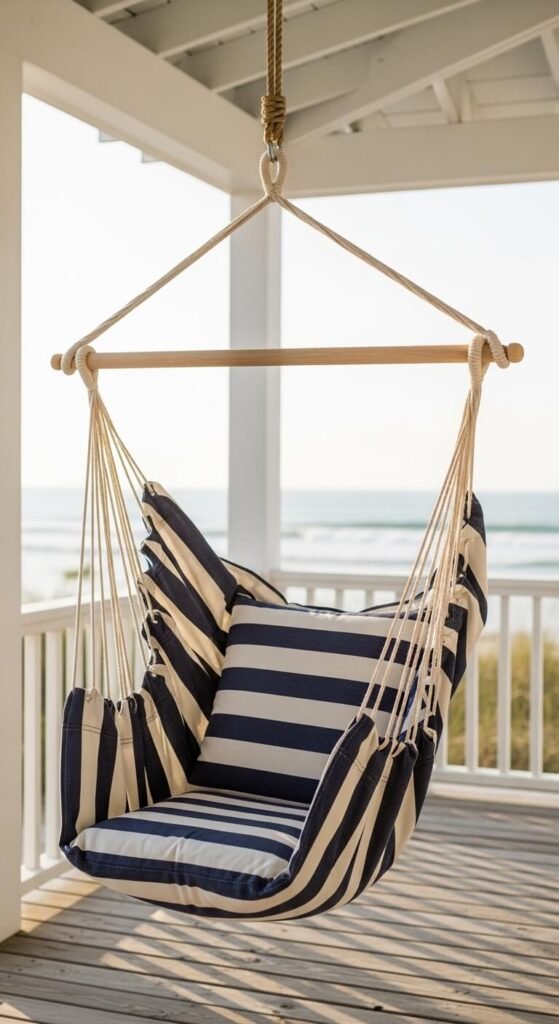
Hammock chairs bring vacation vibes daily. Indoor or covered porch versions run $50-$150. The suspended seating feels playful and relaxing. Striped canvas is the most coastal option.
Hang from ceiling joists using proper hardware rated for your weight plus 50%. Add cushions for comfort. Kids especially love these. The swinging coastal seat becomes everyone’s favorite spot. Choose navy, aqua, or red stripes on white. The gentle movement is incredibly calming. Hammock chairs work in reading nooks, bedrooms, or porches. They take up minimal floor space while providing full seating. Fold them up when not in use. This is coastal living at its most carefree.
Coastal Color Palettes Throughout

Stick to a defined coastal palette. Whites, creams, sandy beiges, soft grays, and blues from navy to aqua. Add weathered wood tones. These colors create instant coastal cohesion.
Test paint samples in your lighting before committing. Coastal blues look different in various lights. Choose one blue as your main accent color. Use whites and neutrals as the foundation. Wood tones add warmth. The ocean-inspired palette works because it mimics actual beaches—sand, water, weathered driftwood, white foam. Rooms feel calm and connected when colors stay within this range. You can rotate accent colors seasonally while maintaining the coastal base. The consistency creates professional-looking design without hiring anyone.
Shiplap Accent Walls in White

Shiplap walls scream coastal cottage. Install pine boards horizontally with small gaps between each plank. Paint everything white. The technique costs $100-$200 per accent wall in materials.
Use a nickel as a spacer between boards for consistent gaps. Nail into studs with a finish nailer. The horizontal lines make rooms feel wider. Shiplap works behind beds, on fireplace walls, or in bathrooms. The dimensional texture catches light beautifully throughout the day. This is architectural coastal character that increases home value. Watch installation tutorials before starting. The project takes a weekend but transforms spaces dramatically. Shiplap bridges farmhouse and coastal styles perfectly—it works in both aesthetics seamlessly.
Conclusion
Coastal decor brings vacation home permanently. Each idea here helps you capture that breezy, relaxed beach feeling regardless of your zip code. You don’t need everything—start with elements that resonate most. Maybe it’s painting furniture in ocean hues, collecting shells on your next beach trip, or simply switching to white bedding and adding striped pillows. Those small changes compound quickly. The coastal aesthetic is forgiving and flexible. It mixes with farmhouse, modern, and traditional styles easily. The key is light, texture, and connection to nature. Shop secondhand for authentic pieces. DIY when possible. Let imperfection show—it’s part of the charm. Your coastal space should feel like a deep breath, a slower pace, and endless summer afternoons. Start creating your beach house vibe today, whether you’re oceanfront or landlocked. The feeling matters more than the location.