
Your home office either works for you or against you — there’s rarely a middle ground. The way your space looks and feels has a direct impact on how well you think, how long you stay on task, and how much you actually enjoy your workday. The good news? You don’t need a big budget or a design degree to make real improvements. Small, intentional changes — a better light source here, a smarter storage system there — can completely change how productive your days feel. These 28 practical home office decor hacks are designed to help you work better, not just look good on Instagram.
1. Anchor Your Space With a Dedicated Work Zone

If your desk lives in the middle of chaos, your brain will too. Carve out a defined work zone — even in a small apartment. Use a rug to anchor the area, position your desk facing a wall, and keep that zone strictly for work. This mental boundary tells your brain it’s time to focus. You don’t need a separate room. A corner, a closet conversion, or even a dedicated wall section works. Consistency in location builds a powerful mental habit over time.
2. Swap Harsh Overhead Lights for Layered Lighting

Overhead fluorescent lights are focus killers. Layered lighting — a desk lamp for task work, a floor lamp for ambient warmth, and maybe LED strips behind a monitor — creates a much more comfortable environment. Warm bulbs (2700K–3000K) reduce eye strain during long sessions. A basic adjustable desk lamp from a thrift store or discount retailer works just fine. Plug-in floor lamps avoid the need for an electrician. Small lighting changes make a surprisingly big difference by the end of a workday.
3. Paint One Wall a Muted, Focus-Friendly Color

Color affects mood more than most people realize. Deep blues, soft greens, and warm taupes have been shown to support calm, sustained focus. You don’t have to repaint an entire room. One accent wall behind your desk does the trick for under $30 in paint. Avoid bright reds or overly saturated yellows in a work zone — they’re energizing but distracting. Stick to muted, nature-inspired tones. Peel-and-stick paint samples let you test a shade before committing.
4. Use Vertical Wall Space for Smart Storage

A cluttered desk is a cluttered mind. Move storage off your desk and onto your walls. Pegboards are the ultimate affordable solution — a full kit runs about $20–$40, and you can rearrange it whenever your needs change. Floating shelves, magnetic strips for small metal accessories, and over-door organizers all use vertical space you’re probably ignoring. Get items off your desk surface and the whole room will feel more spacious. More visual space means fewer distractions pulling at your attention.
5. Add a Whiteboard or Corkboard Within Eye Level

Sticky notes scattered everywhere create visual noise. A dedicated idea board at eye level keeps your plans visible and your desk clear. A corkboard, a basic whiteboard, or even a painted chalkboard section of wall works great. Pin your weekly priorities, key deadlines, or your top three daily goals. Seeing your tasks displayed intentionally — rather than scribbled on random paper — keeps you oriented throughout the day. Boards run $10–$25 at most office supply or dollar stores.
6. Position Your Desk to Face Natural Light

Where your desk faces matters more than most people think. Natural light from the side is ideal — it reduces screen glare and provides even, flattering illumination. Facing a window straight-on can cause glare; having it behind you can create screen reflection. Try positioning your desk perpendicular to the nearest window. If you don’t have great natural light, a daylight-spectrum bulb (5000K–6500K) in your desk lamp mimics it pretty well and costs under $10.
7. Get a Monitor Riser or Stack of Books

If your monitor or laptop sits flat on the desk, you’re tilting your neck down all day. That physical discomfort affects concentration. Raising your screen to eye level is one of the cheapest ergonomic wins available. A purpose-built riser runs $20–$40, but a stack of hardcover books works just as well. Pair it with a wireless keyboard and mouse for a full ergonomic setup. Your neck and your focus will both thank you by the afternoon.
8. Introduce One or Two Low-Maintenance Plants

Plants do more than look nice. Studies suggest having greenery nearby can reduce stress and improve attention. You don’t need a green thumb. Pothos, snake plants, and ZZ plants thrive with minimal care and low light — perfect for most home offices. A single small plant on your desk or a trailing plant on a shelf adds life without demanding maintenance. Budget option: propagate cuttings from a friend’s plant for free. Even a single plant changes the energy of a room.
9. Hide Cable Clutter Once and for All

Tangled cables are visual clutter that quietly drains your mental energy. Cable management doesn’t require expensive solutions. A few velcro cable ties ($5), a cable management tray mounted under your desk ($10–$15), and a simple power strip with organized cords will completely transform your workspace’s appearance. Binder clips on the desk edge can hold cables in place and prevent them from sliding behind furniture. A clean, cord-free desk surface feels instantly more professional and calming.
10. Hang Artwork That Inspires Without Distracting

Your visual environment shapes your mindset. Blank walls feel cold, but chaotic gallery walls can become a distraction. One or two intentional pieces of art hit the sweet spot. Choose artwork that feels calm, purposeful, or quietly motivating — abstract prints, minimal line drawings, or landscape photography work well. Print-on-demand services like Printify or even free downloads from Unsplash printed at a local shop let you do this for under $15, frame included from a thrift store.
11. Use a Tray or Catch-All to Corral Desk Clutter

A desk without boundaries quickly becomes a dumping ground. A simple tray or shallow bowl acts as a visual container — anything inside it is “allowed” on the desk. Everything else gets put away. This one trick resets your workspace in seconds. Use a wooden tray from a thrift store, a repurposed baking dish, or a decorative bowl. Having one designated spot for small items like paper clips, lip balm, or a charger keeps the rest of your desk intentionally clear.
12. Set Up a Dedicated “Inbox” Spot for Paperwork
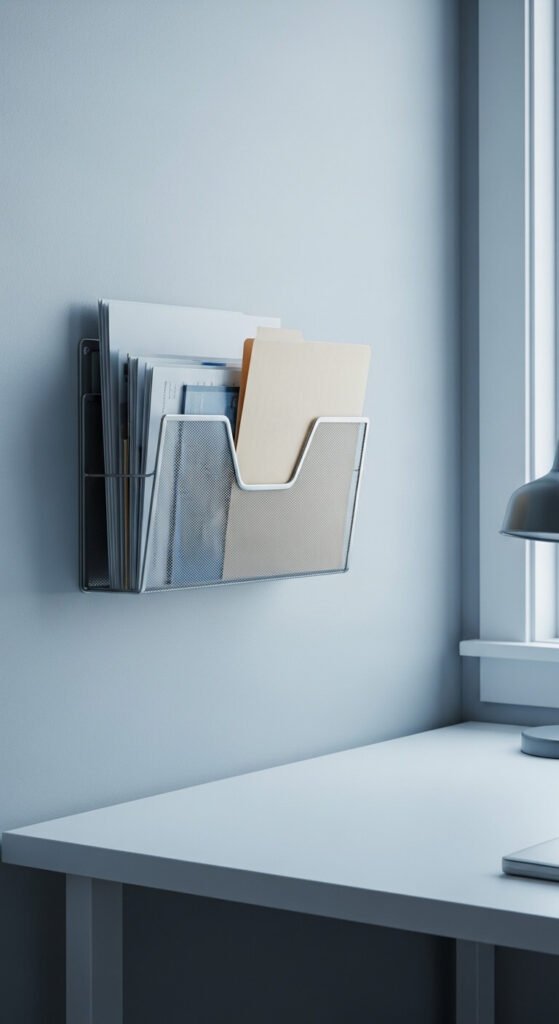
Paper is the silent enemy of a tidy home office. Without a system, it piles up everywhere. A wall-mounted or desktop file tray gives all incoming paper one home. Sort it once a day — file, respond, or recycle. A two-slot wall organizer runs about $10–$15 and frees your desk from paper chaos. Label one slot “to do” and one “to file” to keep it simple. Fewer loose papers means fewer visual interruptions while you work.
13. Choose a Chair That Actually Supports You

An uncomfortable chair will break your concentration faster than any notification. You don’t have to spend $500 on an ergonomic chair. Adding a lumbar support cushion to any existing chair makes a significant difference for under $20. If you’re in the market for a new chair, check Facebook Marketplace or office liquidation sales — good chairs often sell for a fraction of retail. Even adjusting your seat height so your feet rest flat on the floor improves posture and stamina.
14. Create a Simple Morning Reset Ritual for Your Desk

Your environment before you sit down matters as much as the environment itself. A two-minute desk reset every morning — clear the surface, open your planner, light a candle — signals to your brain that it’s time to work. This ritual anchors your workday with intention. Keep a small cleaning cloth in your desk drawer for a quick wipe-down. Pair it with a consistent scent like a candle or diffuser and your brain starts associating that smell with focus.
15. Use Scent Strategically to Set the Tone

Scent is one of the fastest ways to shift your mental state. Peppermint and rosemary are associated with alertness. Lavender helps with calm, focused work. A basic ultrasonic diffuser costs $15–$25 and transforms your workspace without taking up much space. Alternatively, a soy candle with citrus or eucalyptus notes does the same job. Use one scent consistently for work-only hours, and your brain will start treating it as a focus trigger over time.
16. Label Everything in Your Storage System

A storage system you can’t navigate quickly becomes a storage system you stop using. Labels take two minutes to make and save hours of frustration. Use a basic label maker ($15–$20) or just a marker on masking tape. Label drawer sections, file folders, shelves, and cable boxes. When everything has a clear home, tidying becomes automatic. You stop wasting time searching for things. The mental overhead of “where did I put that” disappears — and that’s time returned to real work.
17. Add a Small Whitespace Zone on Your Desk
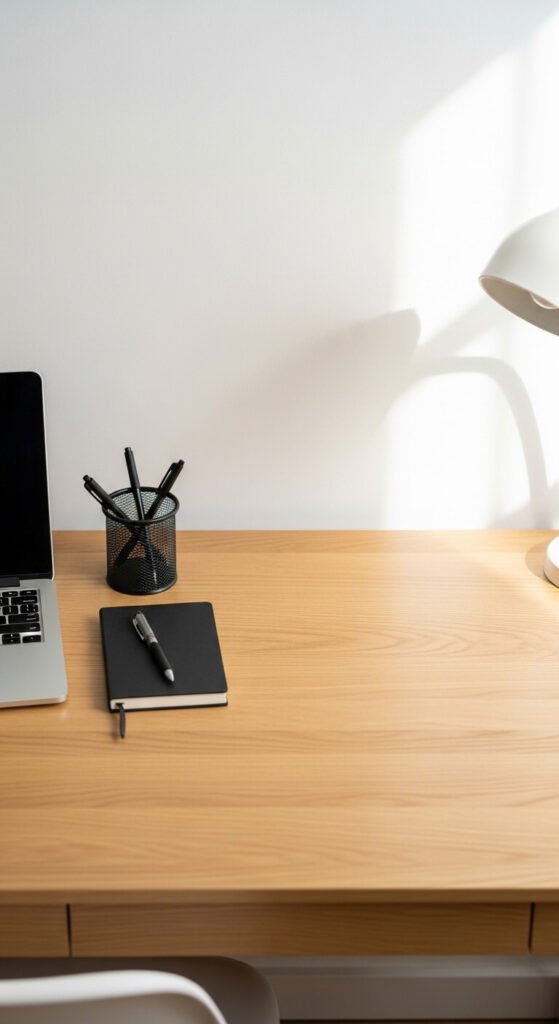
Not every inch of your desk needs to be occupied. A designated blank zone — even just a 12-inch square — gives your eyes and brain a place to rest. Use it to write, sketch ideas, read a document, or simply as visual breathing room. Resist the urge to fill it. This space acts as a mental reset button throughout the day. If clutter keeps creeping in, put a small physical object — like a single stone or a wooden cube — to hold the space intentionally.
18. Soundproof Your Space on a Budget
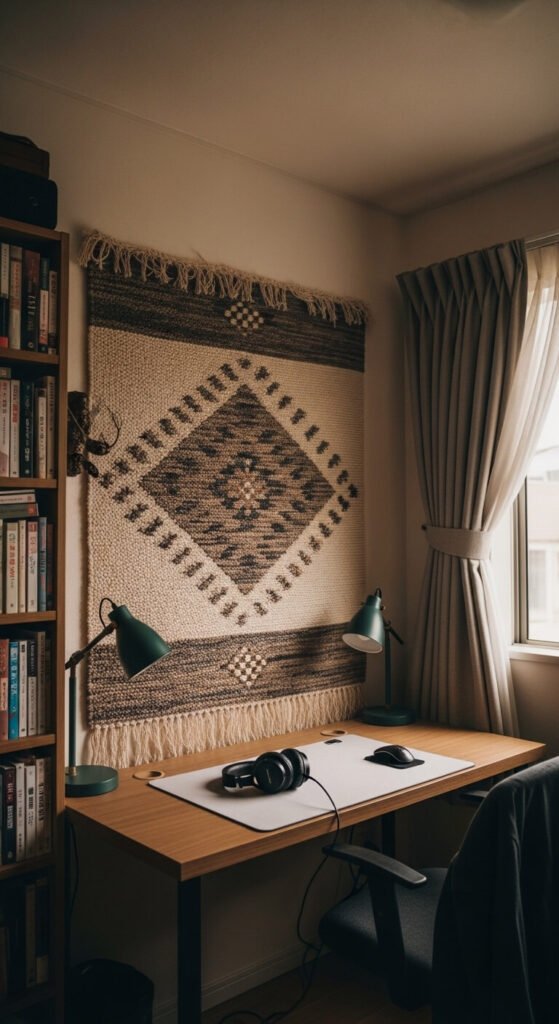
Background noise is a hidden productivity thief. Hard walls and bare floors bounce sound around the room. Soft furnishings absorb noise — thick curtains, a large area rug, bookshelves filled with books, and even a wall tapestry all help. These don’t have to be expensive. A thrifted rug, curtains from IKEA, or a macramé wall hanging can all reduce echo noticeably. Pair with a pair of noise-cancelling headphones or lo-fi music when the environment still isn’t quiet enough.
19. Display a Physical Planner or Calendar

Digital calendars are convenient but easy to ignore. A physical planner or wall calendar you can see constantly keeps deadlines from sneaking up on you. Write your top priorities for each week at the start of Monday morning. Seeing time laid out visually — rather than buried in an app — creates a healthier relationship with your schedule. A wall calendar runs $5–$15. A hardcover weekly planner is $10–$20. Either one reduces decision fatigue and keeps you oriented throughout the day.
20. Install Blackout or Light-Filtering Curtains
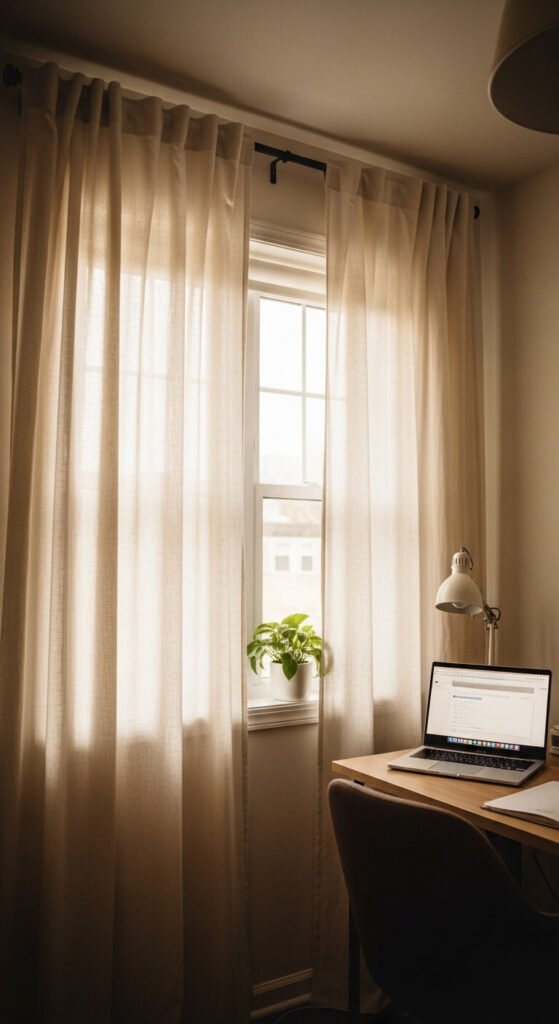
Too much direct sunlight causes screen glare and makes any room feel uncomfortably warm. Light-filtering or blackout curtains give you control over your environment at any time of day. Linen or cotton curtains diffuse light without blocking it entirely — great for daytime work. Blackout curtains are better if you work video calls or late evenings. Both options run $15–$40 per panel at most home goods stores. Curtains also add softness and texture to a space, making it feel more finished.
21. Create a “Brain Dump” Notebook Station
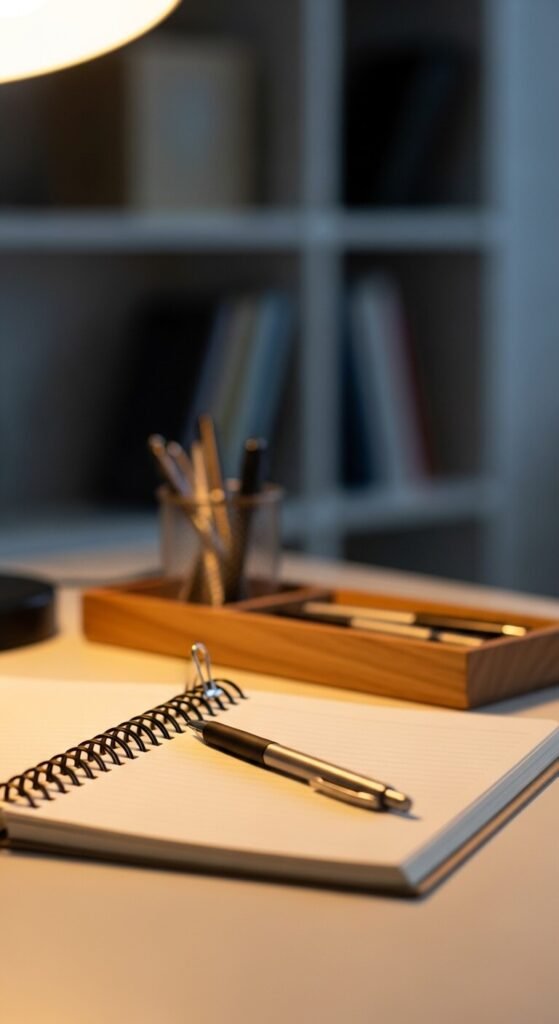
Random thoughts and “don’t forget” reminders interrupt deep work constantly. A dedicated brain dump notebook gives stray thoughts a home that isn’t your working memory. Keep a simple notebook open and accessible at all times. When something pops into your head mid-task, write it down and return to what you were doing. This takes under five seconds and keeps your mental RAM clear. Any notebook works — a dollar-store composition book is just as effective as a Moleskine.
22. Use Warm Wood Accents to Soften the Space

Cold, all-white or all-metal workspaces can feel sterile. Wood tones add warmth without making a room feel cluttered or busy. You don’t need to replace furniture. A few small wooden accessories — a pen holder, a tray, a small shelf, a cork desk mat — are enough. Thrift stores and secondhand shops are full of affordable wooden pieces. These small texture additions make a home office feel more human and comfortable for long work sessions.
23. Mount Your Router or Power Strip Out of Sight

A router sitting on the desk or a power strip snaking across the floor is an easy source of visual clutter. Mounting these items under your desk or behind furniture clears your field of view. Use adhesive velcro strips ($5) to attach a power strip to the underside of your desk. Mount the router on a wall bracket. Use zip ties or velcro straps to bundle any remaining floor cables together. Thirty minutes of organization here pays off every single day.
24. Add a Small Mirror to Make the Room Feel Larger

Small home offices can feel cramped and stifling — and cramped environments affect mood. A mirror placed strategically bounces light around the room and makes it feel twice as open. A small round mirror from a thrift or discount store ($5–$20) mounted beside or across from your window is all you need. You’re not decorating for looks alone here — more perceived space and more reflected light both make it physically easier to spend hours in the room.
25. Keep Only Current Project Materials on Your Desk

Every item on your desk that doesn’t relate to your current task is a potential distraction. A “current project only” desk rule keeps your workspace tight and purposeful. Use a rolling cart, drawer, or a box nearby to hold everything else. At the start of each work block, bring out only what you need. At the end, put it back. It sounds strict, but this single habit dramatically reduces context-switching. The less that’s visible, the more focused your attention becomes.
26. Hang Floating Shelves for Frequently Reached Items

Constantly getting up to grab something breaks your concentration. Floating shelves placed within arm’s reach keep reference books, notebooks, and small supplies accessible without eating up desk space. IKEA’s LACK or MOSSLANDA shelves cost $10–$15 each and hold a surprising amount. Position them at shoulder height when seated. Keep only frequently used items on them — a reference book, your planner, a spare notebook — and store everything else elsewhere.
27. Define Your Workspace With a Quality Desk Mat
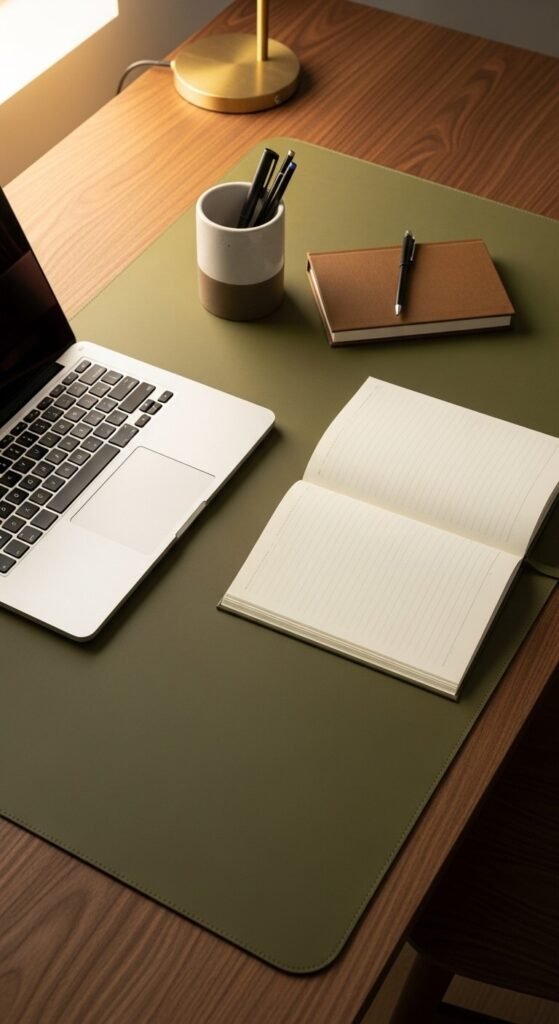
A desk mat does three things at once: protects your desk, contains visual clutter within a defined area, and adds texture and warmth to your workspace. A large desk mat (or “deskpad”) acts as a visual anchor for all your tools. Cork, faux leather, and felt options range from $15–$35. Everything placed on the mat feels intentional. It also makes the desk look finished and put-together with almost no effort — important for video calls and your own daily visual experience.
28. Build a Small “End of Day” Shutdown Checklist

Leaving your workspace messy guarantees tomorrow starts with friction. A two-minute end-of-day shutdown routine — close your tabs, clear your desk, write tomorrow’s top three tasks — creates psychological closure between work and personal life. Post a laminated checklist where you can see it. Make it short: five steps maximum. This ritual trains your brain to actually stop working, which makes the next morning’s start sharper. A clean desk waiting for you tomorrow is a gift your future self will appreciate.
Conclusion
A productive home office doesn’t require a renovation or a big budget. As these 28 ideas show, the most impactful changes are often the simplest ones — better lighting, less desk clutter, one plant, a labeled drawer, a consistent shutdown routine. Start with just two or three changes this week. Pay attention to how each one affects your focus and your mood. Build from there. Your workspace should feel like a place where good work happens naturally — and with a little intention, it absolutely can.