
The mantel is the natural focal point of any room it occupies. Whether it sits above a working fireplace or a purely decorative surround, it commands attention the moment anyone walks through the door. A well-styled mantel tells the story of a room — its mood, its personality, and the care put into the space. The challenge most people face is not a lack of good objects, but a lack of understanding about scale, layering, and restraint. These 27 mantel decor displays cover every style from modern minimalism to maximalist abundance, with practical guidance, realistic budget options, and clear direction on how to build a display that genuinely holds attention all year round.
1. Oversized Leaning Mirror with Layered Objects
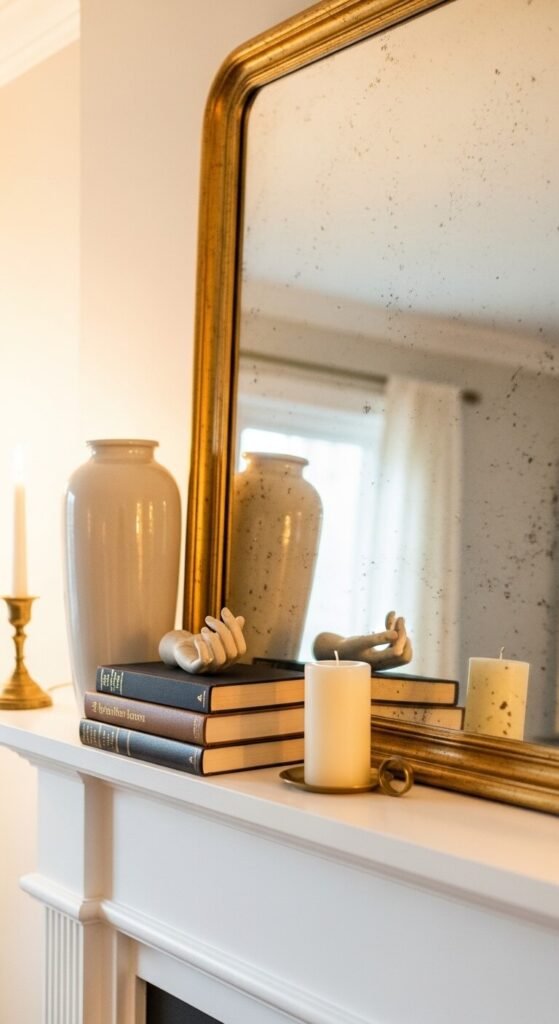
A large leaning mirror is one of the most effective mantel anchors available. Choose a mirror at least two-thirds the width of your mantel shelf — anything smaller looks lost against a wide fireplace surround. An oversized mirror reflects light and makes the room feel larger. Lean it directly against the wall rather than mounting it — this looks more relaxed and is easier to restyle. Thrift stores and estate sales regularly yield large ornate mirrors for $20 to $60. Layer objects in front of the mirror at varying heights. The reflection doubles the visual depth of everything placed on the shelf below.
2. Symmetrical Candlestick Pairs with a Central Object
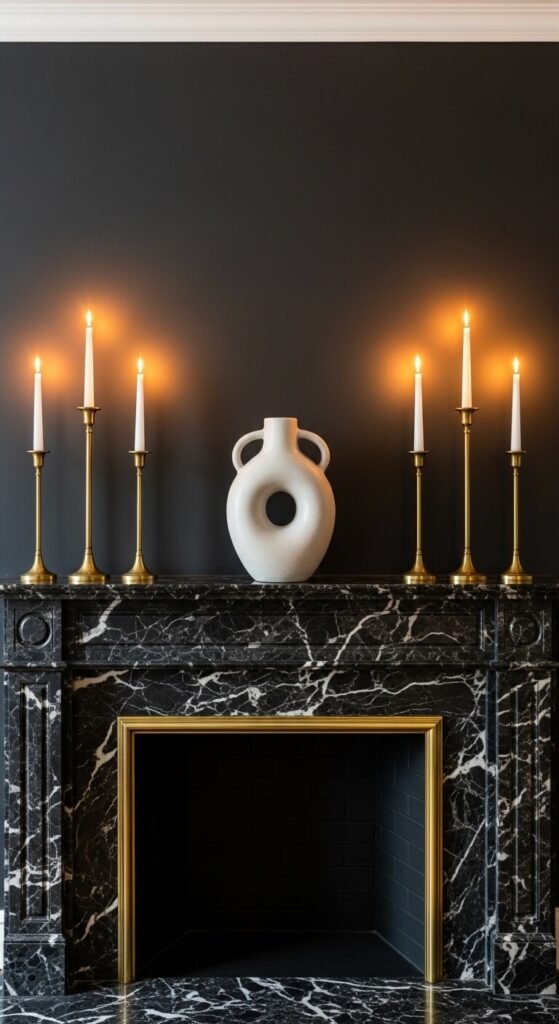
Symmetry is the most straightforward path to a mantel that looks deliberately styled. Place matching candlesticks at equal distances from each end of the shelf and position one strong central object — a vase, clock, sculpture, or framed print — exactly in the middle. The result is formal, balanced, and timeless. Mismatched candlesticks undermine the effect — buy two identical holders. Brass, matte black, and antique silver all work depending on the room’s tone. Taper candle holders cost $5 to $20 each. The central object can be swapped seasonally while the candlesticks remain, giving the mantel a consistent framework with easy variety.
3. Gallery Wall Above the Mantel
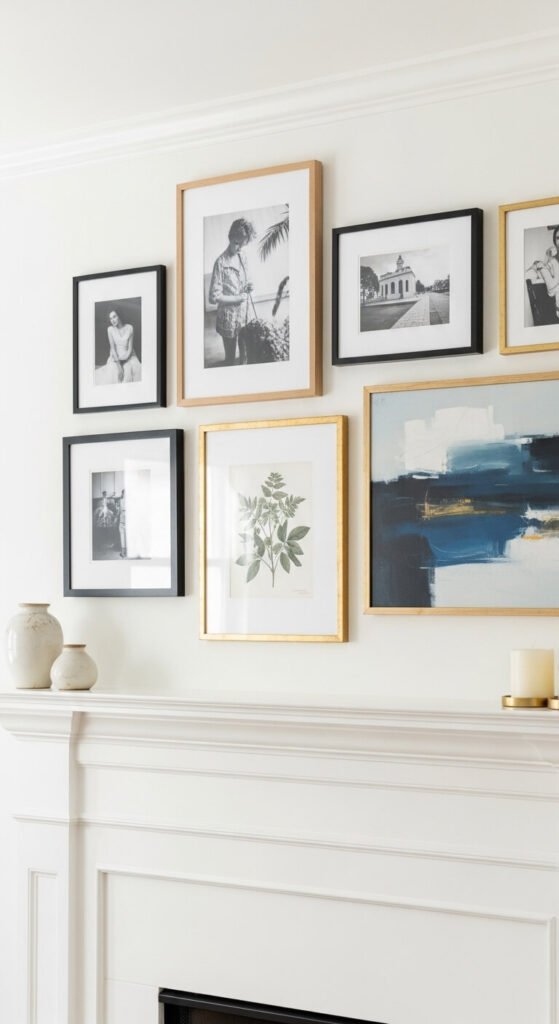
A gallery wall above the mantel turns the entire chimney breast into a single large-scale display. Mix frame sizes and finishes intentionally — vary the sizes significantly but keep the frames within two or three finish tones so the arrangement feels cohesive. Lay the arrangement out on the floor before hanging anything. Start with the largest piece roughly centered, then build outward. Thrift store frames painted in the same color create a collected look for very little money. Space frames 2 to 3 inches apart throughout the arrangement. The mantel shelf below needs only a few simple objects — the wall above does the work.
4. Stacked Books with Small Objects on Top
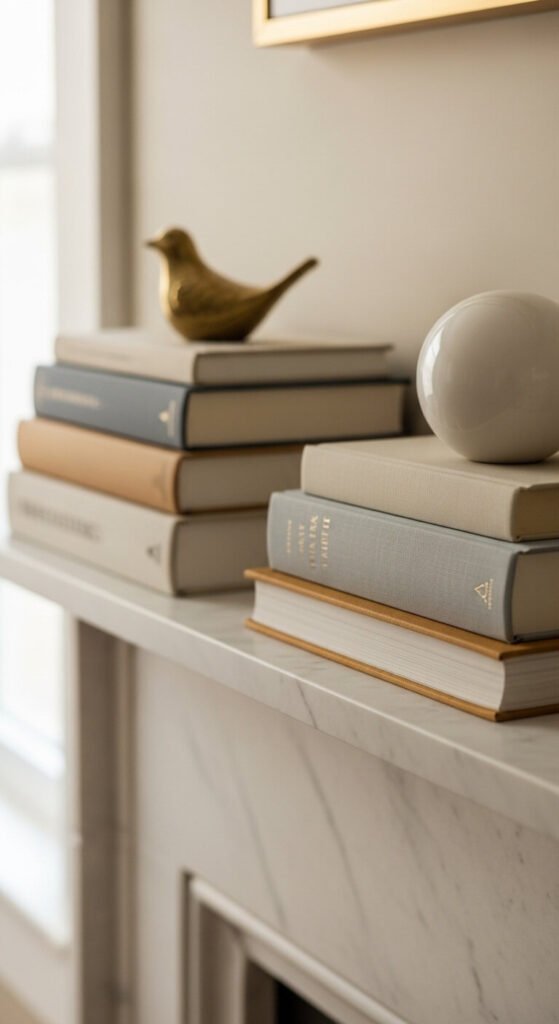
Stacked books are one of the most budget-friendly mantel styling tools available. Remove dust jackets from hardcover books — the plain cloth covers underneath are almost always more beautiful and come in muted, earthy tones that photograph well. Stack two or three books and place a small sculptural object on top: a ceramic bird, a smooth stone, a small vase, or a candle holder. Position two or three stacks at different heights and locations along the shelf. This technique adds horizontal and vertical variety simultaneously. Books from thrift stores cost almost nothing. The objects on top can rotate seasonally without touching the foundation of the display.
5. Organic Greenery Garland Draped Across the Shelf
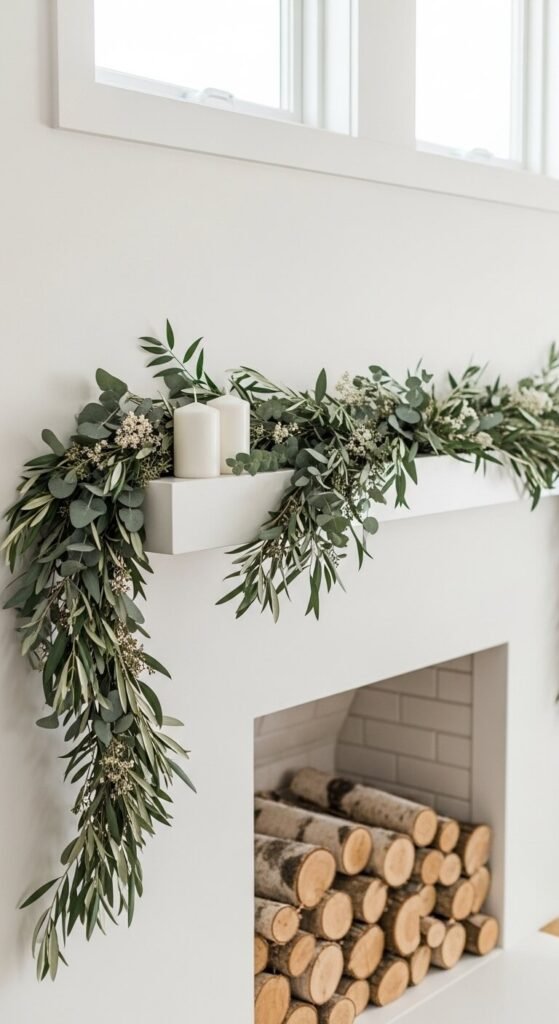
A draped greenery garland softens the hard edges of any mantel shelf and adds natural texture. Use fresh eucalyptus, olive branches, or magnolia leaves — they dry beautifully in place and hold their color for weeks. Drape the garland loosely so it hangs over the front edge at both ends rather than sitting flat on the shelf surface. Tuck in dried flowers, small pinecones, or seed heads for additional texture. Fresh eucalyptus bunches cost $5 to $10 at a florist or grocery store and make enough garland for a standard mantel. Replace every four to six weeks or leave to dry naturally for a permanent display.
6. Vintage Clock as the Central Anchor
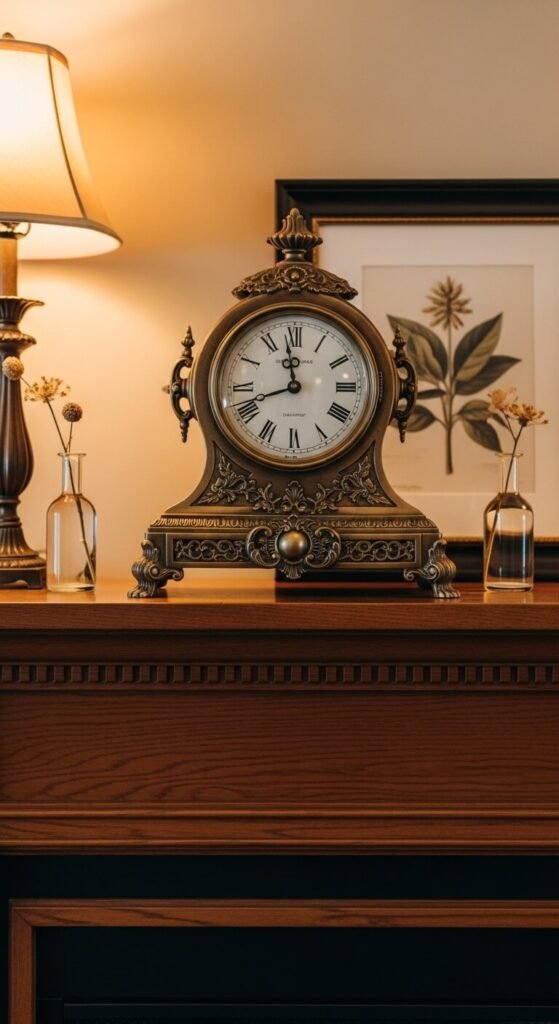
A vintage mantel clock creates instant gravitas and historical character on any shelf. Center it exactly on the mantel as the primary anchor, then build outward with lower-profile objects to avoid competing with it. Ornate brass or bronze antique clocks are a common find at antique fairs and estate sales — prices range from $20 to $80 for genuinely old pieces with real character. Non-working clocks styled purely as decorative objects cost even less. The symmetry of a centered clock is a classic mantel arrangement formula that works across traditional, eclectic, and even contemporary styled rooms depending on the clock’s specific design.
7. Monochromatic White Mantel Display
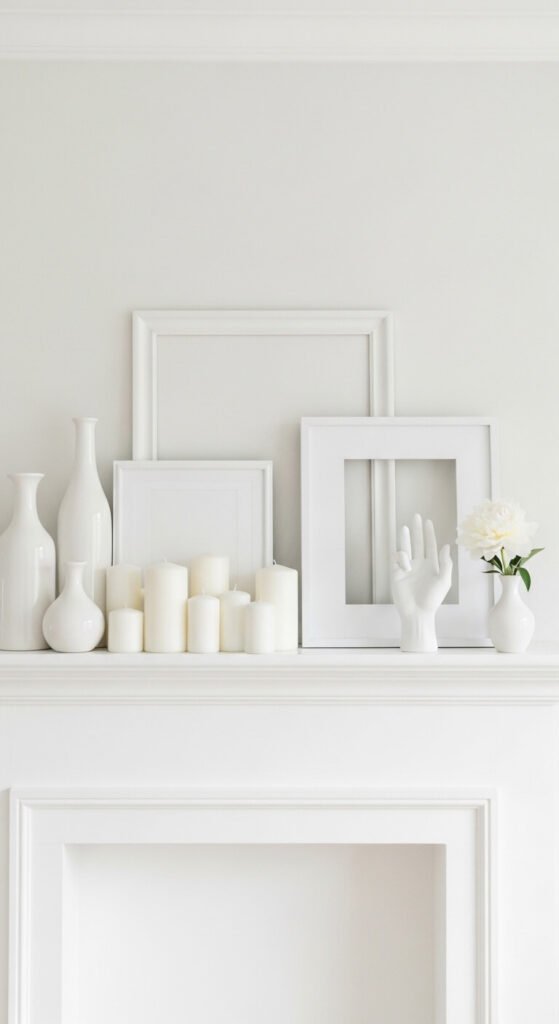
An all-white mantel display is one of the most sophisticated looks you can achieve — and it costs almost nothing if you already own white objects. Group white ceramics, candles, plaster objects, and frames in varying shapes and heights along the shelf. The interest comes entirely from silhouette, texture, and scale rather than color. Matte white, glossy white, aged white, and cream all work together. Check thrift stores for white ceramics — they are one of the most commonly donated items and cost almost nothing. An entirely white mantel suits modern, Scandinavian, farmhouse, and coastal interiors equally well without requiring any theme-specific purchases.
8. Single Large-Scale Artwork Propped on the Shelf
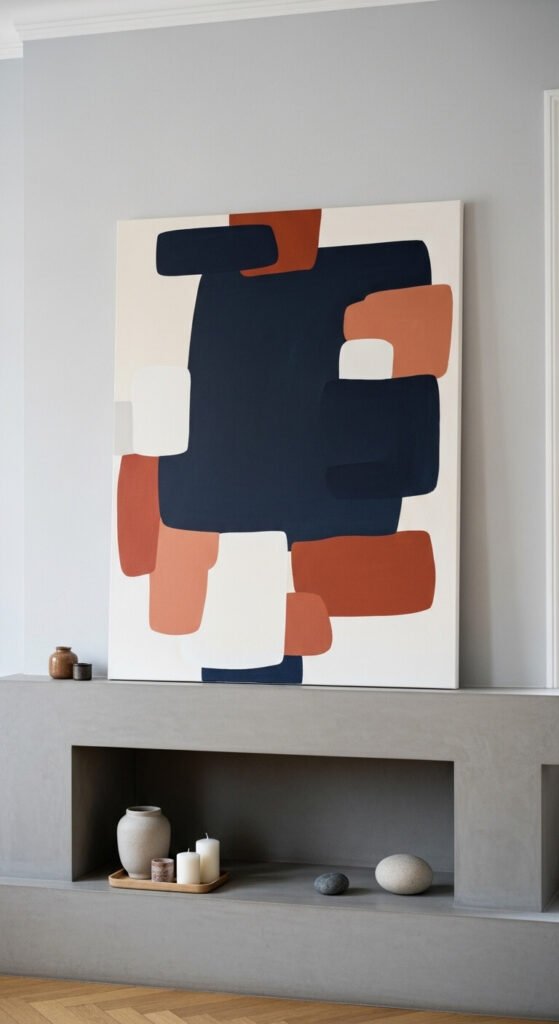
One large piece of artwork propped directly on the mantel shelf makes a bold, gallery-style statement. The artwork should be close to the full width of the mantel surround — a piece that is too small gets swallowed by the fireplace architecture. Lean it directly against the wall without hanging — this approach looks intentionally casual and is easier to change. Abstract canvases, oversized botanical prints, and large black-and-white photography all work well. Affordable large canvases are available from online art marketplaces for $30 to $80. Layer one or two small objects in front at the base to bridge the transition between shelf and artwork.
9. Autumn Harvest Display with Pumpkins and Foliage
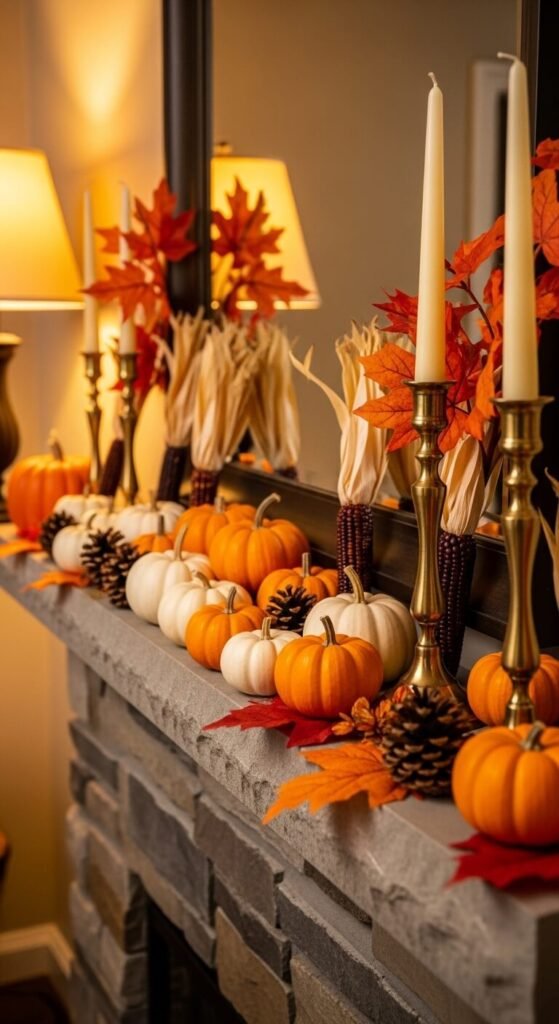
Seasonal mantel styling signals that a home is lived in and cared for throughout the year. An autumn harvest display needs three elements: height, texture, and organic shapes. Use tall candlesticks for height, a cluster of pumpkins in varying sizes and colors for shape, and dried foliage, pinecones, or seed heads for texture. White, cream, and blush pumpkins look more considered than all-orange. Dried foliage from your own garden costs nothing. Small decorative pumpkins cost $1 to $4 each at farm stands in season. The whole display costs under $20 to build and transforms a mantel completely for the entire autumn season.
10. Architectural Salvage Pieces as Sculpture
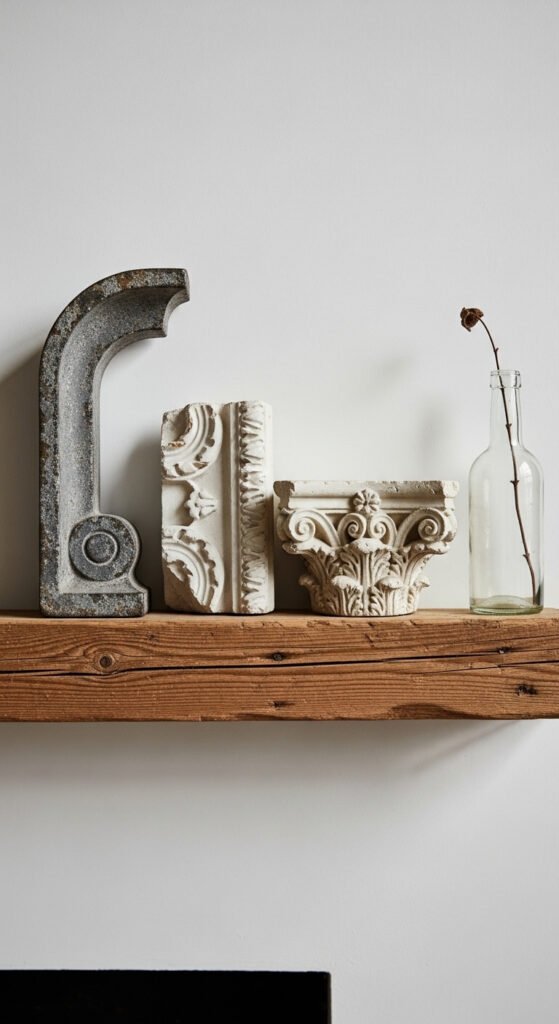
Architectural salvage pieces — old corbels, plaster fragments, carved stone capitals, and ironwork — make extraordinary mantel objects because they carry real history and texture. Source them from architectural salvage yards, demolition companies, or antique fairs. Prices are often surprisingly low because demand is niche. A weathered iron corbel or carved stone fragment costs $5 to $30 and looks like a considered collector’s piece on a mantel shelf. Arrange two or three salvage pieces alongside simpler objects — a single dried stem, a candle, a smooth stone — so the salvage pieces remain the focus. This approach works especially well in industrial, eclectic, and traditional interiors.
11. Minimalist Three-Object Mantel
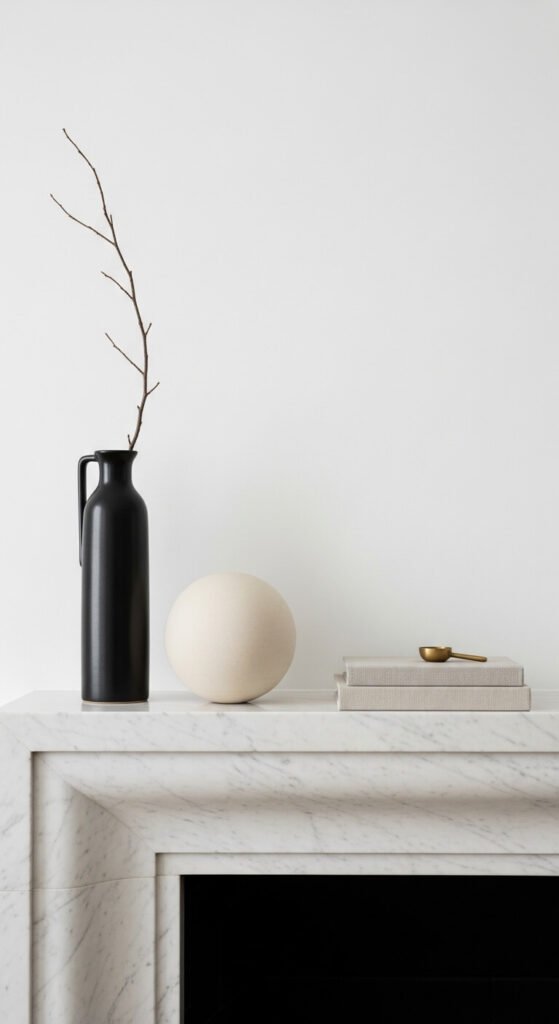
A three-object mantel is one of the hardest displays to execute well — and one of the most striking when done right. Use the rule of three: one tall object, one mid-height object, and one low object, placed at varying positions along the shelf rather than clustered together. The negative space between them is as important as the objects themselves. Choose pieces that vary in height, material, and texture. A ceramic vase, a sculptural sphere, and a small stack of books is a reliable starting combination. The whole display costs almost nothing if you already own suitable objects — this is a styling exercise, not a shopping one.
12. Layered Frames in Front of a Mirror
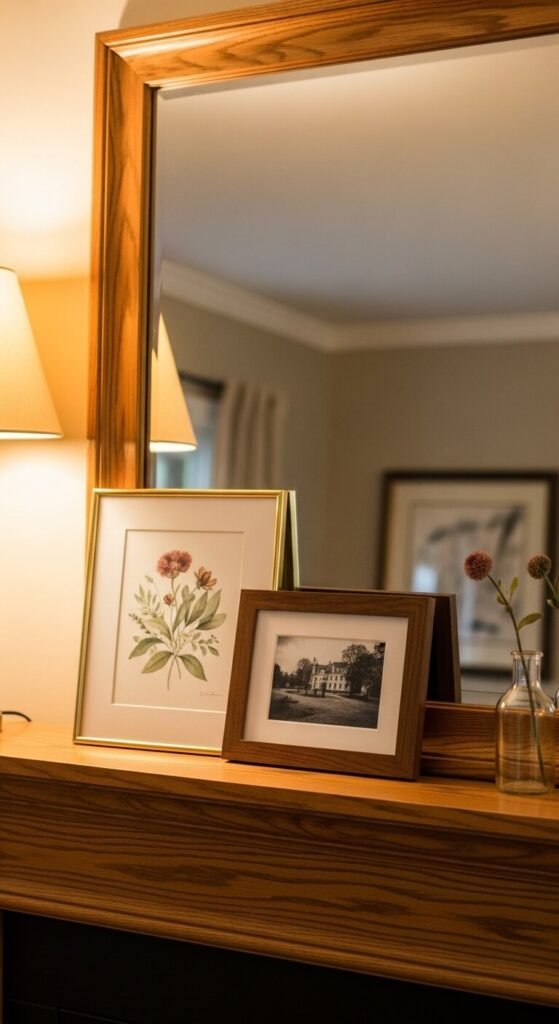
Layering smaller frames in front of a large leaning mirror adds depth and an art collector’s aesthetic to a mantel display. Lean two or three frames of different sizes directly against the mirror, offset from center. The mirror behind reflects the room and the backs of the frames, adding depth. Mix frame finishes — one gold, one dark wood, one black — for a collected look. Print your own artwork or photographs at a copy shop for $2 to $5 to fill frames cheaply. This technique works especially well when the frames are slightly too small on their own to hold attention — the layering compensates entirely.
13. Sculptural Vases in a Tonal Arrangement
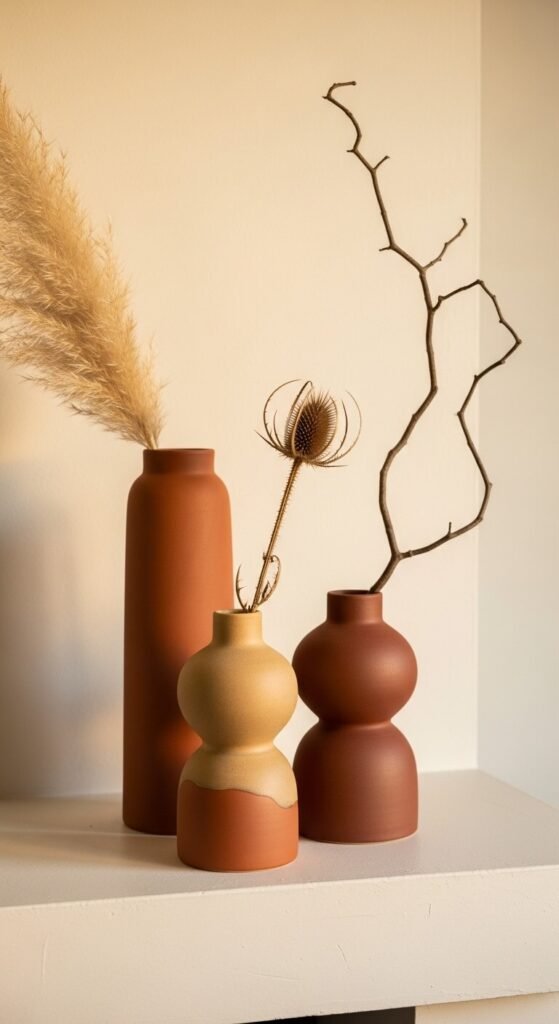
A tonal vase grouping — multiple vases in related colors with varying shapes — creates a quiet but compelling display. Choose three to five vases in the same color family but with different heights and silhouettes. Earthy terracottas, muted greens, and cool stone greys all work well as a tonal group. Use each as a vessel for a single dried stem or branch rather than a full floral arrangement — the simplicity makes the ceramics the focus. Independent ceramic artists sell beautiful pots at craft markets and online for $15 to $40 each. Charity shops also frequently yield interesting ceramics for $2 to $6 a piece.
14. Christmas Mantel with Stockings and Greenery
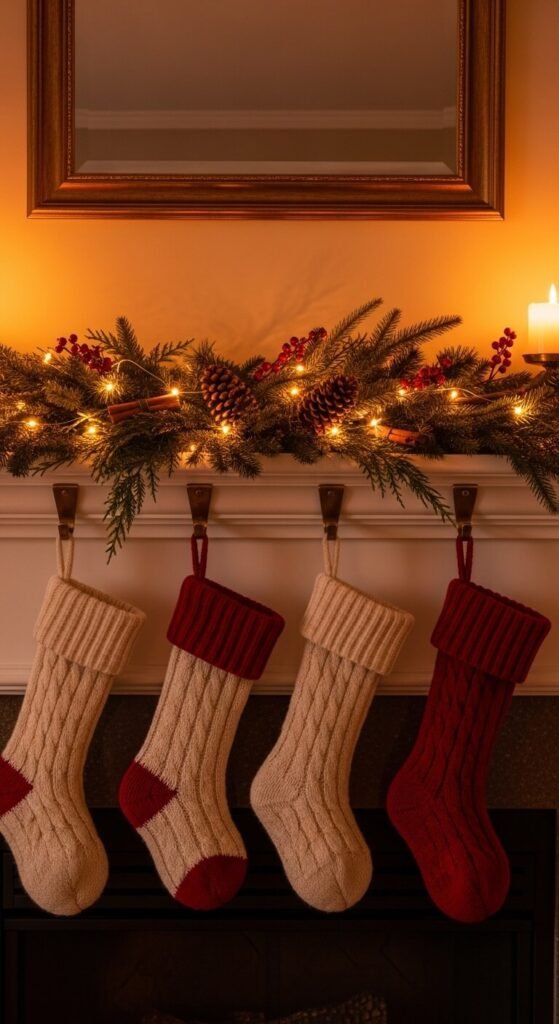
A well-styled Christmas mantel is the most visual room display of the year. Start with a fresh pine or cedar garland as the base, then layer in lights, ribbon, pinecones, berries, and candles. Hang stockings from brass stocking holders — they cost $6 to $12 each and hold stockings securely without damaging the mantel. Fresh pine garland from a garden center or Christmas tree lot costs $15 to $25 for a 6-foot length and fills the shelf generously. Add battery fairy lights woven through the greenery for safe, easy lighting. The whole mantel display costs under $60 to build and becomes the most photographed spot in the house each December.
15. Black and White Photography Collection
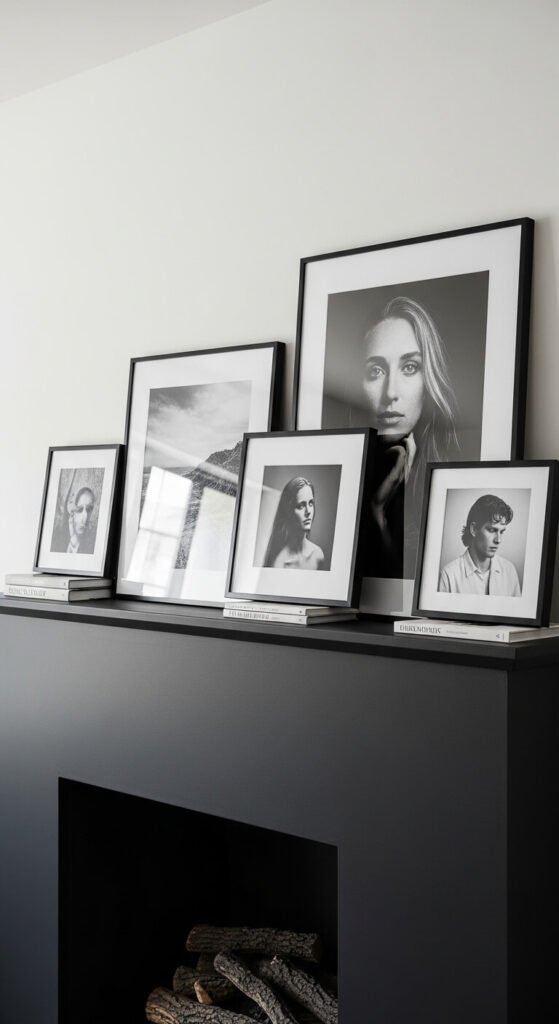
A curated collection of black-and-white photographs in matching frames gives a mantel a gallery quality that works in almost any interior style. Use the same frame finish throughout — all black, all white, or all natural wood — to unify the collection visually. Print personal photos at a local print shop or order online for as little as $3 to $8 per print. Frame sizes can vary; the matching finish is what holds the arrangement together. Place frames at slightly different heights using small book stacks as risers. Five frames in matching black thin frames across a wide mantel costs around $30 to $50 in total materials.
16. Dried Botanicals and Seed Heads in Bud Vases
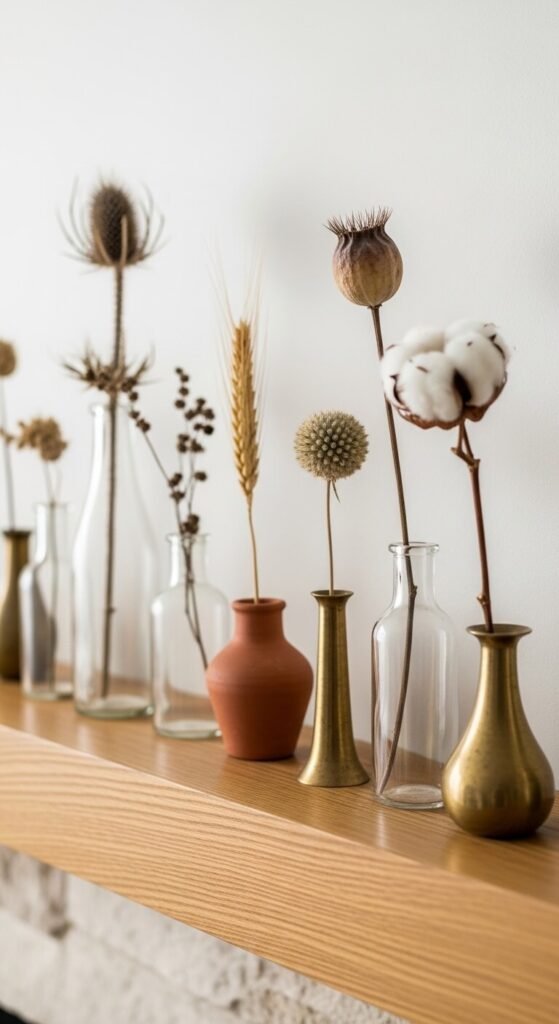
A botanical specimen display — individual dried stems in small collected vessels — looks like something from a natural history collection. Gather a mix of five to ten small vessels: old glass bottles, small ceramic pots, bud vases, and brass holders. Place a single dried stem in each. Use a range of botanical specimens: dried thistles, wheat, craspedia, cotton bolls, seed pods, and pampas grass all work well. Forage from your own garden or roadside hedgerows in late summer and autumn. Dry them by hanging upside down for two weeks. The vessels cost $0 to $5 each from thrift stores. This display costs almost nothing and lasts for months.
17. Vintage Candlestick Collection
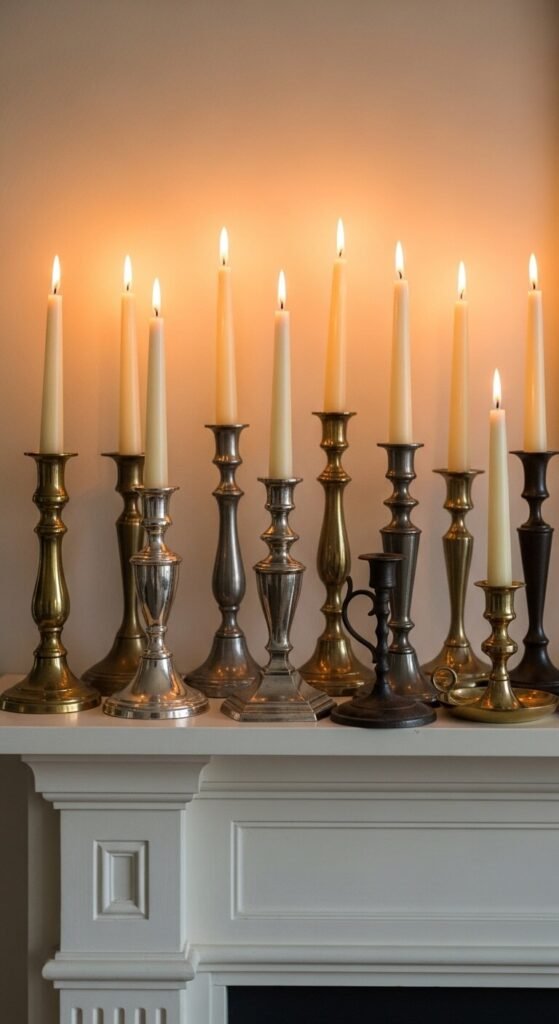
A collection of mismatched vintage candlesticks reads as curated and collected when the candles are unified. Use only white or ivory taper candles throughout — this unites the visually different candlestick styles into a single cohesive display. Collect candlesticks over time from antique fairs, charity shops, and estate sales — brass, silver plate, pewter, and iron pieces all work together. Prices range from $1 to $15 each secondhand. Aim for five to seven candlesticks in varying heights spread across the mantel. Cluster three together at one end, separate two in the middle, and place one at the far end for an asymmetric but balanced arrangement.
18. Neon Sign or LED Letter Art Above the Mantel
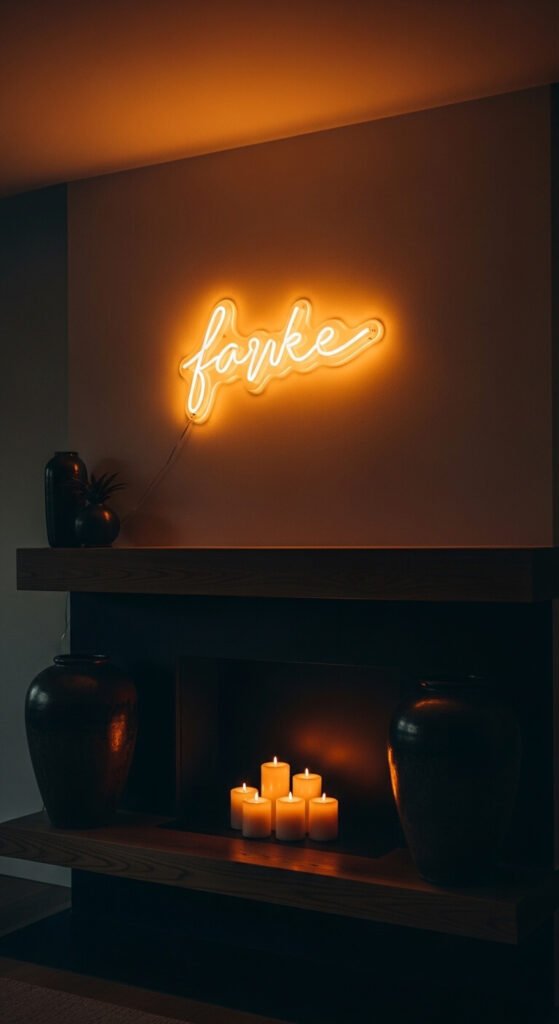
A neon or LED light sign above the mantel creates an unexpected, modern focal point that works particularly well in contemporary and eclectic interiors. LED neon flex signs are safer, lighter, and cheaper than glass neon — a custom 18-inch sign costs $30 to $60 online. Choose a simple word, phrase, or symbol in a color that complements the room’s palette. Warm white and amber tones photograph beautifully and feel less trendy than bold colors. Mount the sign on the wall above the mantel using the included fixings. Keep the mantel shelf itself simple — the lit sign above handles all the visual attention.
19. Terracotta Pot Collection as Sculptural Objects
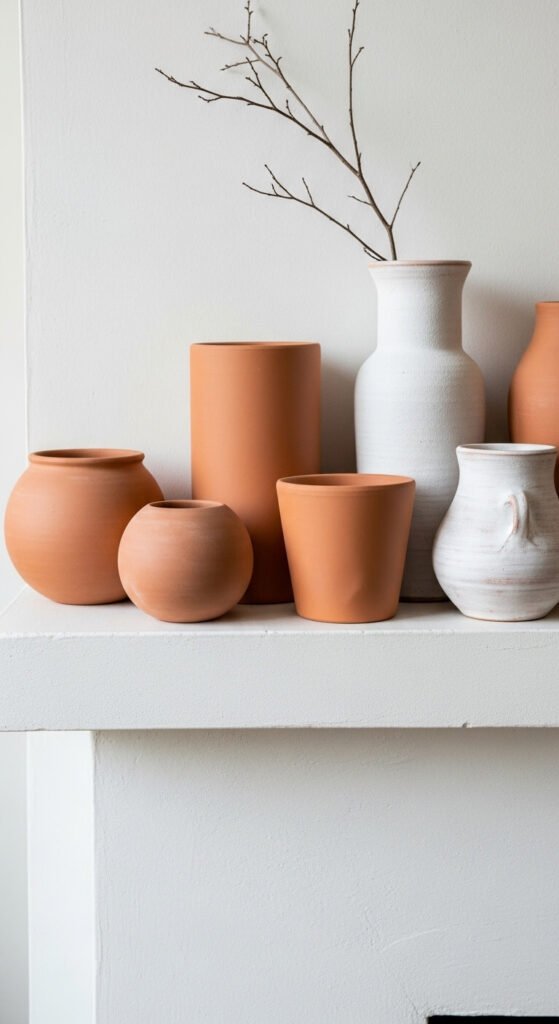
Plain terracotta pots used as sculptural objects — without plants — are an unexpected and genuinely beautiful mantel styling choice. Use a mix of sizes and forms: short and squat, tall and cylindrical, wide-mouthed and hand-thrown irregular shapes. The earthy unglazed surface has a warmth and quiet beauty that works especially well against white, plaster, or pale grey walls. Some can hold a single dried stem; others work left entirely empty. Terracotta pots cost $2 to $12 each from garden centers. This display suits organic, Mediterranean, and contemporary interiors particularly well. It costs almost nothing and looks deliberately considered.
20. Large-Scale Botanical Print Collection
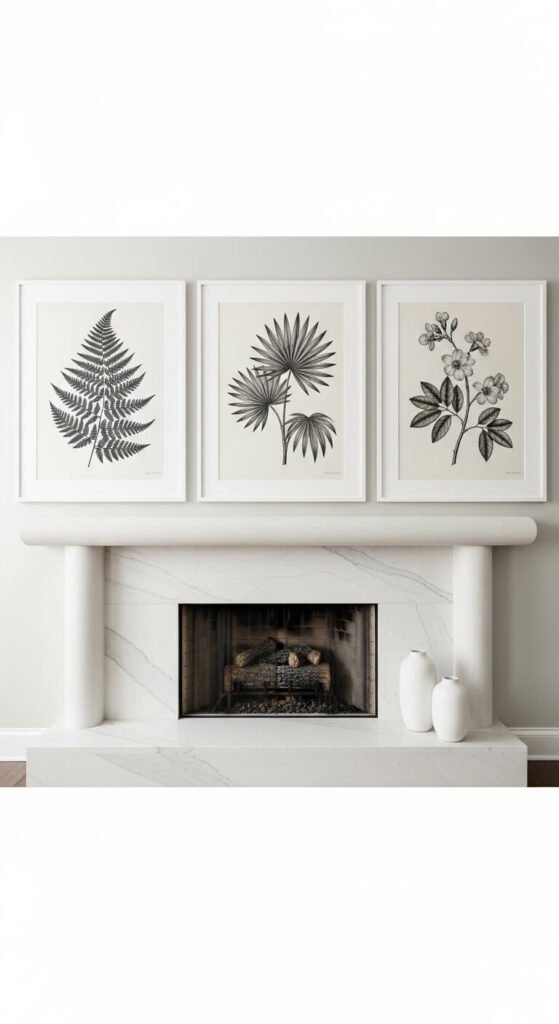
A set of three matching botanical prints in identical frames across the wall above the mantel creates a polished, collected display. Download free vintage botanical illustrations from public domain archives — hundreds of high-quality antique botanical engravings are available free online. Print at a local copy shop on cream cardstock for $3 to $6 per print. Frame in identical white or black frames. Mount at equal spacing above the mantel. The result looks like a considered art purchase for under $30 total. Keep the shelf below simple — two matching vases or a single garland is enough to ground the display without competing with the prints.
21. Moody Dark Academia Mantel
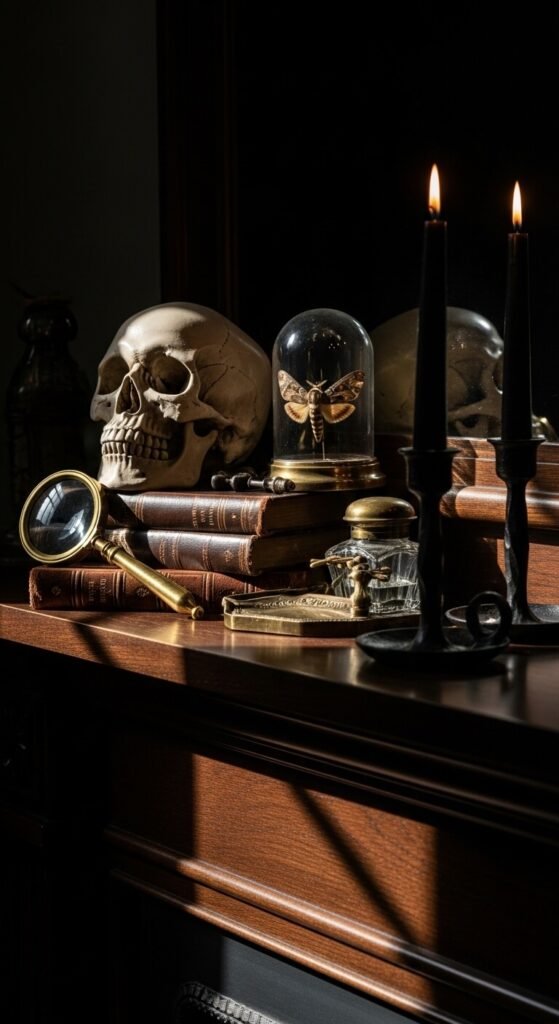
Dark academia mantel styling rewards a specific collector’s sensibility. Layer objects that reference curiosity, knowledge, and natural history: worn leather books, a skull replica, dried botanical specimens, a glass cloche, a magnifying glass, or a taxidermy piece. Dramatic black taper candles and iron candlesticks add atmosphere. Buy leather-look books from thrift stores — content does not matter, only the cover tone and wear. Glass cloches cost $8 to $20 from craft stores. Skull replicas in resin are widely available online for $15 to $30. Light the mantel with candles alone for maximum atmosphere. This style works on any mantel type but particularly suits dark wood surrounds.
22. Spring Mantel with Fresh Blooms and Pastel Tones
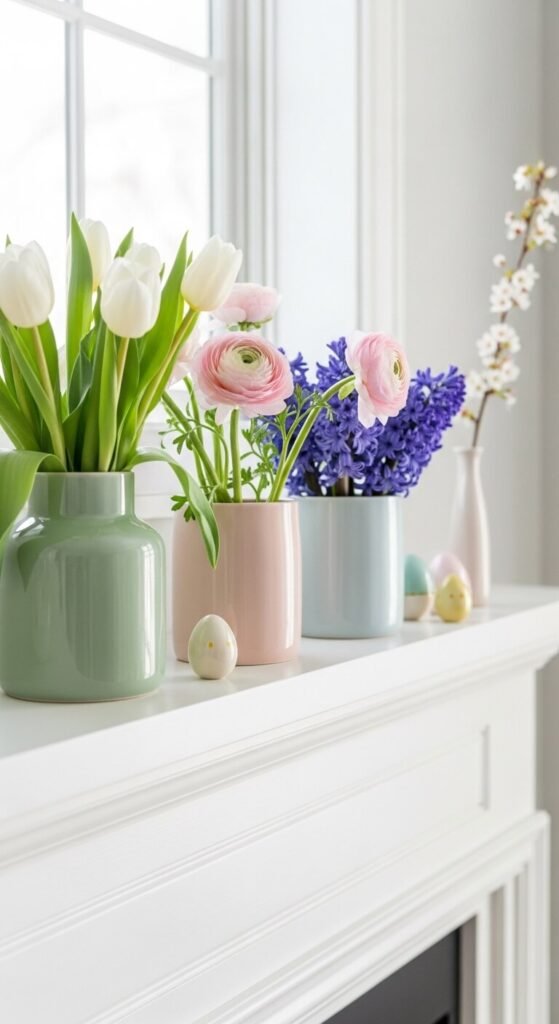
Spring mantel styling is about bringing the outdoors inside through soft color and real flowers. Use three small-to-medium vases in coordinating pastel tones, each holding a single type of flower. Tulips, ranunculus, hyacinths, and daffodils are all inexpensive in spring and available at supermarkets for $3 to $8 a bunch. Choose vase colors that pick up tones from the flowers — sage green, blush pink, soft blue, and pale yellow all work within the same pastel palette. Add a few small decorative birds, ceramic eggs, or a sprig of pussy willow for texture. Replace flowers weekly. The whole display costs under $25 and lasts through the entire spring season.
23. Industrial Pipe and Reclaimed Wood Mantel Display
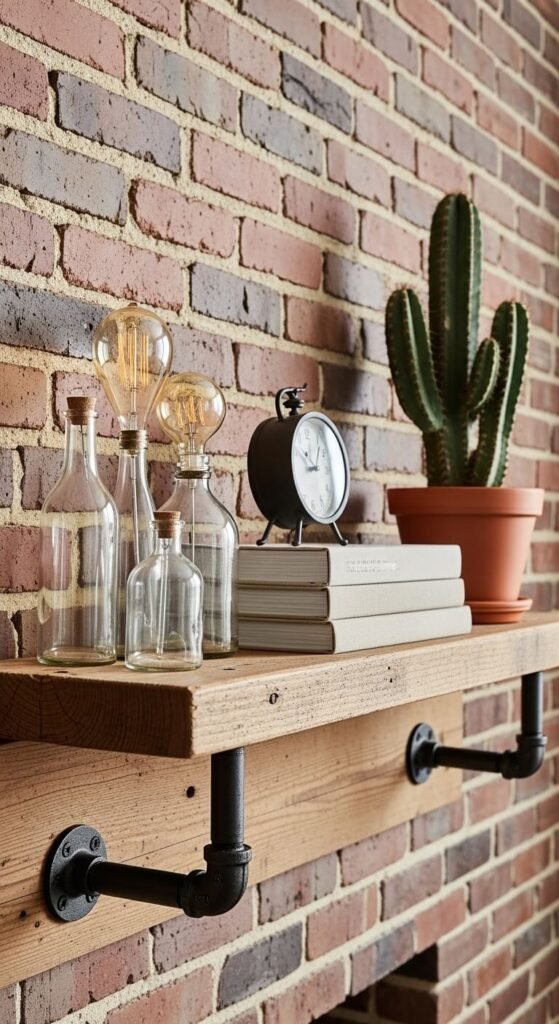
An industrial-style mantel display leans into raw materials, honest construction, and functional objects used decoratively. Use Edison bulb bottles, iron objects, natural linen, raw terracotta, and unfinished wood as the material palette. Exposed brick walls behind the mantel reinforce the aesthetic naturally. Keep the shelf uncluttered — three to five objects spaced with intention work better than crowding the shelf. Vintage Edison bulb bottles are widely available at flea markets for $2 to $5 each. Group three to five as a vase collection and add single dried or living stems. One large sculptural cactus in terracotta adds a living element that suits the rough industrial aesthetic well.
24. Travel Memory Collection Display
A travel memory mantel tells a personal story in a way no purchased decor can replicate. Group five to eight objects collected from meaningful trips: a small ceramic, a framed map, a carved wooden piece, a smooth stone, a postcard, a textile swatch. Keep the arrangement loose — objects should feel found and placed with care, not symmetrically aligned. Print a favorite travel photograph large and frame it as the display anchor. The whole collection costs nothing because you already own the pieces — this is a curation exercise. Objects that carry personal meaning create more visual interest than expensive purchased decorative pieces ever could.
25. Tall Pampas Grass in a Statement Floor Vase
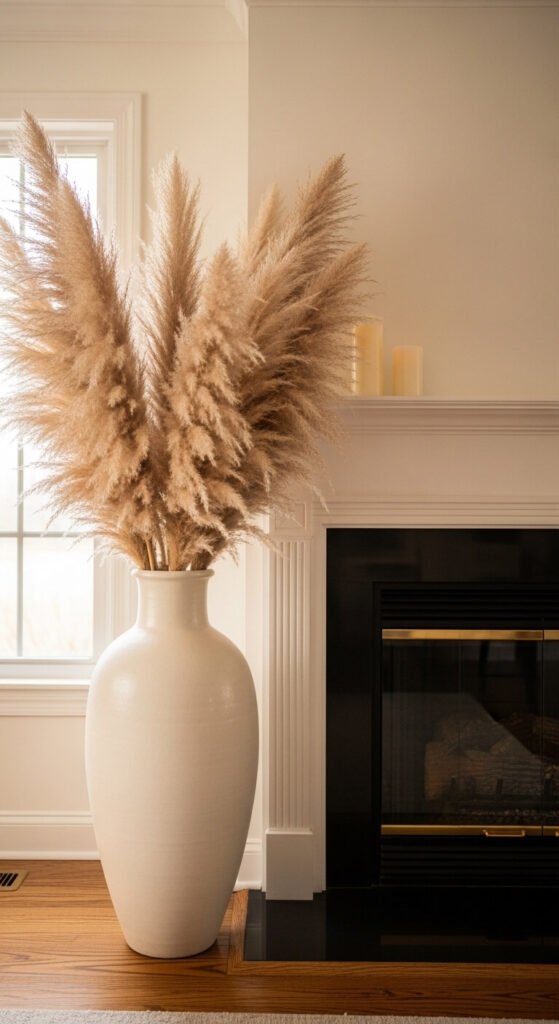
A tall floor vase on the hearth below the mantel extends the display vertically and adds architectural scale that shelf decor alone cannot achieve. Choose a vase that stands at least 24 to 30 inches tall and fill it with dried pampas grass, tall dried grasses, or large dried allium heads. Position it on the hearth floor rather than the shelf — this drops the visual weight downward and creates a full floor-to-ceiling composition. Large ceramic floor vases cost $40 to $80 new but turn up secondhand regularly for $15 to $30. Dried pampas grass costs $5 to $15 a bunch online. The scale alone makes it a room-defining piece.
26. Wabi-Sabi Mantel with Imperfect Objects
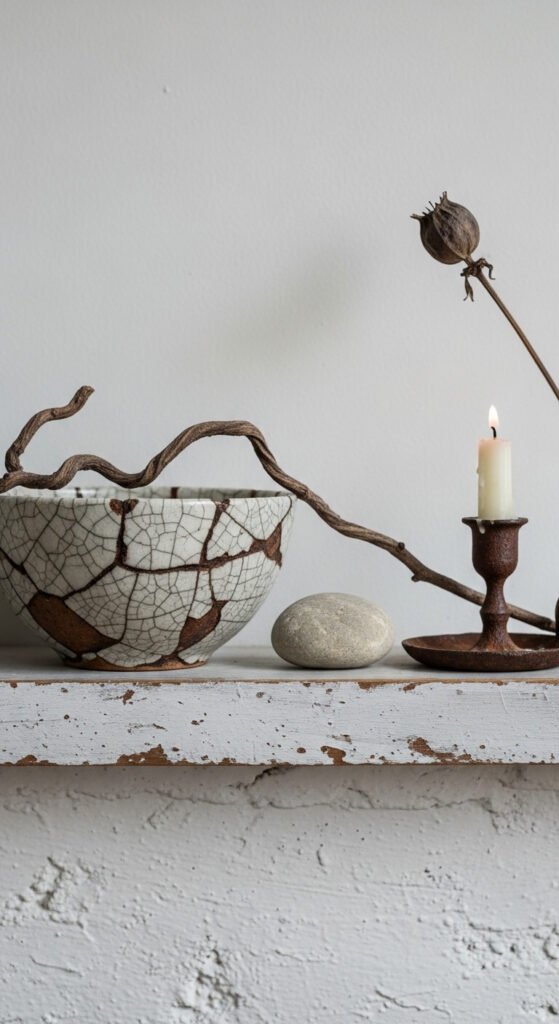
Wabi-sabi is the Japanese philosophy of finding beauty in imperfection and impermanence — and it makes for one of the most quietly compelling mantel displays possible. Use objects that show age, wear, and natural irregularity: a cracked or crazed ceramic bowl, a twisted dried branch, a smooth river stone, a rusted candlestick, a dried seed pod. The objects should feel found rather than purchased. River stones cost nothing. Twisted branches foraged from hedgerows cost nothing. Old cracked ceramics from a thrift store cost $1 to $3. The beauty of this approach is that the most interesting objects are often the least expensive — age and imperfection are the point.
27. Holiday Garland with Ornaments Draped Along the Shelf
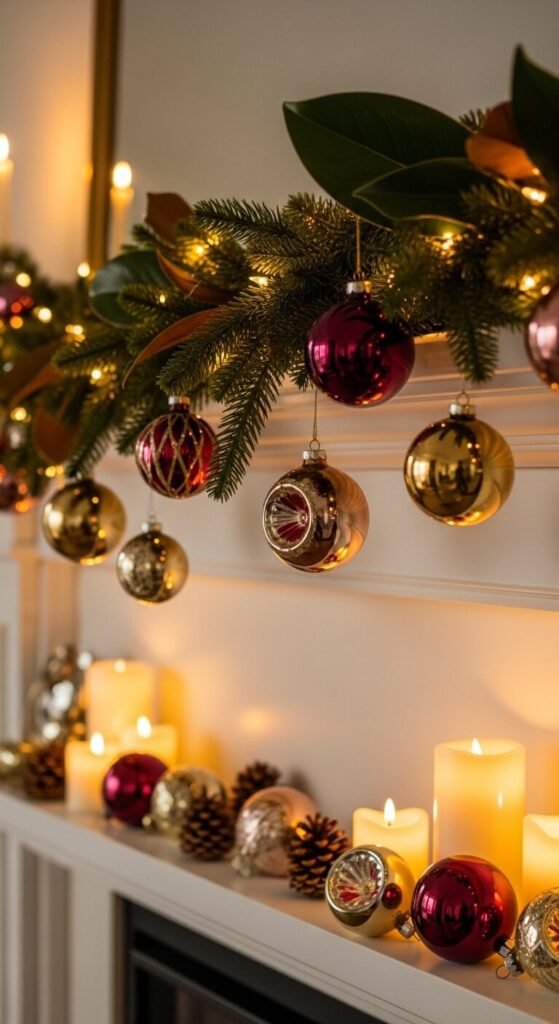
Draping a garland along the front edge of the mantel shelf — rather than lying flat on top — gives the mantel a dramatically more lush and luxurious feel. Use small S-hooks or clear fishing line to attach the garland to the mantel face, letting it hang in a gentle swag. Weave battery fairy lights through the garland as you drape it. Hang a mix of ornaments directly from the garland at varying depths — some close to the shelf, some hanging lower. Vintage glass ornaments from thrift stores cost $0.50 to $2 each and look far richer than new plastic versions. The whole decorated mantel becomes the centerpiece of a room for the entire holiday season.
Conclusion
A mantel display is one of the most rewarding styling projects in any home because the impact is immediate and the investment is often minimal. The best displays are not built from expensive purchases — they are built from a clear understanding of scale, layering, and restraint. A single large mirror, three well-chosen vases, and a handful of meaningful objects can outperform a shelf crowded with expensive pieces. Start with whatever you already own. Edit down to the objects that genuinely interest you, vary the heights, leave breathing room between them, and step back. Then add one element at a time until the arrangement feels complete. That is the whole process — and it works every time.