
Pillows are the fastest, most affordable way to change how a room looks and feels — and most people are using only a fraction of their potential. A single well-chosen combination of textures, sizes, and tones can make a plain sofa look like it belongs in a design magazine, a flat bed feel like a boutique hotel, and a forgotten reading chair feel like the best seat in the house. You don’t need to spend a lot or start from scratch. You just need to know which combinations actually work — and why. These 26 pillow decor combinations are specific, practical, and designed to add real comfort and visual warmth to any space, any budget, and any style.
1. Classic Cream and Ivory Linen Stack
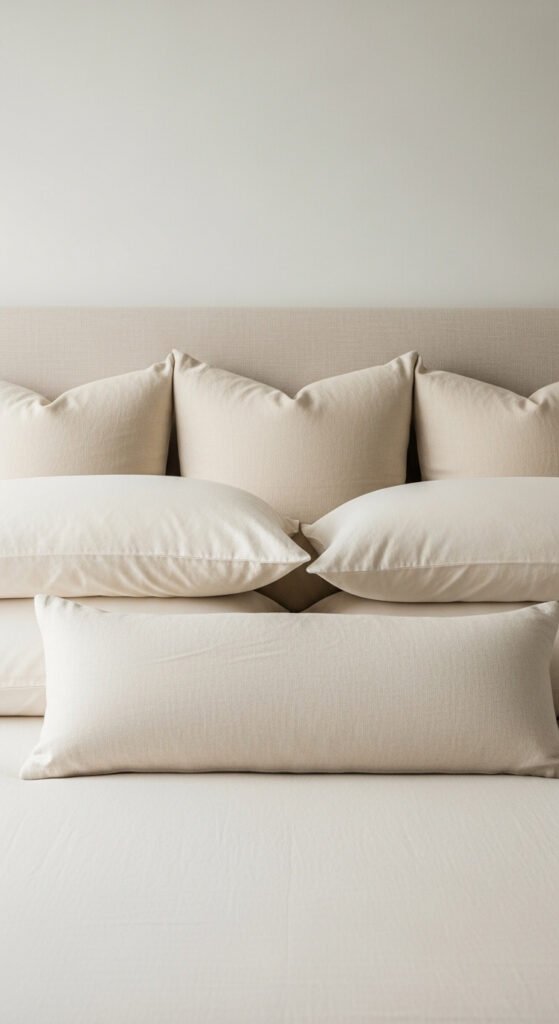
Cream and ivory together look simple but work because of the tonal variation between warm white shades.
They’re not the same color — ivory leans yellow-warm, cream leans pink-warm — and that difference creates subtle contrast when layered together. The result is a bed or sofa that feels cohesive without being monotone.
Start with euro shams in ivory linen, standard pillows in cream percale, and a lumbar in washed linen for texture contrast. All three elements cost under $60 total from IKEA or Amazon basics. This combination photographs beautifully and suits every bedroom style from minimal to traditional.
2. Rust, Cream, and Terracotta Earthy Trio
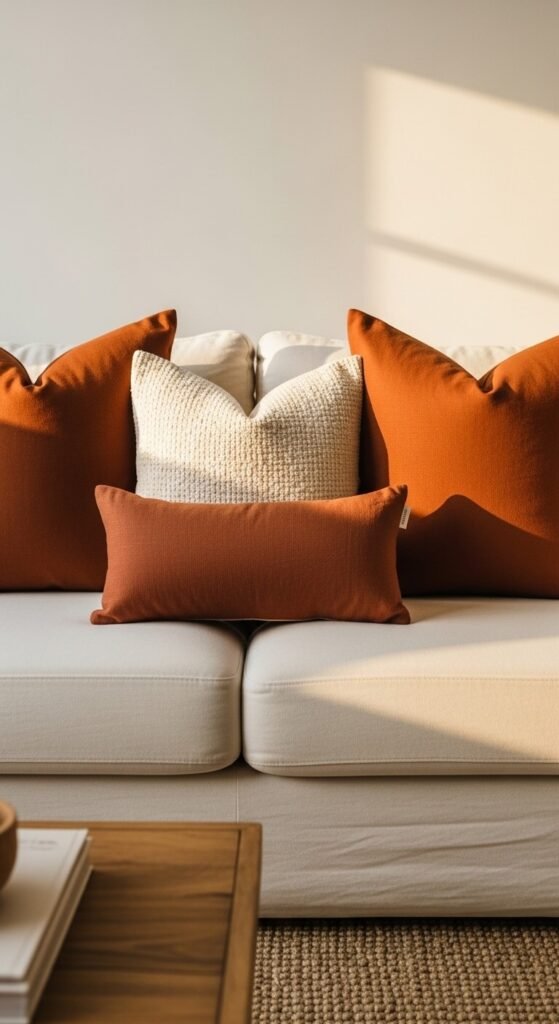
Earthy tones anchored in rust and terracotta give a sofa or bed an instant sense of warmth and intentional styling.
The key is keeping cream as the bridge between the two stronger shades. Too much rust and terracotta together becomes heavy. One neutral in the center lightens the palette and lets the warm tones breathe.
Rust and terracotta pillows are widely available at Target, H&M Home, and HomeGoods for $12–$25 each. Look for them in washed cotton or linen for the most natural, relaxed finish. This combination pairs beautifully with warm wood tones and natural fiber rugs.
3. Chunky Knit and Velvet Contrast Pair
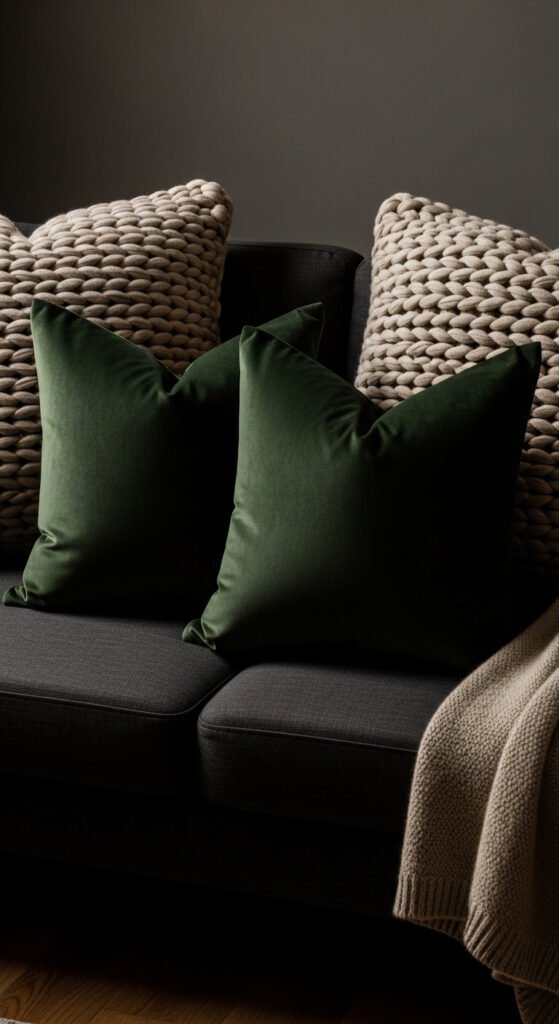
Chunky knit next to velvet is one of the highest-contrast texture pairings available — and it works because both fabrics catch light in completely opposite ways.
Knit is matte, dimensional, and casual. Velvet is smooth, reflective, and structured. Together they create visual tension that makes a sofa feel curated rather than just filled with pillows.
Keep the color palette tight — two neutrals or one neutral and one accent. Oatmeal knit with forest green velvet, cream knit with dusty rose velvet, or charcoal knit with caramel velvet are all combinations that work immediately. Most pillow covers in these fabrics cost $15–$30 each.
4. Black, White, and Natural Linen Modern Mix
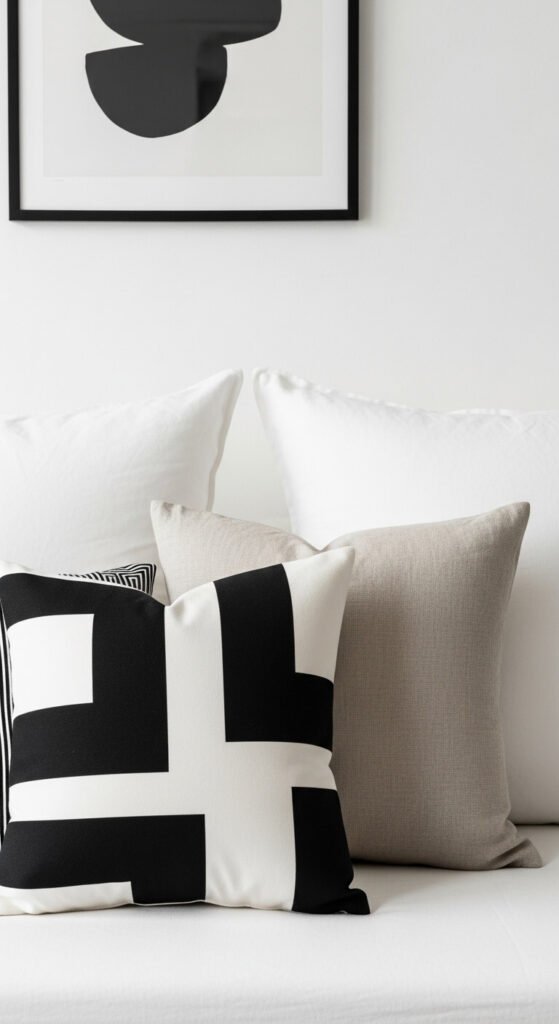
Black and white with natural linen creates a modern, graphic pillow arrangement that suits minimal and Scandinavian-influenced interiors.
The natural linen acts as a warm buffer between the stark contrast of black and white, softening the palette just enough to keep it from feeling clinical. One graphic patterned pillow — a simple stripe, grid, or abstract print — adds visual interest without disrupting the overall calm.
Use undyed or natural linen for the center pillow — it’s the warmest neutral available and prevents the arrangement from reading as too stark. Graphic black-and-white pillow covers are widely available on Etsy for $18–$30.
5. Sage Green and Warm White Botanical Combination
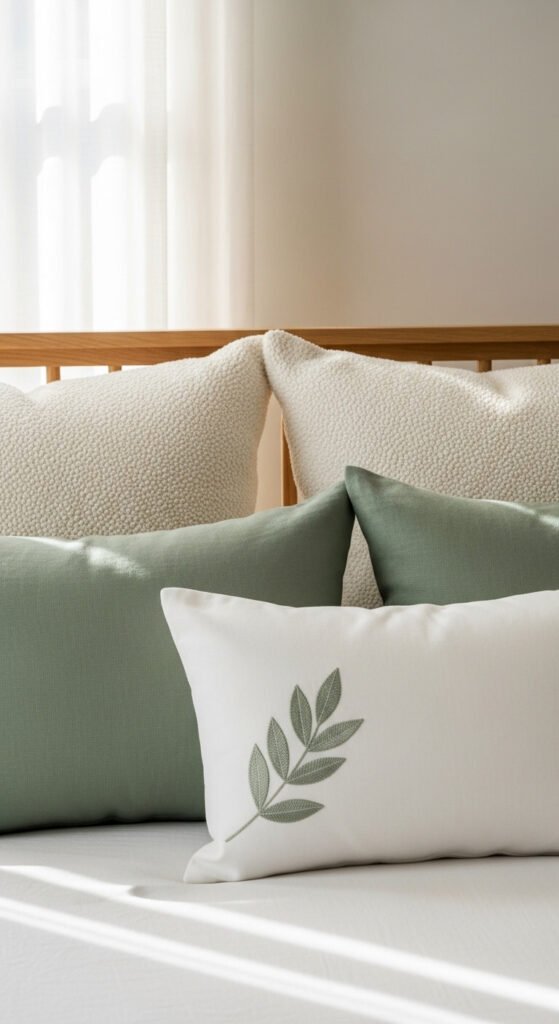
Sage green and warm white together feel organic, calm, and quietly sophisticated — without requiring any bold design decisions.
Sage reads as a natural neutral in many contexts, which means it pairs easily with almost every other tone in a room. Combined with warm white, it evokes botanical prints, greenhouse interiors, and linen-draped summer spaces.
Add one embroidered or textured accent pillow in white to break up the flat sage. Embroidered pillow covers from Amazon or Etsy run $18–$28 and add a handcrafted quality to the arrangement. This combination suits bedrooms, living rooms, and sunrooms equally well.
6. Deep Navy and Brass-Accented Pillow Pairing
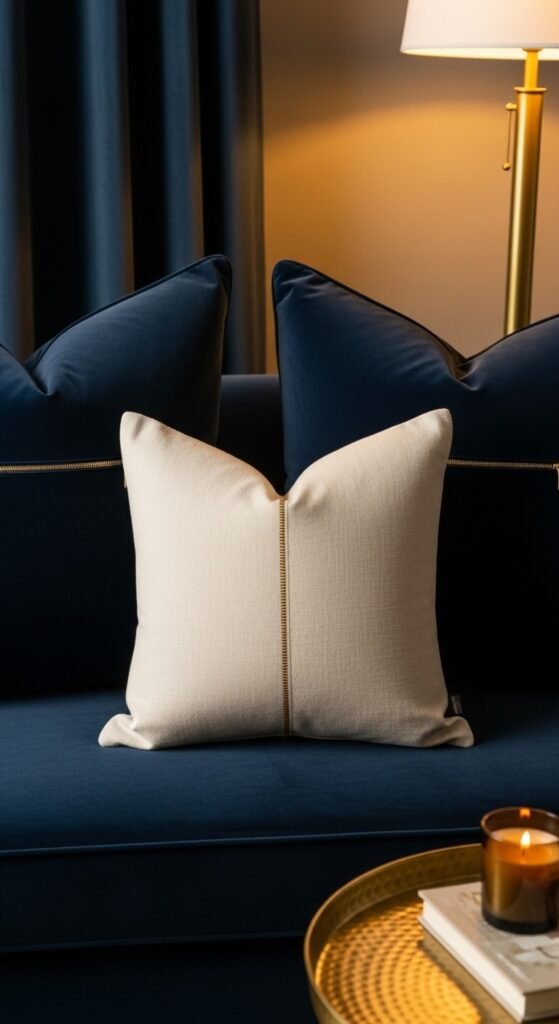
Deep navy with brass accents in pillow combinations creates a rich, slightly nautical, wholly sophisticated look that works across traditional and modern interiors.
The navy anchors the arrangement in depth and seriousness. Cream introduces lightness. Brass — even in small doses through piping, embroidery, or trim — adds warmth and a point of visual interest that prevents the navy from reading as heavy.
Look for pillow covers with brass zipper pulls or metallic thread detail — a subtle way to introduce the metal finish without committing to a fully embellished piece. Target and H&M Home regularly carry navy and cream pillow covers for $15–$25 each.
7. Boho Fringe and Woven Texture Layering
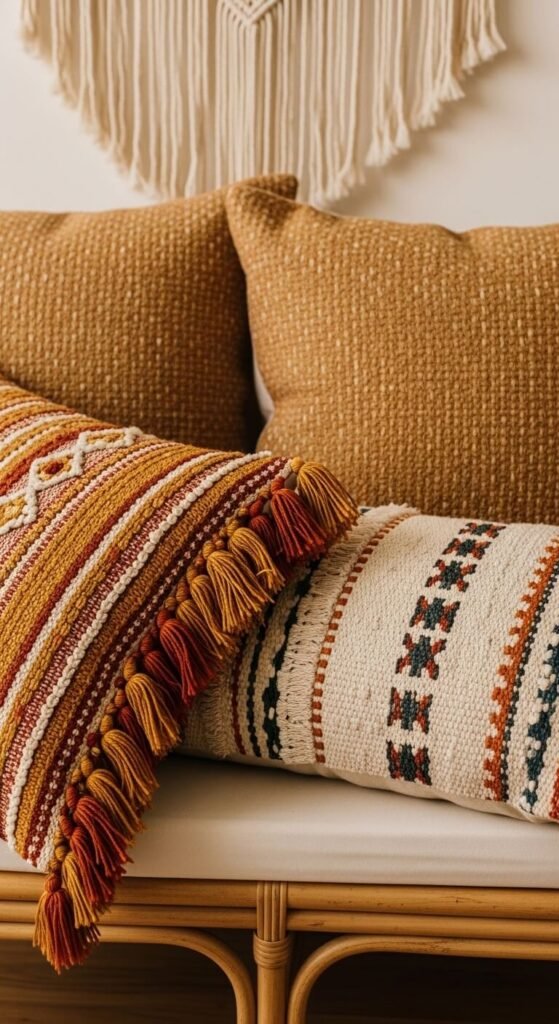
Fringe, tassels, and woven flat-weave fabrics create a boho pillow arrangement that feels collected and handmade in the best possible way.
The trick is layering rather than matching. Each pillow should look like it was found separately — different scale, different texture, different pattern — but held together by a consistent warm color palette of sand, rust, ochre, and cream.
Woven and tassel pillows from World Market, Urban Outfitters, or Etsy run $18–$40. Look at thrift stores and vintage markets too — older woven and kilim pillow covers are often the most beautiful options available and cost $5–$15. Mix freely without overthinking.
8. Blush, Dusty Rose, and Mauve Tonal Gradient
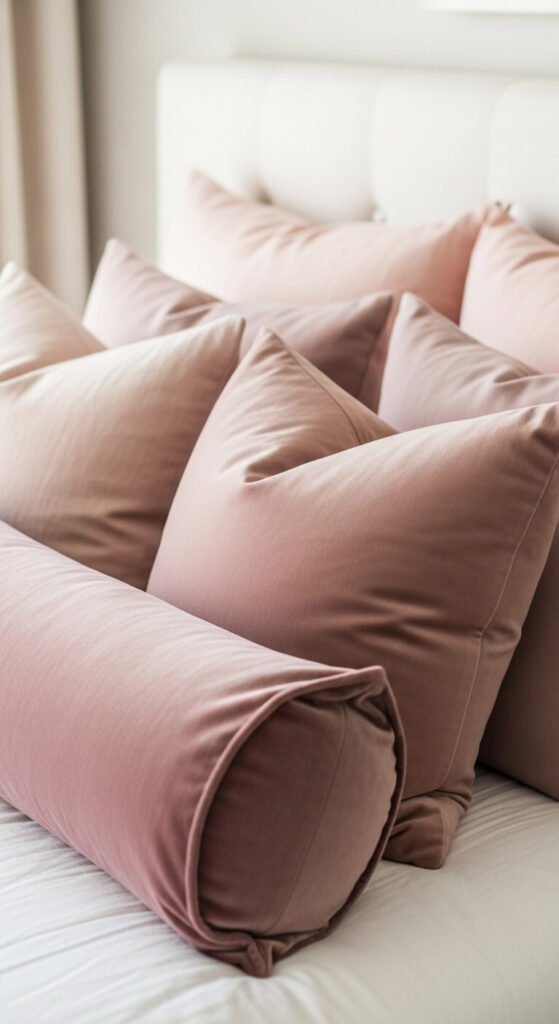
A tonal gradient using three shades of the same pink family creates a pillow arrangement that looks professionally designed with almost no effort.
Start with the lightest shade at the back — the euro shams — and move progressively deeper toward the front. Blush to dusty rose to mauve is the most natural progression in this family. Keeping the same tone family means every element coordinates automatically.
Stick to the same fabric across all pillows — all linen or all velvet — for the cleanest tonal gradient. Mixing fabrics within a gradient introduces texture contrast that can muddy the color story. Each shade in this combination costs $15–$30 per cover from H&M Home or Amazon.
9. Chunky Bouclé and Cashmere Luxury Pair
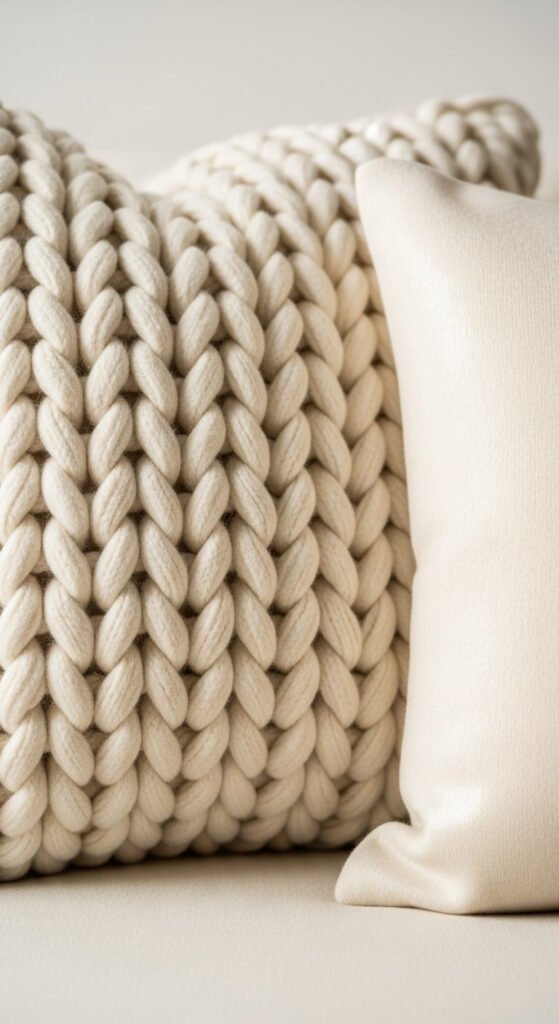
Bouclé and cashmere in the same neutral tone is a tone-on-tone combination that works entirely through texture contrast rather than color.
The bouclé is rough, dimensional, and matte. The cashmere is smooth, soft, and has a very slight sheen. Placed side by side, the visual difference between them is striking despite the identical color — and both fabrics photograph beautifully.
Bouclé pillow covers cost $20–$45 from Amazon, Anthropologie, or HomeGoods. Cashmere-blend covers run $25–$60. Look for cashmere blends rather than pure cashmere for significant savings. This combination works best in pairs on a sofa rather than in larger groupings on a bed.
10. Forest Green, Rust, and Ochre Jewel Tones
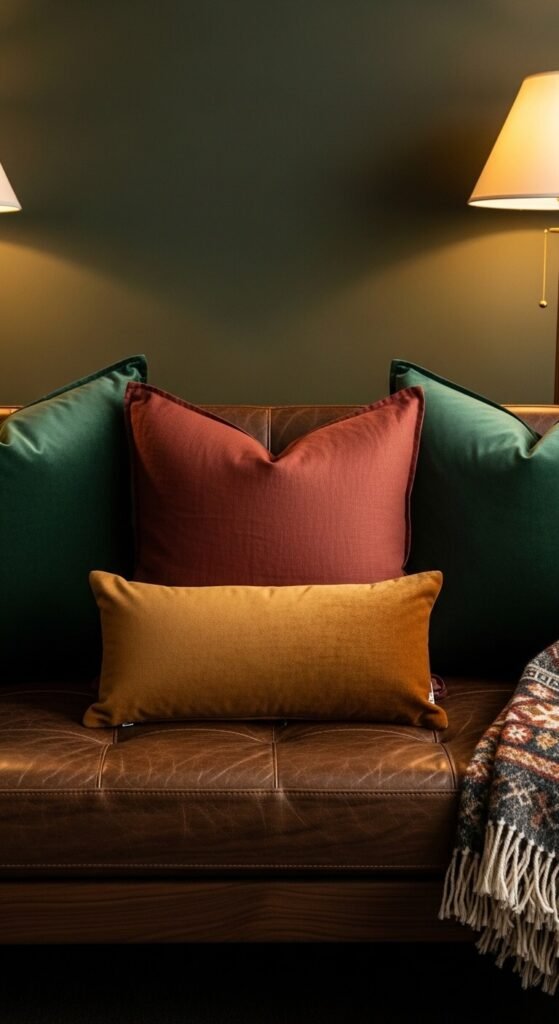
Forest green, rust, and ochre together create a jewel-toned combination that feels rich, autumnal, and deeply layered without being heavy.
These three colors sit within the same warm temperature range, which means they naturally harmonize despite being visually distinct. The green anchors and cools slightly; rust warms the center; ochre brightens and lifts.
This combination works exceptionally well on leather or dark upholstered sofas where the warmth of the pillow colors contrasts beautifully against a cool, smooth base. All three colors are widely available at Target, HomeGoods, and H&M Home for $15–$28 per cover.
11. Striped Linen and Solid Lumbar Combination
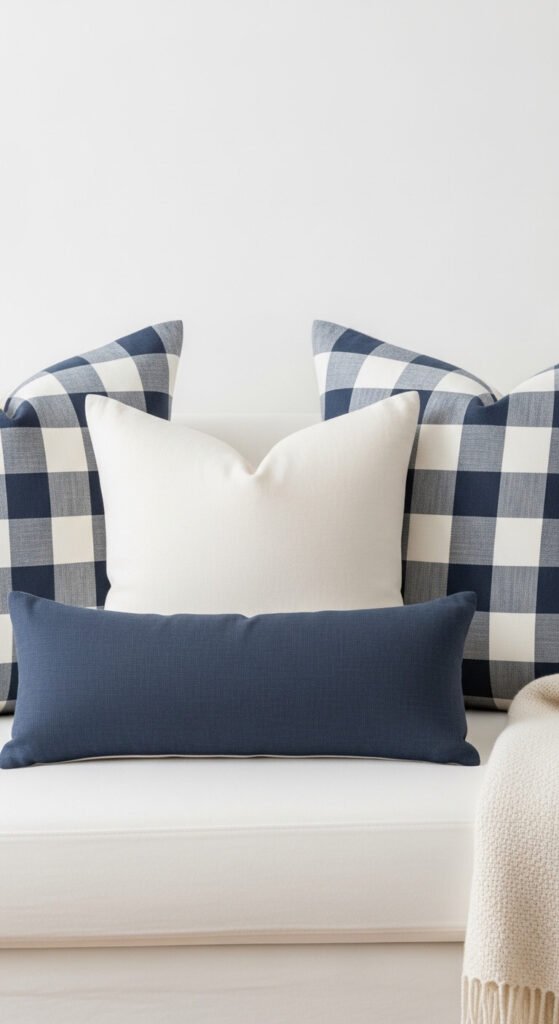
One striped pillow paired with matching solid pillows in the same color family is one of the cleanest, most reliable pillow formulas available.
The stripe introduces pattern without overwhelming the arrangement — especially when the solid colors are pulled directly from the stripe’s own palette. A navy and white stripe pairs with navy and white solids. A sage and cream stripe pairs with sage and cream solids.
Ticking stripe linen covers are available on Amazon and at IKEA from $12–$22. Pull the accent color from the stripe for the lumbar to complete the connection. This formula works on sofas, beds, and window seats.
12. All-White Texture Play Arrangement
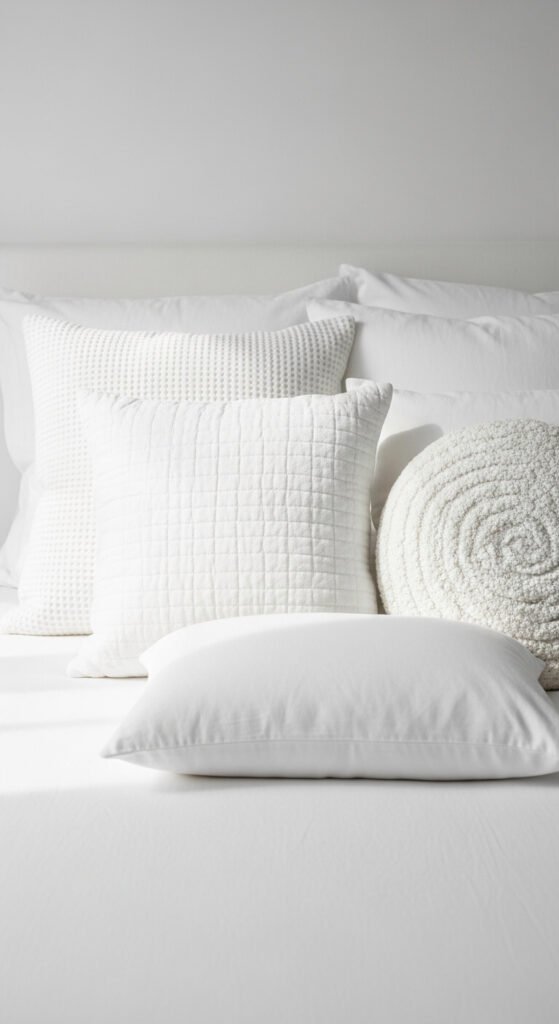
An all-white pillow arrangement that works relies entirely on texture variety — flat cotton, waffle knit, quilted, bouclé, and smooth linen all reading as different surfaces at the same neutral tone.
This combination looks especially strong in bright, minimalist bedrooms where the white-on-white creates a calm, hotel-like atmosphere. The more varied the textures, the richer the arrangement reads despite the absence of color contrast.
Source one pillow from each texture category — flat, waffle, quilted, nubby, smooth — and the arrangement almost styles itself. Most white pillow covers cost $10–$25 each, making this one of the most affordable full arrangements on the list.
13. Geometric Pattern and Solid Contrast Pairing
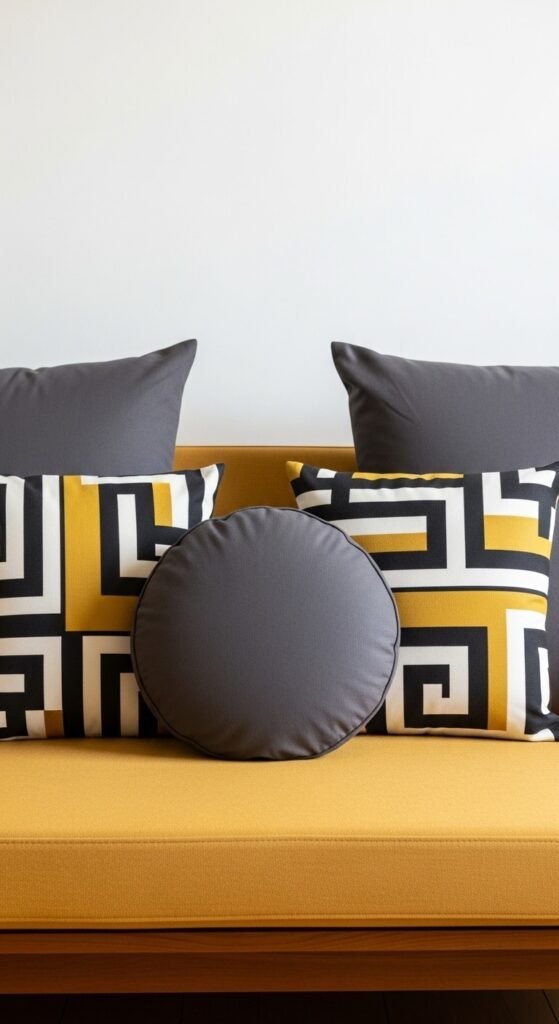
One bold geometric pillow surrounded by solid pillows in colors pulled directly from its own pattern is the most foolproof way to use patterned pillows without the arrangement looking chaotic.
The geometric print acts as the starting point — not the ending point. Choose solids in two of the colors already present in the pattern. The result is a fully coordinated arrangement where every element feels chosen together.
Look for geometric pillow covers on Etsy or Society6 where independent designers offer print options not found in mainstream stores. Prices run $18–$35 per cover. This approach works with any geometric print — grid, diamond, triangle, or abstract.
14. Ivory, Caramel, and Chocolate Brown Warm Neutral Stack
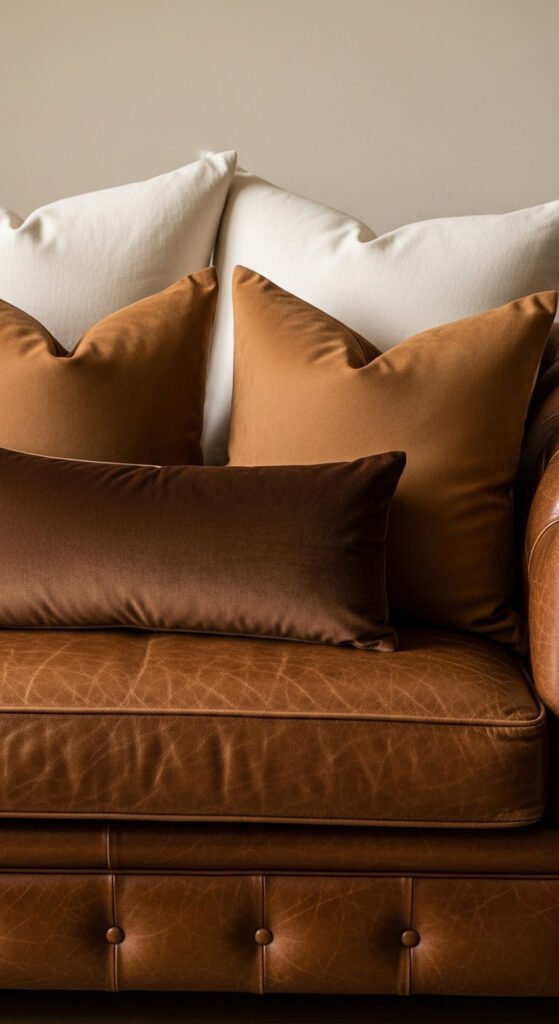
Ivory to caramel to chocolate is a tonal stack in the brown family that creates visual depth on warm-toned sofas and beds without introducing any color outside the neutral range.
This progression from lightest to darkest — back to front — creates a natural shadow effect that makes the arrangement look dimensional. Each pillow appears as though it’s slightly deeper in tone than the one behind it.
Suede and velvet in caramel and chocolate tones are especially effective here — they absorb and reflect light differently across the day and give the arrangement a subtly dynamic quality. Budget per pillow cover: $15–$35.
15. Linen Euro Shams with Embroidered Accent Pillows
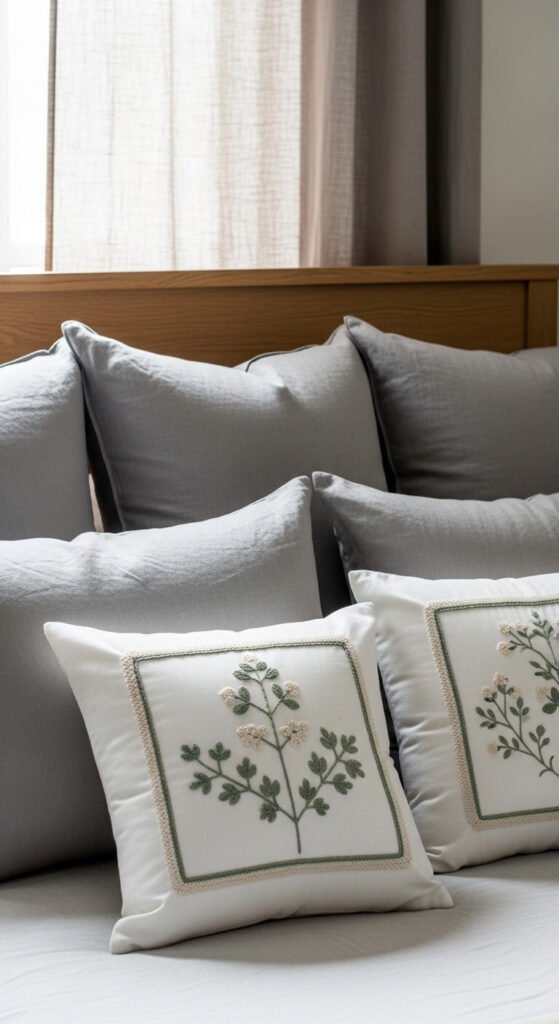
Plain linen euro shams paired with one or two embroidered accent pillows is a combination that looks considered and artisan-made without requiring a significant budget.
The linen provides the neutral, understated backdrop. The embroidered pillows introduce detail, craft, and a point of visual focus that the rest of the arrangement intentionally lacks. The contrast between plain and detailed is what makes each element look better.
Embroidered pillow covers on Etsy — often made by independent artisans — run $22–$45 and offer far more interesting options than mass-market stores. Look for botanical, geometric, or abstract embroidery in thread colors that match your room’s existing palette.
16. Outdoor Sofa Pillow Combination in Faded Indigo and White
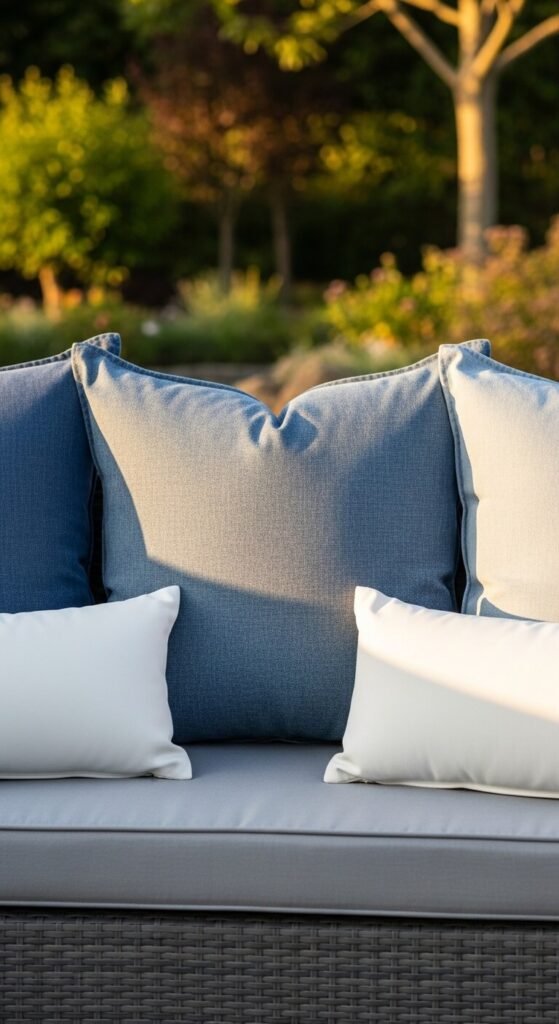
Faded indigo and white outdoor pillows create a relaxed, sun-bleached coastal atmosphere on any patio or porch furniture.
The beauty of this combination is the tonal variation within the indigo itself — some deeper, some more faded — which creates interest without introducing a second color. White lumbar pillows at the front clean up the arrangement and prevent the blues from becoming visually heavy.
Outdoor pillow covers in water-resistant fabric cost $15–$35 each. Look for UV-treated options that won’t fade unevenly over time. IKEA, Target’s patio collection, and Amazon carry reliable outdoor pillow options in indigo and white across every season.
17. Mixed Sizes on a Sectional Sofa
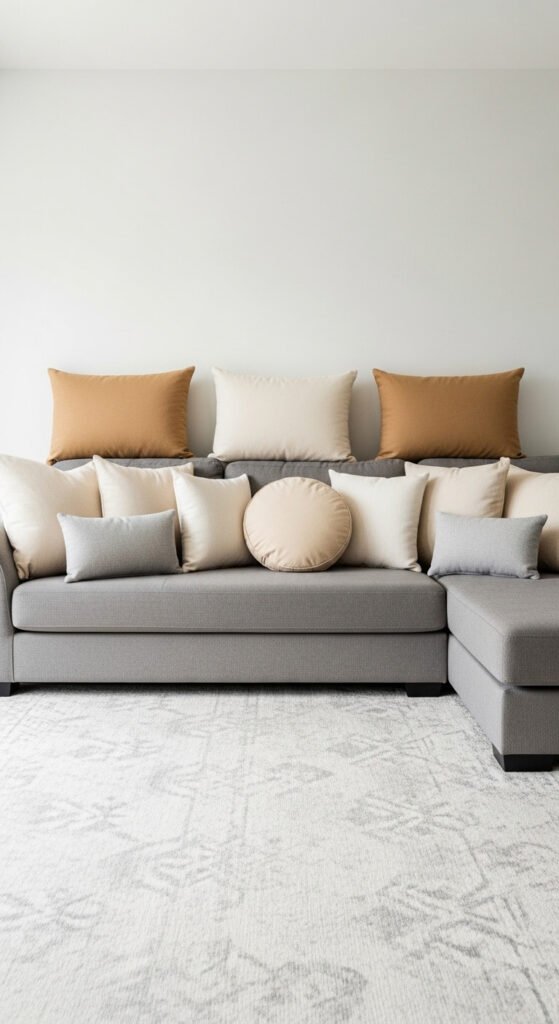
Sectionals require deliberate size variation — using only one pillow size on a large sofa creates a flat, repetitive look that makes the space feel smaller.
The rule for sectionals: use at least three different sizes — oversized for the corners, standard for the long back, and lumbar or round for accent positions. This creates a visual hierarchy that makes the large sofa feel purposeful rather than overstuffed.
Mix textures freely within a tight color palette. Two neutrals with one warm accent color covers the entire sectional cohesively. Start with the corner pillows first and work inward, adjusting for balance as you go.
18. Velvet Jewel Tone Sofa Pop
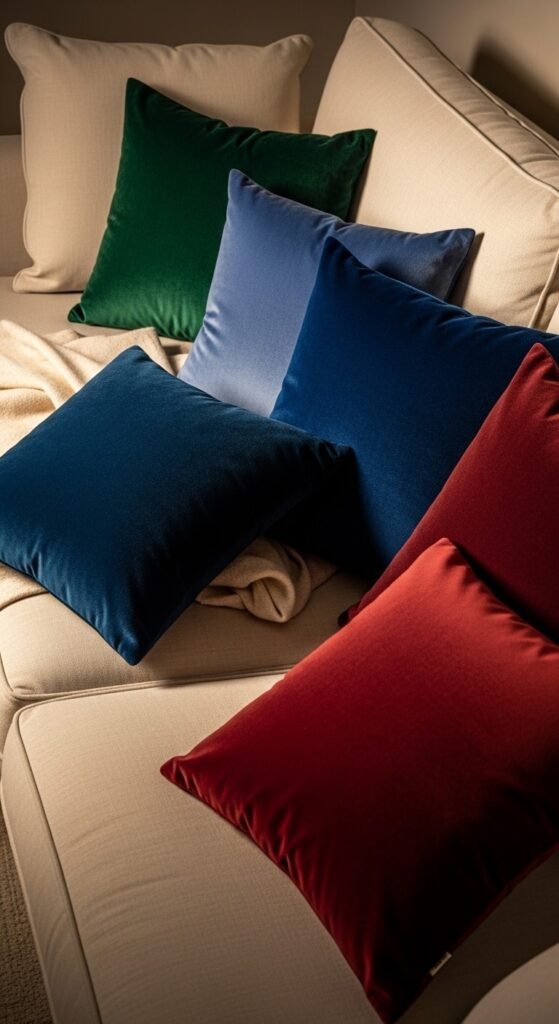
A cream or white sofa becomes the perfect blank canvas for rich jewel-toned velvet pillows — the contrast between pale and saturated is where the magic happens.
Three to five velvet pillows in jewel tones on a light sofa immediately transforms the furniture from background element to visual centerpiece. Emerald, sapphire, burgundy, and amethyst all work individually or in combination.
Don’t use more than two or three jewel tones at once — mixing too many rich colors loses the impact of each individual shade. Two tones with one neutral velvet pillow between them is a reliable formula. Velvet pillow covers cost $18–$35 each from Amazon, HomeGoods, or H&M Home.
19. Kilim and Solid Combination for a Global Look
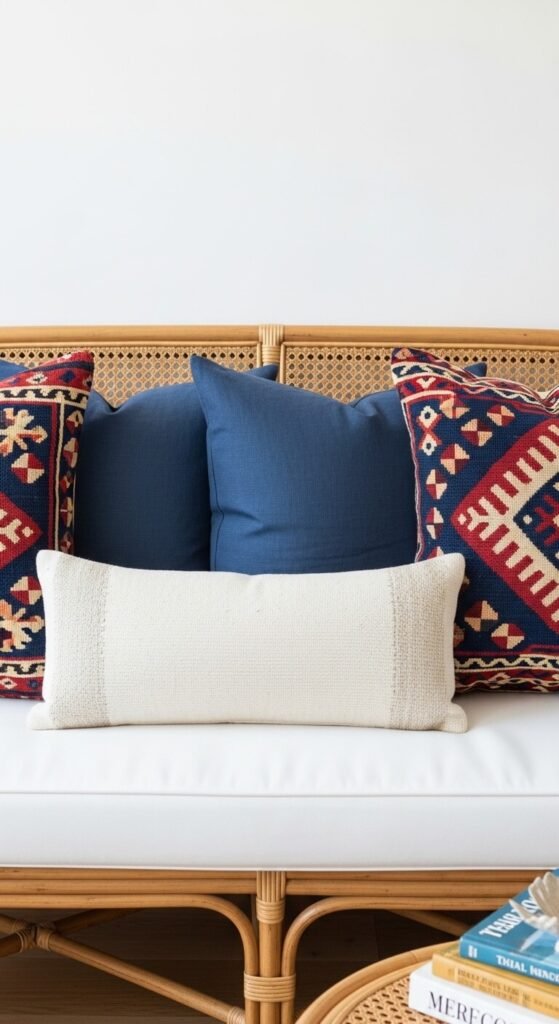
One kilim-print or vintage tribal pillow paired with solid pillows in its dominant colors creates a globally-inspired arrangement that looks collected and well-traveled.
Kilim patterns are busy — so they need solid companions that give the eye somewhere to rest. Pull the two most prominent colors from the kilim pattern and use those as your solid pillow choices. The result ties the arrangement together without looking matchy.
Real vintage kilim pillow covers from Turkish markets or Etsy run $25–$80 depending on age and quality. Printed kilim-style covers are available for $18–$30 and work just as effectively in most arrangements. Either way, limit yourself to one kilim pattern per grouping.
20. Round Pillow Trio as a Coffee Table or Chair Accent
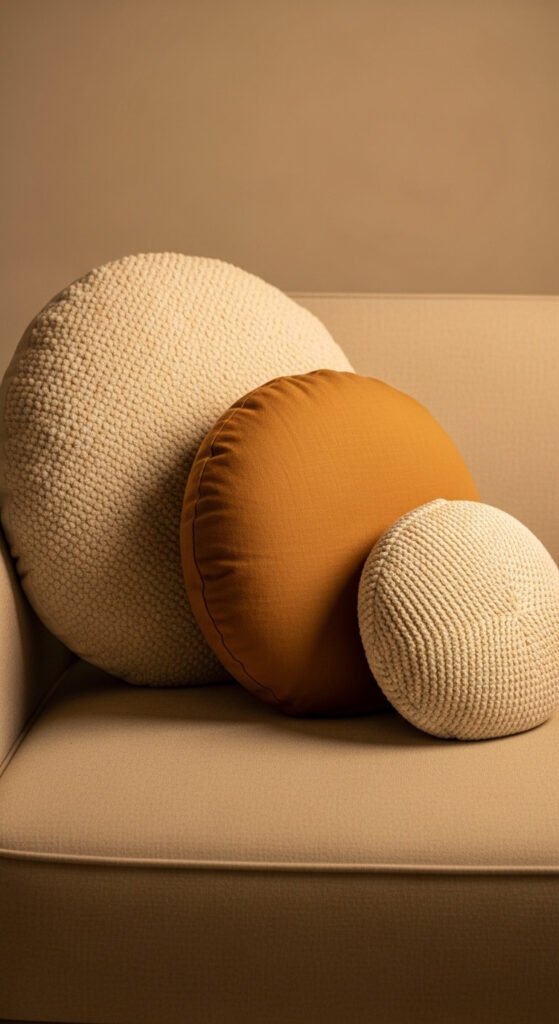
Round pillows add a sculptural quality that square and rectangular pillows can’t — and grouping three of them together in graduating sizes creates a casual, informal arrangement that suits armchairs, reading nooks, and window seats.
The key is size variation — large, medium, and small — rather than three identical rounds, which looks repetitive. Stack them loosely against the back of the chair, not precisely centered.
Round pillow covers in bouclé, knit, and linen are available on Amazon and Etsy from $16–$32 each. This is a great use for odd-sized inserts you might already own — the round shape hides imperfect stuffing better than square pillows.
21. Seasonal Swap: Warm Winter Pillow Set
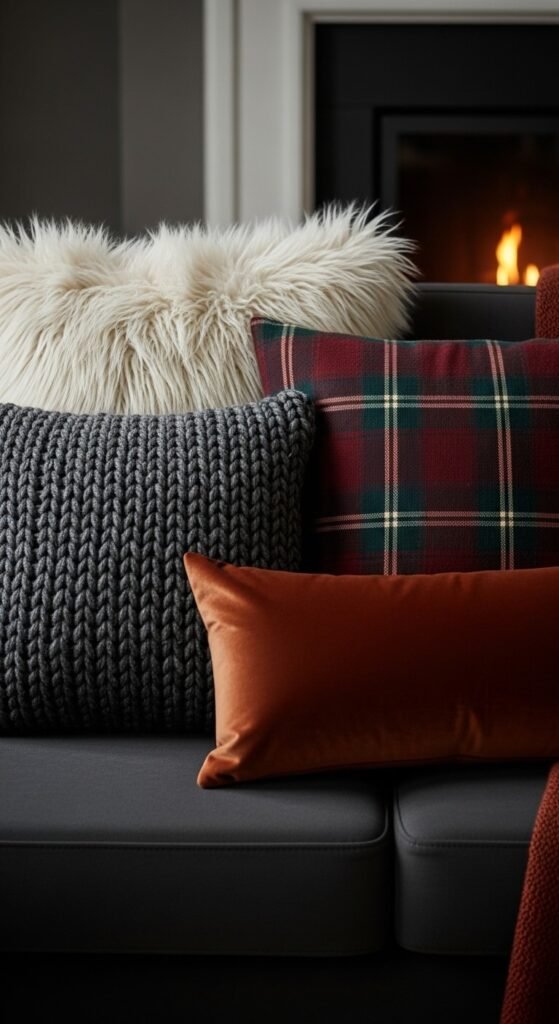
Swapping just four pillow covers for winter — faux fur, chunky knit, flannel plaid, and velvet — transforms a sofa from year-round neutral to deeply seasonal without replacing any furniture.
Seasonal pillow swaps cost $40–$80 for a full set of covers and change the feel of a room more dramatically than almost any other seasonal decor change. Store off-season covers in a vacuum bag to keep them fresh and compressed.
Choose a winter palette of burgundy, forest green, rust, and cream and stick to it across all four covers. The variety in fabric — plush, knit, plaid, velvet — is where the seasonal warmth comes from, not just the colors.
22. Pastel Spring Combination for a Bedroom Refresh
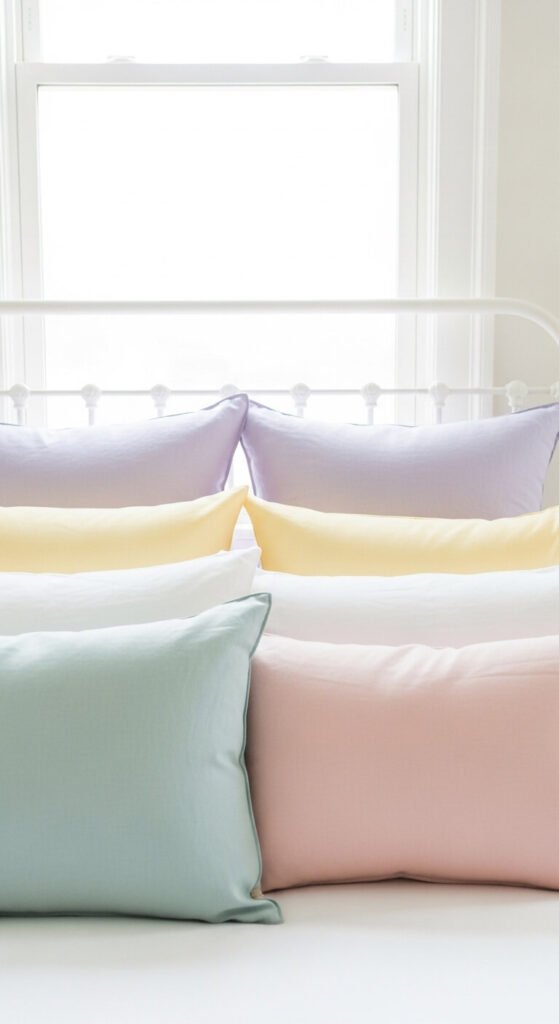
Four soft pastel tones on a white bed — lavender, butter yellow, mint, and blush — create a spring pillow arrangement that feels light, optimistic, and seasonally appropriate without being childish.
The key to keeping pastels sophisticated rather than juvenile is fabric choice. Linen and percale in muted, slightly dusty pastel tones look grown-up and relaxed. Avoid anything shiny, bright, or synthetic — those textures push pastels into nursery territory.
Each pillow cover in these soft spring tones costs $12–$22 from IKEA, Amazon, or Target’s seasonal collections. Store them between seasons in a linen bag for a pillow refresh that literally takes five minutes.
23. Minimalist Two-Pillow Setup for a Small Sofa
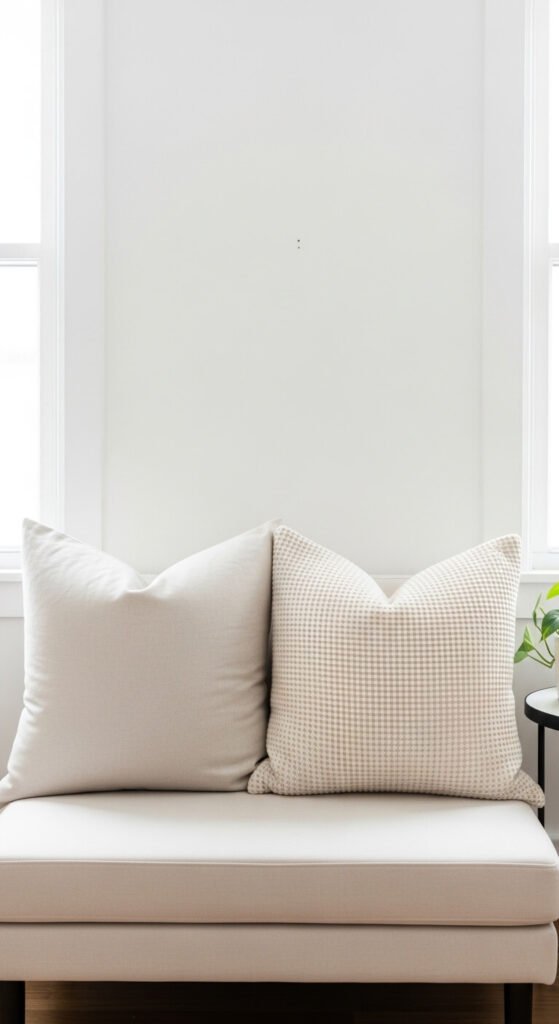
For small sofas and apartment living, two large, well-chosen pillows in contrasting textures is a more effective arrangement than five smaller ones that make the sofa feel crammed.
Two oversized pillows at either end of a compact sofa leave the center visually open, which makes both the sofa and the room feel larger. The pillows act as visual bookends rather than a collection — clean, deliberate, and easy to maintain.
Go for 22×22 or 24×24-inch pillows rather than the standard 18×18 on small sofas. The larger scale reads as more intentional and prevents the arrangement from looking sparse. Two quality pillow covers in complementary textures: $30–$55 total.
24. Patterned Lumbar as the Single Statement Piece
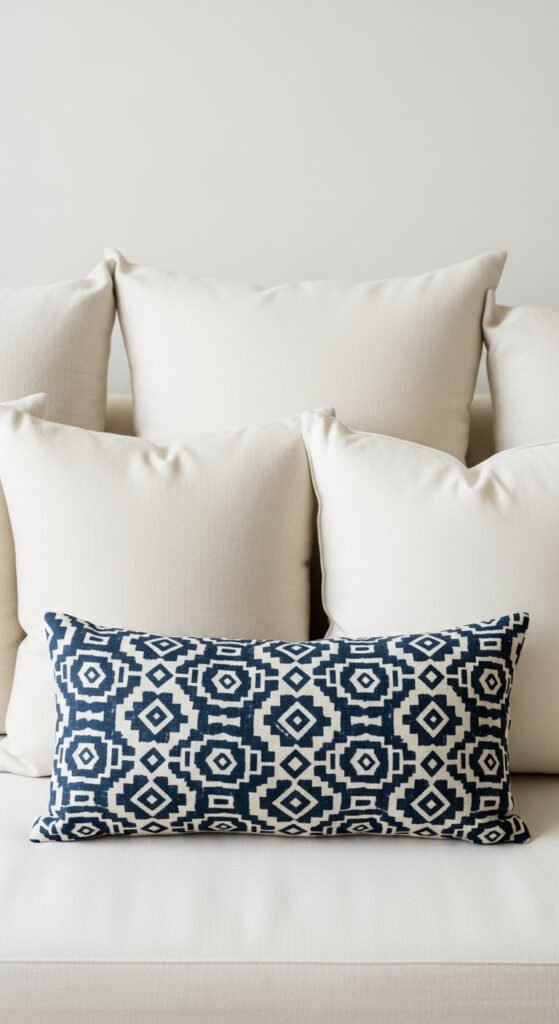
Using one bold patterned lumbar as the sole pattern element in an otherwise all-solid pillow arrangement lets the pattern do all the visual work without competing with anything else.
This is the arrangement for people who love pattern but feel overwhelmed by it. One bold, beautiful lumbar in a strong print does more visual work than three patterned pillows fighting each other. Everything else stays solid, calm, and neutral.
Block-printed and hand-stamped lumbar covers from Indian artisan shops on Etsy run $20–$40 and offer patterns not found anywhere in mainstream retail. This setup requires a total of five or six pillow covers — all solids at $10–$18 each, plus one statement lumbar.
25. Monochrome Gray Pillow Arrangement
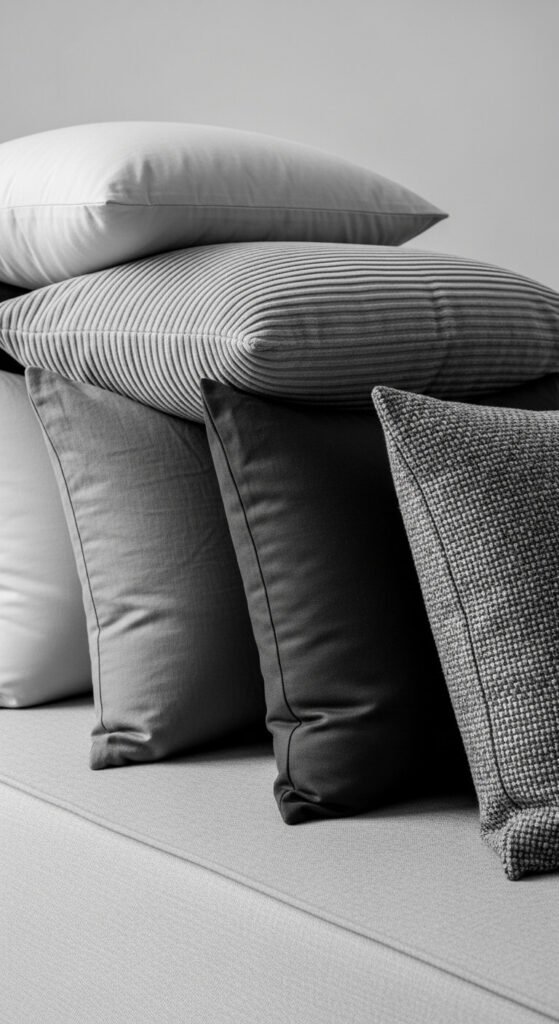
A monochrome gray arrangement using five shades from silver to charcoal, each in a different fabric, is the most sophisticated neutral pillow combination you can build.
Gray is the most forgiving neutral because even wildly different shades of it harmonize naturally. The variation in fabric — flat against ribbed, velvet against woven — creates the visual interest that the single color family cannot provide on its own.
Start by collecting one pillow in each fabric type — flat, knit, velvet, linen, woven — and find each in the closest available shade of gray. This combination is easiest to source at thrift stores where individual gray pillow covers turn up regularly for $2–$8 each.
26. Mixed Ethnic Textile Pillow Gallery for a Sofa Wall
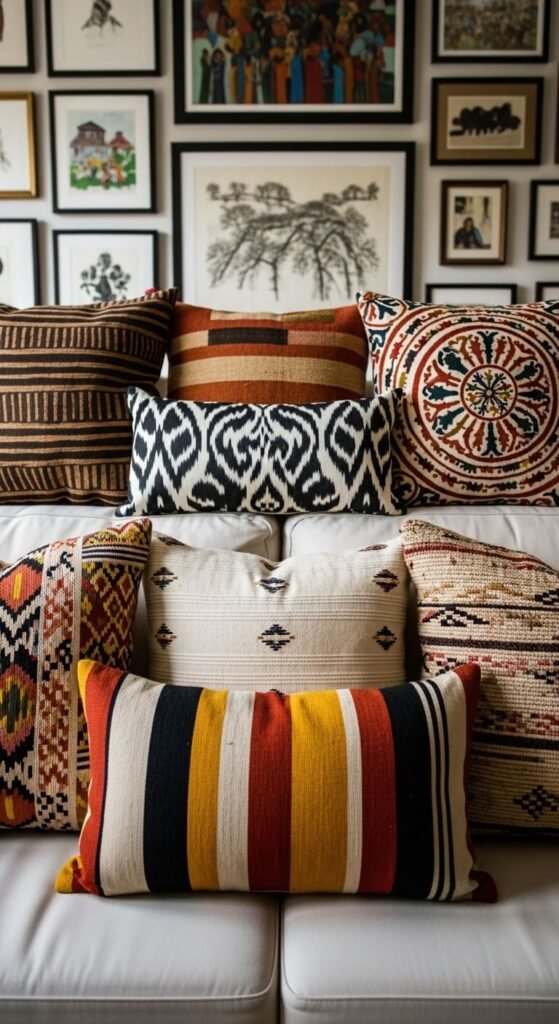
A curated mix of globally-sourced textile pillow covers — mudcloth, ikat, suzani, kente, and kilim — creates the most visually rich and deeply personal sofa arrangement possible.
The secret to making mixed global textiles work together is color editing first. Every fabric, regardless of origin or pattern, should share one consistent warm palette — black, cream, rust, and gold is a combination that unifies even the most disparate textiles naturally.
Look for authentic and fair-trade textile covers on Etsy, at import markets, and through small businesses sourcing directly from artisans. Individual covers run $20–$60. A complete sofa arrangement built over time from intentional purchases becomes a genuinely personal, irreplaceable collection.
Conclusion
The right pillow combination does something remarkable in a room — it signals that the space was thought about, that comfort was considered, and that someone lives there who actually cares how it feels to sit or sleep in it. Every combination in this list is achievable this weekend, most for under $60, and all of them can be built gradually by swapping out covers rather than buying entirely new pillows. Start with the combination that matches the room you most want to change. Invest in quality inserts once — good down-alternative inserts from IKEA or Amazon cost $8–$15 each and last for years. Then change covers freely with the seasons, your mood, and your evolving taste. The comfort is immediate. The style is yours to keep refining.