
A tray is one of the most quietly powerful tools in home styling — and one of the most underestimated. At its most basic, a tray is a containment device. But in decorating terms, a tray does something far more significant: it defines a zone on any surface, groups the objects within it into a single intentional composition, and creates an immediate sense of organization and curation that the same objects scattered loosely across the same surface would never achieve. A coffee table with a styled tray looks designed. The same table without one looks like a surface where things were put down and forgotten. The tray creates the editorial frame. These 26 tray decor styling ideas cover every surface in every room — coffee tables, ottomans, bathroom counters, kitchen islands, entryway consoles, bedside tables, and more — with specific guidance on object selection, proportions, height variation, and the practical rules that make a tray display look curated rather than cluttered.
1. The Classic Coffee Table Tray
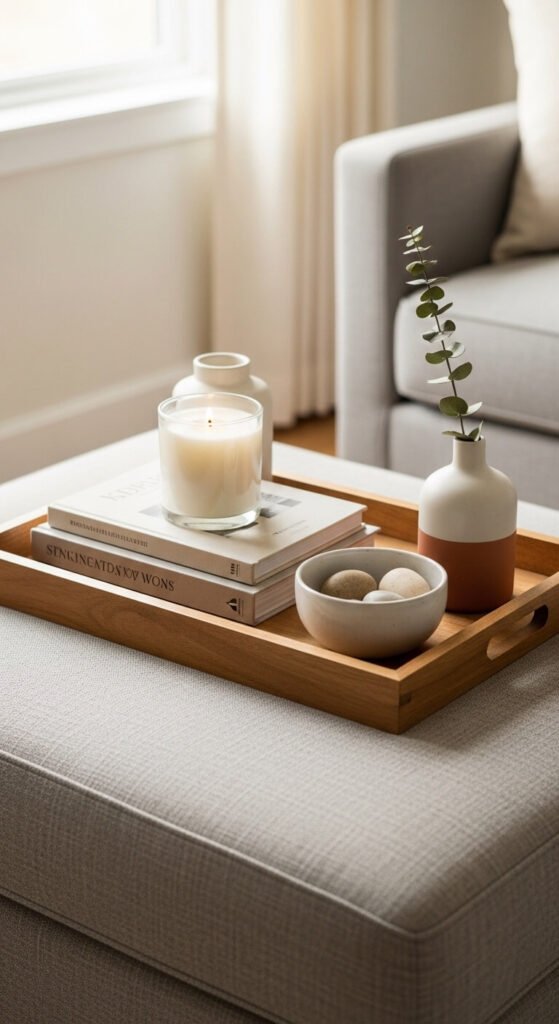
A styled tray on a coffee table or ottoman creates an immediate focal point for the living room and keeps frequently used objects — a candle, a remote, a small plant — from looking scattered across the surface. Use a tray that is approximately one-third to one-half the length of the coffee table surface so the remaining table surface is visible on both sides. Group objects in a loose triangle with the tallest item at the back, the mid-height items in the center, and a low flat item at the front. A wooden, rattan, or marble tray costs $15 to $50 from most home stores. The objects inside the tray should total no more than five to keep the display from feeling cluttered.
2. The Bathroom Counter Tray
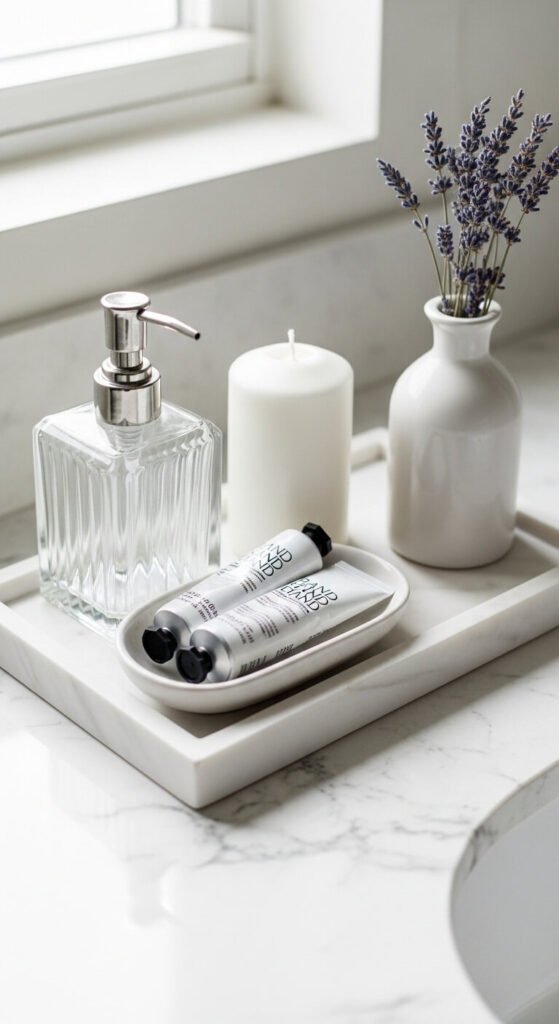
A small tray on the bathroom counter groups daily-use items — soap dispenser, hand cream, a candle — into a contained display that transforms a functional counter from cluttered to intentionally styled. Keep the tray small — 8 to 12 inches wide — so it does not consume the entire counter surface. Choose a tray material that complements the existing bathroom hardware — marble or white ceramic for a clean spa look, brass or bamboo for a warmer aesthetic. A small marble or ceramic bathroom tray costs $10 to $30 from most home stores. The four to five objects inside the tray should all be items used daily — styling a bathroom tray with purely decorative objects that have to be moved for practical use defeats the purpose.
3. The Bedside Table Tray
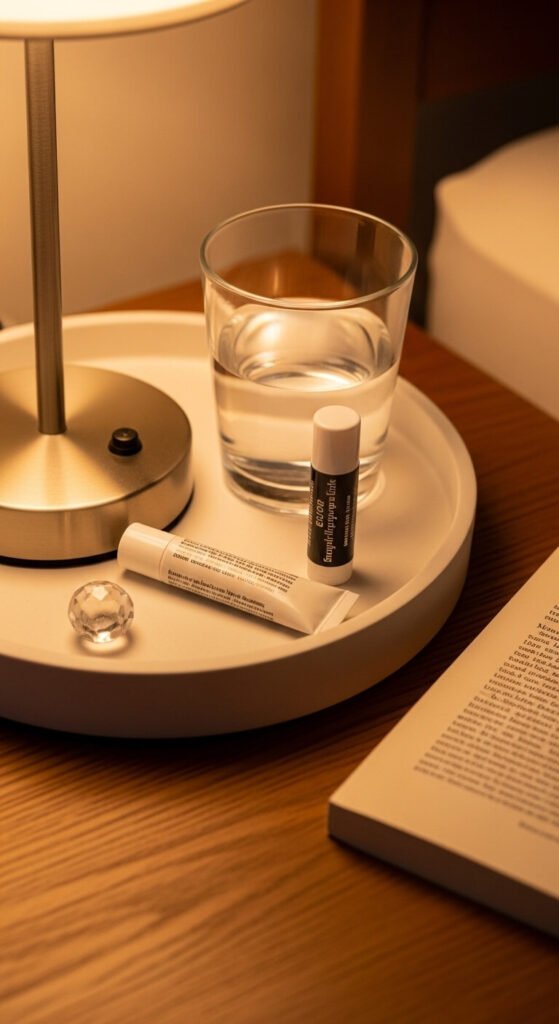
A tray on a bedside table corrals the small items that accumulate overnight — a glass of water, a phone charger, lip balm, reading glasses — into a contained zone that keeps the nightstand from looking like a landing pad for whatever happened to land there. Use a round or small rectangular tray no larger than half the nightstand surface so the lamp and any other permanent fixtures have room beside the tray rather than crowding it. A small ceramic or leather tray costs $8 to $25. Include only the items actually used at bedtime — a tray with three purposeful objects looks styled, a tray with eight random items looks like a drawer emptied onto the table.
4. The Kitchen Island Tray
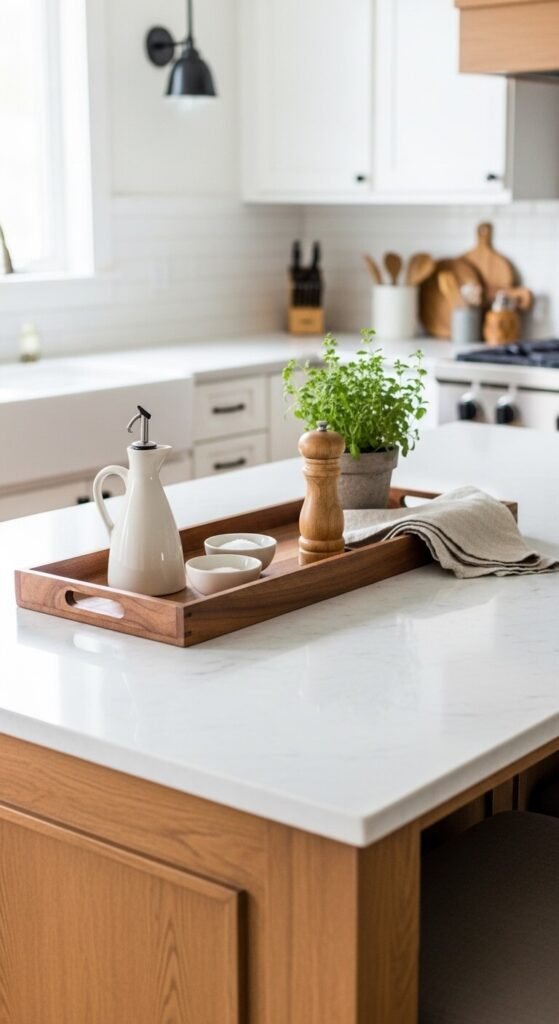
A tray on one end of a kitchen island contains the everyday cooking essentials — olive oil, salt, a small herb plant — so they are always accessible but never look scattered across the counter surface. Position the tray at the far end of the island away from the primary prep area so it does not interrupt cooking workflow. Use a long rectangular wooden or slate tray to contain four to six frequently used items. A wooden kitchen tray costs $15 to $40. The functional items inside the tray — oil, salt, herbs — serve as the decor themselves, so no additional decorative objects are needed. The tray does the organizational and aesthetic work simultaneously.
5. The Entryway Console Tray
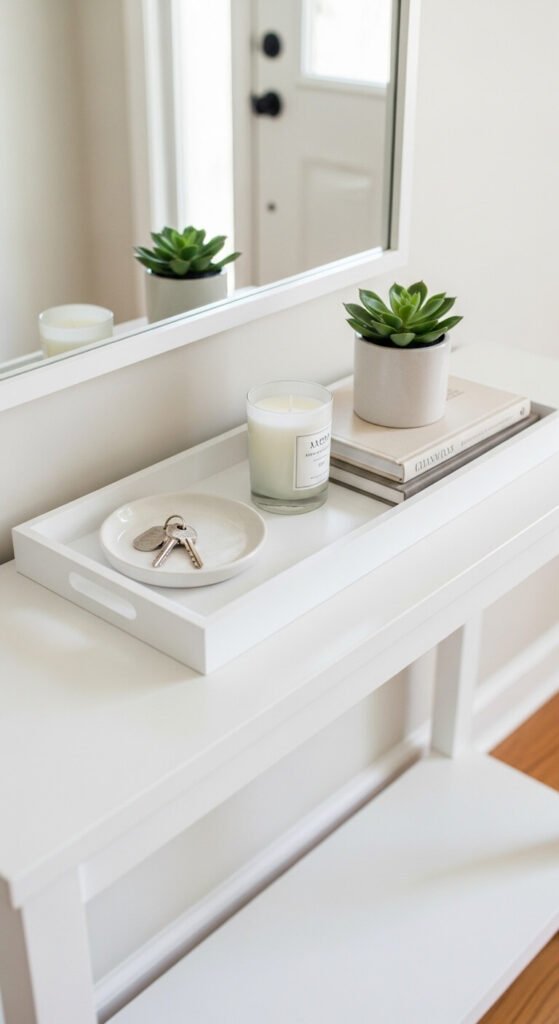
An entryway tray on a console table creates the first styled moment of a home — a contained, intentional display that communicates care and organization from the moment someone walks through the door. Include a small ceramic or leather dish inside the tray specifically for keys and small daily-carry items — this makes the tray genuinely functional rather than purely decorative. The tray also prevents the console table from becoming a dumping ground for mail, bags, and everyday clutter. A white, marble, or dark wood tray on an entryway console costs $15 to $40. Keep the total objects to four or five and include one living element — a small succulent or potted herb — for organic warmth.
6. The Ottoman Tray Bar Setup
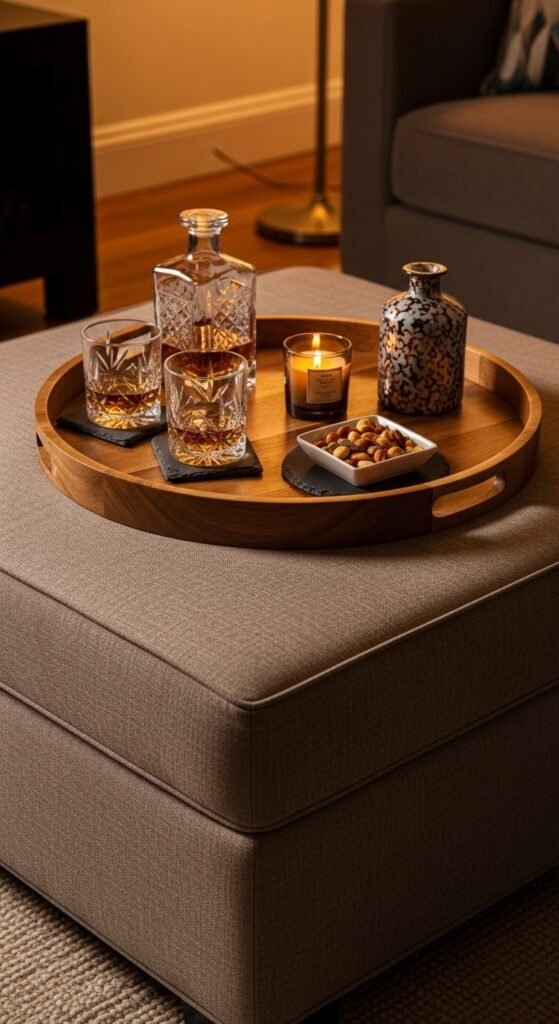
A tray on an upholstered ottoman solves the practical problem of the ottoman’s soft surface — items placed directly on fabric shift, tip, and leave indentations — while creating a styled bar-like display that makes an evening in the living room feel considered and prepared. Choose a large, sturdy tray — round wood or rectangular lacquer in a size that covers most of the ottoman’s top surface — to create a stable platform. A round wooden tray 16 to 20 inches in diameter costs $20 to $50. Style it as a bar tray with two glasses, a coaster, a small candle, and one decorative object. This is the most elegant solution to the ottoman-as-coffee-table styling challenge.
7. The Vanity Perfume Tray
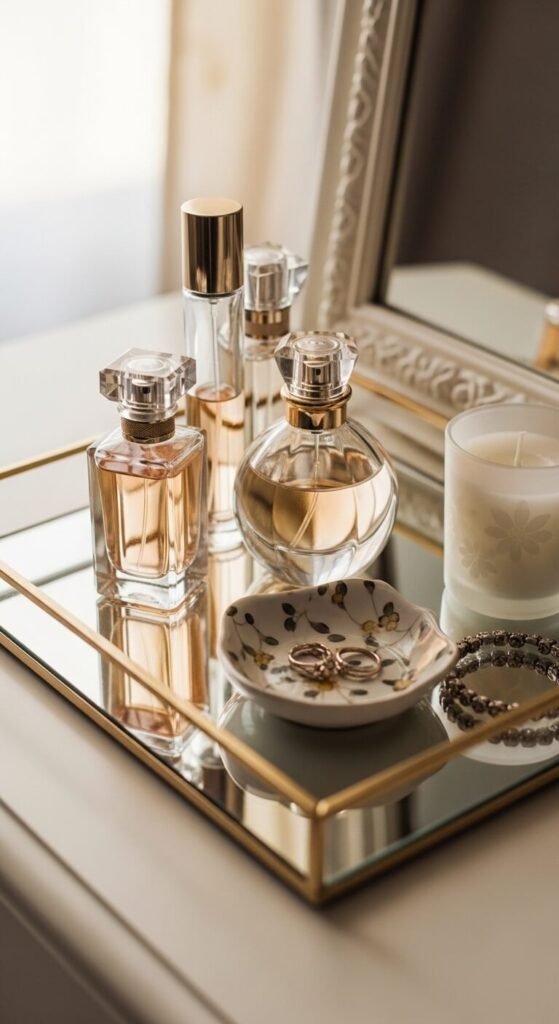
A mirrored tray on a bedroom vanity groups perfume bottles, jewelry dishes, and small beauty items into a luxurious, hotel-dressing-table display where the mirrored base reflects and multiplies the beauty of the objects grouped on top of it. Perfume bottles are inherently beautiful objects — their varied glass forms, heights, and color work as decorative arrangements in their own right when grouped on a mirrored surface. Use a mirrored or glass tray specifically for this purpose — the reflection adds a dimension of sparkle that a wooden or marble tray cannot replicate. A small mirrored vanity tray costs $15 to $40 from most home and beauty retailers. Group bottles by height — tallest at the back, smallest at the front.
8. The Outdoor Table Tray Centerpiece
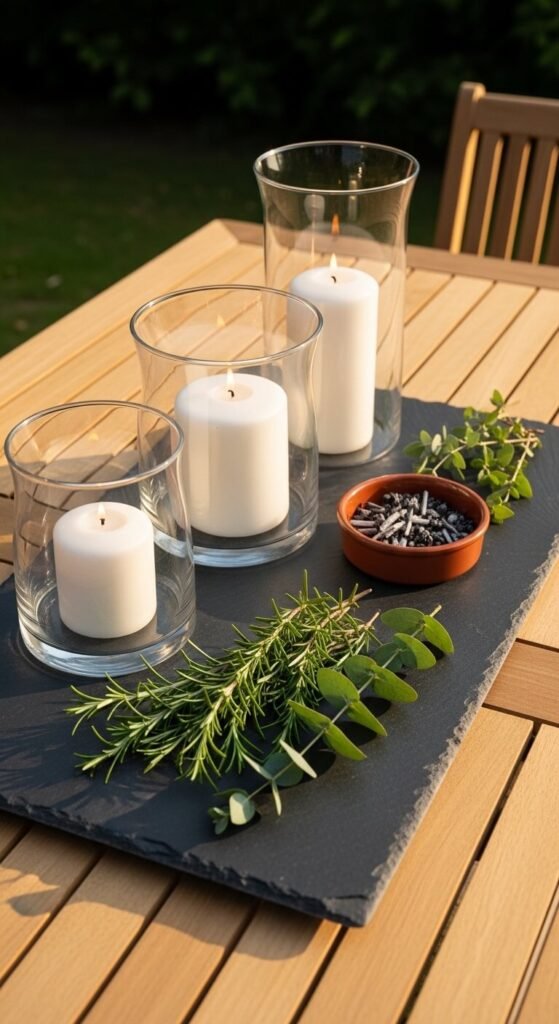
A styled tray on an outdoor dining or entertaining table creates a centerpiece that functions equally well as decoration and practicality — candles for evening light, herbs for fragrance and visual greenery, a citronella element for insect deterrence. Use a weather-resistant tray material for outdoor use — slate, teak, or powder-coated metal all withstand moisture and UV exposure far better than lacquered wood or leather. A slate serving tray costs $20 to $50. Loose herb sprigs from the garden laid directly on the tray surface add organic life for zero cost. Hurricane candle holders protect candle flames from outdoor wind and cost $5 to $15 each.
9. The Spa Bathroom Tray on the Tub
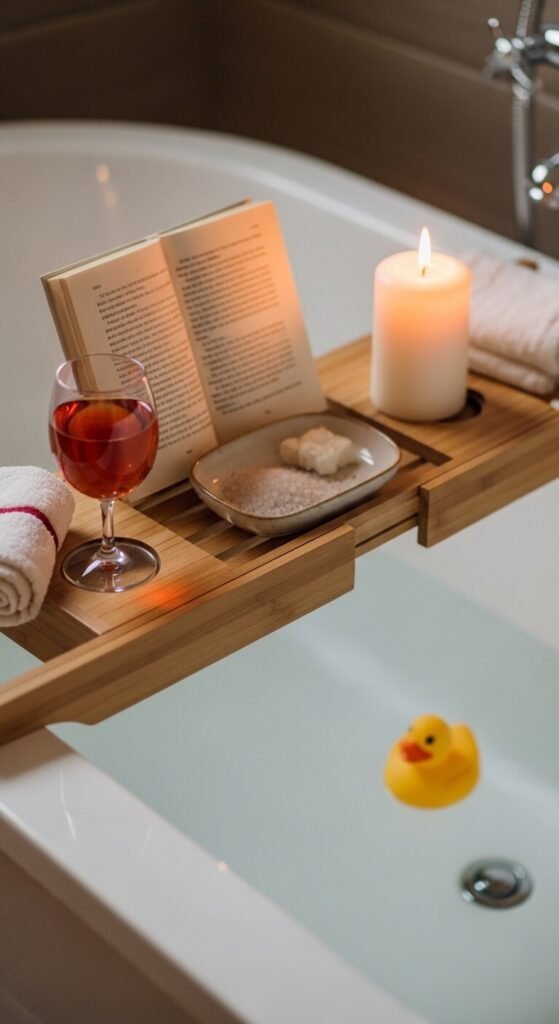
A wooden bath caddy tray spanning the bathtub is one of the most commonly styled bathroom tray displays — it creates a spa-at-home atmosphere that transforms a functional bath into a deliberate retreat. Use a caddy with an extending width so it fits across different tub sizes — most quality bath caddies have slide-out ends that adjust from 27 to 42 inches to fit standard tub widths. A wooden bath caddy costs $25 to $60 from Amazon or most home retailers. Style with a candle, a small book or magazine, a bath salt dish, and one glass of a preferred drink. Keep it to five objects — the bath caddy tray performs best when it feels generous but not overcrowded.
10. The Layered Tray within a Tray
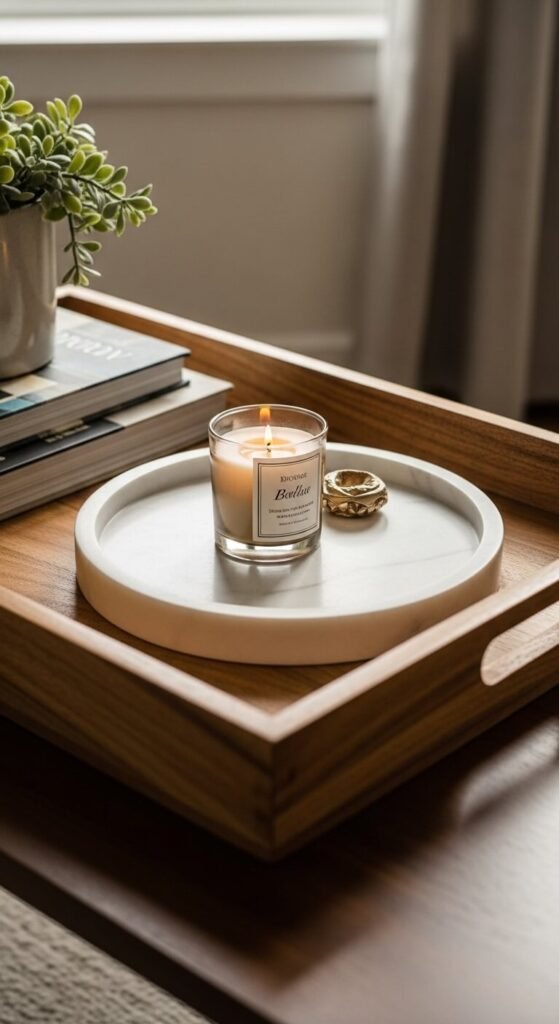
Placing a smaller tray inside a larger tray creates a layered, nested composition with two distinct display zones — the inner tray becomes a focused vignette within the broader outer tray arrangement. Use contrasting materials for the two trays — a large rectangular wooden tray with a small round marble or brass tray inside it creates visual contrast through both shape and material. The objects in the inner tray should be the most decorative — a candle, a crystal, a small sculpture. The objects in the outer tray surrounding it can be more practical — books, a coaster, a plant. This two-layer approach creates depth and a sense of editorial intention that a single flat tray cannot match.
11. The Brass Tray Bar Cart Alternative
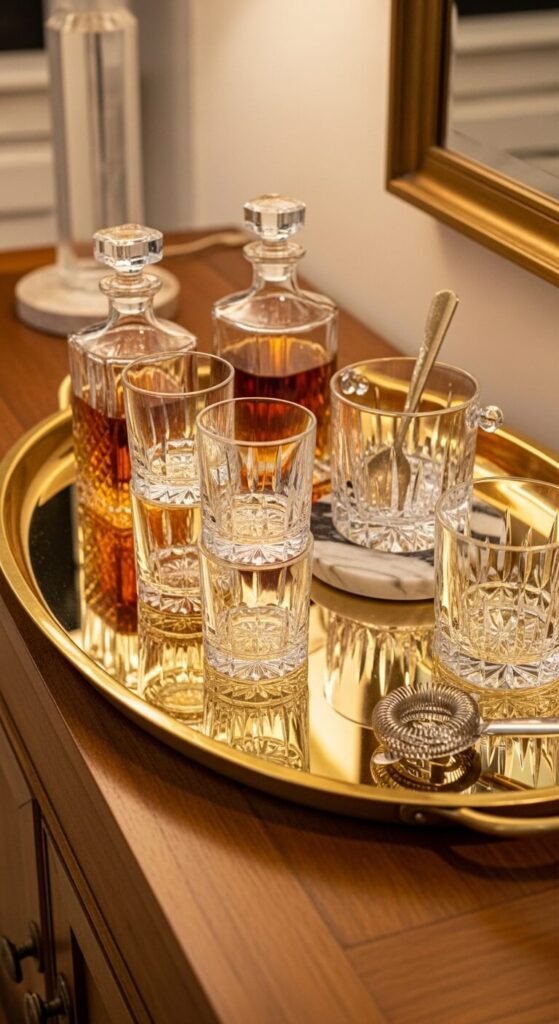
A large brass or gold tray on a sideboard creates a home bar display without requiring a dedicated bar cart — it groups all the serving essentials into a contained, beautiful arrangement that looks like a purposeful bar vignette rather than a random collection of bottles. Use a large oval or rectangular brass tray — at least 16 inches in the longest dimension — to hold two decanters, four glasses, and one or two additional bar accessories. The brass surface reflects the crystal and glass above it, multiplying the sparkle and visual richness of the display. A large brass tray costs $20 to $60 from most home stores and online retailers. This approach suits dining rooms, living rooms, and home office sideboards equally well.
12. The Seasonal Tray Refresh
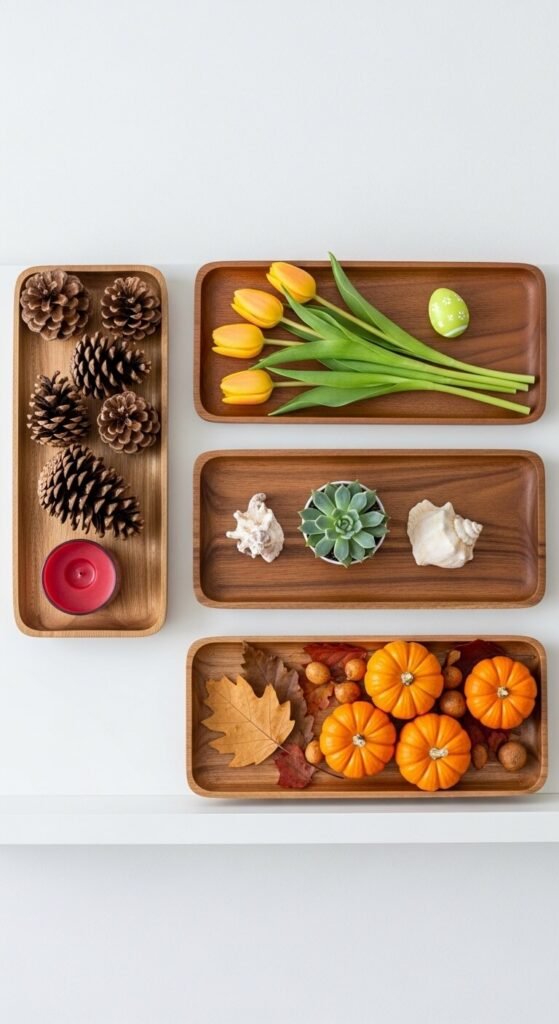
Using the same tray year-round and simply swapping its contents with the season is the most cost-effective way to keep any surface looking current without buying new decor throughout the year. Keep a permanent tray on each key surface — coffee table, console, kitchen island — and plan four seasonal swaps: pine cones and a candle for winter, tulips and a small ceramic for spring, a succulent and a seashell for summer, mini pumpkins and dried leaves for autumn. Seasonal objects from a grocery store or craft store cost $3 to $10 per season. The tray is the constant; the contents are the change. Four seasonal refreshes cost less than $40 total for the entire year.
13. The Nightstand Tray for Morning Rituals
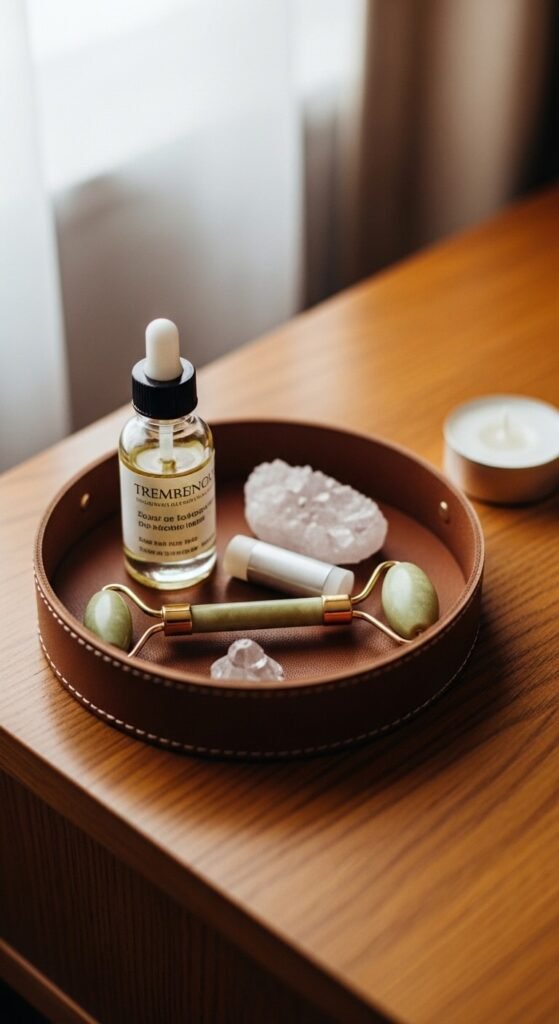
A nightstand tray styled around a morning skincare or wellness ritual turns a functional routine into a beautiful daily experience — the objects needed each morning are grouped, visible, and aesthetically pleasing rather than scattered in a drawer or crowded on a flat surface. Group five to six items used in a specific morning order — facial oil, a jade roller, a lip balm, a face mist — in a small leather or ceramic tray so the ritual objects are always in place and always visible. A small round leather tray costs $10 to $25 from most home or stationery retailers. The ritual objects inside the tray give the nightstand a personal, intentional character that purely decorative styling cannot replicate.
14. The White Tray on a White Surface
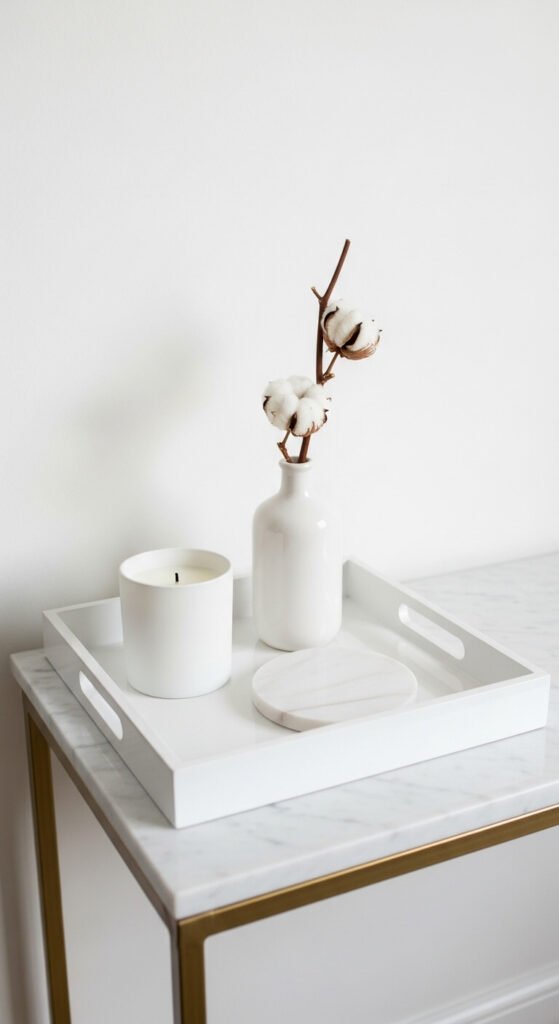
A white tray on a white surface relies entirely on material and texture variation rather than color contrast to create visual interest — and when done well, this monochromatic approach produces one of the most sophisticated and quietly confident tray displays possible. Use objects with as much texture variety as possible — a matte ceramic candle, a glossy lacquer tray, a rough marble coaster, a cotton stem — so the eye moves between surfaces rather than resting on a single undifferentiated white plane. This approach works best in rooms with a clean, minimal, or Scandinavian aesthetic where the restraint of an all-white palette is the design intention rather than an accident of limited options.
15. The Kitchen Breakfast Tray in Bed
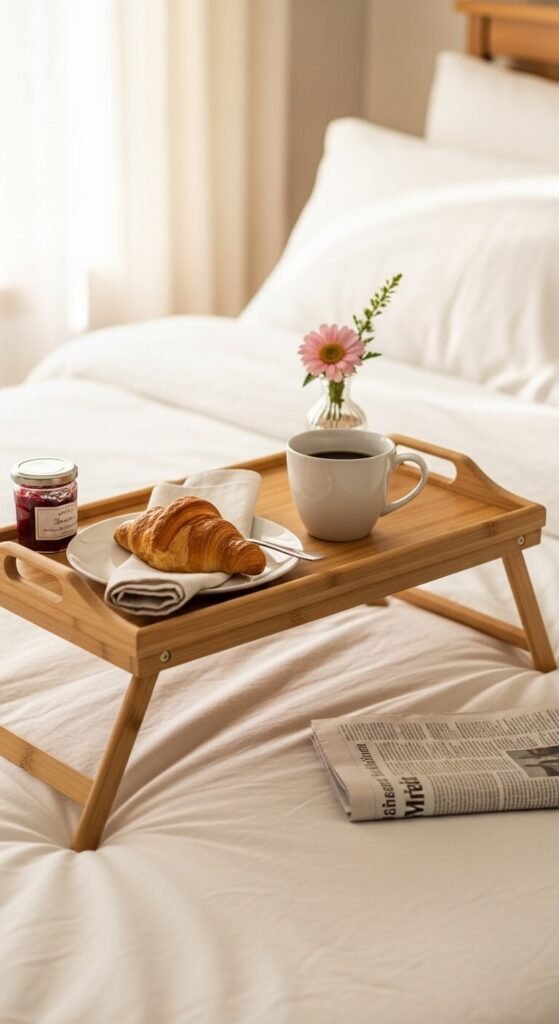
A styled breakfast tray in bed is a small act of care — for yourself or for someone else — that turns an ordinary morning into something worth remembering. A wooden tray with fold-down legs is the most practical format because it creates a stable working surface on the soft, uneven bed surface without requiring anything underneath for support. A wooden breakfast tray with legs costs $20 to $50 from Amazon or most kitchen retailers. Style it with a mug, a plate, a small jar, a fresh flower in a bud vase, and a napkin. The single flower — one stem in a tiny vase — costs under $1 and does more for the tray’s atmosphere than any other single element.
16. The Tray as a Bookcase Shelf Organizer
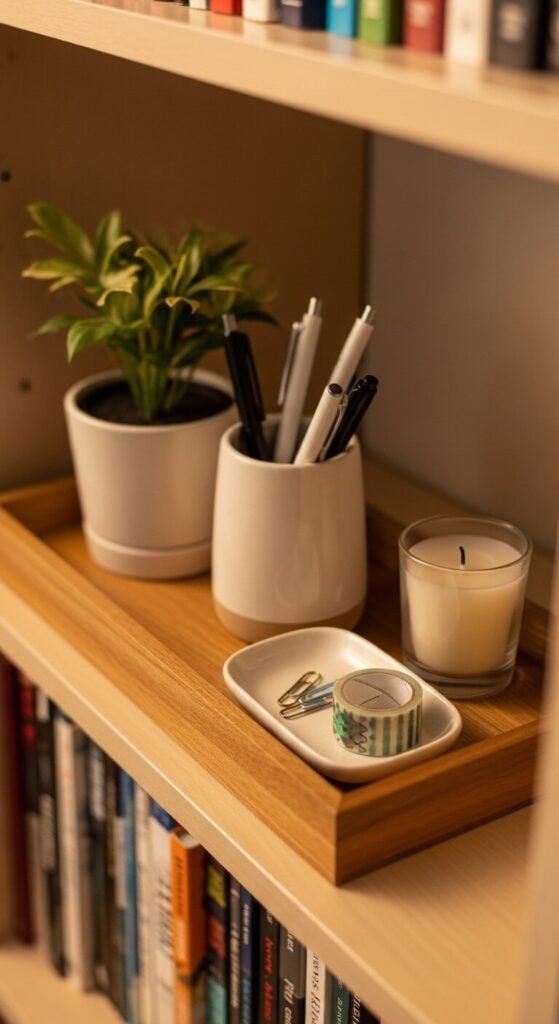
A tray placed on a bookcase shelf functions as a portable, self-contained mini-display that organizes and groups the small objects on that shelf into a contained vignette. Use a tray that fits within the shelf depth without overhanging — typically 10 to 12 inches deep for standard bookshelves. Group a small plant, a pencil holder, a tiny dish, and a short candle inside the tray. The tray prevents these objects from visually competing with the books behind them by creating a distinct layer of space within the shelf. A small rectangular bamboo or wooden tray costs $8 to $18 from IKEA, Amazon, or most office and home stores.
17. The Gold or Brass Tray on a Dark Surface
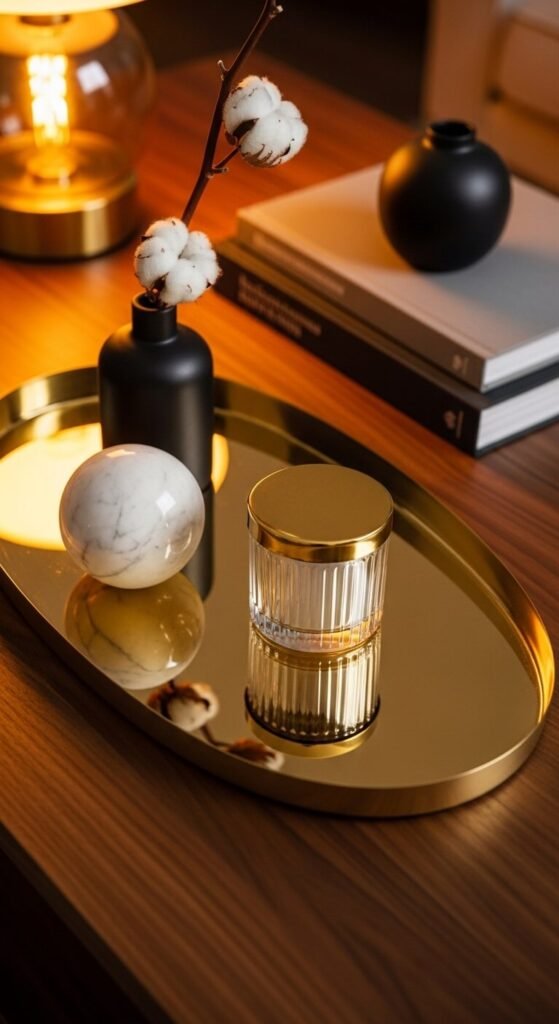
A gold or brass tray on a dark wood or dark marble surface creates one of the most visually dramatic tray displays available — the warm metallic sheen against the deep background tone produces a luxurious contrast that reads from across the room. Choose objects with strong material variation to place inside a gold tray — a white marble sphere, a clear glass candle, a black bud vase — so the gold frame is surrounded by contrasting textures that each reflect differently against the metallic surface. A large oval brass tray costs $20 to $60. The three to four objects inside the tray should include at least one white or light-colored object to provide visual contrast against the dark table surface below.
18. The Entryway Key and Drop Zone Tray
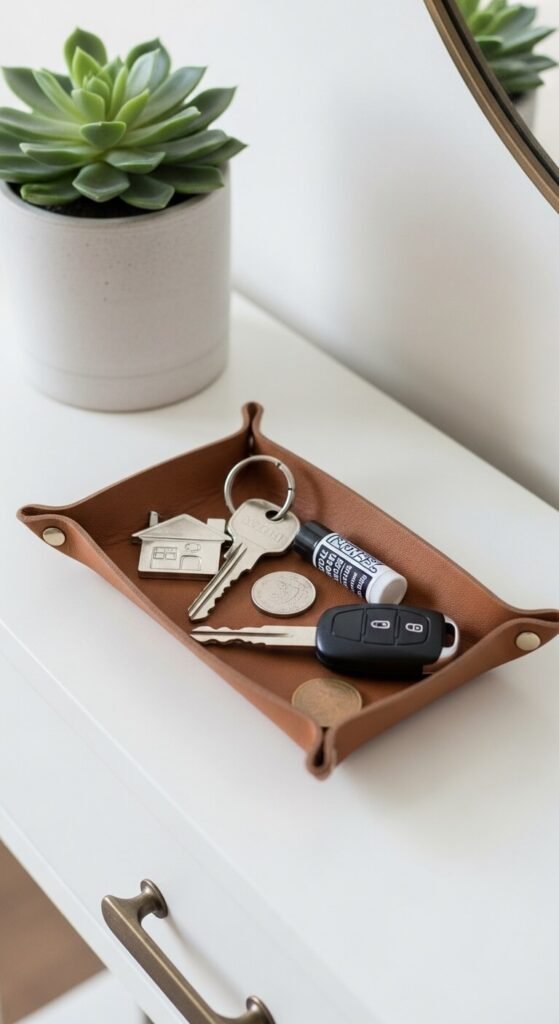
A dedicated drop zone tray at the entryway solves one of the most persistent daily frustrations in any home — the inability to find keys, cards, and small items when leaving. A small leather or ceramic catchall tray positioned immediately inside the front door creates a habitual landing spot for pocket items that works because it is visible, accessible, and permanently positioned. A leather catchall tray costs $10 to $25 from most home and office retailers. Keep it strictly for daily carry items — keys, coins, a transit card — and resist the urge to add more decorative objects that reduce its functional capacity. One small plant beside the tray provides decoration without competing with the tray’s practical purpose.
19. The Rattan Tray for Boho Styling
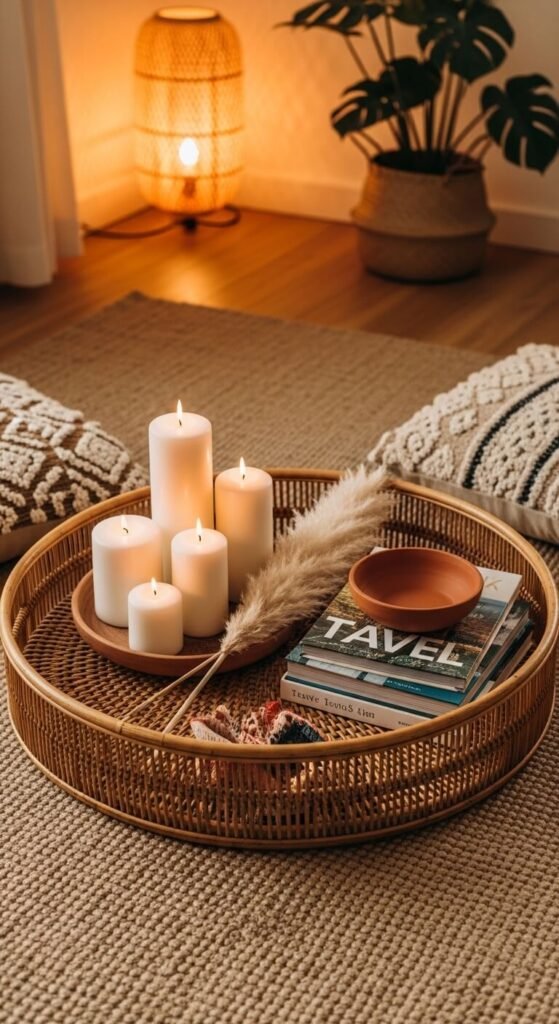
A large round rattan tray on the floor — used as a low, bohemian coffee table surface — is one of the most casual and characterful tray placements available, creating a defined display zone directly on a rug without requiring any furniture. Use a rattan tray at least 18 to 24 inches in diameter for a floor placement so it provides enough display surface for five to six objects at the comfortable viewing scale of floor-level seating. A large round rattan tray costs $20 to $50 from most home and discount retailers. Floor cushions arranged around the tray complete the low-level seating setup. This works particularly well in rooms with jute or sisal rugs where the natural material of the tray coordinates with the floor texture.
20. The Marble Tray for Luxury Styling
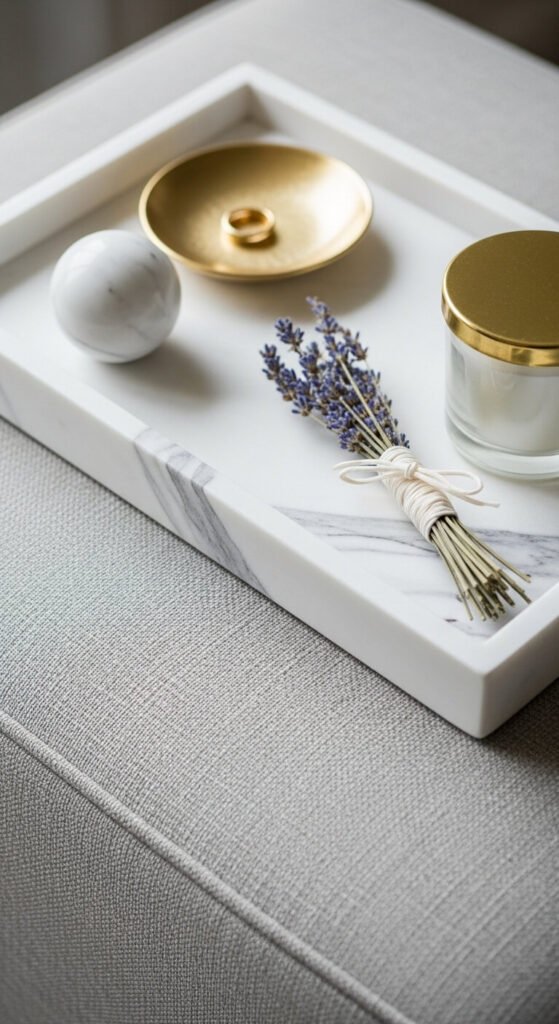
A marble tray immediately adds a sense of material luxury to any surface it rests on — the natural veining pattern of marble is unique to every slab, making each tray a genuinely individual piece that no manufactured alternative can replicate. Pair marble trays with gold or brass objects — ring dishes, candle lids, small figurines — to reinforce the luxurious material pairing that marble and metal create together. A marble tray costs $20 to $60 from most home decor retailers and lasts indefinitely if handled carefully. Use on stable, flat surfaces — marble is heavy and unforgiving on soft or uneven surfaces. A marble tray on a coffee table, bathroom counter, or vanity desk creates an immediate sense of considered material quality.
21. The Tray as a Home Office Desk Organizer
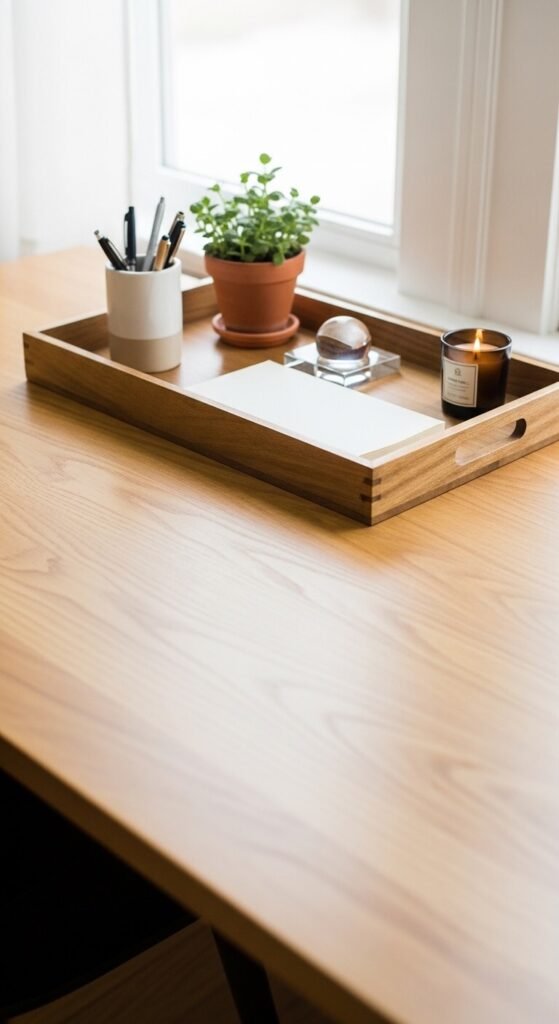
A tray on a home office desk corrals the decorative and functional desk accessories — a pen cup, a small plant, a candle, a paperweight — into a contained display at the back of the desk while leaving the primary working surface completely clear. Position the tray at the back edge of the desk rather than in the center so it does not encroach on the active work zone. A large rectangular wooden or leather desk tray costs $15 to $40. The four to five objects inside should be items that belong at the desk — a working pen, a functional small plant, a real candle — so the tray functions as an organized desktop accessory zone rather than a purely decorative distraction.
22. The Tray with a Candle Cluster
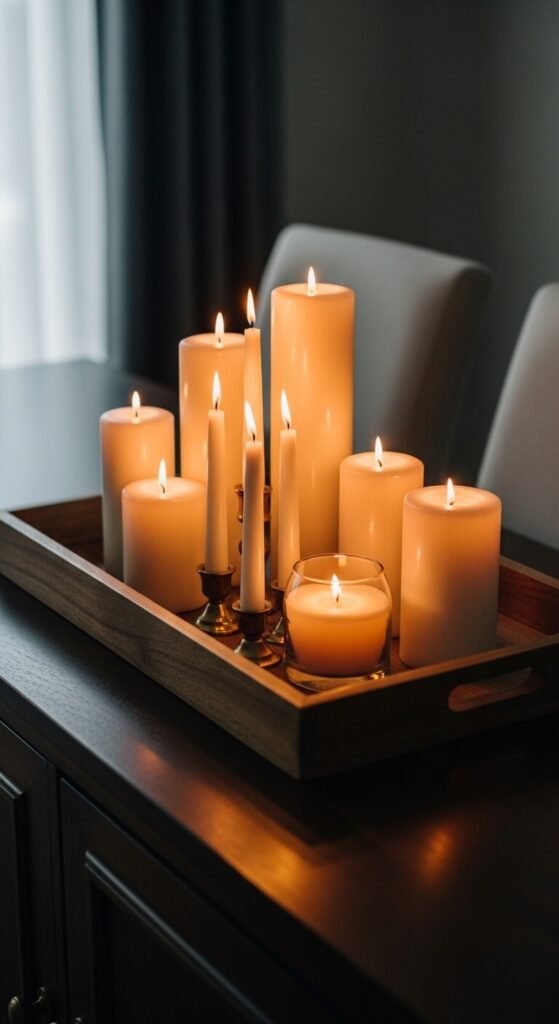
A tray used specifically as a containment zone for a candle cluster is one of the most practical and safest ways to display multiple candles together — the tray catches any wax drips, prevents candles from tipping onto a bare surface, and creates a defined display that looks intentional rather than hazardous. Use candles of dramatically different heights within the cluster — a 12-inch pillar beside a 4-inch votive beside an 8-inch taper — for the most visually dynamic composition. A large wooden serving tray from a thrift store or kitchen store costs $5 to $20. The candles themselves from a variety pack cost $10 to $25 for a full mixed-height cluster.
23. The Tray for Plant Grouping
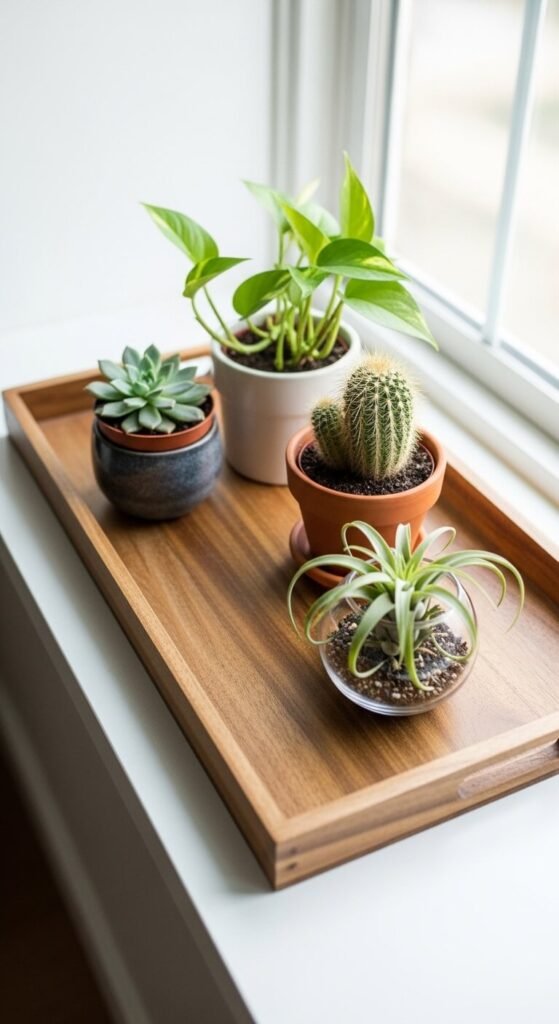
A tray used to group small potted plants together creates a unified mini-garden display rather than scattered individual pots — and catches excess water during watering, protecting the surface beneath from moisture damage. Use a waterproof or sealed tray — sealed wood, metal, or ceramic — so water does not seep through the tray base onto the surface below. A waterproof wooden or metal tray costs $15 to $35. Group plants that share similar light and watering requirements within the same tray for practical care. A window ledge plant tray with four small plants costs $25 to $50 total including plants and containers. Vary pot materials — terracotta, ceramic, glass, and metal — for the most visually interesting grouped plant display.
24. The Tray in a Kids’ Room
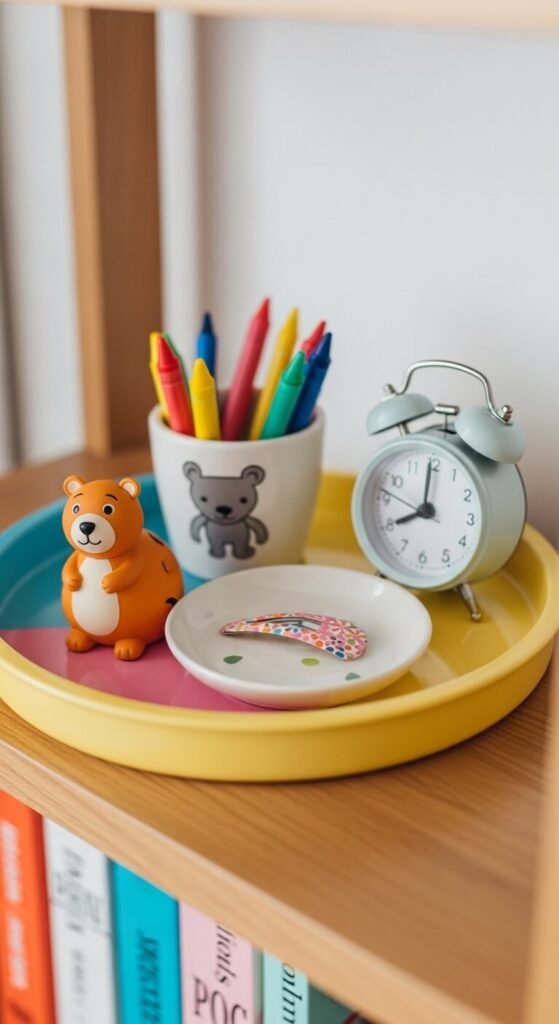
A small tray on a child’s shelf or nightstand creates a defined zone for the small personal objects that accumulate in a child’s room — a figurine, a set of hair clips, a small toy — and makes tidying easier because everything has a specific landing place that the child learns to use. Choose a lightweight, unbreakable tray — silicone, bamboo, or painted wood — for a child’s space so it can be handled safely. A small round bamboo or silicone tray costs $5 to $15. Include only objects that belong to the child’s daily routine so the tray remains functional and the child engages with it naturally. Label the tray area simply — “your stuff” — so ownership and responsibility are clear.
25. The Tray Below a Mirror
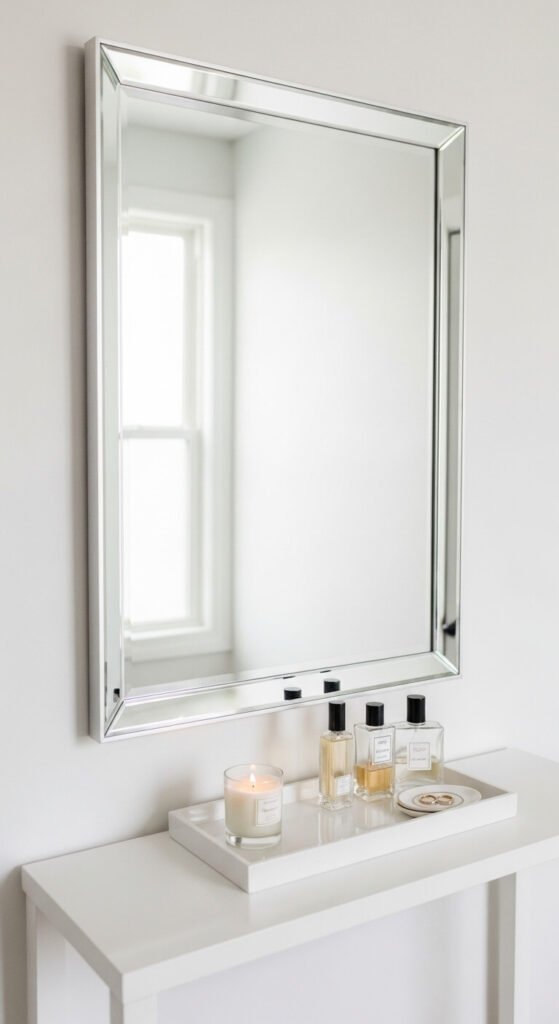
Positioning a styled tray on a console or shelf directly below a mirror creates a doubled display — the mirror reflects the contents of the tray from above, making every object in the tray visible from two angles simultaneously and adding an extra dimension of visual richness to the arrangement. Center the tray directly below the mirror so its reflection is centered within the mirror’s frame. This works especially well with trays that hold objects with interesting tops — candle flames, flower heads, the lids of perfume bottles — because the mirror reveals the top view of the arrangement that would otherwise be invisible. The tray below the mirror technique requires no extra objects or cost — the visual benefit comes entirely from the placement.
26. The Tray That Tells a Story
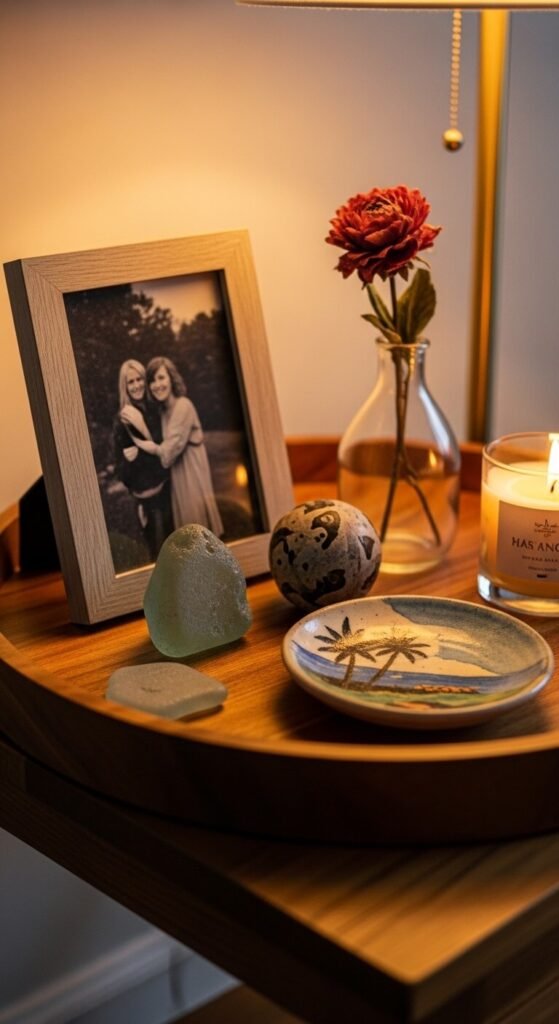
The most memorable tray displays are not the most expensive or perfectly composed — they are the ones that contain objects with personal meaning, arranged together in a way that communicates something specific about the person who lives in the home. A personally curated tray might hold a piece of sea glass from a favourite beach, a small ceramic from a trip abroad, a dried flower from a significant occasion, and a small photograph. These five objects together tell a story that no styled product display can replicate. The tray — any tray — simply provides the frame. The objects provide the meaning. A tray that tells a story costs almost nothing to assemble and creates the most genuinely individual display in any room.
Conclusion
A tray is one of the most reliable styling tools in home decorating precisely because of its simplicity — it takes whatever is placed inside it and frames it as a collection rather than a scatter. The objects do not change; the tray changes how they read. A candle, a book, and a small plant placed randomly on a coffee table look like things left there by accident. The same three objects on a tray look placed there with intention. That single distinction — contained versus scattered — is the entire difference between a surface that looks styled and one that does not. Start with the surface in your home that accumulates the most random clutter. Put a tray on it. Move the clutter into the tray or remove it entirely. Keep three to five objects. The room will look more designed within five minutes and the improvement will hold because the tray gives everything a defined home.