
A shelf is one of the most personal surfaces in any home. Unlike a sofa you sit on or a table you eat at, a shelf exists purely to display — and what you choose to put on it says something real about who you are. The challenge most people face is not a lack of interesting objects but a lack of confidence in arranging them. Shelf decor that genuinely showcases personality is not about buying a matching set of decorative pieces. It is about understanding how books, ceramics, plants, photographs, and collected objects work together through principles of height variation, grouping, color, and negative space. These 26 ideas give you a practical framework for every shelf style, room type, and budget — so your shelves stop looking accidental and start looking exactly like you.
1. Books Arranged by Color Gradient
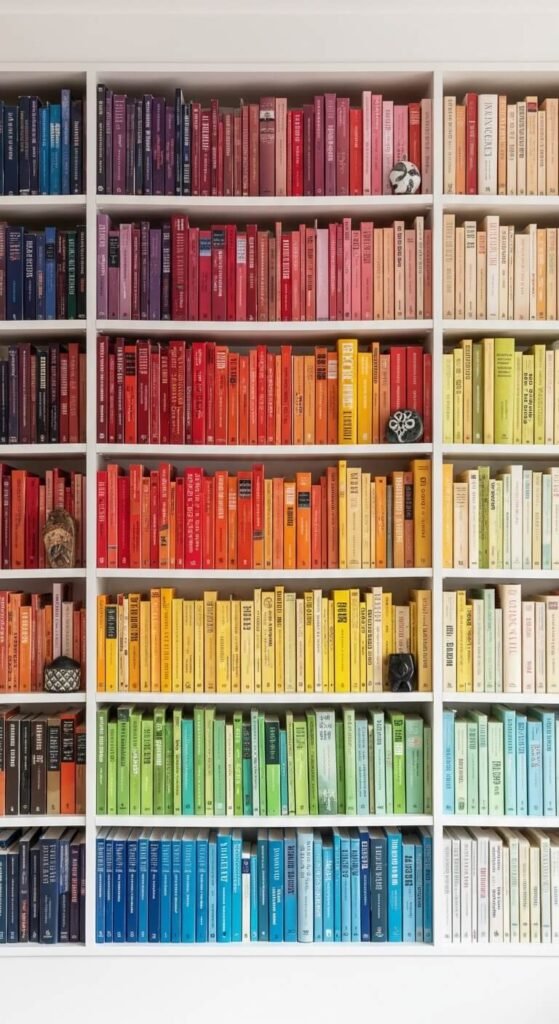
Arranging books by color spine rather than author or genre turns a bookshelf into a piece of wall art. Sort books into color families — deep darks on one end, pale neutrals on the other — and arrange them in a smooth gradient across the shelf. Remove dust jackets to reveal the plain cloth covers, which often produce a more refined color palette. This works best on shelves where the books run the full width. It takes about 30 minutes to rearrange an existing collection and costs nothing. The visual impact is immediate and dramatic — one of the highest-return shelf styling changes you can make.
2. Stacked Horizontal Books as Object Risers
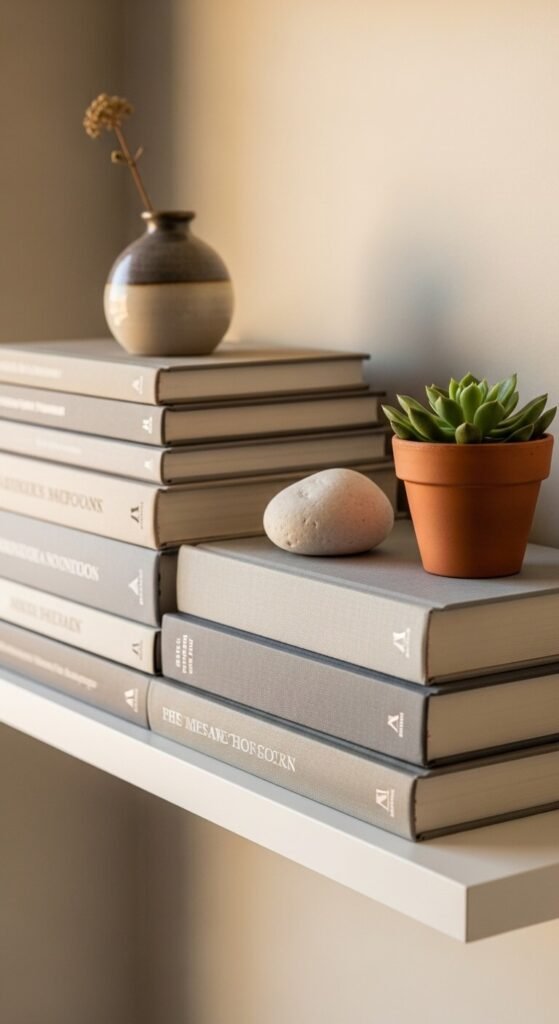
Horizontal book stacks function as free, infinitely adjustable risers that give shelf objects height variation without buying additional stands. Stack two to four books on their sides and place a small object on top — a ceramic piece, a plant, a candle, or a sculptural object. Vary the stack heights across the shelf to create an uneven, natural-feeling visual rhythm. Remove dust jackets so the stacked spines are clean and tonal rather than busy with text and imagery. This technique lets you dramatically change the vertical interest of any shelf arrangement in under ten minutes. It costs nothing if you already own books.
3. Floating Shelves in a Staggered Wall Grid
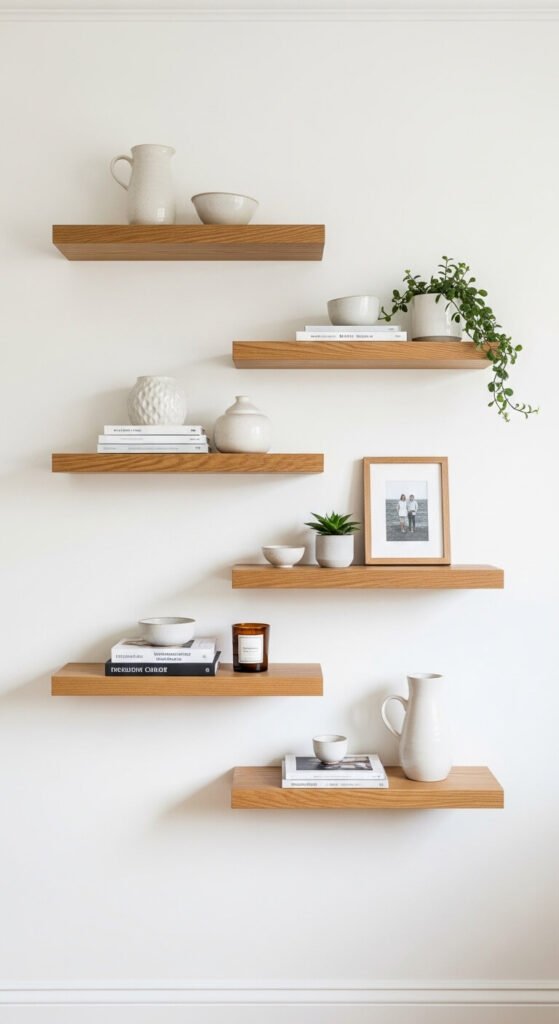
Staggered floating shelves at varying heights turn a plain wall into a full display surface with architectural character. Use shelves of different widths mounted at irregular intervals — some higher, some lower, some offset left or right — rather than a symmetrical grid. The asymmetry makes the arrangement feel collected over time rather than installed in one go. Standard floating shelf brackets and raw wood shelves cost $8 to $20 per shelf. Mount each on a stud or with appropriate wall anchors. Keep each shelf lightly styled with two to three objects maximum so the wall architecture remains visible and the display does not feel cluttered.
4. Framed Artwork Leaning Against Books
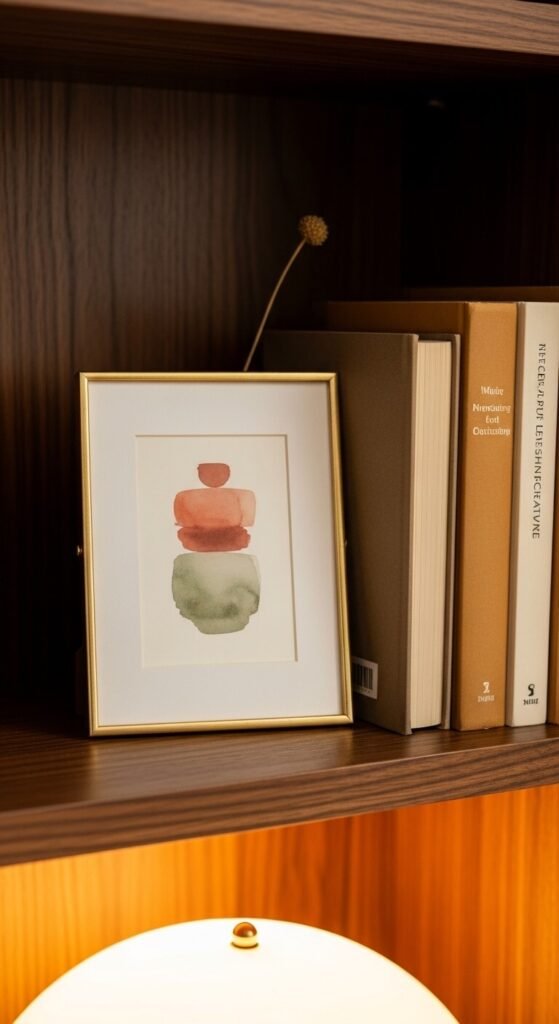
Leaning small framed artworks against books rather than hanging them on the wall gives a shelf an effortless, gallery-in-progress quality. Choose frames that are small enough to be partially obscured by the books beside them — the partial reveal creates depth. Mix frame finishes: thin brass, simple black, and raw wood all work at this small scale. Print your own artwork at a copy shop for $2 to $5 to fill frames cheaply. The leaned rather than hung position signals intentional casualness — it looks like the frame belongs on the shelf rather than having been placed there for decoration. Rotate artworks seasonally without leaving any holes in the wall.
5. Living Plants at Every Shelf Level
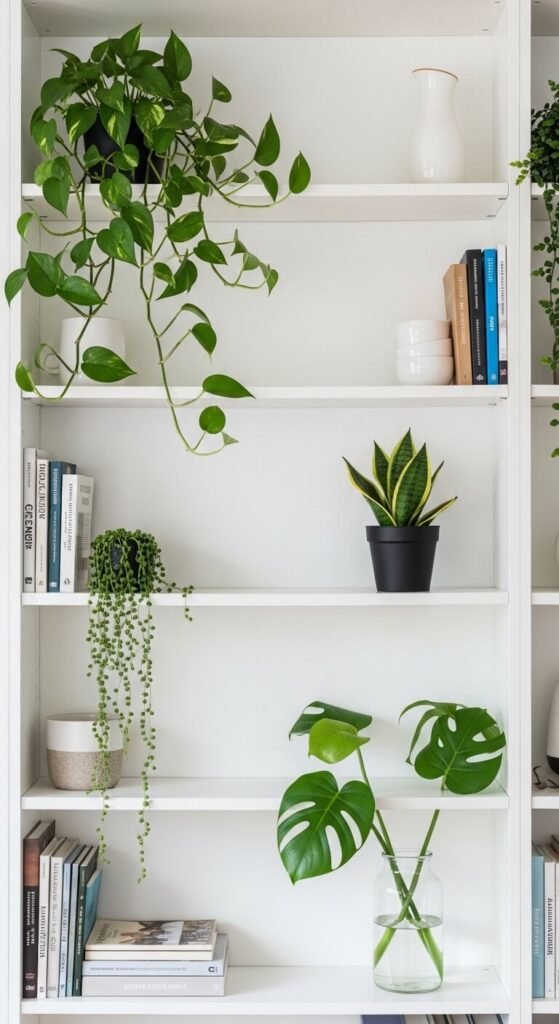
A shelf with plants on every level feels genuinely alive in a way that purely decorative objects cannot replicate. Assign at least one plant to each shelf level, varying the plant type so each level has different leaf shapes, textures, and colors. Use trailing plants on upper shelves to cascade downward — pothos, string of pearls, and trailing tradescantia all work well. Place compact upright plants like snake plants or small ZZ plants on middle shelves. Reserve the bottom shelf for plants in larger pots. Small plant cuttings from a garden center or propagated from existing plants cost $2 to $8 each. The whole shelf comes alive within one growing season.
6. Collected Ceramics from Different Makers
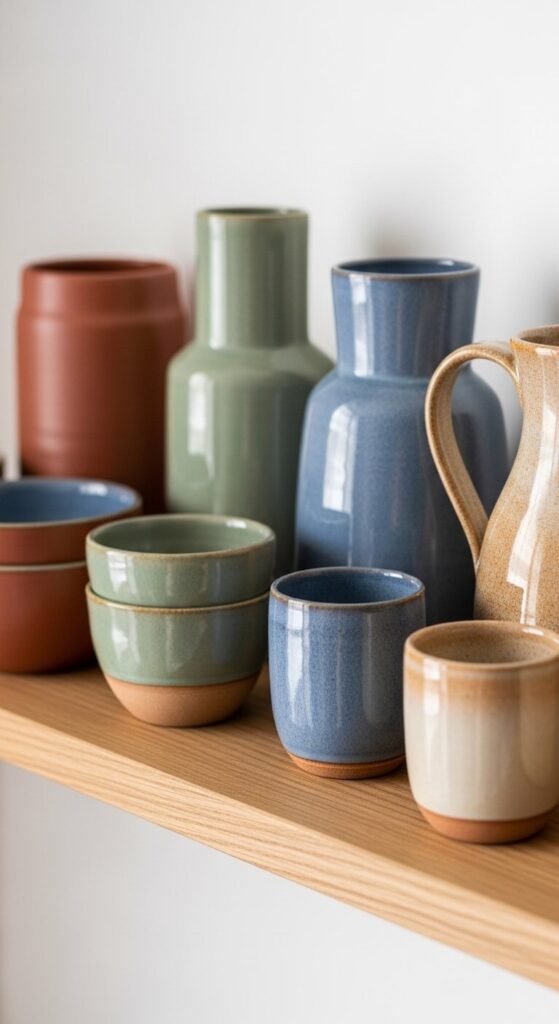
A shelf dedicated to collected ceramics from different makers and different places looks like a serious, personal collection. The key is variety of form within a limited color palette — pieces in different shapes and heights but all within the same tonal family of earthy neutrals, muted greens, or cool stone tones. Buy individual pieces at craft fairs, independent ceramic studios, and charity shops over time. A hand-thrown ceramic from an independent maker costs $15 to $40. Charity shops regularly yield interesting studio pottery for $2 to $6 a piece. Allow the collection to grow slowly — a shelf that fills over time has far more character than one bought all at once.
7. Vintage Photograph Collection in Mismatched Frames
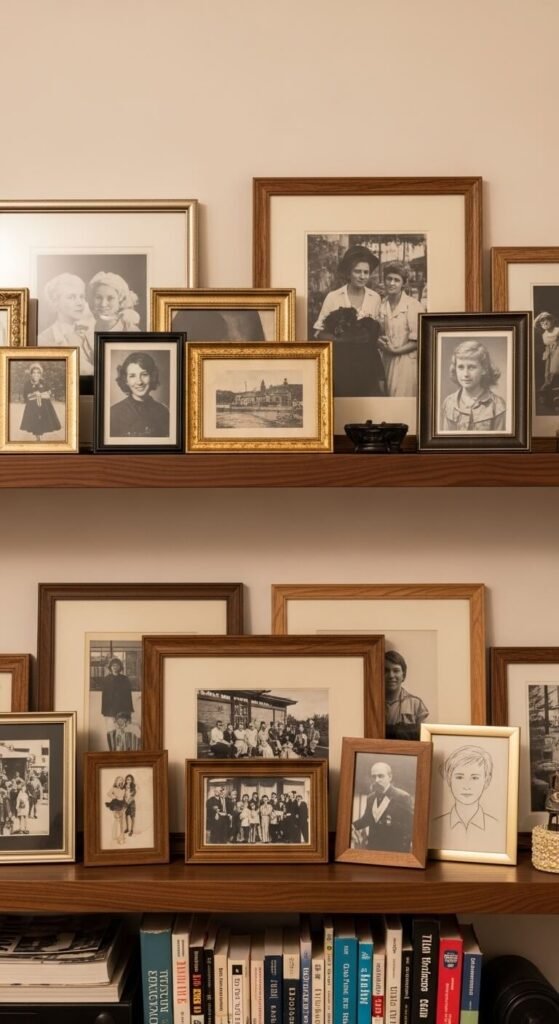
A collection of personal or vintage photographs in mismatched frames across a shelf tells a visual story that no purchased decor can match. Gather frames in a range of sizes and finishes — thin black, ornate gold, raw wood, and painted white all work together when the photographs themselves are unified by being personal or by a consistent printing style. Black-and-white printing ties a mixed collection together immediately. Print family photographs in black-and-white at a copy shop for $1 to $3 each. Buy mismatched frames from charity stores for $0.50 to $4 each. The result looks intentionally eclectic and genuinely personal — the two qualities that make a shelf display memorable.
8. Dark Painted Shelf Interior as a Backdrop
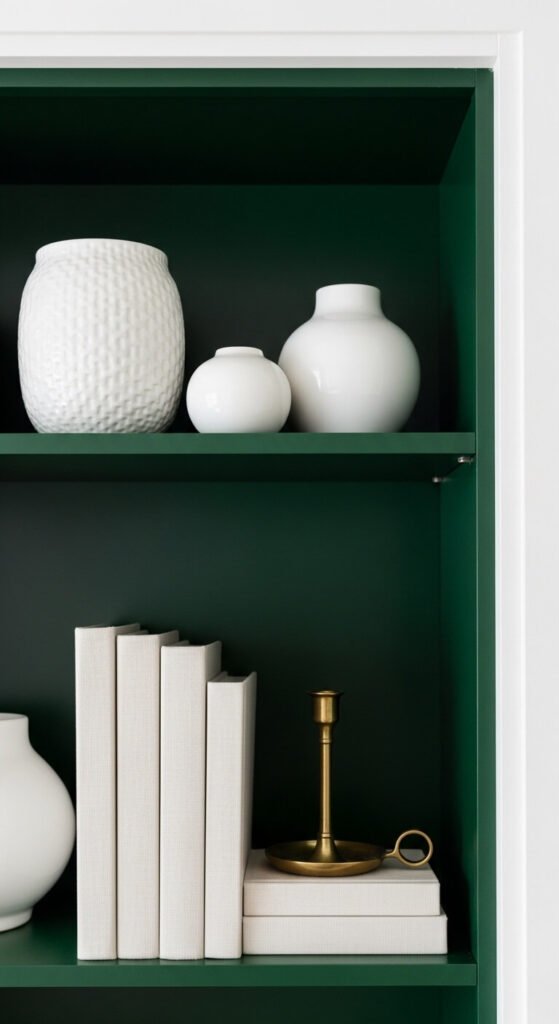
Painting the back panel of a bookshelf in a deep, saturated color turns each shelf level into a shadow box that makes every object on it pop with contrast. Deep forest green, navy, charcoal, or terracotta all work beautifully as shelf interior colors. Use the same paint roller you would use for a wall — one small tin covers most shelf interiors and costs $10 to $20. White ceramics, pale wood objects, and brass accents all read dramatically against a dark shelf back. No other shelf styling change has a greater visual return for less money or effort. This works on both built-in shelves and freestanding bookcases with solid back panels.
9. Natural History and Specimen Display
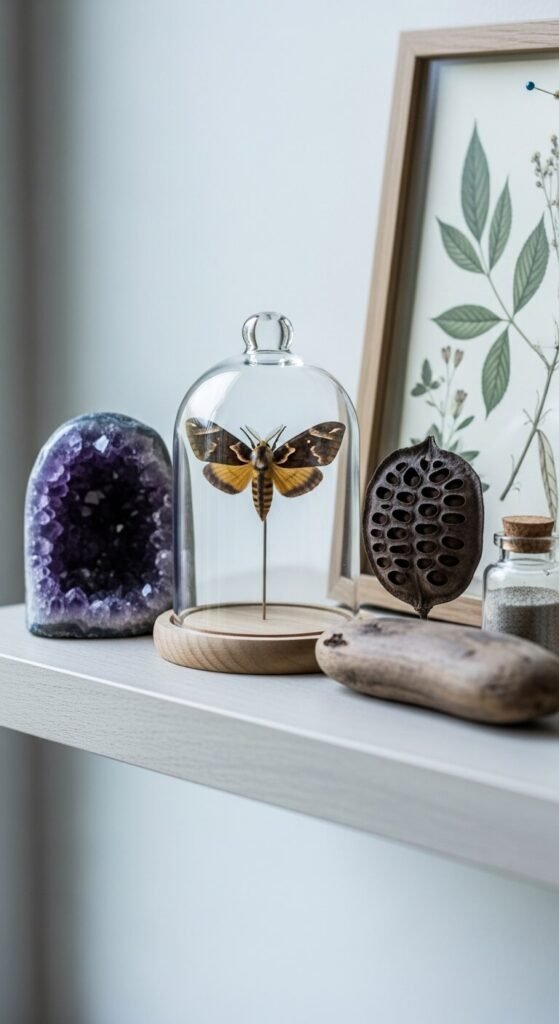
A natural history-style specimen display transforms a shelf into a curated cabinet of curiosities. Gather objects from nature and from your own environment: a geode, a dried botanical specimen, a smooth stone, a feather, a shell, a section of bark, or a pinned butterfly print. Present them with clear space between each object as though they are labeled specimens in a museum case. Glass cloches from craft stores cost $10 to $25 and add immediate display quality. The natural objects themselves are free — collected from walks, gardens, and beaches. A single shelf arranged this way reads as deeply personal and considered rather than decorative.
10. One Bold Sculptural Object per Shelf Level
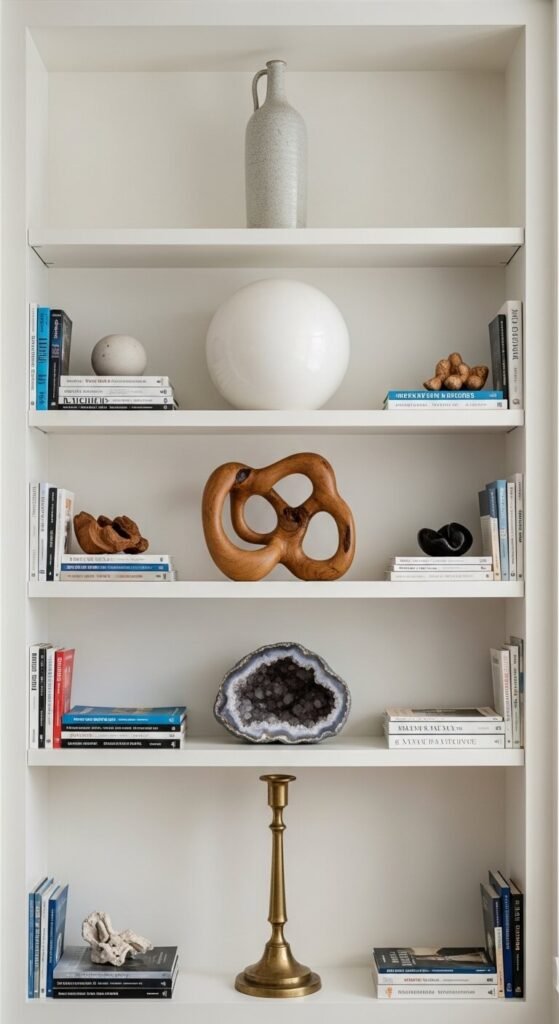
Assigning one bold sculptural object as the anchor for each shelf level creates a visual hierarchy that makes a large shelving unit easy to read from across the room. Each anchor should be the largest object on its level and placed first, with books and smaller objects arranged around it rather than competing with it. Vary the anchor type on each level — a tall vase on one, a large sphere on another, a sculptural wood piece on the next. The anchors give the eye a clear path through the shelves from top to bottom. One strong sculptural piece per level costs $15 to $50 each from thrift stores and craft markets.
11. Woven Baskets for Hidden Storage on Lower Shelves
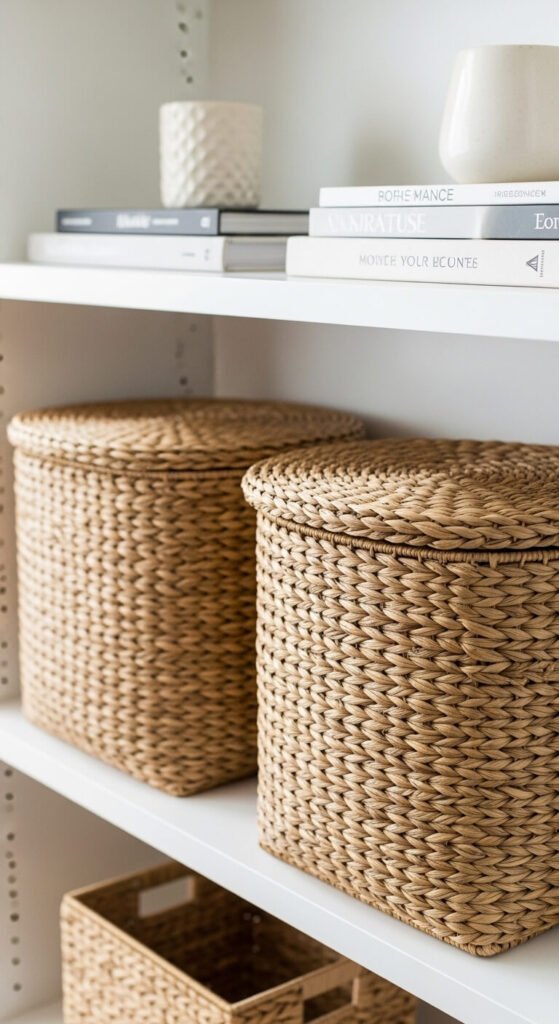
Lower shelves on a bookcase are the hardest to style well because they are seen from above rather than straight on. Use large lidded woven baskets on the bottom one or two shelf levels to create hidden storage for items that do not need to be visible — cables, spare linens, toys, or office supplies. The baskets themselves become the decor on those levels, adding natural texture and warmth to the base of the unit. Matching seagrass or rattan baskets with lids cost $15 to $30 each from discount homeware stores. They signal organization and add a considered touch to the shelf’s lowest, most practical levels.
12. Propagation Vases with Cuttings
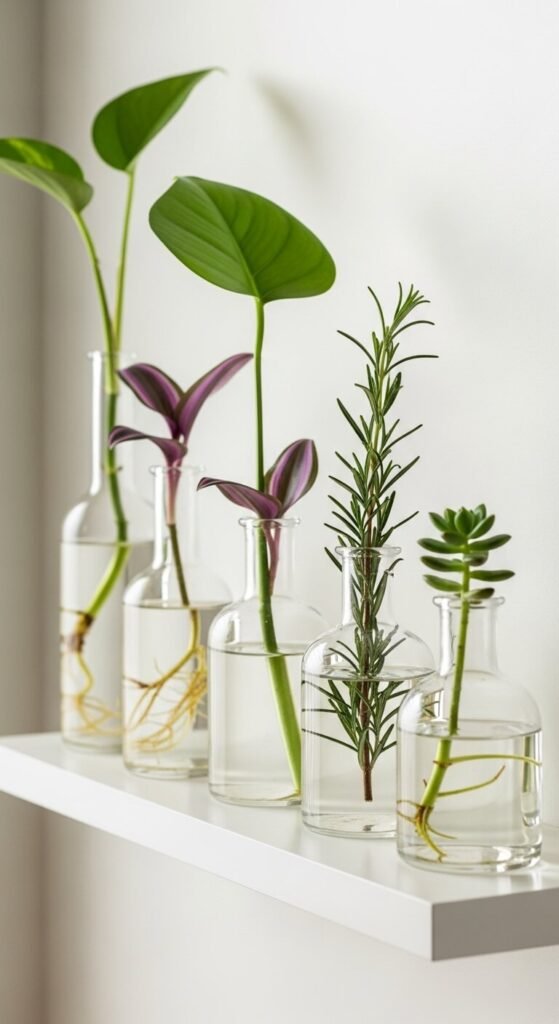
A row of glass propagation vases with plant cuttings is both a functional growing station and a genuinely beautiful shelf display. Use vases in different heights and silhouettes — clear glass bottles, bud vases, test tubes in a wooden stand — and fill each with a single cutting in water. The visible roots growing in the clear water add a scientific, naturalist quality that is unexpectedly beautiful. Any plant cutting placed in water will begin growing roots within two to four weeks. Old glass bottles and bud vases from thrift stores cost $0.50 to $2 each. The cuttings are free if you already own houseplants. Refill the water weekly.
13. Architectural Drawings and Blueprint Prints
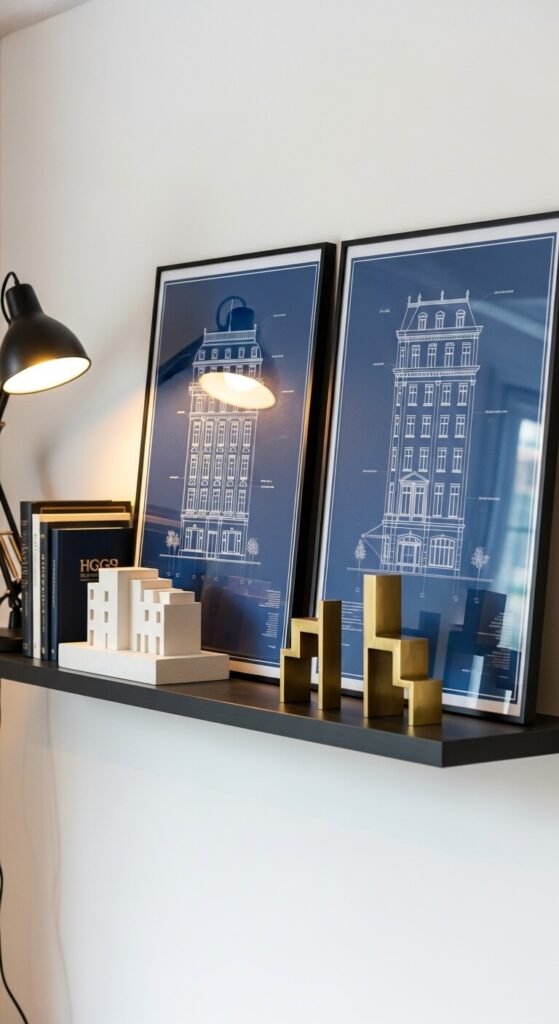
Framed architectural drawings or blueprint-style prints bring a design-forward quality to a shelf that suits anyone with an interest in architecture, engineering, or graphic design. Download free public-domain architectural drawings from archives like the Library of Congress and print them at a copy shop on standard paper for $2 to $5. Frame in thin black or brass frames. Pair with a small architectural model, a compass, or a set of drawing instruments as supporting objects. This aesthetic suits home office shelves, studio spaces, and living rooms with a modern or industrial design direction. The whole display costs under $20 to build from scratch.
14. Shelf Styling with a Strict Two-Color Rule
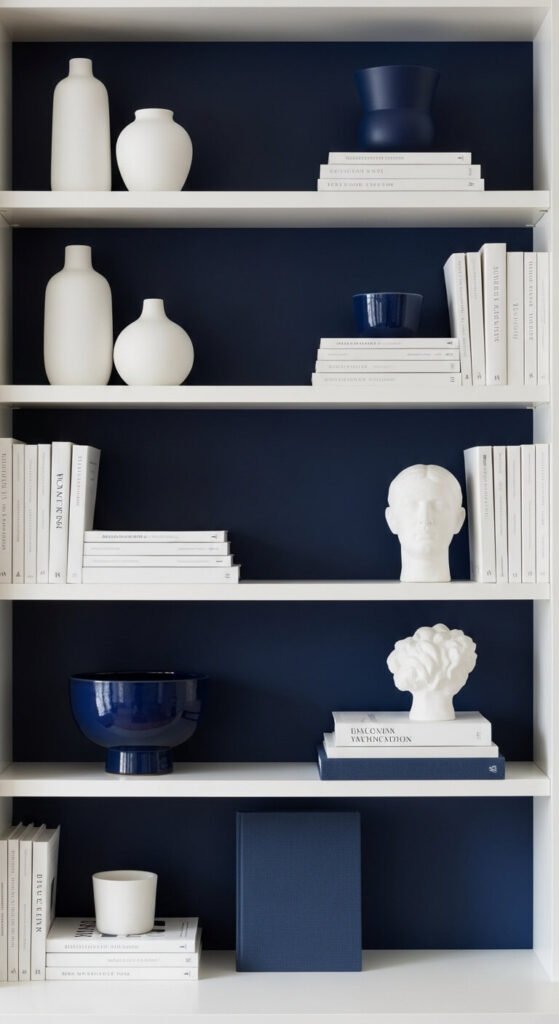
Restricting an entire shelf display to exactly two colors creates a graphic, designed result that looks far more intentional than a mixed palette arrangement. Choose two colors that suit your room — navy and white, black and terracotta, sage green and cream — and apply the rule strictly to every single object on the shelf. Books with off-color spines face inward or get removed. Every ceramic, frame, plant pot, and textile must fall within the two chosen tones. The discipline of the constraint is what creates the visual impact. This is a free styling exercise if you work with objects you already own — it is purely an editing and arrangement challenge.
15. Small Framed Mirrors Among Shelf Objects
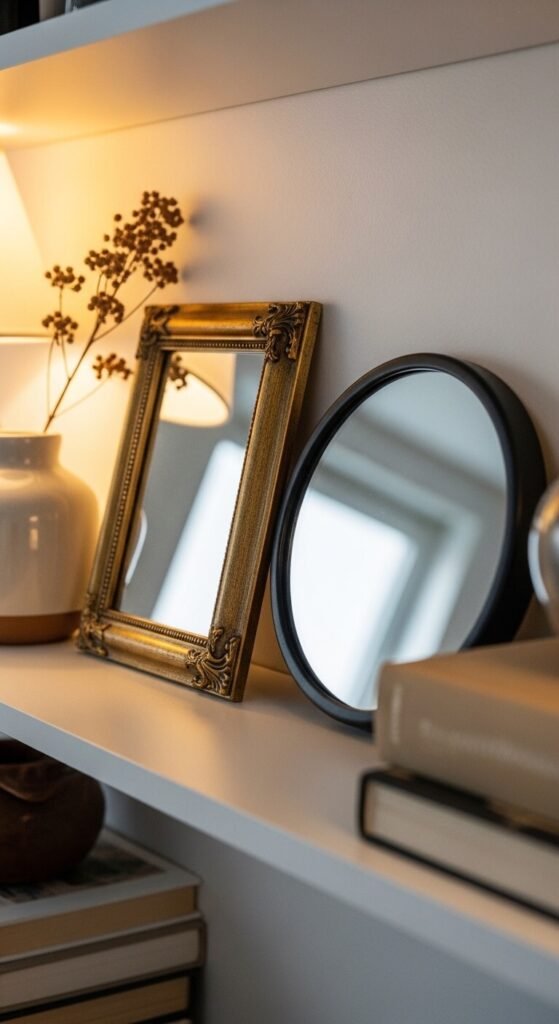
Small mirrors leaned among shelf objects add depth and light reflection that no other decorative element provides. Use mirrors with frames that suit your room’s aesthetic — an ornate gilt frame for a maximalist shelf, a thin black circle for a modern one. Prop them rather than mounting them so they can be repositioned as the shelf arrangement evolves. Small decorative mirrors cost $5 to $20 at discount homeware stores or $2 to $8 at thrift stores. Their reflective surfaces make shelves feel deeper and bring light into dark shelf corners. Two or three spread across a large shelving unit is more effective than clustering them all in one spot.
16. Themed Collection Display — Maps and Globes
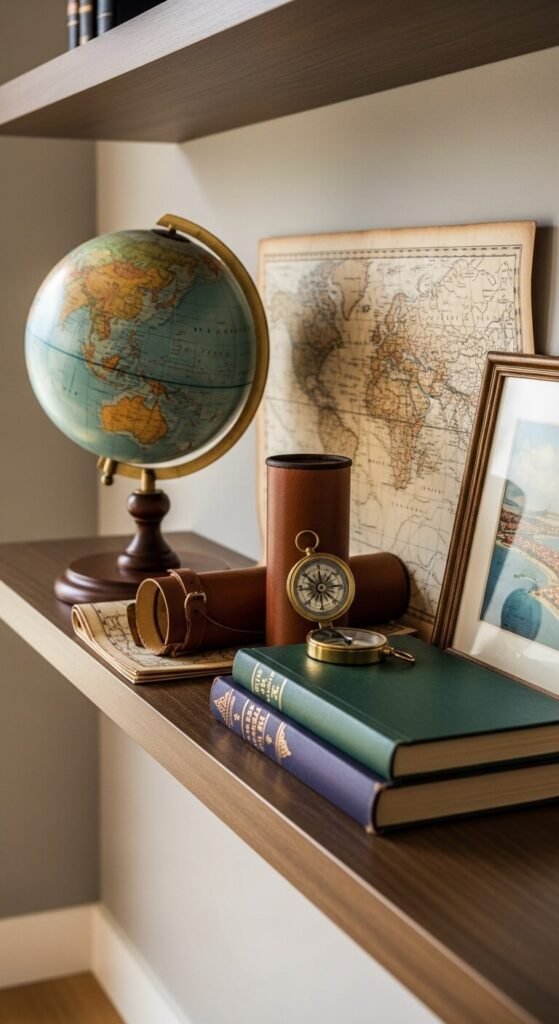
A shelf built around a single collecting theme tells a clear, coherent story that random decorative objects never can. Choose one subject you genuinely care about — maps and navigation, cameras and photography, music, cooking, natural history — and build the shelf display entirely from objects related to that theme. A vintage globe from an antique shop costs $15 to $40. Old maps, compasses, and travel books from thrift stores cost almost nothing. The result looks like the shelf of someone with real knowledge and passion rather than purchased decor. Themed shelves work because they are honest — every object belongs and has a reason for being there.
17. Plants in Unexpected Vessels
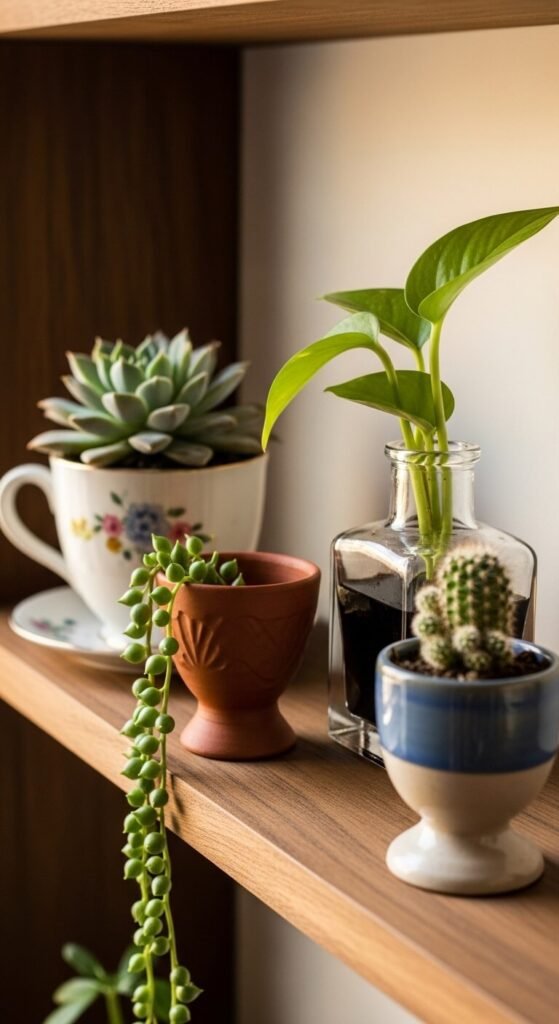
Planting small plants in unexpected vessels — vintage teacups, old ink bottles, ceramic egg cups, small sake cups — gives a shelf an inventive, personal quality that standard plant pots cannot match. The vessel becomes as interesting as the plant. Collect small ceramic vessels from thrift stores, charity shops, and kitchen sales — unusual shapes and old glazes are the goal. Drill a small drainage hole in the base with a ceramic drill bit, or use the vessel without drainage and water sparingly. Each vessel costs $0.50 to $3. The whole shelf of collected vessel-plants costs less than $20 and looks completely original.
18. Shelf Styled Around a Single Artwork
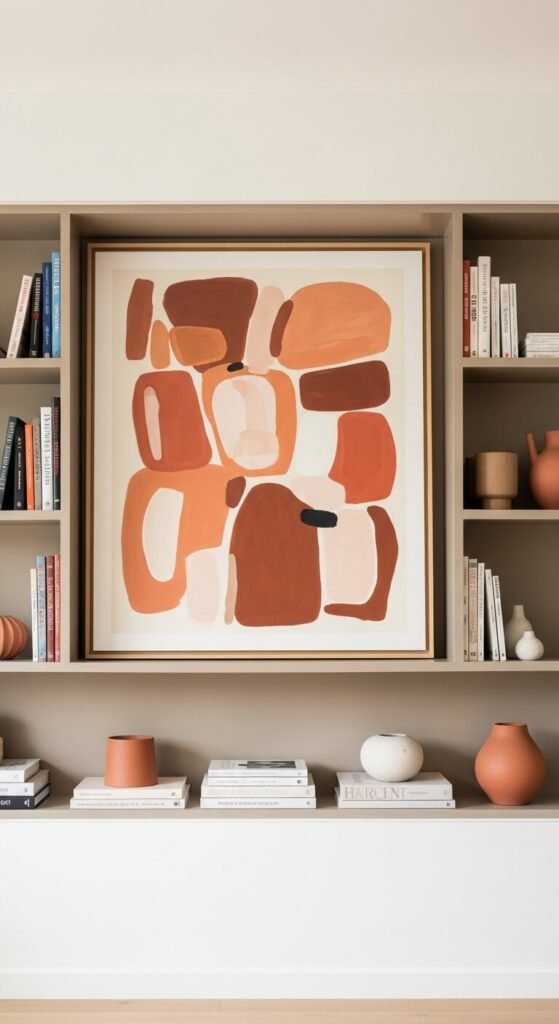
Building an entire shelf arrangement around one piece of artwork creates a display where everything feels purposeful. Place the artwork prominently on a middle shelf level and then choose every surrounding object to pick up tones, materials, or themes from the piece. If the artwork is warm terracotta, the surrounding ceramics echo those tones. If it is botanical, plants and natural objects surround it. The artwork does not need to be expensive — a large poster print in a simple frame costs $5 to $15. The curation work around it is what creates the effect. This approach suits anyone who has one piece they genuinely love and wants to build a shelf around it.
19. Neon or LED Word Sign on a Shelf
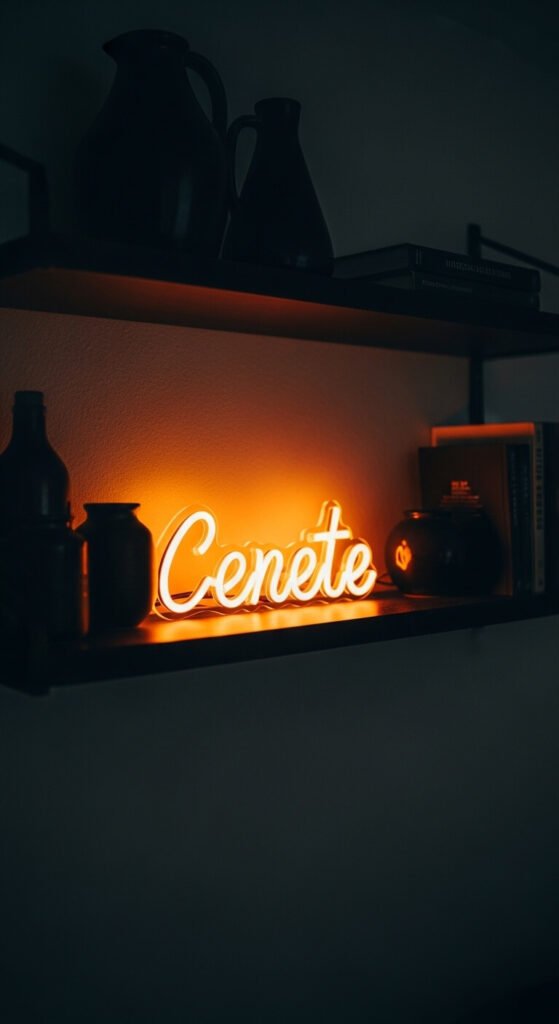
A small LED neon sign on a shelf adds a warm, moody light source that transforms the shelf’s evening atmosphere. Choose a short word or simple symbol — a single word in warm white or amber reads far more sophisticated than multi-colored or bright primary neon. LED neon flex signs on shelf-sized bases cost $20 to $40 online. They run on a USB cable that can be hidden behind books. At night with the room lights dimmed, a glowing shelf sign becomes the most visually interesting spot in the room. Keep surrounding objects in dark, muted tones so the light from the sign is the clear focal point.
20. Wabi-Sabi Objects with Intentional Imperfection
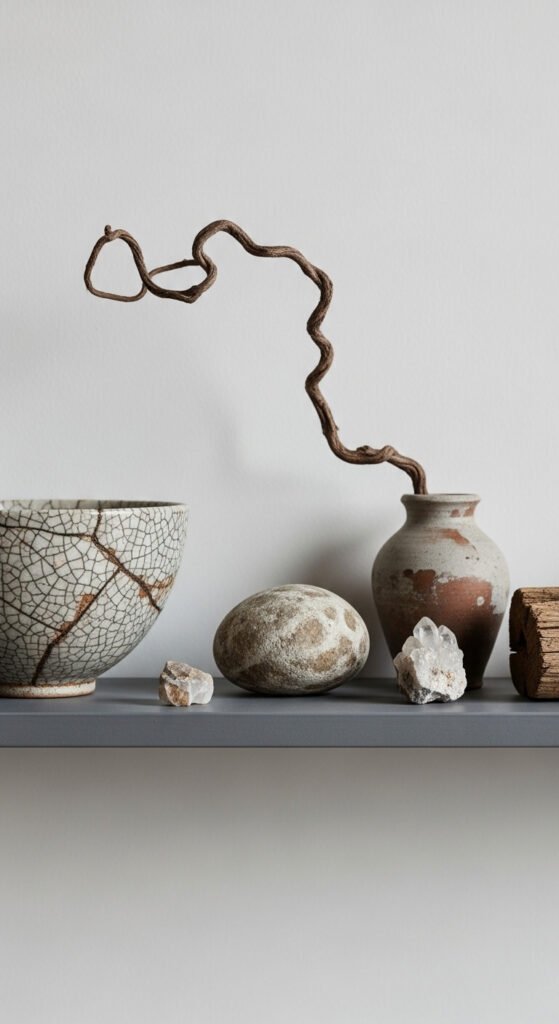
Wabi-sabi shelf styling uses objects that show age, wear, and natural irregularity as their primary beauty. Cracked ceramics, twisted branches, smooth worn stones, weathered wood, and aged metals all belong here. The objects should feel found and genuinely old rather than new pieces made to look distressed. Antique fairs and charity shops yield genuinely aged ceramics for $1 to $5. River stones and driftwood are free. The generous negative space between each object is as important as the objects themselves — this is not a full shelf but a spare, considered one. This aesthetic requires the most editing of any shelf style. Remove rather than add.
21. Travel Souvenir Curation with Context
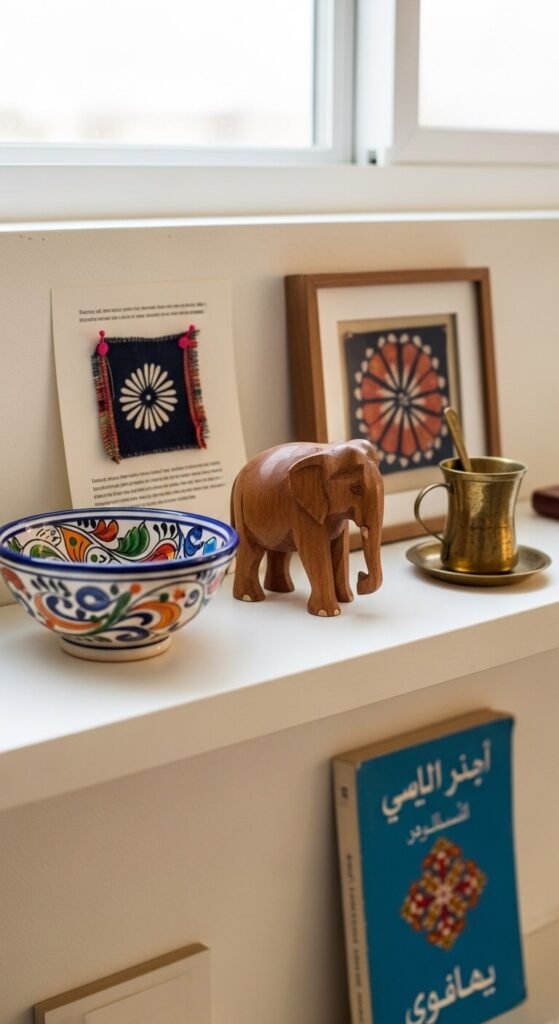
Travel souvenirs are most powerful on a shelf when they are curated to the best five or six pieces rather than displayed all at once. Edit down to the pieces with the strongest visual interest or most meaningful stories and arrange them with generous space between each object. A small handwritten note or tag beside each piece describing where it came from adds a personal museum quality. Rotate which pieces are on display seasonally — store the rest. No new purchases needed. This is a curation exercise using objects you already own. A shelf of five meaningful travel objects beats thirty crammed together every time.
22. Record Album Covers as Rotating Wall Art
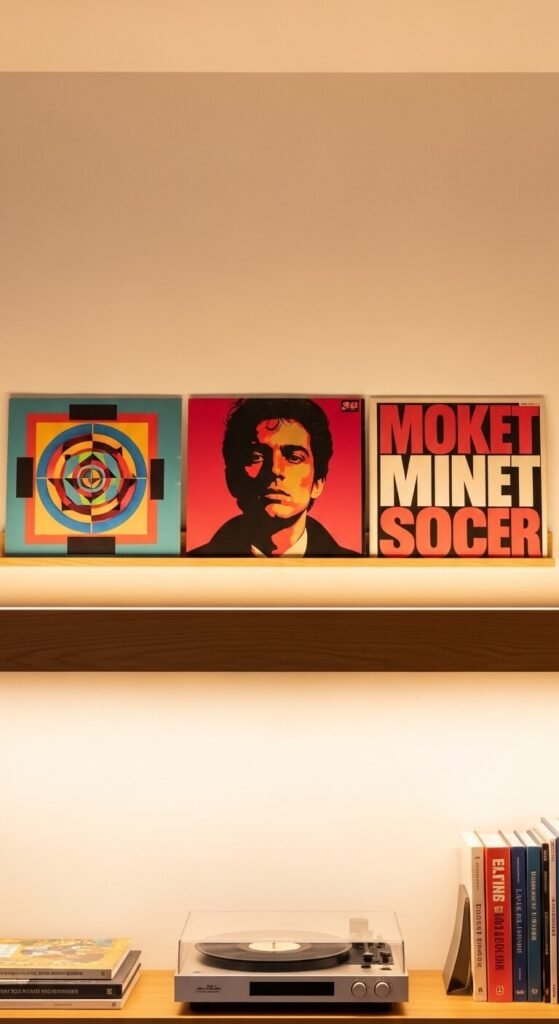
Record album covers are some of the best graphic design objects in any home — and displaying them on a shelf ledge turns them into rotating wall art. Mount a slim picture ledge or album display rail at shelf height and lean three to four records against the back, covers facing out. Swap them out whenever you want a new look. The covers act as large, colorful flat artworks that change the shelf’s mood completely depending on which records are displayed. Vinyl records from a charity shop or car boot sale cost $1 to $5 each. The display ledge costs $8 to $15. A shelf for music lovers that is personal, functional, and constantly changing.
23. Monogram or Initial Letter as a Shelf Anchor
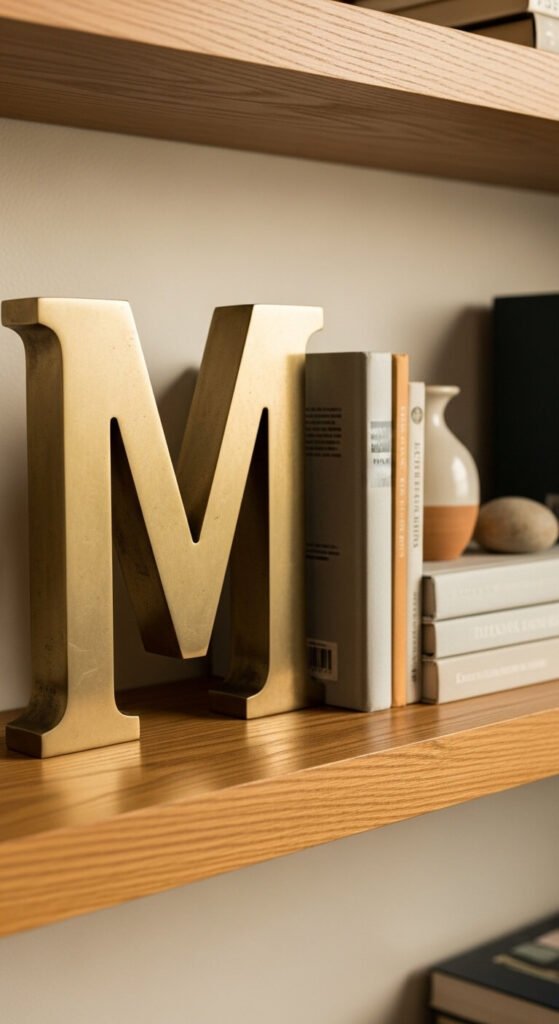
A large freestanding initial letter used as a shelf anchor adds an immediately personal touch to any display. Choose a material that suits your shelf’s aesthetic — raw brass for a warm modern shelf, painted wood for a farmhouse shelf, or concrete for an industrial one. Letters from craft stores cost $3 to $15 depending on size and material. Choose a letter large enough to be read clearly from across the room — at least 6 inches tall. Position it at one end of the shelf rather than centered so it anchors the display rather than halving it. Surround it with books and two or three smaller objects that defer to rather than compete with the letter.
24. Shadow Box Frames as Mini Display Cases
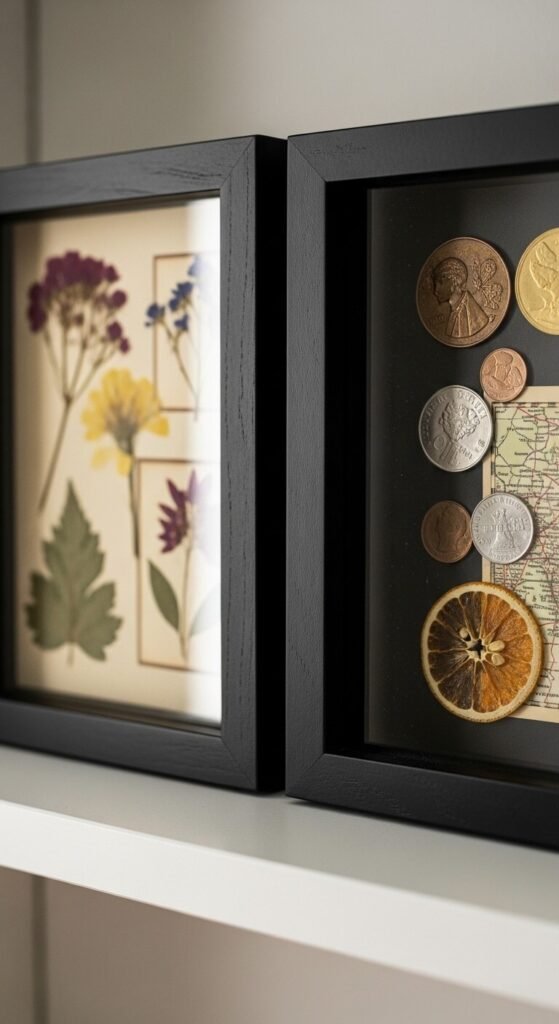
Shadow box frames mounted at the back of a shelf turn the shelf itself into a three-dimensional display case. Fill them with flat collections of meaningful objects: pressed botanicals, old coins, postage stamps, small photographs, fabric swatches, or natural specimens. A shadow box frame with a 2-inch depth costs $8 to $18 at craft stores. Mount two or three side by side as a series for stronger visual impact. The objects inside are typically free — gathered from personal collections, gardens, or drawers. The frames make the ordinary feel considered and displayed. Change the interior contents seasonally without removing the frames from the shelf.
25. Kitchen Shelf with Functional and Beautiful Objects
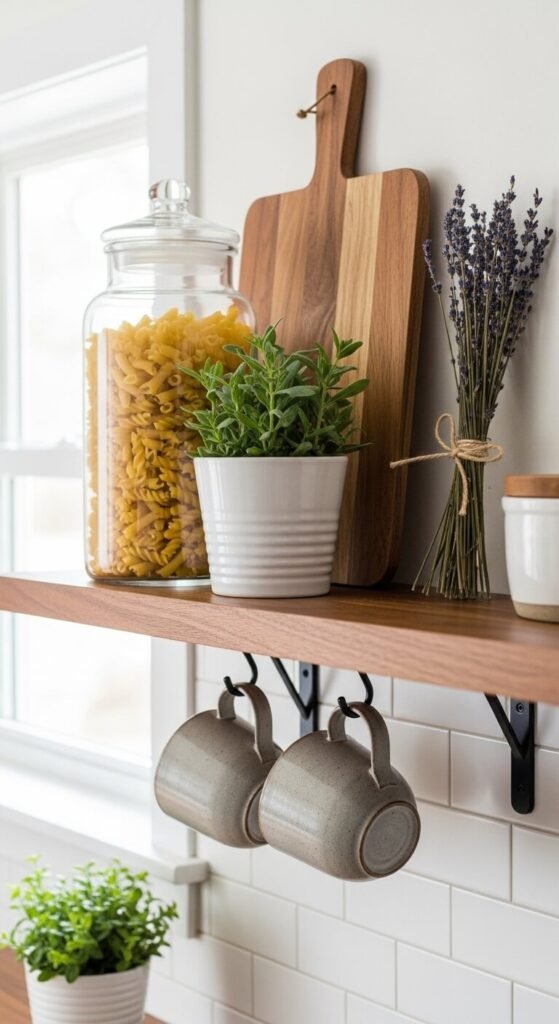
Kitchen shelves earn their place when they hold objects that are both beautiful and genuinely used every day. Mix clearly functional objects — mugs, jars, cutting boards — with one or two purely decorative elements: a small potted herb, a dried flower bunch, or a single ceramic piece. The functional items give the display authenticity; the decorative elements give it intention. Glass apothecary jars filled with dried goods — pasta, pulses, grains — cost $3 to $8 and look far better than the original packaging. Hang mugs from small hooks screwed into the shelf underside to add a vertical element and free up shelf surface space for other objects.
26. Shelf as a Dedicated Reading Nook Display
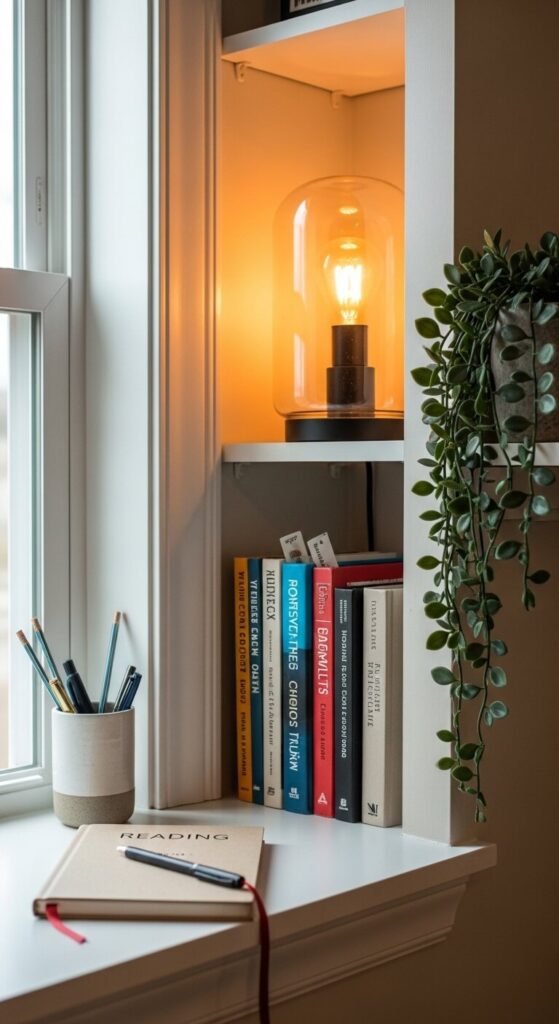
A shelf dedicated to the active reading life — current books, a small lamp, a journal, writing tools, and one plant — becomes a display of how you actually spend your time rather than what you want to project. Keep only currently-reading or next-to-read books on this shelf rather than a large library. A small table lamp on the shelf provides warm focused light for actual reading. A ceramic cup holding a few pens, one open journal, and one trailing plant complete the arrangement. Everything on this shelf should be genuinely used. The display looks personal because it is personal — and that honesty reads immediately to anyone who sees it.
Conclusion
The shelves that people remember are not the ones with the most expensive objects — they are the ones that clearly belong to a specific person. A shelf filled with collected ceramics from craft fairs, personal photographs in mismatched frames, travel objects with real stories, and plants grown from cuttings says something true about who lives in the space. Start by editing what you already have. Remove anything that does not genuinely interest you or belong in the room’s palette. Group what remains by height, color, and material. Add one plant, one light source, and one personal object that means something specific to you. That process — not any particular purchase — is what transforms a shelf from storage into a display worth looking at every day.