
The moment someone steps through your front door, your entryway speaks before you do. It sets the tone for everything that follows — the style of your home, how organized your life feels, and how welcome your guests are going to feel. But entryways are often the most neglected spaces in a house. Too small, too dark, too cluttered, or just completely forgotten. The good news is that even a narrow hallway or a tiny foyer can be turned into something that genuinely impresses with a few smart, affordable design choices. These 24 entryway decor ideas cover everything from lighting and mirrors to storage and seasonal styling — practical, doable, and designed to make a real difference.
1. Hang a Statement Mirror to Open Up the Space

A mirror is the single most effective tool in a small entryway. It reflects light, creates depth, and makes the space feel twice as large as it actually is. Go for a round or arched frame in brass, black, or natural wood to add character. A large mirror from a thrift store, spray-painted to match your style, works just as well as a new one. Mount it at eye level — roughly 57–60 inches from the floor to the center. Instant visual upgrade for under $30.
2. Add a Console Table for Function and Style

A console table turns a dead wall into a working, beautiful surface. Choose one that’s 10–14 inches deep so it doesn’t block movement in a narrow entryway. Style it with a lamp, a small tray for keys, and something with texture — a plant, a book stack, a candle. Thrift stores regularly carry console tables for $15–$40. Paint or stain them to match your home’s palette. Keep the top mostly clear so it stays functional and doesn’t become a catch-all dumping zone.
3. Layer a Runner Rug for Warmth and Direction
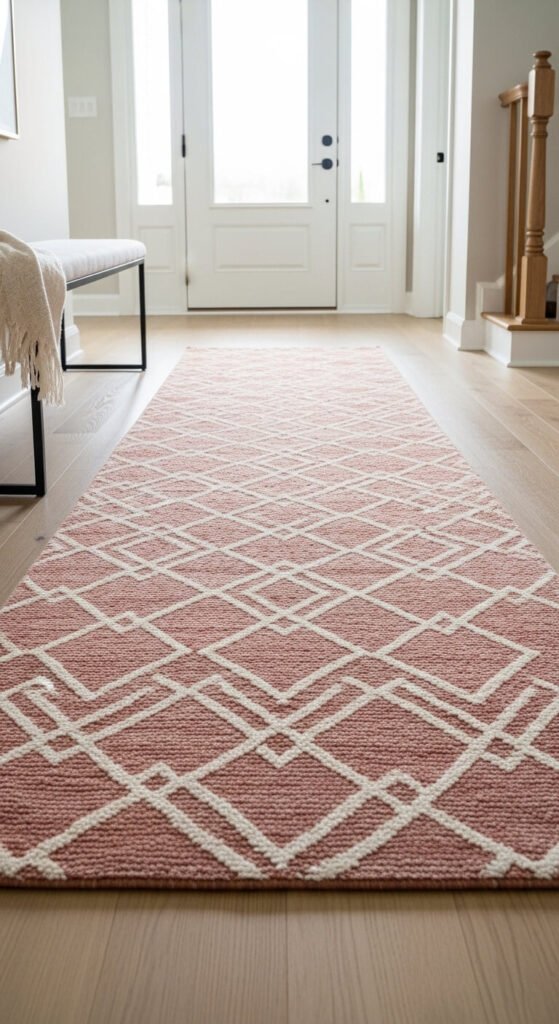
A runner rug does more than protect your floors. It defines the entry zone, adds color and texture, and guides the eye naturally into the rest of the home. Choose a pattern with some visual interest — stripes, diamonds, or a simple geometric print add personality without overwhelming a small space. Natural fiber runners like jute or cotton are affordable ($25–$60) and hold up well near the front door. Layer a non-slip pad underneath for safety and to keep the rug from shifting.
4. Install a Row of Wall Hooks for Everyday Items

A dedicated hook system keeps coats, bags, and hats off the floor and out of chairs. Wall hooks are one of the cheapest, highest-impact entryway investments you can make. A simple row of five matte black or brass hooks costs $10–$25 and takes under an hour to install. Mount them at varying heights — some lower for kids — for maximum usability. Add a small wooden plank or shiplap panel behind them to create a built-in look without the built-in price tag.
5. Use a Mudroom Bench for Seated Shoe Changes

Everyone wrestles with shoes at the door. A bench with storage underneath solves that problem while adding a piece of furniture that actually looks good. DIY version: mount a plank of wood between two corbels for under $20. Add a foam cushion wrapped in linen or canvas fabric for comfort. Use wicker baskets or fabric bins underneath for shoe storage. This setup creates a real “drop zone” moment — a place to sit, store, and stay organized right where you need it.
6. Light It Up With a Pendant or Wall Sconce

Most entryways are poorly lit — and dim lighting makes a space feel unwelcoming. Replacing a basic overhead fixture with a pendant or adding plug-in wall sconces changes the entire atmosphere. Pendant lights in matte black, brushed gold, or rattan start around $30–$60 online. Plug-in sconces require no electrician and run $20–$40 each. Warm bulbs (2700K) make the entry feel cozy and intentional. Good lighting is the fastest way to make a space feel designed rather than overlooked.
7. Frame the Door With Potted Plants

The welcome begins before anyone even opens your door. Two matching plants flanking the front entrance create symmetry and a sense of arrival. Boxwood topiaries, small olive trees, or tall ornamental grasses in identical pots work beautifully. Terracotta pots cost $10–$25 each at garden centers or thrift stores. Choose plants appropriate for your climate so they stay healthy with minimal care. If outdoor plants aren’t practical, faux topiaries from discount home stores hold up surprisingly well and look great year-round.
8. Paint the Front Door a Bold, Confident Color
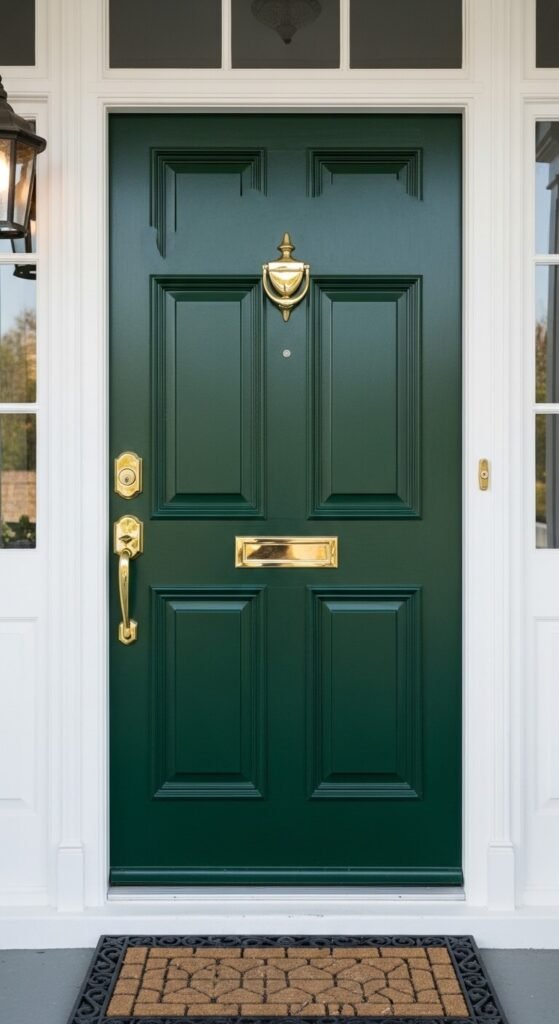
Your front door is the face of your home. A bold color — deep green, navy, black, burgundy, or sunny yellow — turns a forgettable door into a design statement. Exterior door paint costs $20–$35 per quart, which is plenty for one door. Sand lightly and apply two coats for a clean, professional finish. New hardware — a brass knocker, updated hinges, a sleek handle — costs another $20–$40 and makes the door look like a complete renovation. High ROI, low effort.
9. Display a Seasonal Wreath Year-Round

A wreath signals warmth and personality before a guest rings the bell. You don’t need to buy a new one every season. A dried flower or eucalyptus wreath stays beautiful for months. A simple grapevine wreath ($5–$10) becomes a base for seasonal additions — ribbon, small ornaments, or foliage. Hang it with an over-the-door hook to avoid putting holes in your door. DIY wreaths from grocery store flowers or farmer’s market stems cost very little and look far more intentional than mass-produced alternatives.
10. Create a Gallery Wall That Tells a Story
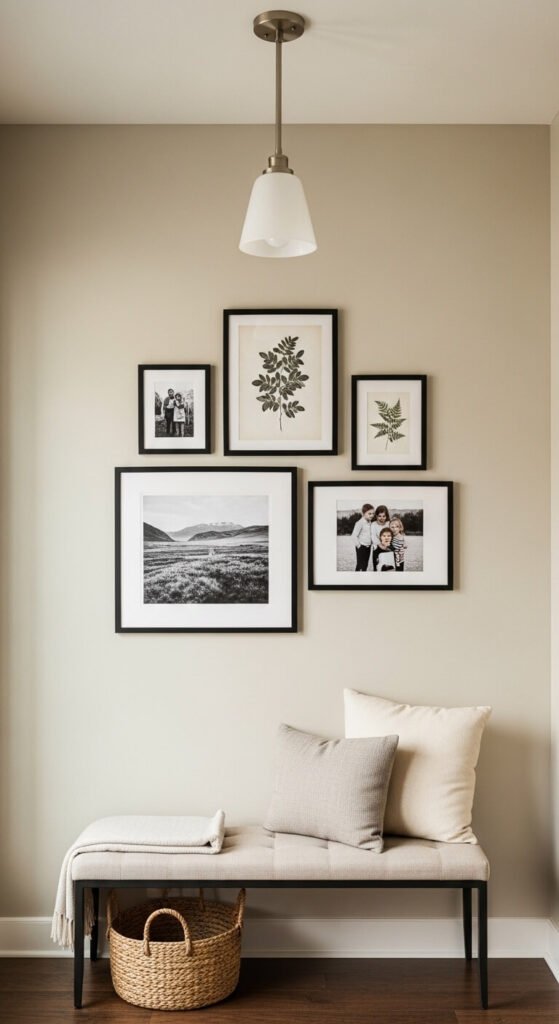
A gallery wall above a bench or console table personalizes an entryway immediately. Keep frames consistent — same finish, similar sizes — so it reads as curated rather than cluttered. Mix family photos with simple art prints, postcards, or pages torn from a calendar. Print photos at a drugstore for under $1 each and frame them with $3 frames from the dollar store. Lay the arrangement on the floor first to plan placement before putting a single nail in the wall. Ten minutes of planning saves a lot of patching later.
11. Use Woven Baskets for Hidden Storage

Baskets are the most affordable and attractive storage solution for entryways. Woven seagrass or water hyacinth baskets ($10–$25 each) hold shoes, umbrellas, dog leashes, kids’ gear, or seasonal items without looking messy. Stack them in a corner, slide them under a bench, or line them up on a shelf. Because they’re covered or opaque, the contents stay hidden. The texture they add — natural, warm, organic — works in almost every decor style from bohemian to coastal to classic.
12. Mount Floating Shelves for Display and Storage

Floating shelves work in entryways where floor space is limited. Mount them at varying heights to add visual rhythm. Use the top shelf for display — a plant, a framed photo, a small sculpture. Use the lower shelf for function — a key dish, a charger, a small basket. IKEA’s LACK shelf is $7.99 and holds more than it looks like it can. Three shelves staggered on one wall can replace a console table entirely in a truly tiny entryway.
13. Choose a Doormat That Sets the Tone

A doormat is one of the first things anyone sees and touches when arriving at your home. Choose one with texture, pattern, or a clean graphic rather than defaulting to a plain brown rectangle. Coir mats ($15–$30) are durable and naturally trap dirt. Layered mats — a larger flat mat underneath a smaller decorative one — look designer-level for very little money. Replace your mat every year or two; a tired, frayed mat undermines everything else you’ve done to make the entryway look good.
14. Add a Small Table Lamp for Ambient Warmth

Overhead lighting is fine, but a small lamp on your console table creates something overhead fixtures can’t — warmth at eye level. That low, warm light is what makes a space feel genuinely cozy and welcoming. A plug-in table lamp with a drum shade runs $20–$45. Position it on the far end of the console so it doesn’t block the mirror above. Use a smart plug to set it on a timer so it’s on when you arrive home. That glowing light through the sidelight window is worth every penny.
15. Incorporate Natural Texture With Wood and Rattan

Hard surfaces dominate most entryways — tile floors, painted walls, solid doors. Natural textures like wood, rattan, and jute add warmth that manufactured materials can’t replicate. A rattan mirror, a jute rug, a wooden tray, a woven lamp shade — any combination of these softens the space and makes it feel more human. Rattan and jute items are widely available at discount stores and thrift shops for $5–$30 each. You don’t need all of them at once. Start with one textural element and build from there.
16. Create a Dedicated Key and Mail Station

Losing keys is one of the most common household frustrations — and it’s 100% solvable. A wall-mounted key and mail organizer gives every incoming item one dedicated home. Look for a combined hook, shelf, and mail slot unit for $15–$35 online. Mount it right beside the door so you can drop keys as you walk in without thinking. If you’re handy, build a simple version with a wood plank, two cup hooks, and a small wire basket. Thirty seconds of setup every time you arrive saves significant stress.
17. Style With Dried Botanicals for Low-Maintenance Beauty

Fresh flowers are beautiful but require constant attention. Dried botanicals — pampas grass, wheat stalks, eucalyptus, lavender, dried protea — last for months or even years with zero upkeep. Arrange a loose bunch in a tall clear vase or a terracotta pot for an earthy, organic look. Dried arrangements are available at craft stores, farmers markets, and online for $10–$30. Or dry your own summer flowers by hanging them upside down in a closet for two weeks. Completely free, completely beautiful.
18. Paint Your Walls a Deep, Dramatic Color
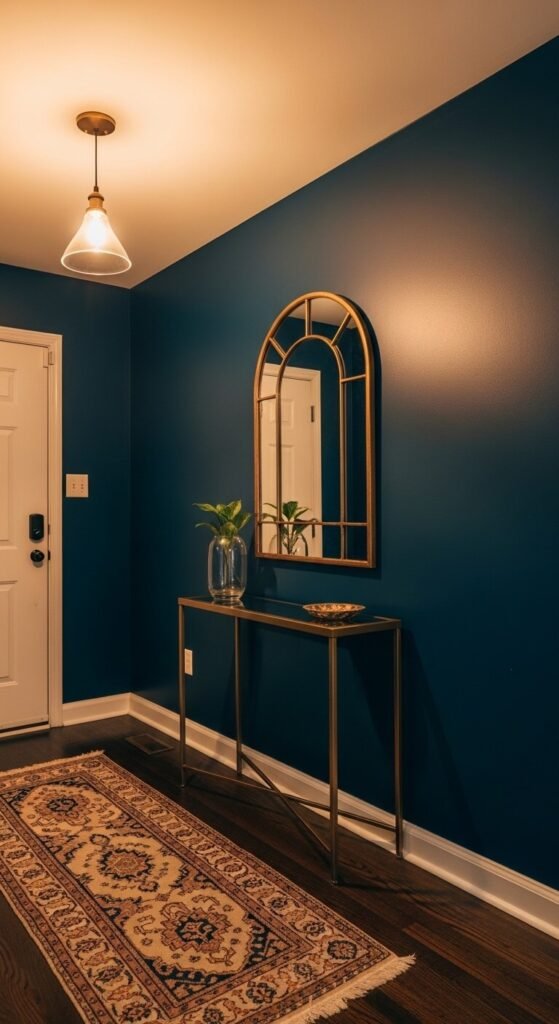
Light, neutral walls are safe — but a dramatic dark wall color in an entryway creates a bold, unforgettable first impression. Navy, charcoal, forest green, or deep terracotta make the space feel intimate and intentional rather than small and neglected. Dark colors also hide scuffs and marks better than white. A quart of paint covers the average small entryway for $20–$35. Pair it with warm lighting and natural materials to keep the space feeling welcoming rather than cave-like.
19. Hang a Functional Pegboard System

Pegboards aren’t just for garages. A painted pegboard in an entryway creates a fully customizable wall system that holds coats, bags, hats, dog leashes, and decorative elements all in one place. Paint it the same color as your wall for a seamless look or a contrasting color to make it a feature. Add wooden pegs ($1–$3 each), small shelves, and even small potted plants in clip holders. A full setup costs $20–$40 and takes an afternoon. Far more attractive than a row of random hooks.
20. Use a Tall Lantern or Candleholder as a Floor Accent
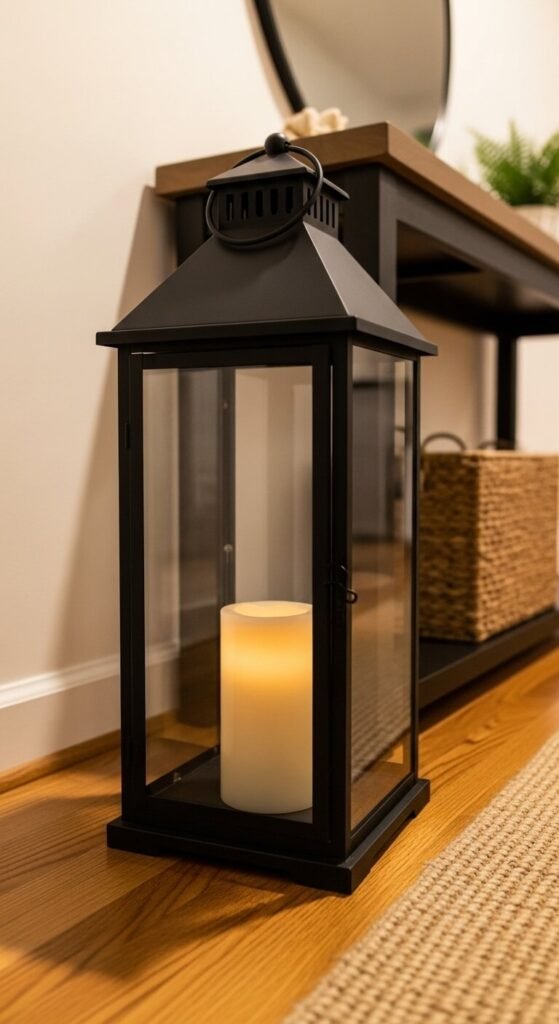
Floor accents ground an entryway and fill the often-awkward space beside furniture. A tall lantern, a large ceramic vase, or a statement plant pot on the floor adds visual weight at a lower level, making the space feel layered and complete. Tall iron lanterns run $20–$45 and look good in farmhouse, coastal, and classic decor styles. Place one on either side of a console table for symmetry, or use a single large one beside the door as an accent point. Change candles seasonally to keep things feeling updated.
21. Invest in Updated Door Hardware

Door hardware is the jewelry of the entryway. Swapping outdated brushed nickel or builder-grade hardware for matte black or aged brass makes your front door look intentional and upgraded. New door handles cost $25–$60. New hinges run $3–$8 each. A matching coat hook in the same finish ties the whole entryway together. This is one of the highest-return, lowest-effort upgrades available. The entire job takes about 20 minutes with a screwdriver. Guests notice even if they don’t know exactly what changed.
22. Layer Lighting With a Dimmer Switch
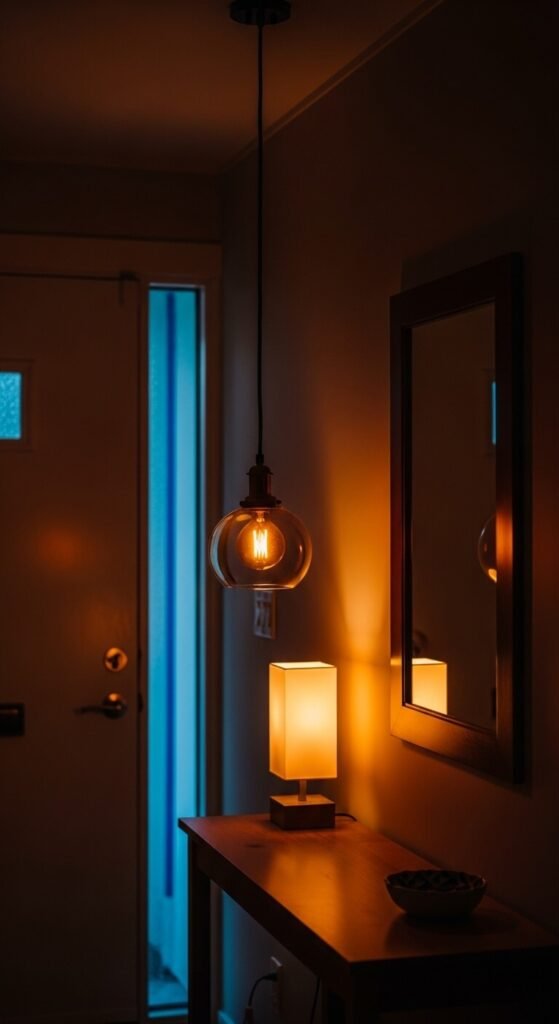
Lighting shouldn’t be all-or-nothing. Installing a dimmer switch on your entryway fixture lets you set the mood — bright and functional during the day, soft and welcoming in the evening. Dimmer switches cost $10–$20 and replace a standard switch in about 15 minutes. Make sure your bulb is dimmable (most LED bulbs are labeled as such). A layered lighting setup — pendant plus table lamp, both on dimmers — gives you complete control over the atmosphere the moment someone walks through the door.
23. Add a Chalkboard Wall or Framed Chalkboard

A chalkboard in the entryway is both decorative and useful. Use it for daily schedules, guest welcomes, shopping reminders, or seasonal artwork. A framed chalkboard ($15–$30) is the easiest option — hang it like any other art. Or paint an entire wall section with chalkboard paint ($12–$15 per can) for a more dramatic, built-in effect. Change the content weekly or seasonally to keep the entryway feeling alive. Kids love contributing drawings, which makes the space feel genuinely personal and lived-in.
24. Style the Space Seasonally With Small Swaps

An entryway that changes with the seasons always feels current and cared for. You don’t need to redecorate — just swap a few key pieces. Change out the vase contents: pumpkins and wheat in autumn, greenery and pinecones in winter, florals in spring. Swap the doormat, the wreath, and the candle scent. Store seasonal items in a labeled box so the swap takes under ten minutes. Small seasonal touches signal to everyone who enters — guests and family alike — that this home is tended to with intention.
Conclusion
Your entryway sets the emotional tone for everything inside your home. It doesn’t have to be large or expensive to be warm, functional, and genuinely welcoming. A mirror that opens up the space, a bench that solves the shoe chaos, a lamp that glows at eye level, a coat of bold paint on the front door — any one of these changes makes a real difference. Pick two or three ideas from this list that match your space and your budget, and start there. Once you see how much a thoughtful entryway changes the feeling of coming home, you’ll wonder why you waited so long.