
A coffee table is the most touched, most looked at, and most photographed surface in any living room. It sits at the center of the space where people gather, rest their drinks, and settle in for conversation. When it is styled well, the whole room feels more intentional. When it is cluttered or bare, even a beautiful sofa and rug arrangement loses its impact. The good news is that great coffee table styling does not require expensive objects or a designer’s training. It requires an understanding of a few simple principles — trays, scale, layering, and negative space — applied to objects you likely already own or can find for very little money. These 24 ideas cover every table shape, room style, and budget, so you can create a display that genuinely impresses without overthinking every placement.
1. The Classic Tray with Curated Objects
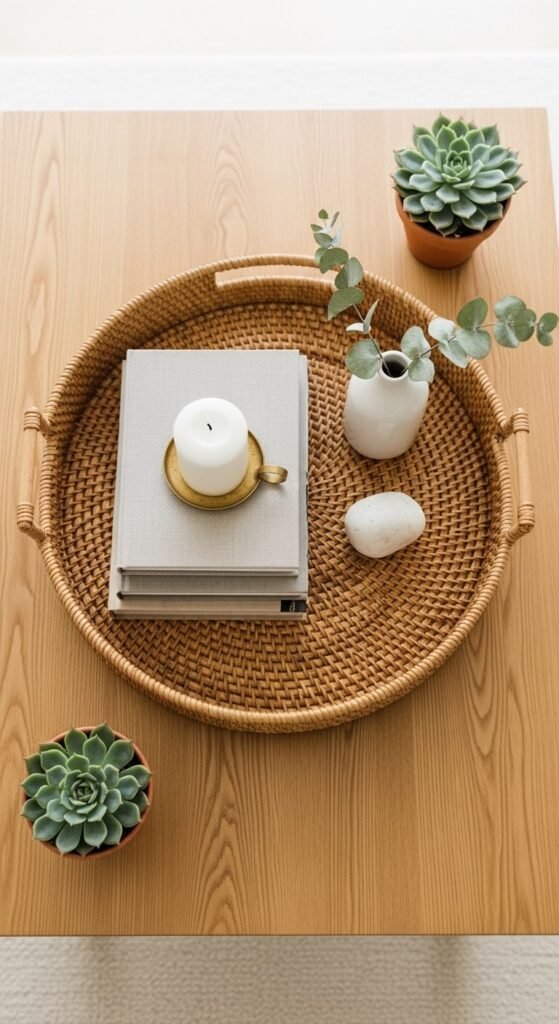
A tray is the single most useful coffee table styling tool available. It corrals loose objects into one intentional group and makes the whole arrangement look considered rather than scattered. Use a large tray — at least 12 inches across — so it reads as a proper foundation rather than a fussy detail. Round rattan, rectangular lacquered wood, and oval marble all work depending on the room’s aesthetic. Thrift stores almost always have trays for $3 to $8. Fill the tray with three to five objects in varying heights. Leave the rest of the table surface relatively clear — the tray creates the focal point, not a crowded surface.
2. Stacked Coffee Table Books as a Base Layer
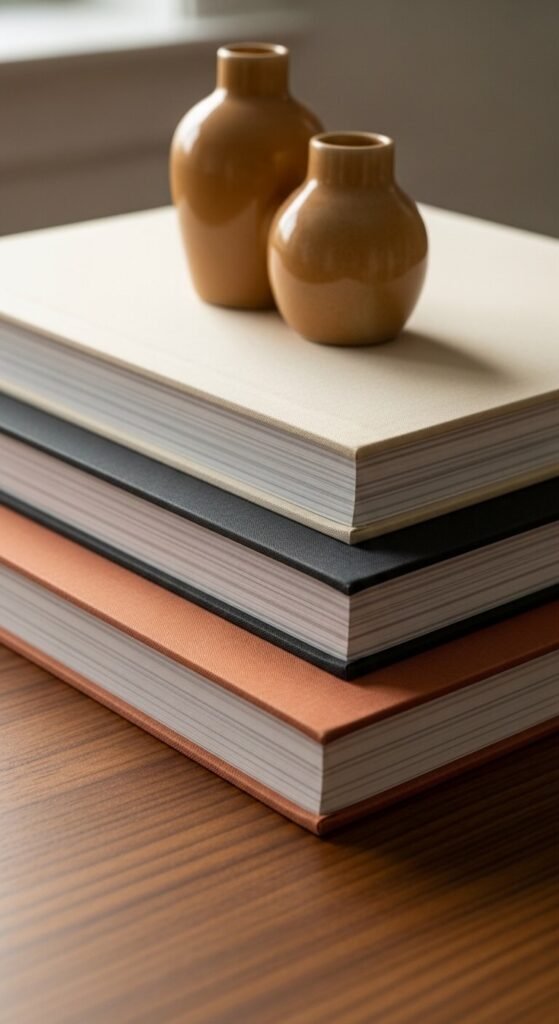
Stacked books are the foundation layer of almost every well-styled coffee table. Use large format hardcover books — art, architecture, travel, or photography — and remove dust jackets to reveal the plain cloth covers underneath, which are almost always more visually appealing. Stack two to three books and place a small object on top: a ceramic piece, a candle, or a smooth stone. Thrift stores are the best source — large format hardcovers cost $1 to $4 each and the visual quality is identical to full-price versions. Aim for spines in tones that relate to your room’s color palette. The books function as both decor and a natural riser for other objects.
3. Single Statement Vase with Dried Botanicals
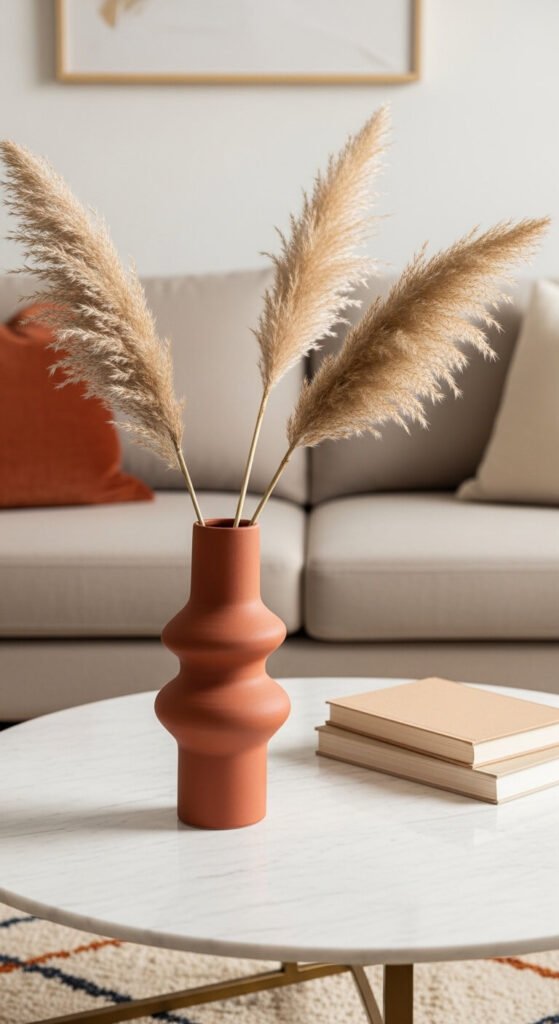
One strong vase with the right contents makes a bigger statement than a cluster of five mediocre objects. Choose a vase with a distinctive silhouette — a wide-mouthed ceramic, a tall bottle-neck form, or an angular sculptural shape — and fill it with a single type of dried botanical. Pampas grass, dried allium, tall dried grasses, or a few twisted bare branches all work beautifully. Dried botanicals last for months without any care. A bag of dried pampas grass costs $8 to $15 online. The vase itself is the long-term investment — buy one you genuinely love in a form and color that suits the room.
4. Candle Cluster in Varying Heights
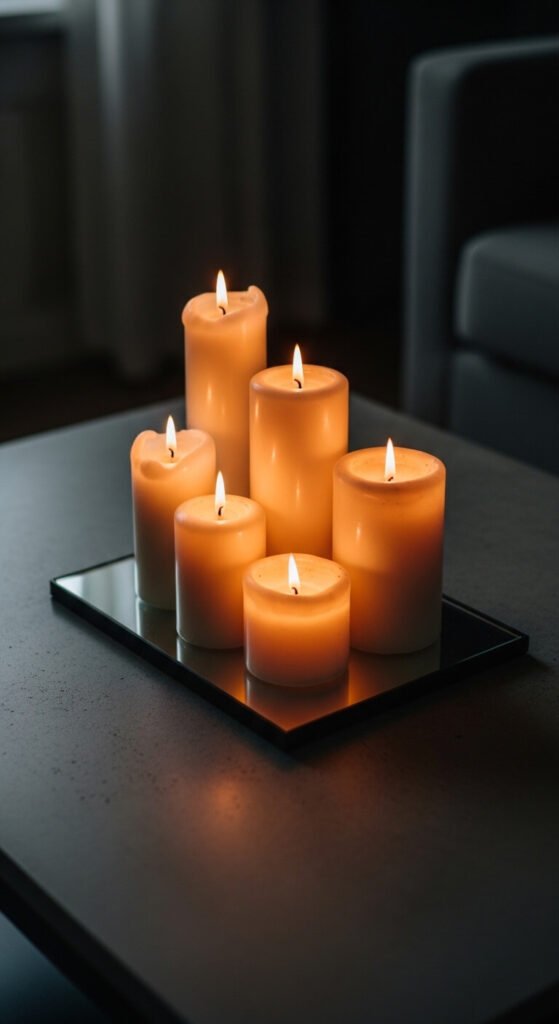
A cluster of pillar candles grouped on a small tray is one of the most atmospheric coffee table arrangements for evening use. Use five to seven candles in different heights and diameters — all in the same color family, either all white, all ivory, or all in warm earth tones. The variation in height creates visual interest; the color unity holds the cluster together. Place them on a mirrored, marble, or metal tray to protect the table surface and reflect the light. Pillar candles in bulk from discount stores or dollar stores cost $1 to $4 each. Swap in battery-operated flameless versions for safety in homes with children or pets.
5. Small Living Plant in a Sculptural Pot
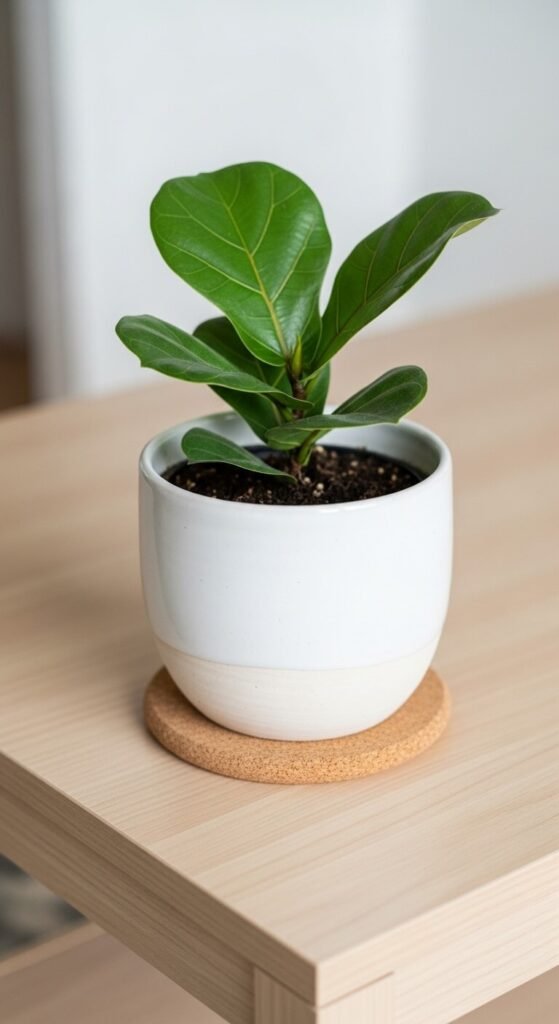
A single living plant on a coffee table adds organic life that no decorative object can replicate. Choose compact, slow-growing varieties that stay in proportion to the table surface: a small pothos, a compact ZZ plant, a low succulent arrangement, or a single stem cutting in a bud vase. The pot matters as much as the plant — a beautiful hand-thrown ceramic or a simple matte white geometric pot suits a styled table far better than a plastic nursery container. Good-looking plant pots from ceramic artists at craft markets cost $12 to $25. The plant inside costs $3 to $8 from any garden center or hardware store.
6. Organic Shape Sculptural Object as a Focal Point
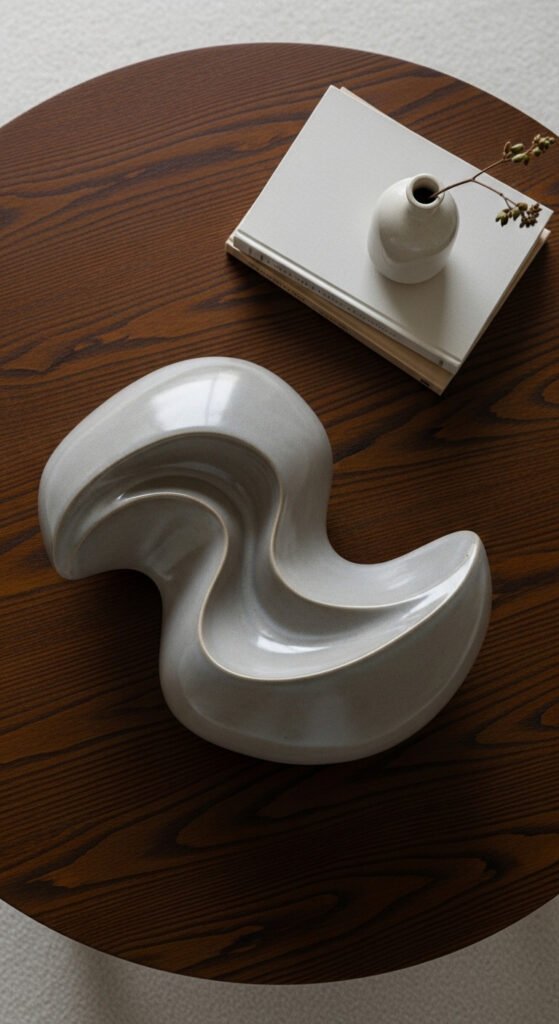
A single sculptural object placed as the hero of a coffee table display gives the whole arrangement an art gallery quality. Look for pieces with organic, irregular forms — smooth stone-like ceramics, abstract resin sculptures, driftwood, or natural geodes. The object should be substantial enough to read clearly from a standing position. Sculptural ceramics from independent artists cost $25 to $80 depending on size and maker. Natural geodes and large smooth stones from rock and mineral shops cost $10 to $30. One strong sculpture with two or three supporting objects alongside it creates a far more sophisticated display than filling the table with multiple small things of equal weight.
7. Marble Tray with Gold Accents
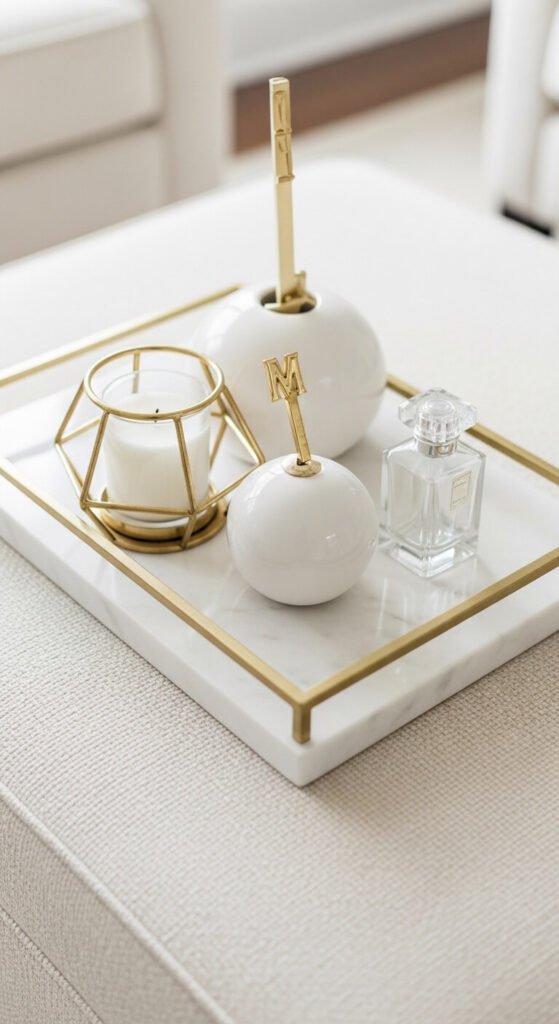
A marble tray with gold hardware reads as expensive and considered even when the objects inside cost very little. Use the tray as the star of the arrangement and keep the objects inside simple: a gold candle holder, a white ceramic sphere, and one small reflective object — a crystal, a small brass piece, or a simple perfume bottle. The material contrast between marble, gold, and white creates visual richness without any single expensive purchase. Marble look resin trays cost $15 to $35 online. Combine with objects from thrift stores finished in gold spray paint — a $4 can transforms almost any metal or ceramic object into a gold-toned accent.
8. Books, Candle, and Botanicals — The Classic Trio
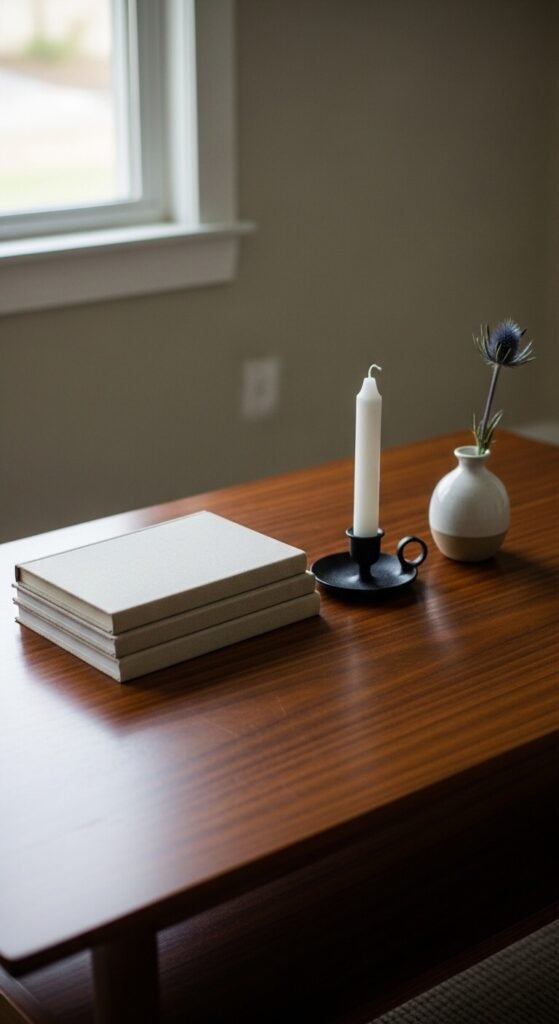
The books-candle-botanical trio is the most reliable coffee table formula in interior styling. Place the book stack, a single candle, and a small botanical element at three separate positions along the table surface rather than grouping them together. The spacing creates visual rhythm and shows intention. Use odd numbers within each element where possible — three books in the stack, one candle, one stem. The books can be swapped seasonally; the candle and botanical rotate easily. Total cost for this arrangement: $5 to $15 using thrift store books, a basic candle, and a single dried stem from the garden. This is the arrangement to start with if you are completely new to coffee table styling.
9. Woven Basket as a Storage-Display Hybrid
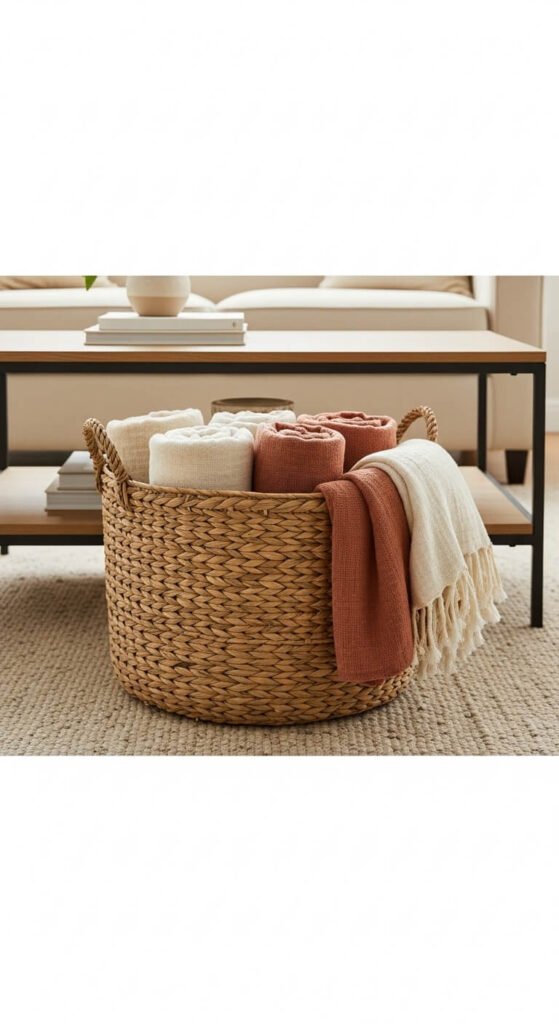
A woven basket on the lower shelf or beside a coffee table adds texture, warmth, and genuine storage utility. Use it to hold folded throw blankets, rolled magazines, or extra candles — functional objects that look good when partially visible. A large round seagrass or rattan basket costs $15 to $35. The basket itself becomes a textural decor element while doing a practical job. On a two-tier coffee table, place the basket on the lower shelf and keep the upper surface styled with three to five smaller objects. In a room with children, this approach keeps toys and remotes corralled and out of sight while still looking intentional.
10. Geode or Crystal as a Natural Accent Object
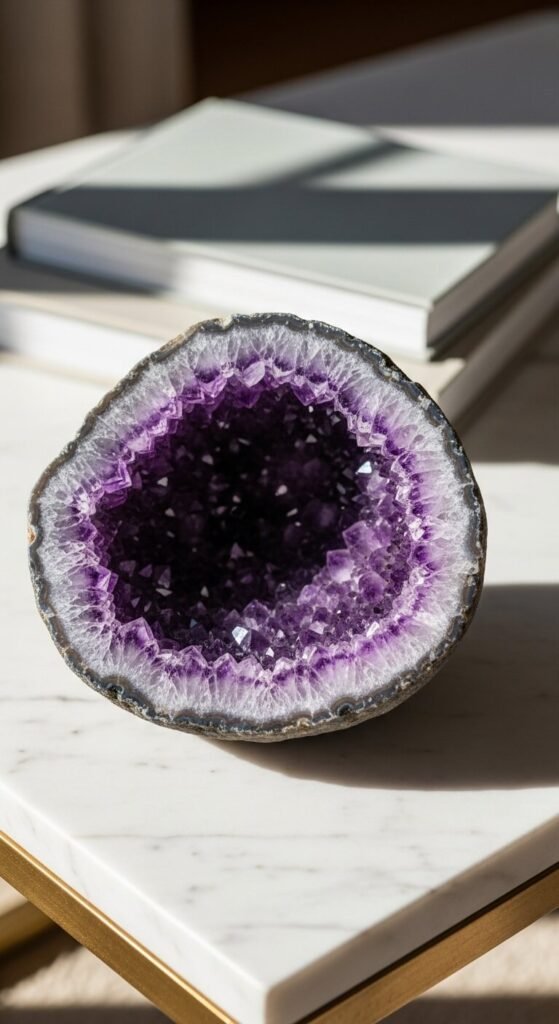
A natural crystal or geode adds genuine visual drama to a coffee table with no styling effort required — the object does the work on its own. An open amethyst, quartz cluster, or large agate slice placed on the table surface catches light from every angle and draws immediate attention. Rock and mineral shops, online crystal suppliers, and gift stores all stock these — prices range from $10 for a small cluster to $50 for a substantial piece. Place it on a small wooden disc or marble tile to lift it slightly from the table surface. It works as a conversation starter and a genuine focal point simultaneously.
11. Neutral Color Palette Arrangement
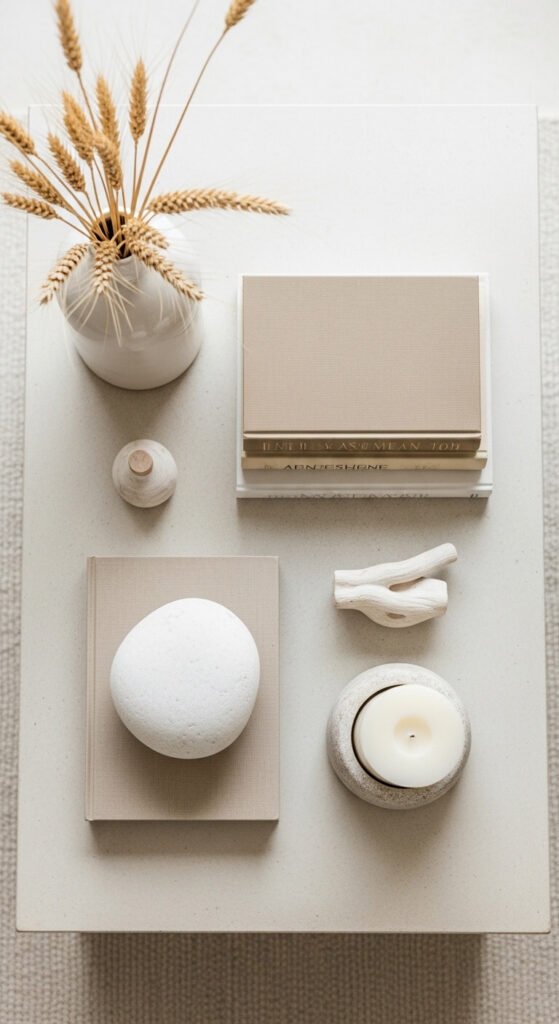
A strict neutral color palette across every object on the coffee table creates a calm, cohesive arrangement that photographs beautifully and suits almost every room style. White, cream, sand, warm grey, and bleached wood all sit within the same tonal family and never clash. The interest comes from varying textures — smooth ceramic beside rough stone beside woven rattan beside matte linen-covered books. This approach works especially well in open-plan rooms where the coffee table is visible from multiple angles. Neutral objects are the easiest to source cheaply from thrift stores — plain white and cream ceramics are the most commonly donated category in most charity shops.
12. Small Tray Bar Cart Setup on the Coffee Table
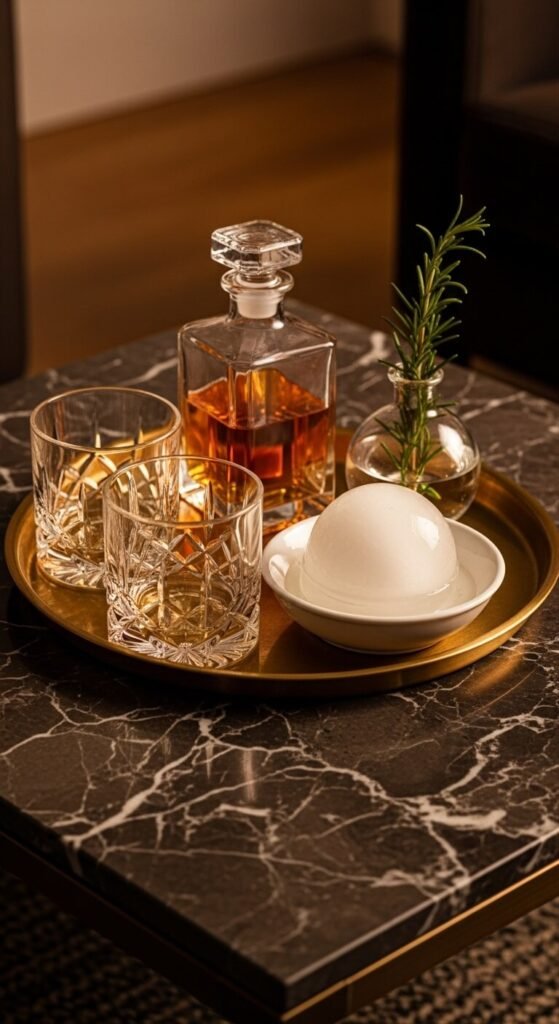
A small drinks tray arrangement on a coffee table signals hospitality and readiness for guests in the most direct way possible. Use a round or rectangular tray as the base, then add two matching glasses, a small decanter or carafe, and one organic element — a sprig of herbs, a slice of citrus, or a single bloom in a bud vase. The setup works with water, juice, or spirits depending on your preference. A crystal-look lowball glass set from a discount homeware store costs $8 to $15. A brass or gold-tone tray from a thrift store costs $3 to $8. The whole drinks tray arrangement costs under $25 to assemble from scratch.
13. Layered Trays in Different Materials
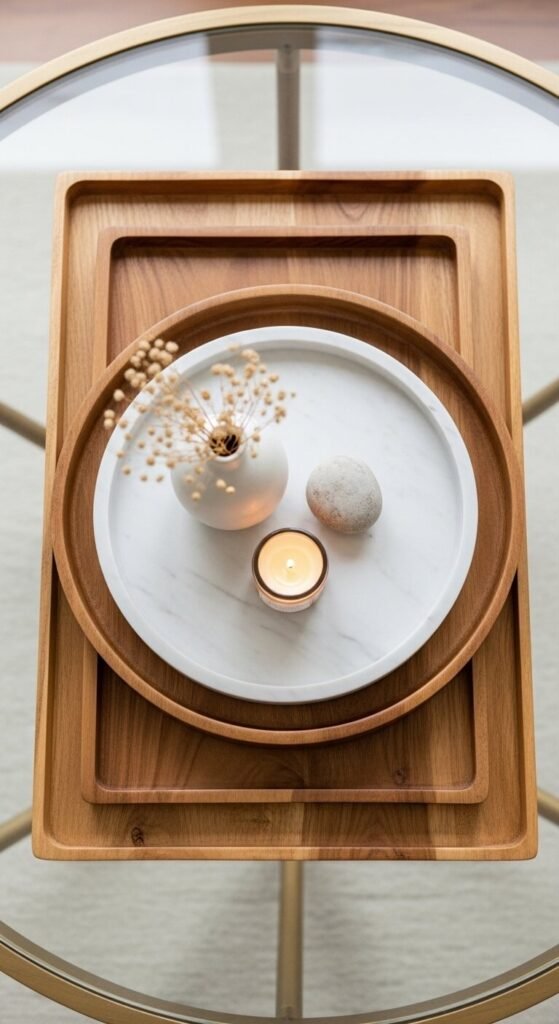
Nesting a smaller tray inside a larger one creates a layered, architectural feel that a single tray cannot achieve alone. Use contrasting materials — a raw wood outer tray with a marble inner tray, or a rattan base with a lacquered inner tray — so the two layers read as distinct elements. Keep the outer tray empty or nearly so, letting the inner tray hold all the styled objects. This approach suits larger coffee tables where a single tray looks undersized. Both trays can be sourced secondhand for $3 to $10 each. The layered effect reads as designed and considered even though the actual technique is simple.
14. Seasonal Autumn Arrangement
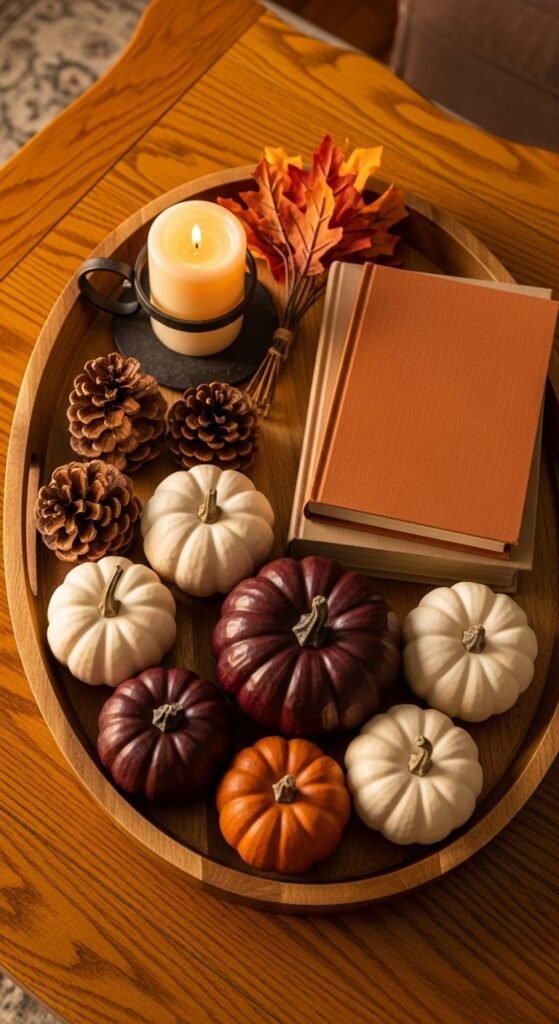
Seasonal coffee table styling is one of the simplest ways to keep a living room feeling alive and current through the year. For autumn, build around a tray of small decorative pumpkins in white, cream, and deep burgundy tones — more sophisticated than all-orange. Add a short pillar candle, two or three pinecones, a small bunch of dried autumn leaves, and a linen-toned book stack. Small decorative pumpkins cost $1 to $4 each at farm stands and grocery stores from September onward. Pinecones are free from any woodland walk. The entire seasonal display costs under $15 to build and transforms the room’s atmosphere completely within minutes.
15. Architectural Model or Sculptural Building Object
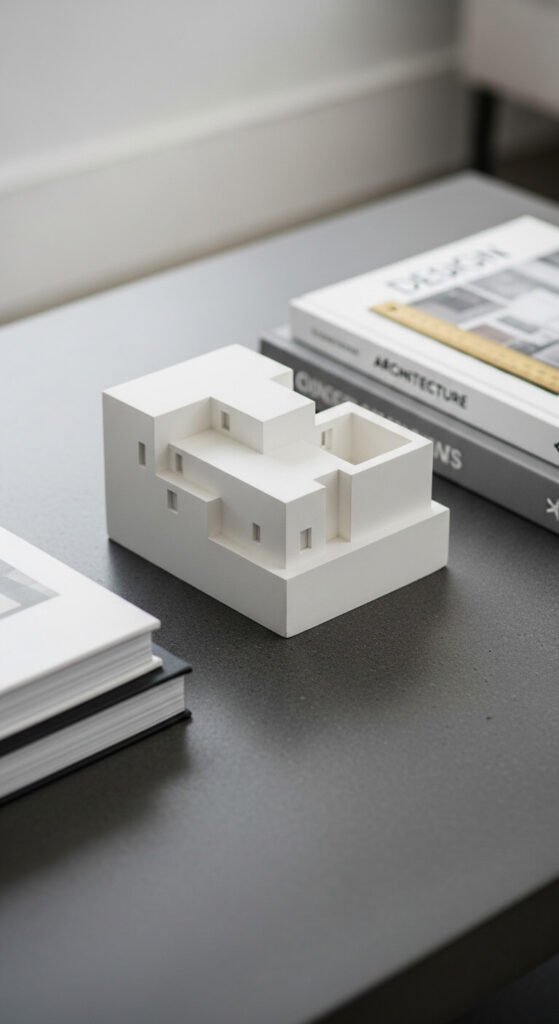
Small architectural models, geometric building forms, or abstract structural sculptures bring a design-forward quality to a coffee table display. Use a white plaster, resin, or marble miniature architectural piece — a scaled building fragment, a column capital, or an abstract geometric form — as the primary object. Pair it with architecture or design books and one or two precision objects: a brass ruler, a drafting compass, or a small technical instrument. Plaster architectural models and resin building fragments are available from design stores and online for $15 to $40. This aesthetic suits modern, industrial, and Scandinavian interiors particularly well and signals a genuine interest in design.
16. Monochromatic Black Display
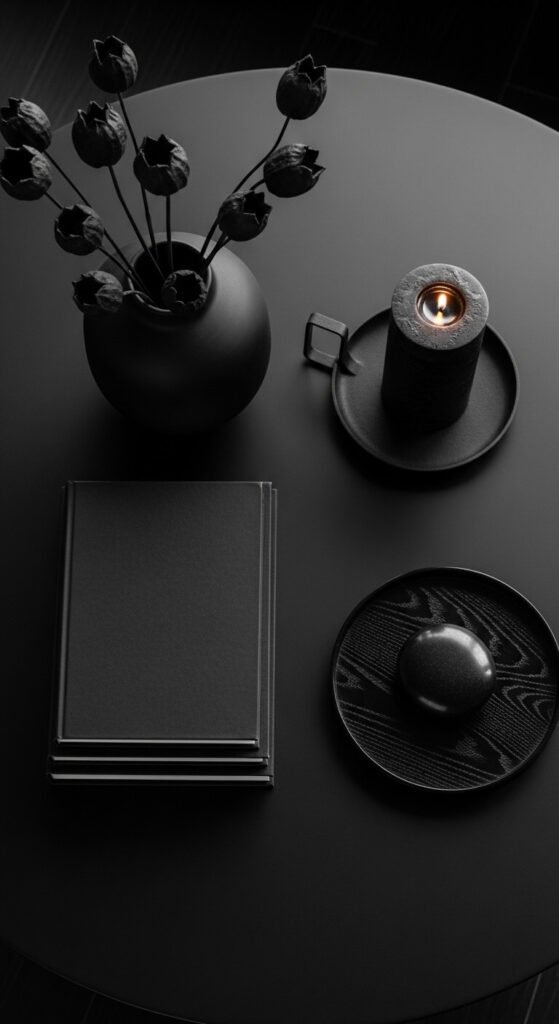
An all-black coffee table display is one of the most dramatic and design-forward arrangements possible. Group black ceramic, black iron, black lacquer, and matte black objects together — the interest comes from the subtle texture differences between each finish rather than color variation. A matte black vase, a black pillar candle, a black lacquered tray, and three books with dark covers all work together. Spray paint transforms any object into a black-toned accent for $4 a can. This arrangement suits modern, industrial, and contemporary minimalist rooms and photographs with extraordinary graphic impact. Keep the surrounding room relatively pale to let the black table display read clearly.
17. Collected Global Objects from Travel
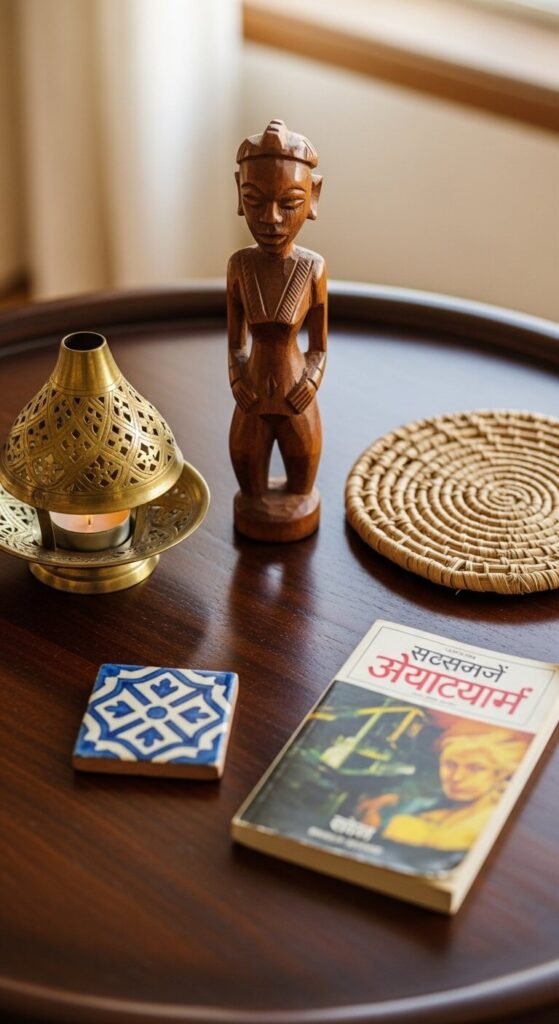
Personal travel objects arranged thoughtfully on a coffee table tell a more interesting story than any purchased decorative set. Select five to eight objects from meaningful trips — a small carved piece, a brass object, a ceramic tile, a woven item, a foreign postcard or book. The objects should be small enough to sit on the table without crowding it and interesting enough to prompt a question from a visitor. Space them with generous negative space between each piece. This costs nothing because you already own the objects — it is a curation and arrangement exercise. Rotate which pieces are displayed to keep the table feeling current.
18. Clear Glass Vases with Simple Seasonal Flowers
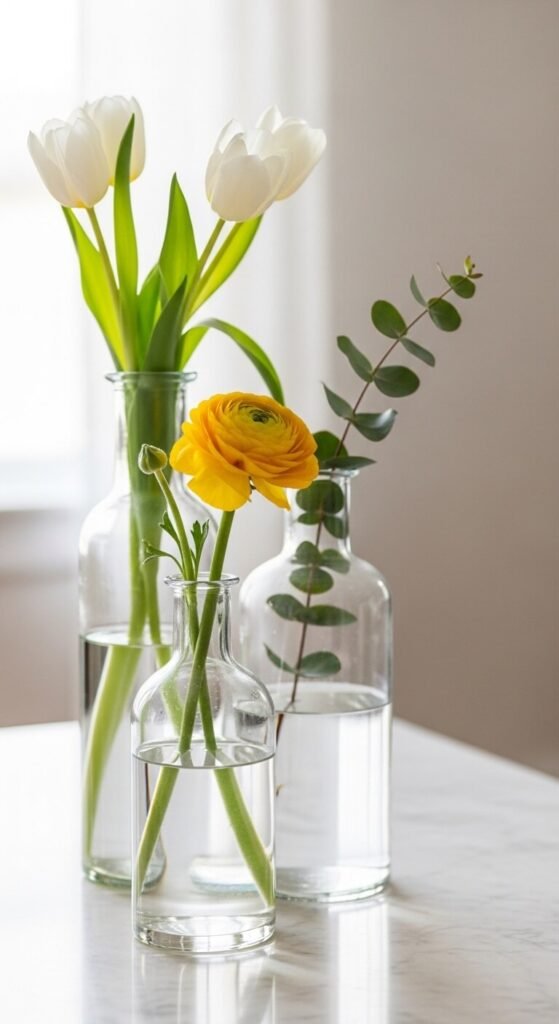
Clear glass vases grouped together with simple single-flower arrangements are one of the most reliably elegant coffee table styling choices. Use three vases in different heights — the variation in scale creates the visual interest. Fill each with a single flower type rather than mixed arrangements — one vase of tulips, one of ranunculus, one stem of eucalyptus. The clear glass shows the stems, which adds another layer of visual interest. Supermarket flowers cost $3 to $8 a bunch. One bunch typically fills all three vases. Clear glass bud vases and bottles from a thrift store cost $0.50 to $2 each. Replace flowers weekly.
19. Linen Napkins or Fabric Runners as a Base Layer
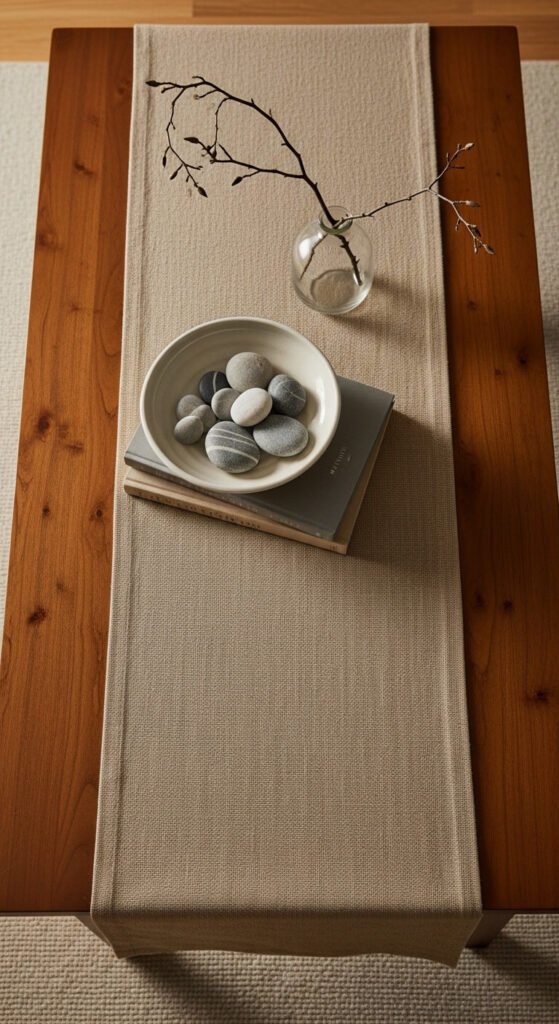
A folded linen napkin or fabric runner laid under a coffee table arrangement adds warmth and texture to a hard table surface and grounds the objects above it. Use a folded linen napkin, a small textile remnant, or a thin fabric table runner in a neutral tone that suits the room’s palette. This technique is particularly effective on glass, marble, or polished wood tables where objects can look stark against a hard reflective surface. Linen fabric remnants from fabric stores cost $2 to $5 for a small piece. The textile layer makes the whole arrangement feel warmer and more considered without adding any height or visual noise.
20. Terrarium or Glass Cloche Display
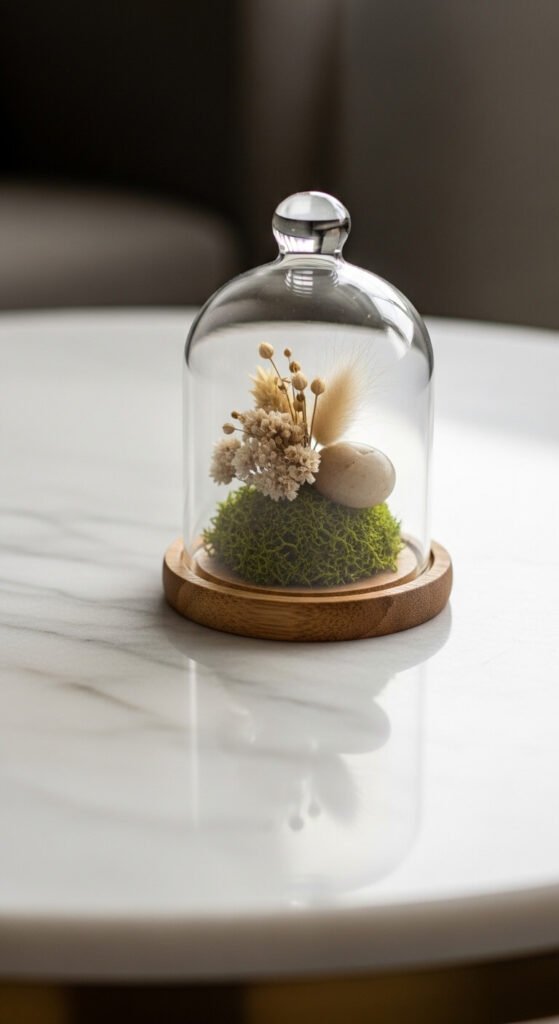
A glass cloche or small terrarium brings a collector’s display quality to a coffee table arrangement. Place a small curated arrangement under the cloche — a preserved moss mound with one dried flower, a tiny sculpture, a smooth stone, or a single mineral specimen. The glass dome frames the interior arrangement like a tiny museum exhibit and draws the eye immediately. Glass cloches cost $10 to $25 from craft stores or online. Use a small circular wood disc or marble tile as the base. This is one of the most photographable coffee table elements available — the glass creates natural focus and magnification that draws both the eye and the camera lens.
21. Bowl Filled with Natural Objects
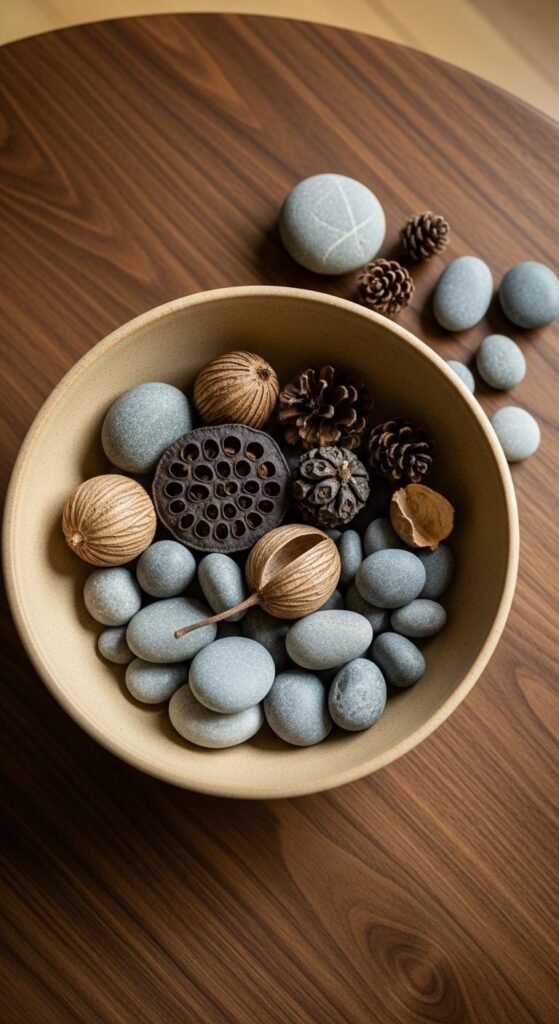
A wide, shallow bowl filled with natural objects is one of the most genuinely cost-free coffee table arrangements you can make. Collect smooth river stones, dried seed pods, small pinecones, sea glass, or acorns and fill a beautiful ceramic or wooden bowl. The contents should be curated — a single category of natural object or two complementary types — rather than a random mix of whatever is at hand. The bowl itself is the only purchase necessary. A beautiful wide ceramic bowl from a thrift store costs $2 to $8. The contents are free. This arrangement suits organic, Scandinavian, wabi-sabi, and naturalistic interior styles and requires zero ongoing maintenance.
22. Layered Magazine and Book Display
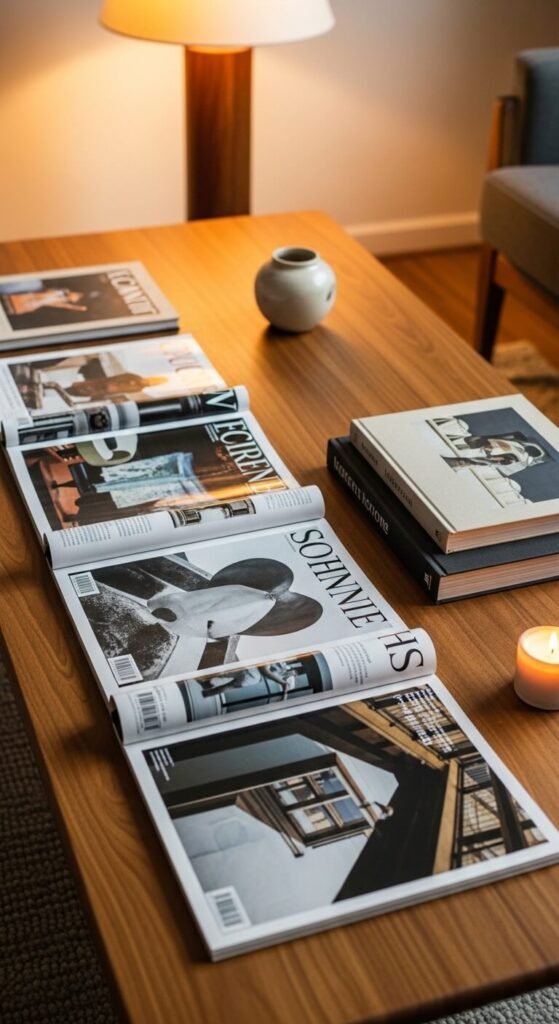
A deliberate arrangement of magazines and books on a coffee table signals that the space is used for reading and thinking — a living, functional arrangement rather than a purely decorative one. Fan large format magazines slightly in an overlapping arrangement rather than stacking them in a neat pile. Mix with one or two hardcover books in complementary cover tones. Remove any magazines with loud, cluttered covers — keep those that have clean photographic or illustrated covers. This approach costs nothing using magazines you already own and updates naturally each time new issues arrive. Rotate older issues into a basket below the table to keep the surface current.
23. Minimalist Single Object on a Wide Empty Surface
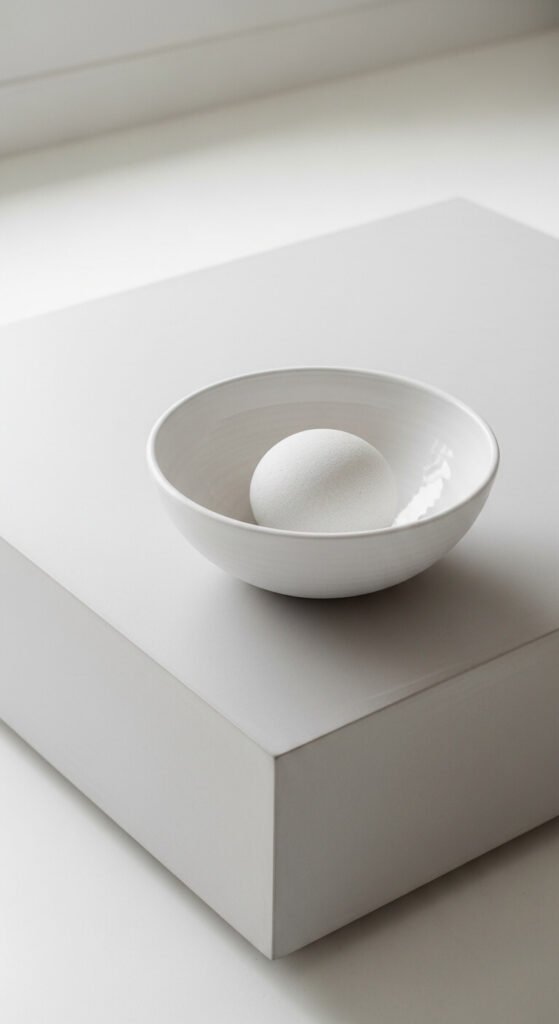
The most confident coffee table styling decision is to place one single beautiful object on a wide, otherwise empty surface. One well-chosen large ceramic bowl, one sculptural geode, or one extraordinary piece of driftwood placed off-center on a generous table surface creates more visual impact than a carefully grouped arrangement of twelve small objects. This approach requires an honest eye for quality — the single object must be genuinely interesting in its own right. The negative space around it amplifies rather than diminishes its presence. This suits modern minimalist, Japanese-influenced, and Scandinavian interiors where restraint is the defining design principle.
24. Coordinated Coaster Set as a Starting Point
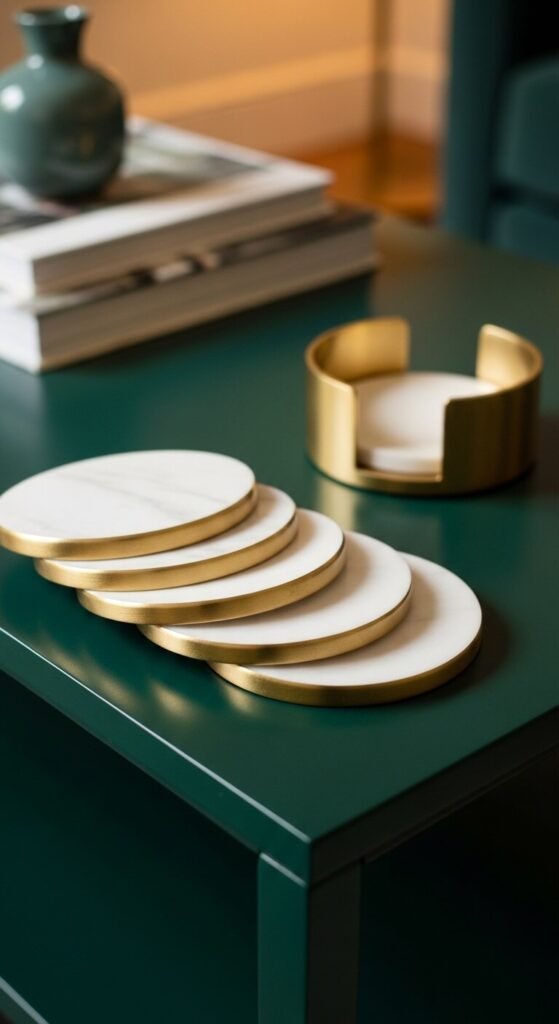
A beautiful coaster set is the most practical and often most overlooked starting point for coffee table styling. Invest in one genuinely beautiful set of coasters — marble, cork, resin, or hand-painted ceramic — and let them be a visible, decorative element rather than hiding them in a drawer. Fan them slightly in an overlapping arrangement on one corner of the table rather than stacking them in a pile. A good coaster set costs $15 to $35. The material should relate to other objects in the room — marble coasters suit a room with marble or stone accents; cork or rattan suits a warm organic interior. Coasters signal hospitality while contributing directly to the table’s visual arrangement.
Conclusion
Coffee table styling is not about filling every inch of surface area — it is about choosing the right objects in the right proportions and giving them room to breathe. The best displays use five to seven objects at most, vary in height and texture, and include at least one natural element, one functional element like a candle or coaster, and one personal element that reflects who lives in the space. Start with what you already own, edit ruthlessly, and resist the urge to add more than the table actually needs. Swap one or two objects seasonally to keep the arrangement feeling current. A coffee table that looks good is not a design achievement — it is a habit of attention. Build that habit once and the space will reward you every single day.