
Scandinavian decor isn’t just a style—it’s a way of living. Hygge, the Danish concept of coziness and contentment, drives every design choice. These spaces feel warm despite minimal color, inviting despite simplicity, and calming through intentional restraint. The Nordic countries endure long, dark winters, so their homes maximize light, warmth, and comfort. You don’t need IKEA or expensive Danish furniture to capture this aesthetic. Most Scandinavian principles cost nothing—they’re about editing, choosing quality, and creating peaceful environments. White walls, natural wood, soft textiles, and candlelight form the foundation. Function matters as much as beauty. Each item earns its place. The result feels effortless, livable, and deeply peaceful. These 24 secrets help you create that Nordic magic in any home, any climate, any budget.
All-White Walls as Foundation
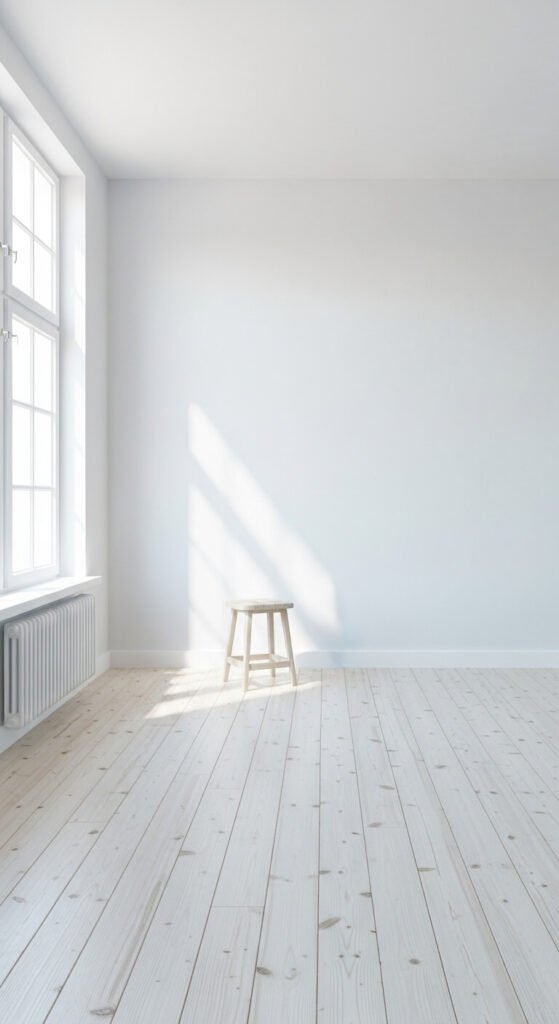
White walls are non-negotiable in Scandinavian design. They maximize precious natural light during dark winters. Paint every room white—ceiling, walls, trim. The monochrome creates seamless flow and visual calm.
Choose warm whites with slight yellow or gray undertones. Avoid stark bright white, which feels sterile. Benjamin Moore Simply White or Behr Swiss Coffee work beautifully. The unified color makes small spaces feel larger and creates a peaceful backdrop for life. Paint costs $30-$40 per gallon. One weekend transforms your entire home. White walls let you change textiles and accessories seasonally without repainting. They’re practical, timeless, and authentically Scandinavian. This single decision establishes the foundation for everything else.
Light Wood Floors Throughout
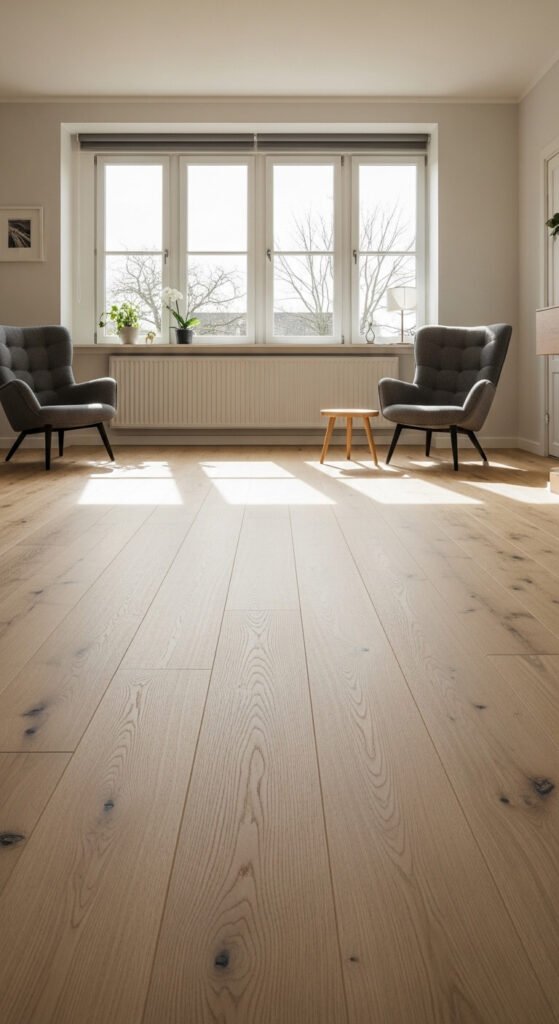
Light wood floors—oak, ash, birch—bring warmth without darkness. They reflect light upward, brightening rooms naturally. The pale grain adds texture while maintaining the airy aesthetic.
If you can’t install new floors, paint existing wood floors white or light gray. Use porch and floor paint ($40/gallon) designed for durability. Apply primer first, then two coats of paint, seal with polyurethane. The transformation is dramatic. Light floors contrast with dark furniture beautifully. They hide dust better than dark floors. Area rugs add softness without covering the natural wood warmth completely. Real wood or good laminate both work. The key is keeping tones light—honey, cream, or white-washed finishes.
Minimal Color Palette with Black Accents
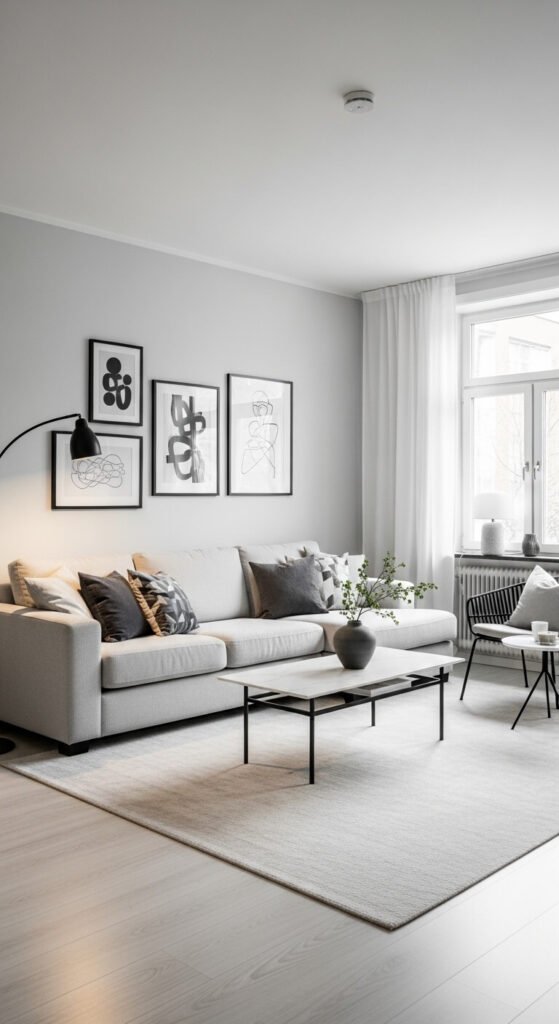
Scandinavian rooms use whites, grays, and blacks almost exclusively. Small doses of black create definition and prevent spaces from feeling washed out. The contrast is subtle but powerful.
Add black through light fixtures, picture frames, chair legs, or hardware. Matte black works better than glossy. The dark accents ground spaces and add visual weight. Paint existing brass or chrome fixtures with matte black spray paint ($6/can) for instant updates. The monochrome sophistication feels modern and timeless simultaneously. Avoid bold colors—Scandinavian style embraces restraint. If you crave color, add it through one or two pillows or a throw. Let black, white, and gray dominate. The discipline creates cohesion across all rooms.
Layered Natural Textiles
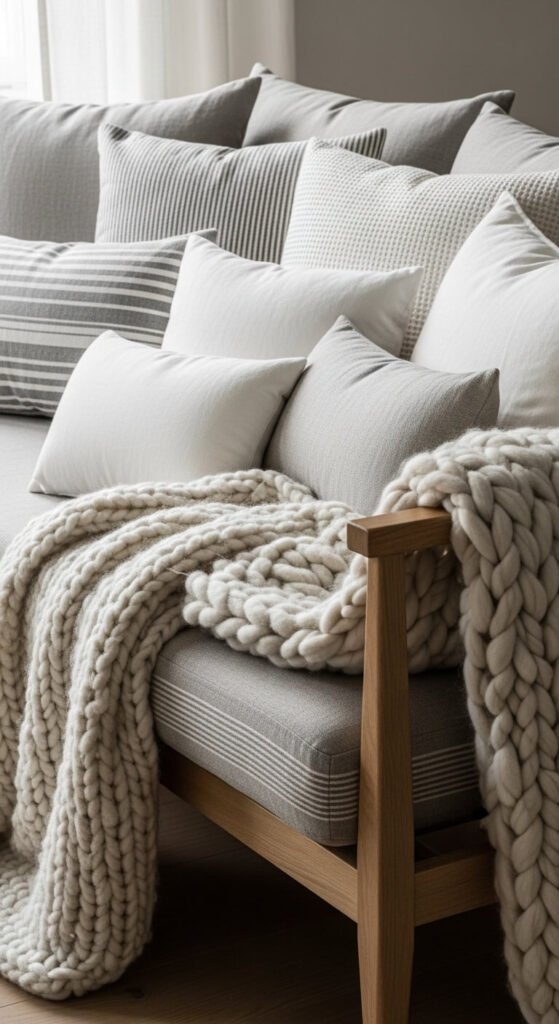
Hygge lives in textures. Layer linen, wool, cotton, and sheepskin. The varied materials create warmth and invite touch. Multiple textiles compensate for minimal color, adding visual interest through texture alone.
Buy wool blankets for $30-$60. Add linen pillow covers for $15-$25 each. Drape sheepskin over chairs ($40-$80). The natural fibers feel better than synthetics and age beautifully. Mix smooth linen with nubby wool with fluffy sheepskin. The tactile variety creates coziness. All pieces should stay in the neutral palette—cream, gray, beige, soft brown. Change textiles seasonally. Heavier wool in winter, lighter linen in summer. The layers make minimalist spaces feel welcoming rather than cold.
Abundant Candles Everywhere
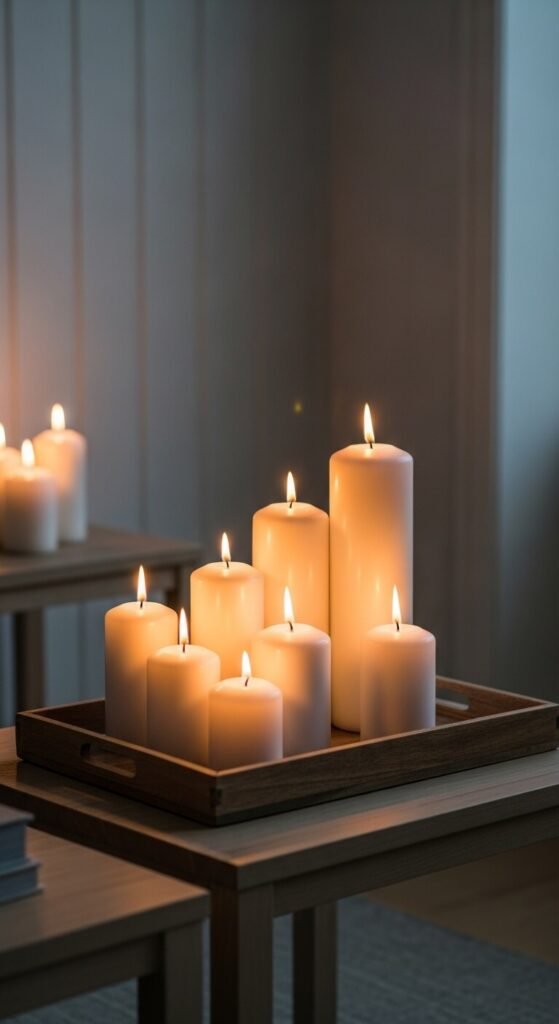
Scandinavians burn more candles per capita than anyone else. Candlelight creates instant hygge—warmth, softness, and ritual. Place candles in every room. Light them daily, not just for special occasions.
Group candles in threes or fives on trays. Use unscented white pillars in varying heights. IKEA sells bags of tealights for under $4—stock up. The gentle flickering light transforms evenings. Real flames beat battery-operated versions for ambiance. Place candles safely away from flammables. The daily ritual of lighting candles as darkness falls creates peace and marks the transition from work to rest. This costs pennies but delivers maximum hygge impact.
Functional Simple Furniture
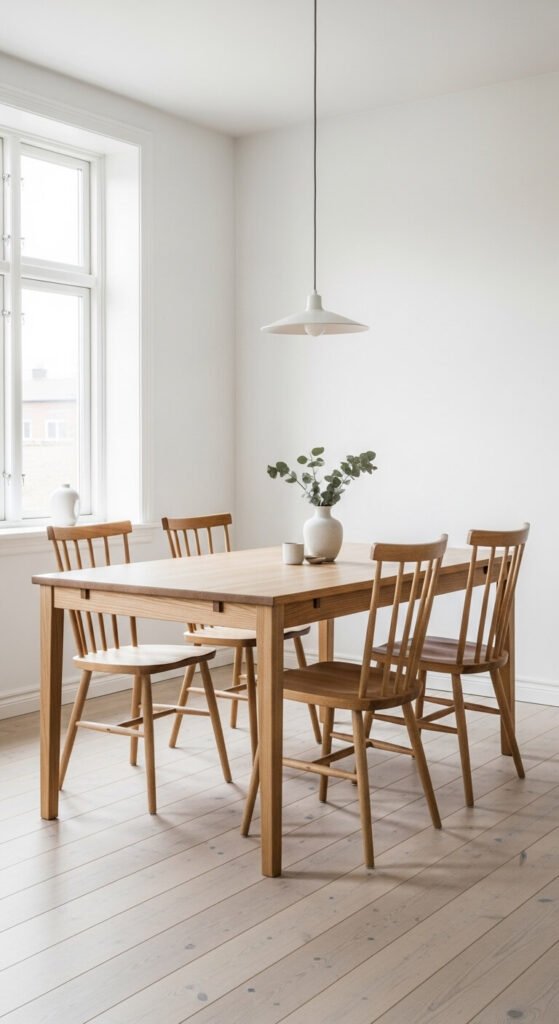
Scandinavian furniture prioritizes function over decoration. Simple shapes, quality construction, and honest materials define the style. Avoid ornate details, curves, or embellishments. Clean lines prevail.
Buy used mid-century modern pieces—they’re authentically Scandinavian. Look for Danish or Swedish makers like Hans Wegner or Alvar Aalto at estate sales. Reproductions work too. IKEA furniture actually captures the aesthetic well at budget prices. Choose pieces with visible wood grain, tapered legs, and minimal hardware. The functional beauty means furniture serves life rather than displaying wealth. Each piece should be useful, well-made, and beautiful in its simplicity. Quality over quantity always.
Sheepskin Rugs and Throws
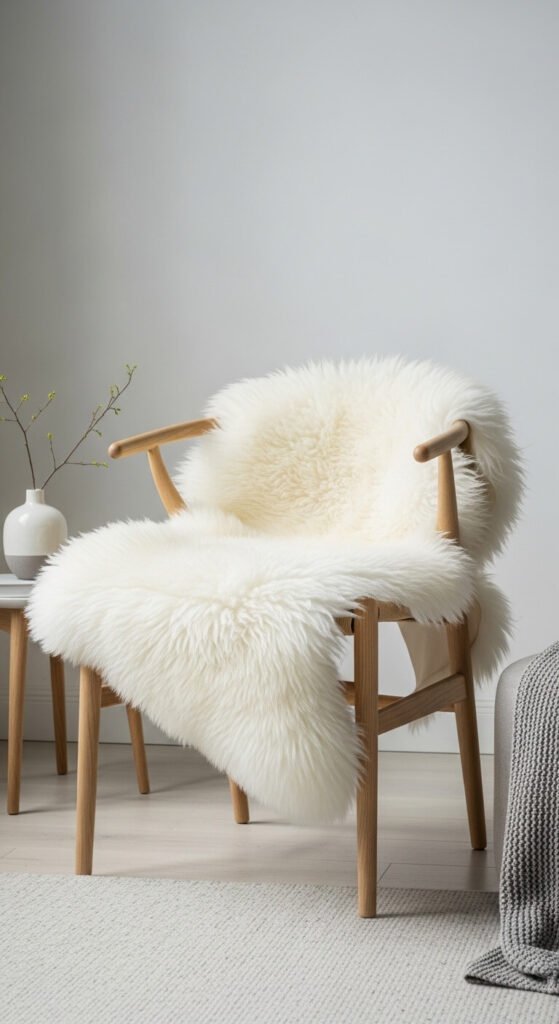
Real or faux sheepskin adds instant Nordic character. Drape them over chairs, layer on floors, or place at bed ends. The fluffy texture provides visual and physical warmth. They soften hard edges beautifully.
Real sheepskin costs $60-$150. Faux versions run $30-$60 and look nearly identical. The white or cream color stays true to the Scandinavian palette. Machine-wash faux versions regularly. Real ones need professional cleaning occasionally. Sheepskin works year-round—cooling in summer, warming in winter. Place one on your desk chair for daily hygge luxury. The texture invites barefoot walking and creates cozy seating instantly. This single addition transforms spaces from minimal to inviting.
Indoor Plants as Living Decor
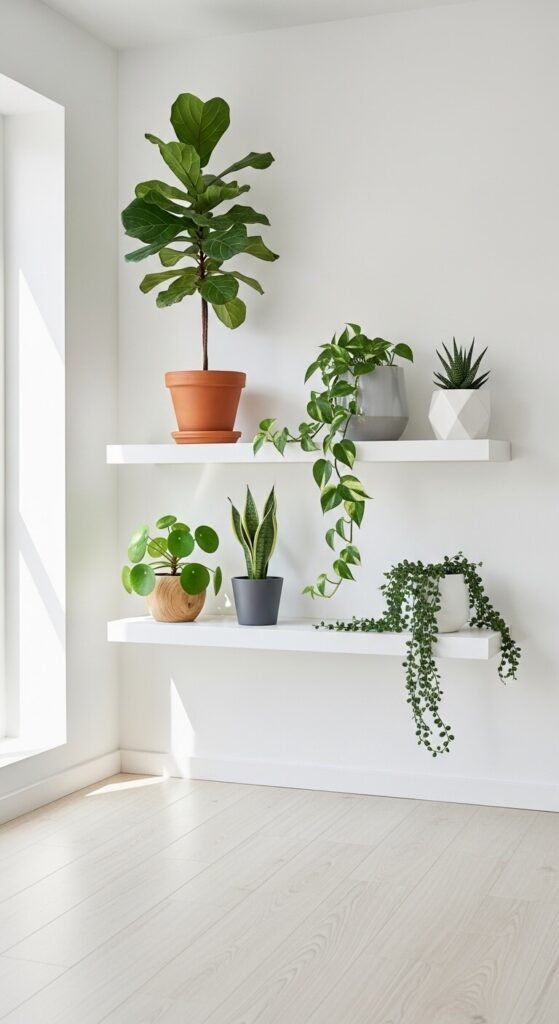
Plants provide the only consistent color in Scandinavian rooms—green. Large floor plants like fiddle leaf figs or rubber trees work as sculpture. Small plants on shelves and tables add life throughout.
Choose easy-care varieties—pothos, snake plants, ZZ plants. These survive Nordic countries’ low light and will survive yours too. Use simple white or terracotta pots—nothing decorative. The plants themselves are the decor. Water weekly and rotate for even growth. The living green elements connect indoor spaces to nature, which matters deeply in Scandinavian design. Plants improve air quality and mood. They’re the most affordable decor that literally grows over time.
Maximum Natural Light Exposure
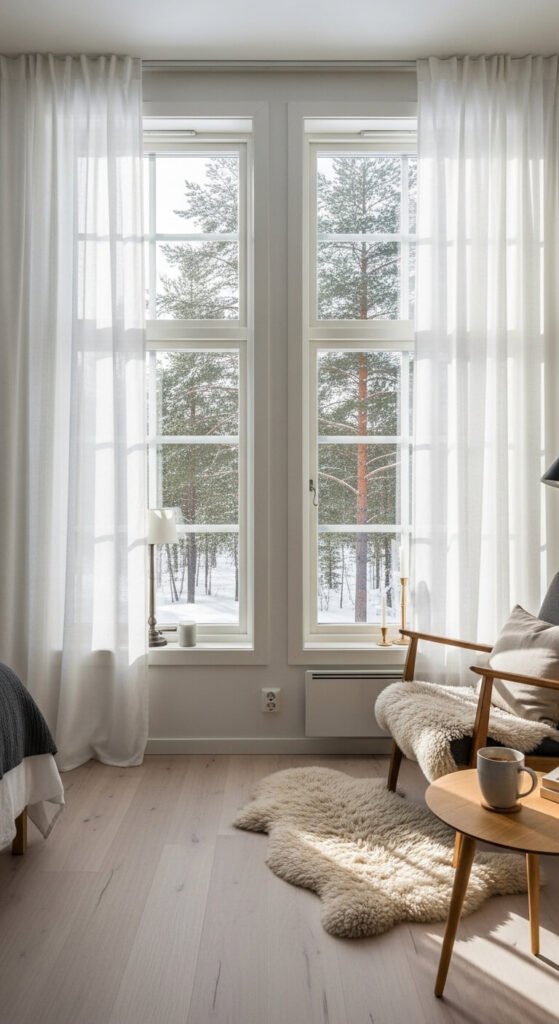
Remove heavy curtains and blinds. Let natural light flood in unfiltered. Scandinavians treasure daylight during long winters. Windows stay as bare as possible or have minimal sheer coverings.
If privacy matters, use sheer white linen panels that filter light without blocking it. Mount rods at ceiling height to maximize window appearance. Clean windows regularly—dirty glass blocks light. Trim outdoor plants that shade windows. Arrange furniture to avoid blocking natural light paths. The generous daylight reduces the need for artificial lighting and improves mood naturally. This costs nothing but delivers immense impact. Light is the most important element in Scandinavian design—honor it.
Simple Pendant Lighting
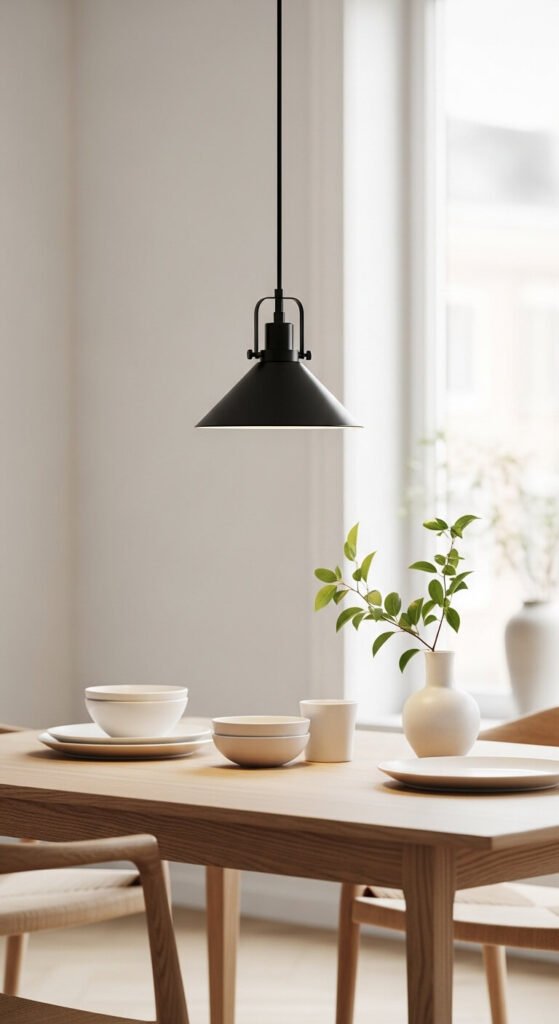
Replace ornate chandeliers with simple pendant lights. Black metal, white porcelain, or natural wood shades work best. The fixtures should disappear into the background, providing light without demanding attention.
IKEA and West Elm sell authentic-looking pendants for $30-$100. Choose geometric shapes—spheres, cylinders, cones. Avoid crystals, multiple arms, or decorative details. One simple pendant over a dining table creates understated elegance. The light itself matters more than the fixture. Use warm LED bulbs (2700K) to create cozy ambiance. Simple lighting feels more expensive than ornate options—the restraint reads as sophistication. Install dimmers for adjustable mood lighting.
Open Shelving Display
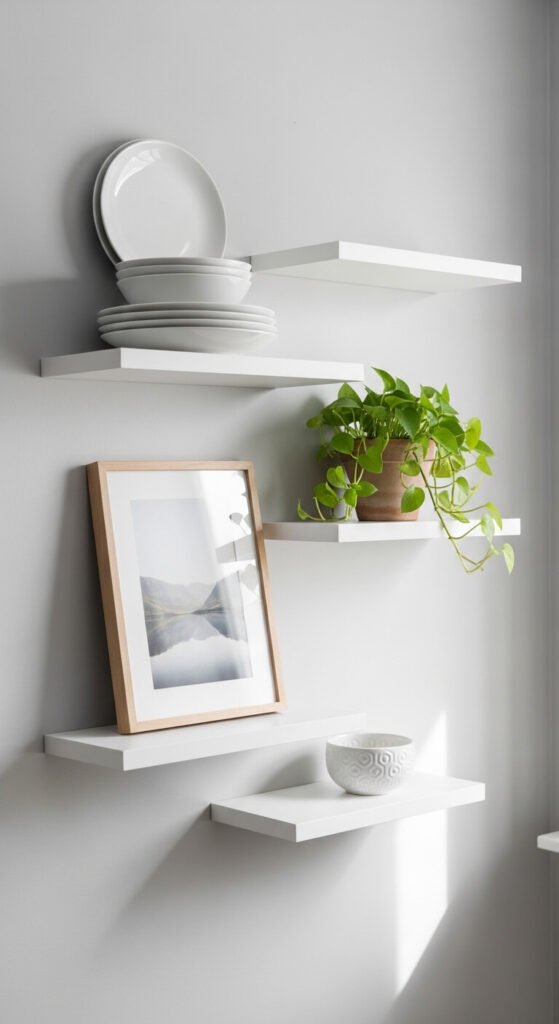
Open shelving displays select items rather than collections. Show only what you use and love. The restraint is the beauty. Leave generous space between objects—negative space matters.
Install simple white floating shelves ($15-$30 each). Display white dishes, a few books, small plants, or meaningful objects. Group items in odd numbers. The curated minimalism prevents clutter while showing personality. Edit ruthlessly—if it doesn’t serve a purpose or bring joy, remove it. Change displays seasonally using the same few items arranged differently. This approach eliminates visual chaos while making daily items accessible and beautiful.
Cozy Reading Nooks
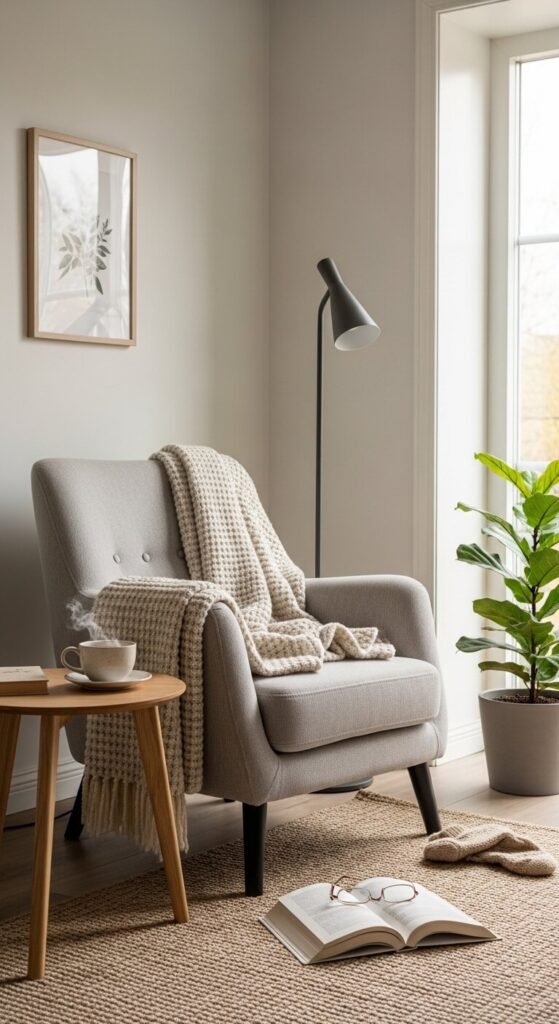
Every Scandinavian home includes dedicated cozy spots. Create reading nooks with a comfortable chair, good lamp, side table, and blanket. These become daily retreat spaces for rest and reflection.
Position chairs near windows for natural reading light. Add a floor lamp for evenings. Keep a wool throw within reach. The side table holds coffee, tea, or books. This costs $100-$300 total using budget furniture. The intentional comfort zone encourages slowing down. Reading nooks embody hygge—they’re about creating moments of contentment. Make yours inviting enough that you actually use it daily, not just admire it.
Natural Wood Furniture
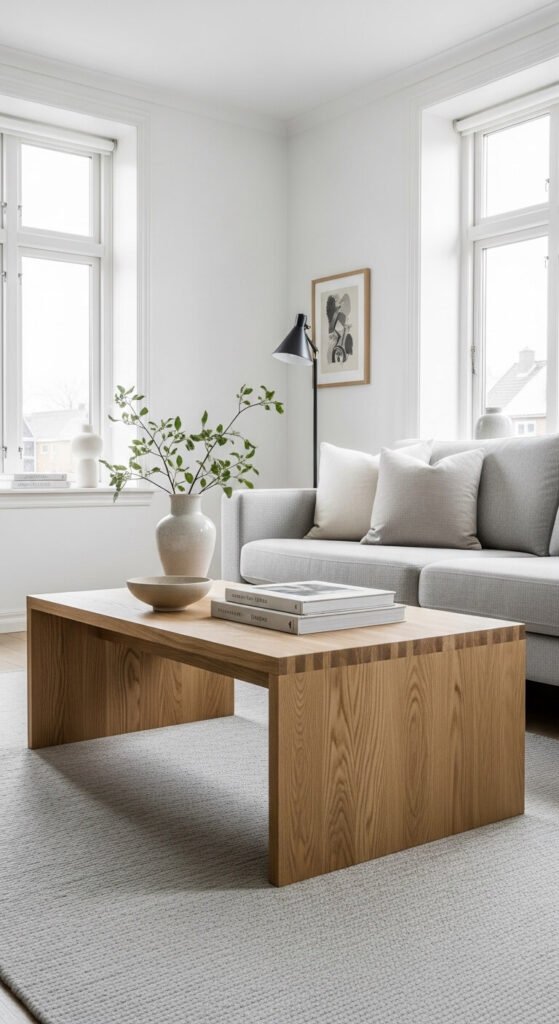
Wood furniture in light finishes brings essential warmth. Oak, ash, beech, and birch are most authentic. Leave wood natural or apply light oils that preserve grain visibility. Avoid dark stains or painted wood.
Buy unfinished pine furniture and treat it with Danish oil ($15) or beeswax. The natural finish develops beautiful patina over time. Visible wood grain adds texture to white rooms. Choose pieces with simple construction—the joinery should be visible, not hidden. The honest materials reflect Scandinavian values of authenticity and quality. Wood ages gracefully, improving with use. This is furniture you’ll keep for decades, not years.
Black and White Photography
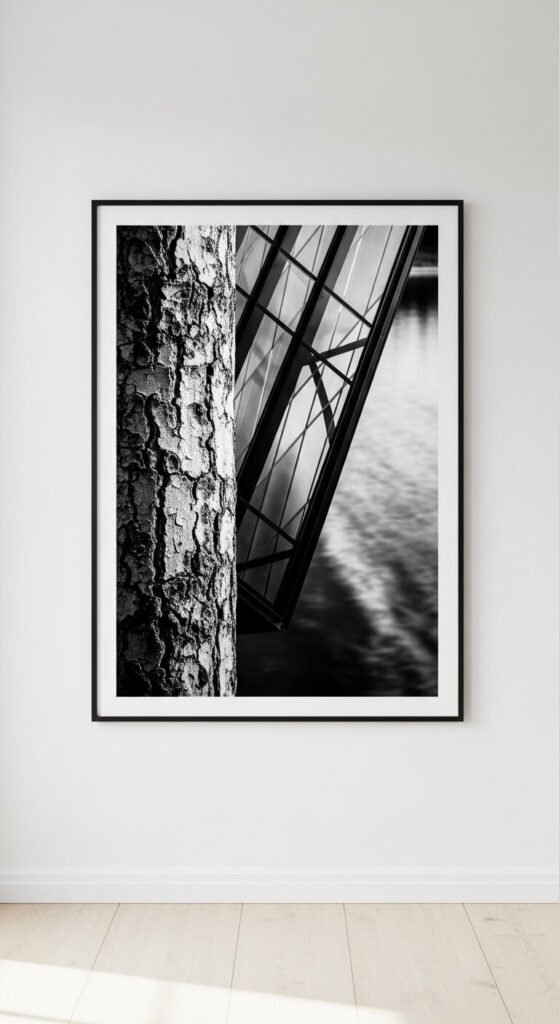
Scandinavian walls feature minimal art—usually black and white photography. Nature scenes, architectural shots, or abstract images work best. Simple black frames keep focus on the images.
Print your own photos for $20-$40 framed. Choose images with strong composition and contrast. The monochrome maintains the room’s palette while adding personality. Hang art at eye level, 57-60 inches from floor to center. One large piece beats multiple small ones. The photographic simplicity adds visual interest without color chaos. Rotate images seasonally if desired. The black and white photography feels timeless and sophisticated.
Uncluttered Surfaces Always
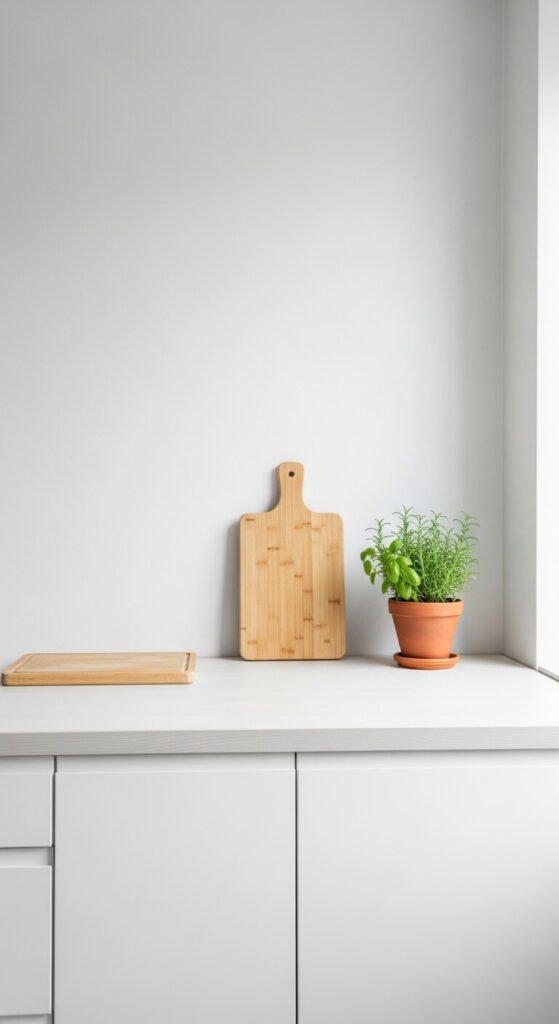
Scandinavian surfaces stay clear. Counters, tables, and shelves hold minimal items. The empty space creates visual and mental calm. This discipline is harder than it looks but transforms spaces.
Store appliances in cabinets. Keep only daily-use items out—coffee maker, knife block, soap dispenser. Everything else lives behind closed doors. The bare surfaces make cleaning easier and rooms feel larger. Adopt the “one in, one out” rule. Before buying something new, remove something old. This prevents accumulation. The empty space isn’t wasted—it’s intentional peace. Clutter-free surfaces are the hardest Scandinavian principle to maintain but perhaps the most impactful.
Wool and Chunky Knit Textiles
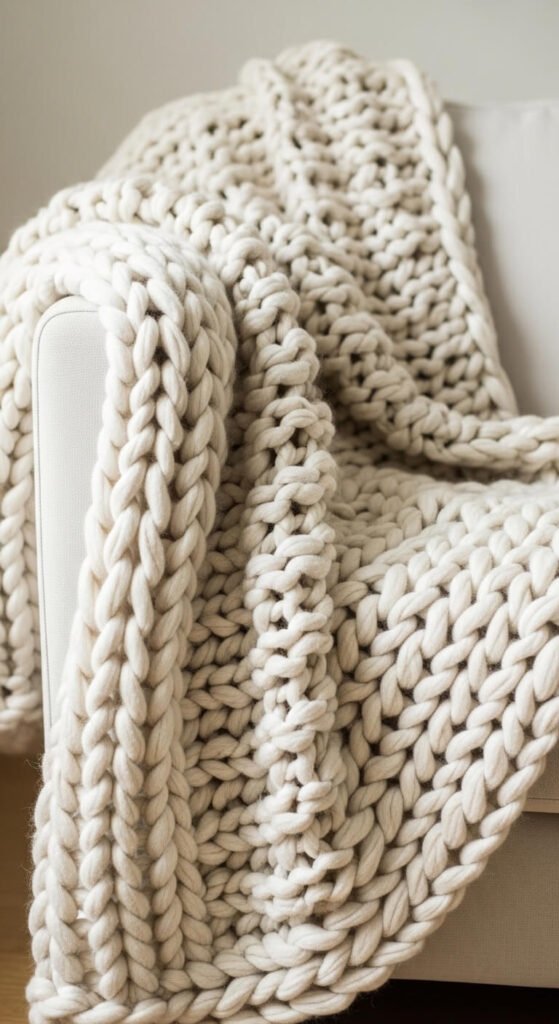
Chunky knits and wool textiles add hygge warmth. Cable knit blankets, wool pillows, and heavy knit throws invite snuggling. The substantial texture feels comforting and looks beautiful draped casually.
Buy chunky throws for $50-$100 or knit your own using giant needles and super bulky yarn. The thick stitches create dramatic texture and visual weight. Stick to cream, gray, or soft brown. Drape them over sofas or chairs where they’re accessible for daily use. Wool regulates temperature naturally—warm in winter, cool in summer. The substantial comfort communicates coziness immediately. These textiles are tactile statements that beg to be touched and used.
Simple Ceramic Tableware
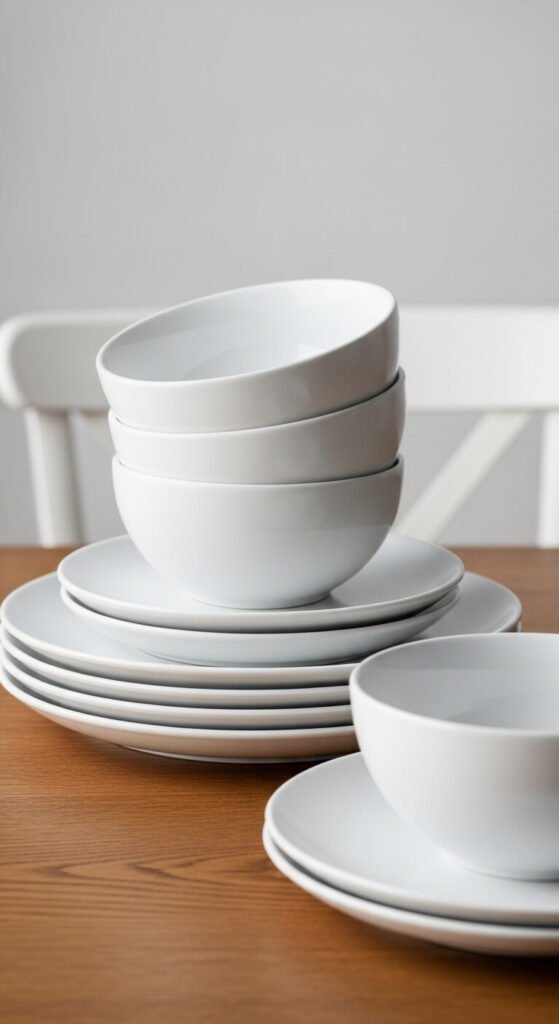
Scandinavian dishes are simple, white, and beautifully made. Matte or glossy finishes both work. No patterns, colors, or decorative elements. The pure forms highlight the food rather than competing with it.
Buy basic white dishes from IKEA ($20-$40 for a set) or thrift stores. The simplicity makes mixing brands acceptable—they all coordinate. Handmade ceramic pieces from local potters add artisan quality. The minimal tableware makes every meal feel intentional. White dishes photograph beautifully and never go out of style. They’re practical—matching everything, dishwasher-safe, and timeless. This is everyday elegance without pretense.
Fireplaces and Wood Stoves
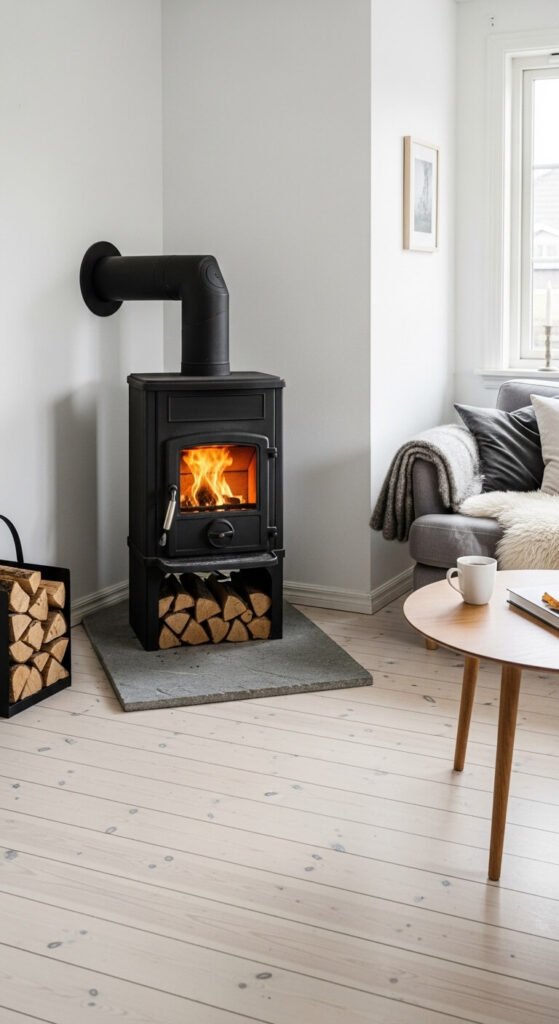
Real fires create ultimate hygge. Wood-burning stoves or fireplaces provide warmth and a mesmerizing focal point. The crackling fire and radiant heat make dark evenings magical.
If you can’t install a wood stove, use your existing fireplace regularly or add a tabletop ethanol fireplace ($100-$300). The real flames create atmosphere candles alone can’t match. Stack firewood beside the hearth—it’s decorative and functional. The primal warmth of fire connects us to ancient comfort. Even a small fire changes a room’s entire feeling. Make fire-lighting a daily winter ritual. The effort is part of the hygge experience.
Baskets for Hidden Storage
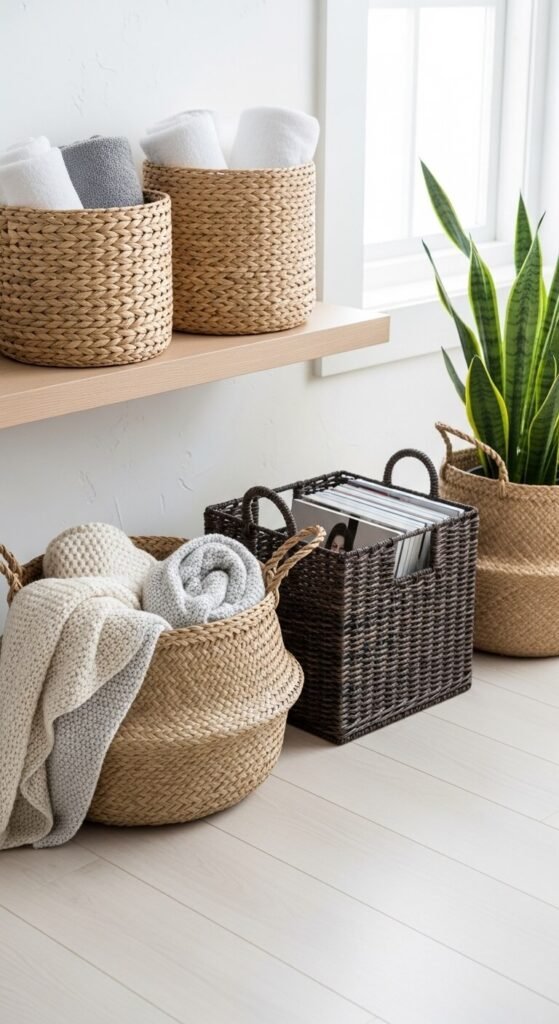
Woven baskets hide necessary clutter while adding texture. Natural fiber in neutral tones stores blankets, toys, magazines, or supplies invisibly. The storage becomes part of the decor.
Buy seagrass or wicker baskets for $10-$40 each. Line shelves with them or place them on floors. The organic texture softens minimalist spaces. Baskets are more attractive than plastic bins and last longer. Label contents if needed, or know what goes where through consistent use. The concealed organization maintains visual calm while keeping homes functional. Scandinavians are practical—they have stuff too. They just store it thoughtfully.
Scent Through Natural Elements
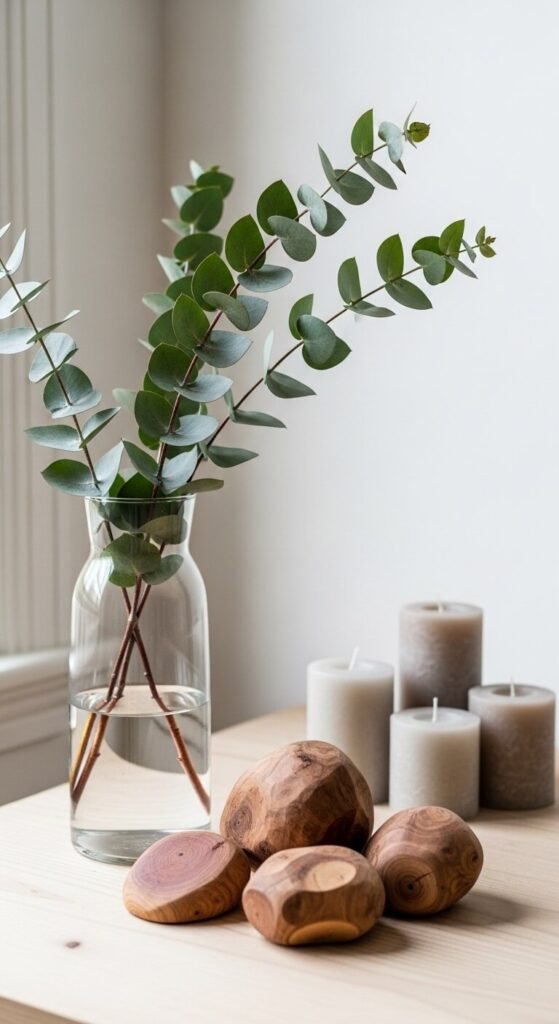
Scandinavian spaces smell natural, not perfumed. Fresh flowers, eucalyptus branches, cedar wood, and beeswax candles provide subtle fragrance. Avoid synthetic air fresheners or heavily scented candles.
Place eucalyptus in bathrooms—the steam releases its scent. Tuck cedar blocks in closets and drawers. Burn beeswax candles for mild honey scent. Open windows regularly for fresh air circulation. The natural aromatics connect spaces to nature without overwhelming. Strong scents disrupt the calm aesthetic. Let your home smell like what it is—clean, with hints of wood, cotton, and living plants. This approach is healthier and more authentic.
Clean Lines in Everything
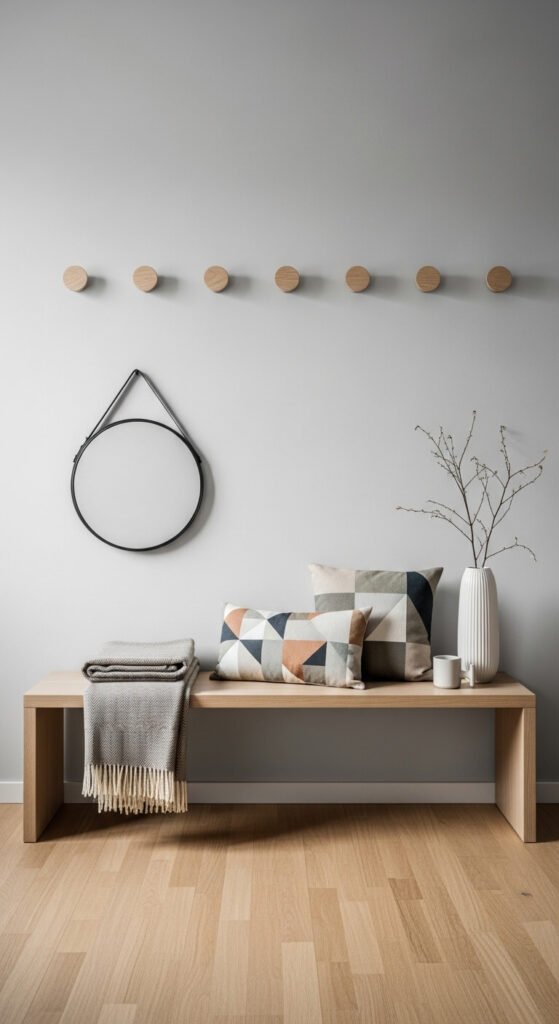
Scandinavian design avoids curves, flourishes, and ornate details. Straight lines, right angles, and geometric shapes dominate. This creates visual order and calm. The discipline feels deliberate and sophisticated.
Choose furniture with square or rectangular forms. Avoid rounded edges, carved details, or decorative legs. The geometric clarity creates coherent spaces. Even plants get geometric planters—cubes, cylinders, rectangles. This doesn’t mean cold or sterile. Natural textures and warm whites soften the clean lines. The combination of strict geometry with soft materials creates the perfect Scandinavian balance—ordered but comfortable, minimal but warm.
Layered Ambient Lighting
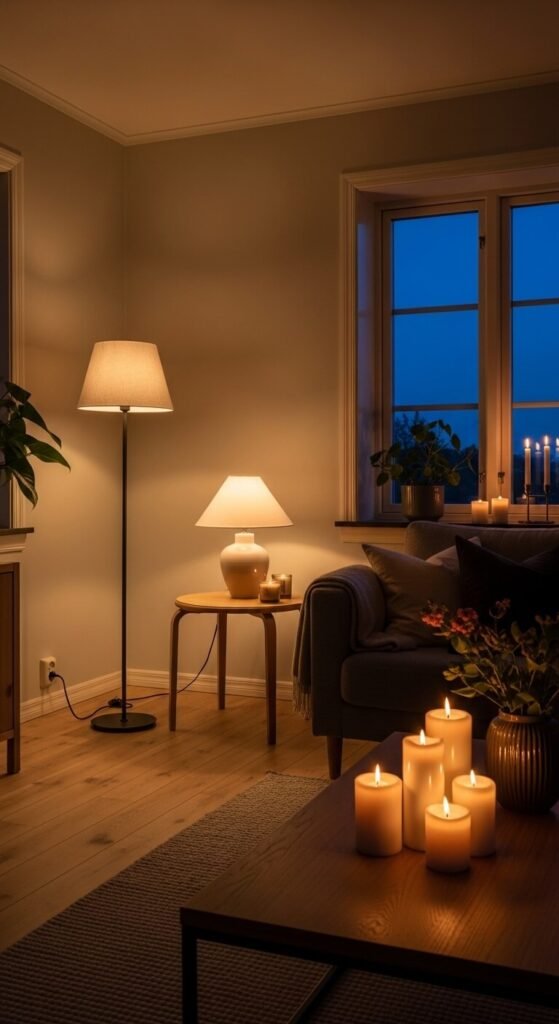
Overhead lighting rarely appears in Scandinavian homes. Instead, layer multiple low-level light sources. Floor lamps, table lamps, and candles create pools of warm light. The layered approach feels intimate and cozy.
Use warm LED bulbs (2700K or lower). Place lamps at different heights throughout rooms. The dimensional lighting creates ambiance overhead lights can’t achieve. Dimmers give you control. In evenings, rely entirely on lamps and candles—never overhead fixtures. This immediately creates hygge atmosphere. The lower, warmer light makes spaces feel like retreats. The investment is minimal—a few lamps and bulbs—but the mood transformation is profound.
Personal Meaningful Objects Only
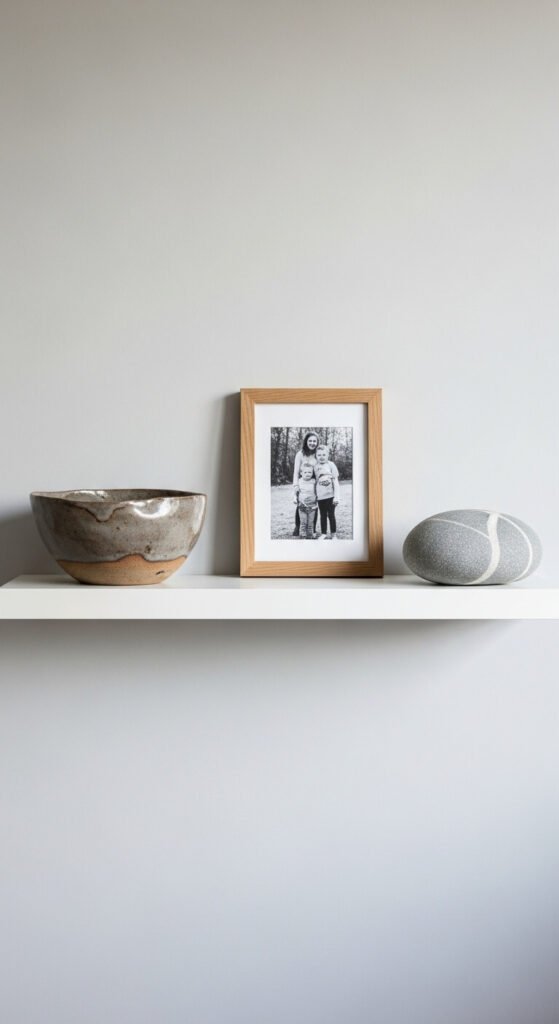
Scandinavians display very few decorative objects—only those with deep personal meaning. Family photos, travel souvenirs, or handmade gifts earn shelf space. Mass-produced decor doesn’t. Each item has a story.
Edit your collections ruthlessly. Keep one or two pieces from each meaningful category. The intentional curation makes remaining items more special. Nothing is there just to fill space. This approach forces you to define what truly matters. Display items with breathing room around them. The space gives each piece importance. Rotate displays seasonally to keep things feeling alive. The result is a home that tells your story authentically, without visual noise.
Conclusion
Scandinavian design proves that living simply doesn’t mean living cold. These 24 secrets create warmth through restraint, comfort through quality, and peace through intentionality. You don’t need every element—start with white walls, natural textiles, and cleared surfaces. Those three changes alone shift your space toward hygge. The beauty of this style is its accessibility. Most principles cost nothing—they’re about editing what you have and making thoughtful choices going forward. Scandinavian homes feel like sanctuaries because they eliminate visual stress and physical clutter. Every item serves a purpose or brings joy. The discipline creates freedom. Your home becomes easier to maintain, more peaceful to inhabit, and genuinely restorative. Start implementing these secrets today. Paint walls white, light some candles, clear your counters. Notice how your space feels after each change. Build your hygge home gradually, with intention. The result is a space that supports your well-being every single day—exactly what Scandinavian design promises.