
Books are the only decorative objects in a home that simultaneously function as furniture, art, personal biography, and intellectual signal. A shelf of books tells a visitor more about who lives in a home than almost any other single element — it reveals interests, education, passions, and aesthetic sensibilities in a way that a purchased print or a styled vase never quite can. But books are also among the most challenging decorative objects to arrange well. Left to their own logic — purchased in different sizes, colors, and formats over years — they produce visual chaos rather than considered display. The difference between a bookcase that looks curated and one that looks like a storage unit is almost entirely a question of arrangement: how books are grouped, which direction they face, what non-book objects sit alongside them, and how the space between them is used. These 24 book decor arrangements cover every format, every room, and every aesthetic — from color-organized shelves to stacked coffee table books, spine-in displays, and styled reading nooks — with practical guidance on creating arrangements that genuinely reflect the person behind the collection.
1. Books Organized by Spine Color
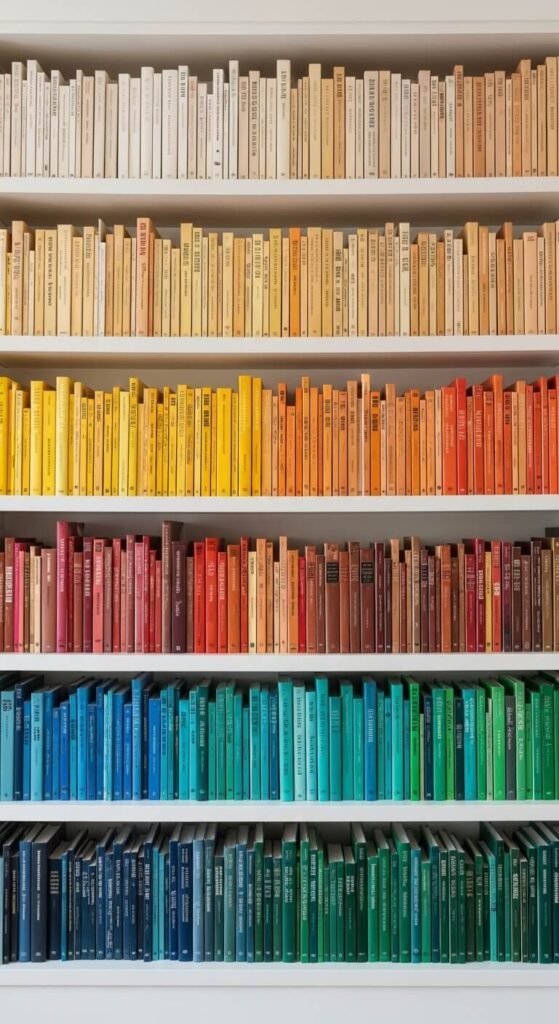
Organizing books by spine color — arranging them in a color gradient across a shelf or across multiple shelves — is the most widely recognized and most visually dramatic bookcase styling approach, turning a functional storage unit into something that reads like a piece of wall art. Sort books into color families first, then arrange each family from light to dark within its section. A single shelf going from white through cream to tan already looks significantly more intentional than random spine colors. Start with one shelf. The reorganization costs nothing and takes 20 to 40 minutes depending on the size of the collection. The result is immediately striking from across the room.
2. The Coffee Table Book Stack
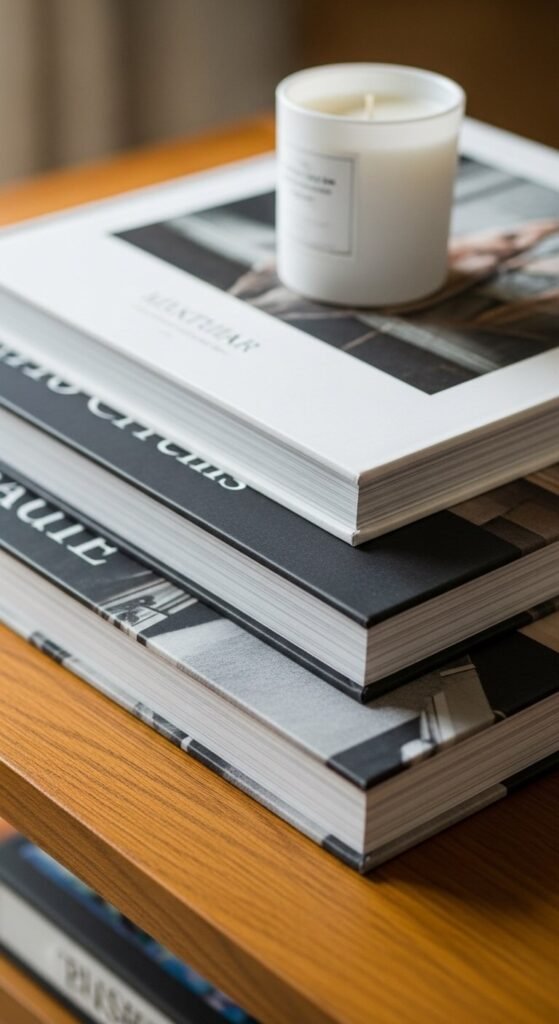
A stack of three large hardcover books on a coffee table is one of the most versatile and universally applicable styling techniques in home decor — the stacked books function as a riser, a display surface, a visual anchor, and a conversation starter simultaneously. Choose books with covers that coordinate in color and tone — three books in neutral tones look cohesive as a stack; three books with visually competing cover designs look chaotic. Art, architecture, photography, and travel books work best because their covers are designed to be visually appealing. Stack largest at the bottom, smallest on top. Place one small object — a candle, a stone, a small ceramic — on the top book for a finished display.
3. Books Stacked Horizontally as Shelf Risers
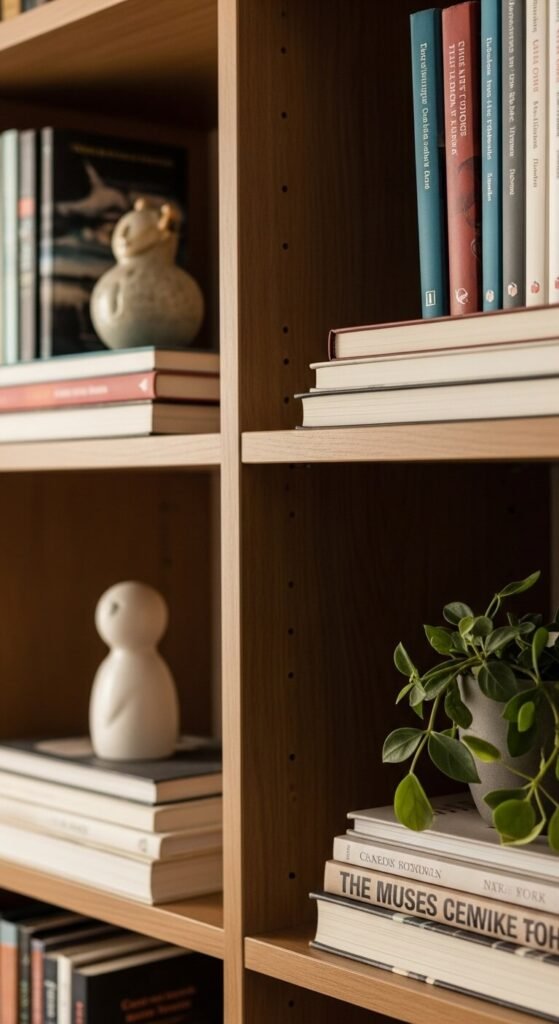
Laying a group of books flat in a horizontal stack — rather than standing them vertically — creates a natural riser on a shelf that adds height variation and a surface on which to display small objects. Intersperse one or two horizontal stacks along a shelf of vertical books to break the uniformity and create visual rhythm across the shelf length. Stack three to five books flat and place a small vase, a figurine, or a plant on top of the stack. The horizontal books should be roughly the same width — mismatched widths in a flat stack look unstable. This approach costs nothing — it simply reorganizes existing books into a more dynamic display configuration.
4. The Spine-In Display
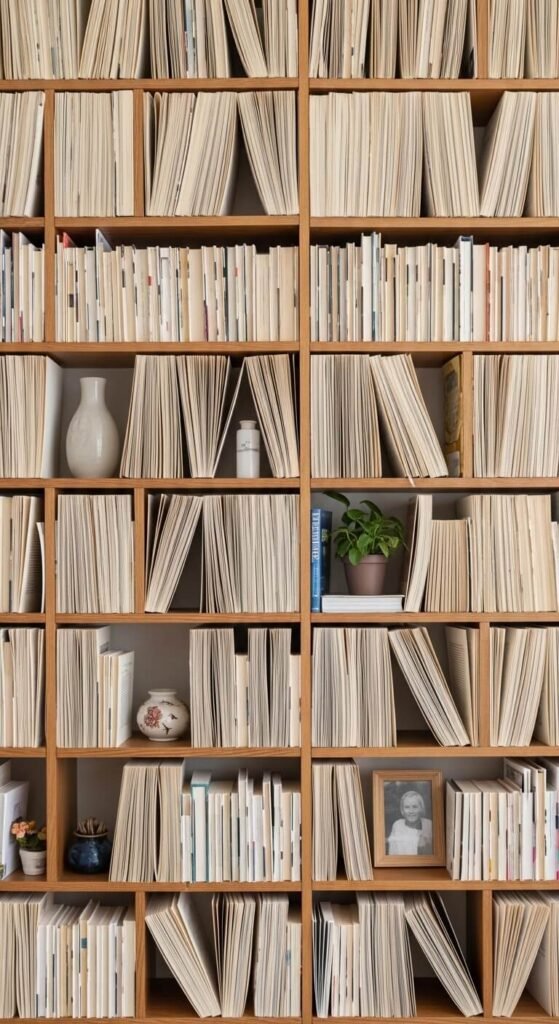
Turning books so their page edges face outward — and their spines face the back wall — creates a uniform, organic cream texture across the entire bookcase that eliminates the visual noise of competing spine colors and text while still communicating that the space is full of books. This approach works especially well in photography-forward interiors where the bookcase is being used primarily as a visual element rather than as a reading library. The cream page-edge texture is warm, subtle, and surprisingly beautiful as a backdrop for small objects placed in front of the books. No cost — simply turn existing books around. Objects placed in front benefit from the uniform background.
5. The Reading Nook Book Display
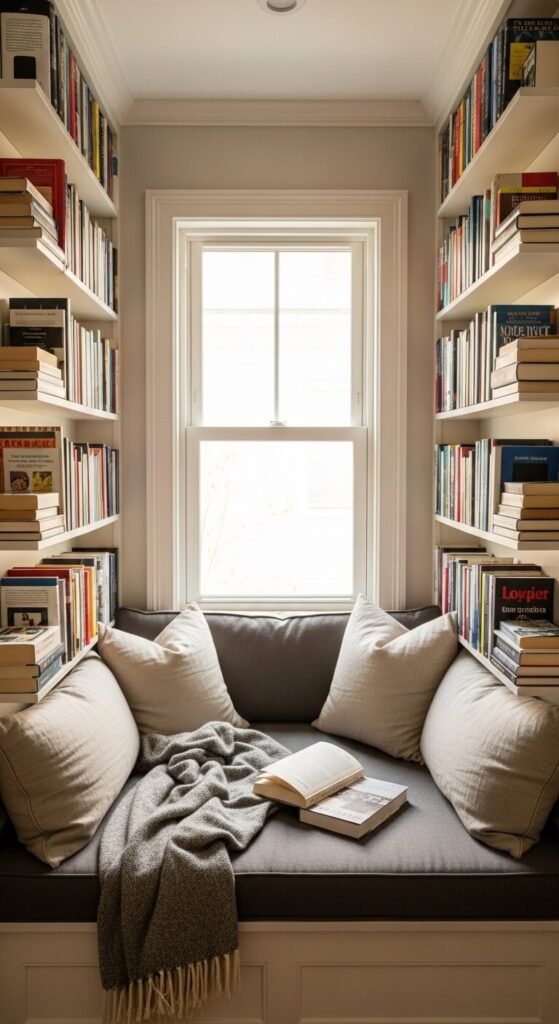
A reading nook with books shelved directly within arm’s reach of the reading seat creates the most genuinely functional and atmospheric book display in any home — the books are not just displayed, they are placed in the position they are most likely to be read. Build or commission a custom reading nook with built-in shelves on the flanking walls at seat height for the most architectural version of this display. Budget alternative: a window seat with two low freestanding bookshelves on each side achieves the same effect for $50 to $150 total in shelving. The book selection in a reading nook should prioritize current and upcoming reads rather than a complete collection display.
6. Books Behind a Sofa as a Room Divider
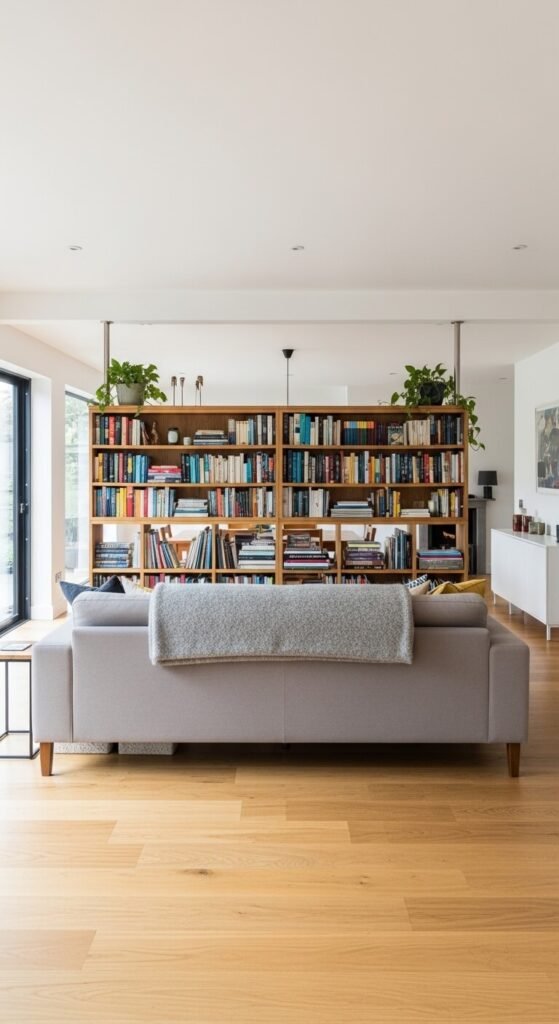
A large freestanding bookcase placed immediately behind a sofa acts as a room divider in an open-plan space — it creates a visual and physical separation between the living area and an adjacent dining or workspace without requiring a wall, while simultaneously displaying the book collection on both sides. Use a freestanding double-sided bookcase — often called a room divider shelf — rather than a standard single-sided unit. These are available from IKEA (the KALLAX series in various configurations) for $80 to $200. The bookcase behind the sofa works especially well in studio apartments and open-plan living rooms where soft architectural division is preferred to hard walls.
7. The Minimal Monochrome Book Display
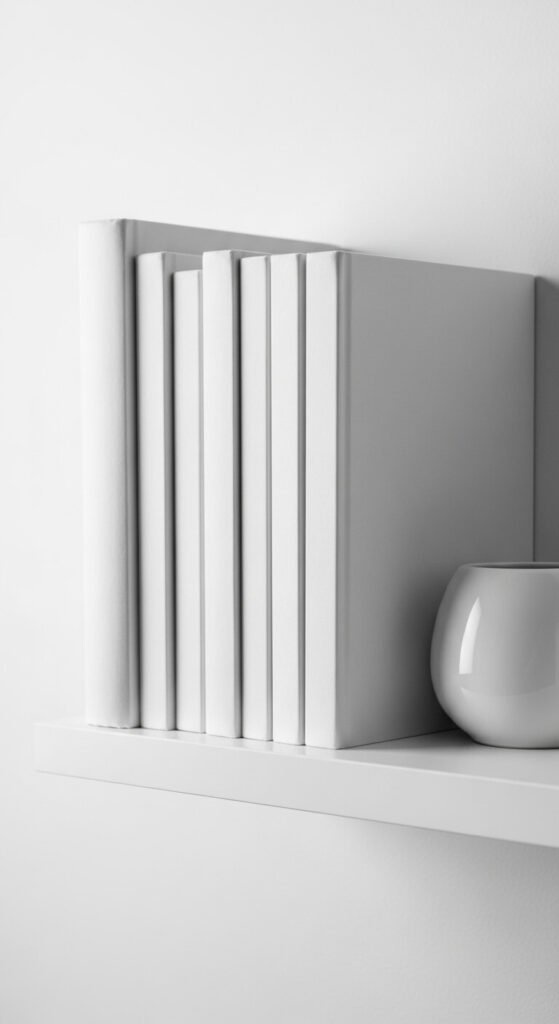
A shelf of books all in the same color — all white covers, all black spines, all kraft paper — creates a monochromatic display that looks more like an art installation than a functional book storage solution. Collect or specifically purchase books with white, cream, or plain covers for a dedicated monochrome shelf — many classic literature editions from Penguin Clothbound Classics, Everyman’s Library, and Folio Society have consistently beautiful cover designs. Remove dustjackets from hardcovers to reveal the often more beautiful plain cloth cover beneath — many hardback books have striking solid-color cloth covers that are hidden by their paper jackets.
8. Books as a Bedside Stack
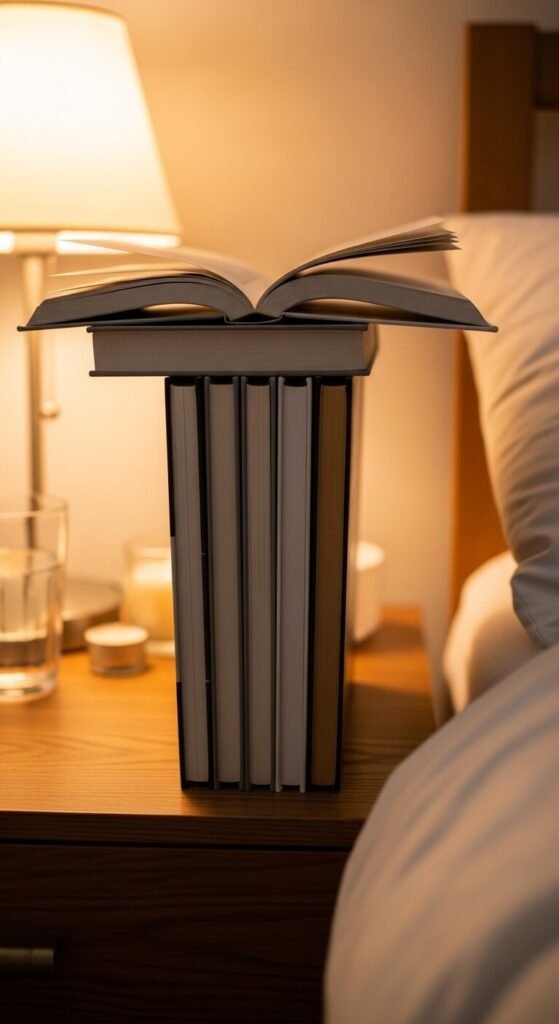
A small stack of books on a bedside table is simultaneously one of the most honest and most personal book displays — these are the books currently being read or recently finished, not curated for visual effect. Stack four to six books with the current read on top, placed face-down or with a bookmark. The stack communicates active reading life in a way that a neatly organized shelf in another room cannot. Keep books in the current reading pile rather than archiving finished titles to the shelf immediately — the lived-in quality of a bedside stack is part of its visual appeal. A modest bedside book stack costs nothing — it uses books already owned and being read.
9. The Color-Blocked Bookcase Section
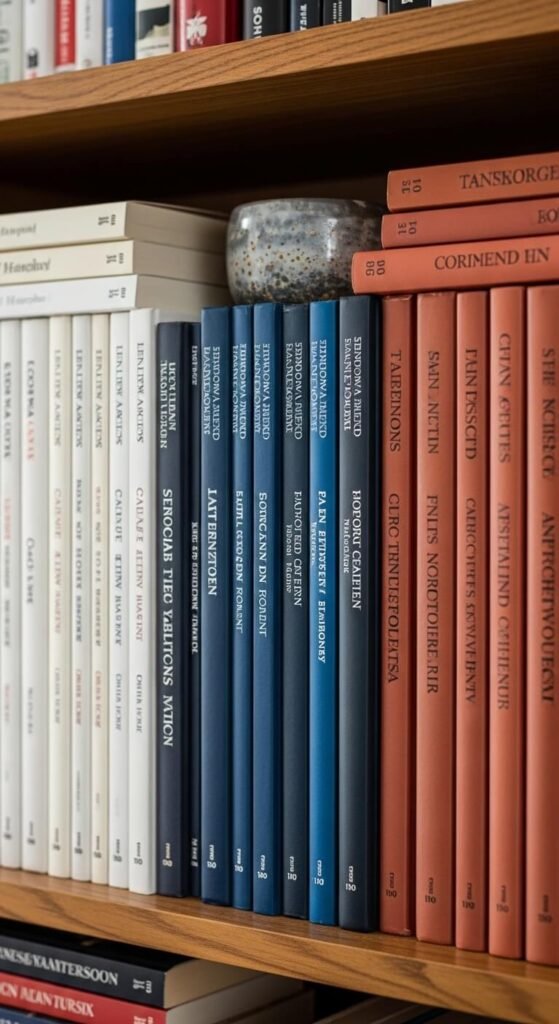
Color blocking books — grouping them into solid sections of single colors rather than a continuous gradient — creates a bolder, more graphic bookcase arrangement that reads from across the room as distinct color fields rather than a flowing spectrum. Three to four large color blocks work better than many small ones — a section of all-whites, a section of all-navy, and a section of all-warm earth tones creates a bookcase that looks designed. Sort your existing collection into these three color families and arrange accordingly. Place one or two small objects between the color block transitions to provide visual breathing room. Cost: nothing. Time: 30 to 60 minutes.
10. The Art Book Display on a Stand
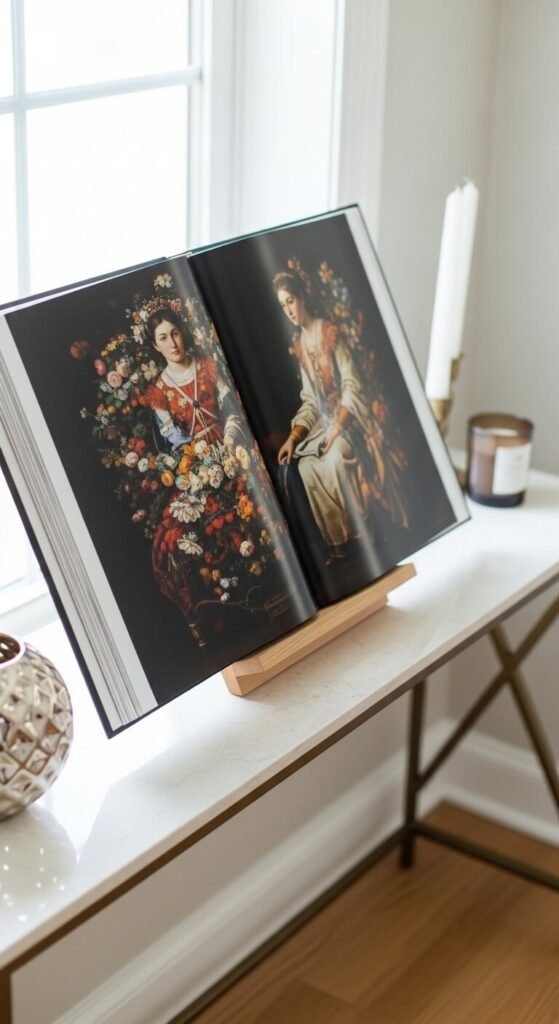
A large art or photography book displayed open on a wooden book stand — rotating to a new page every week — creates a changing wall-art-equivalent on any flat surface without framing, hanging, or purchasing art. A wooden book easel or display stand costs $10 to $30 and props any large hardcover book open at the correct reading angle. Rotate the open page weekly or monthly for a continuously changing surface display. Large monograph art books — dedicated to a single artist, photographer, or designer — work best because each page spread is designed to be a complete visual composition. Thrift stores regularly stock large art books for $1 to $5 each.
11. Books Organized by Subject Section
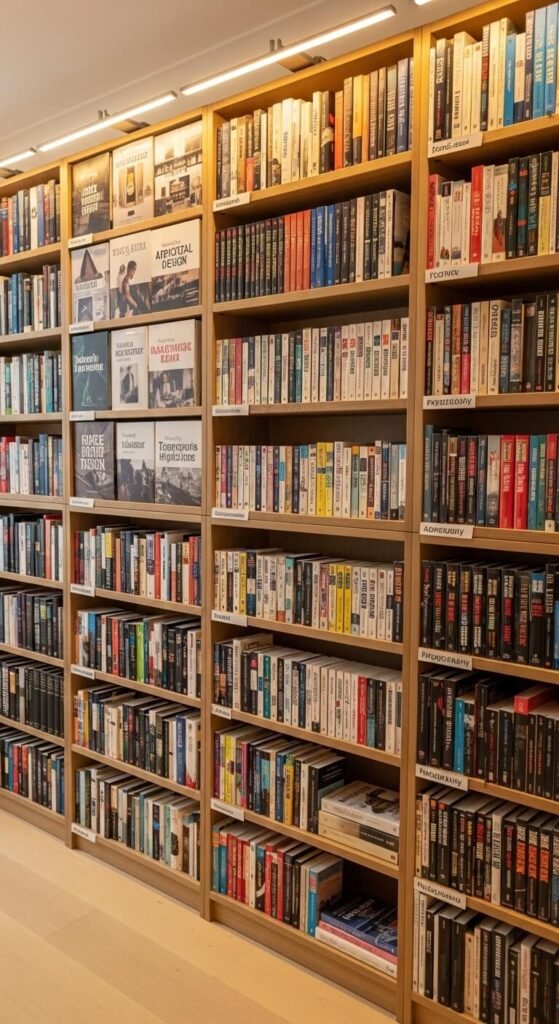
Organizing a bookcase by subject — design, fiction, travel, cooking, science — creates a home library feel that is both visually organized and practically useful, making any book findable in seconds rather than requiring a complete shelf scan. Use simple paper or card shelf labels for each section so the organization is legible at a glance and easy to maintain over time. Group large-format books — art, architecture, photography — together because their size creates visual rhythm when grouped rather than interspersed between smaller formats. A subject-organized bookcase costs nothing to create and communicates a deeply personal intellectual map of its owner’s interests to anyone who reads the shelf sections.
12. The Floating Shelf Gallery with Books
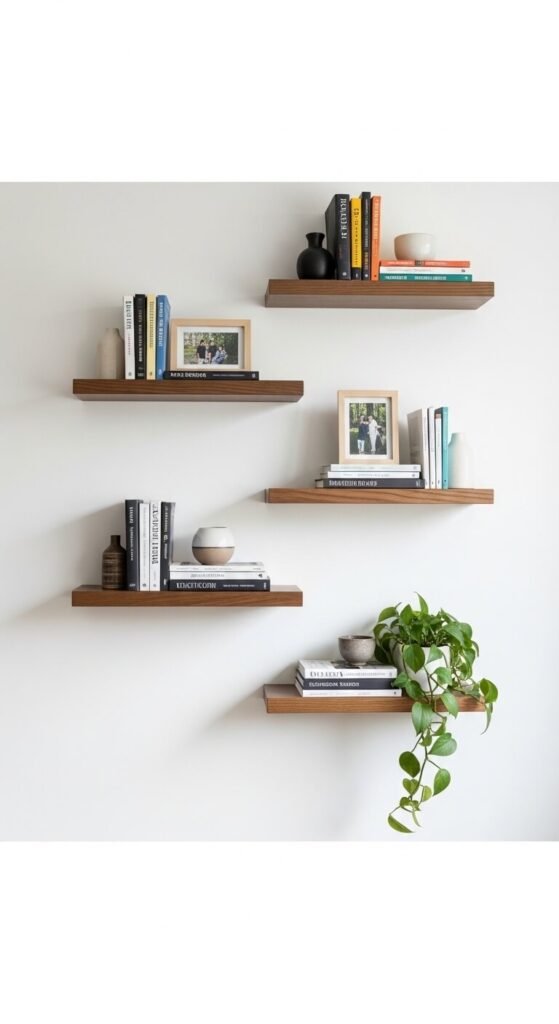
Three floating shelves at staggered heights — with each shelf holding a combination of books and small decorative objects — creates a gallery wall effect using books as the primary material. Stagger the shelves so no two are at the same horizontal height, and vary the object-to-book ratio on each shelf — one shelf mostly books, one shelf half-and-half, one shelf mostly objects. The asymmetry between the shelves creates visual movement that a symmetrically arranged set of matching shelves cannot. Three floating shelves from IKEA cost $15 to $40 total and install with two screws each. The books and objects placed on them cost nothing if sourced from the existing home collection.
13. Books in a Dark, Dramatic Painted Bookcase
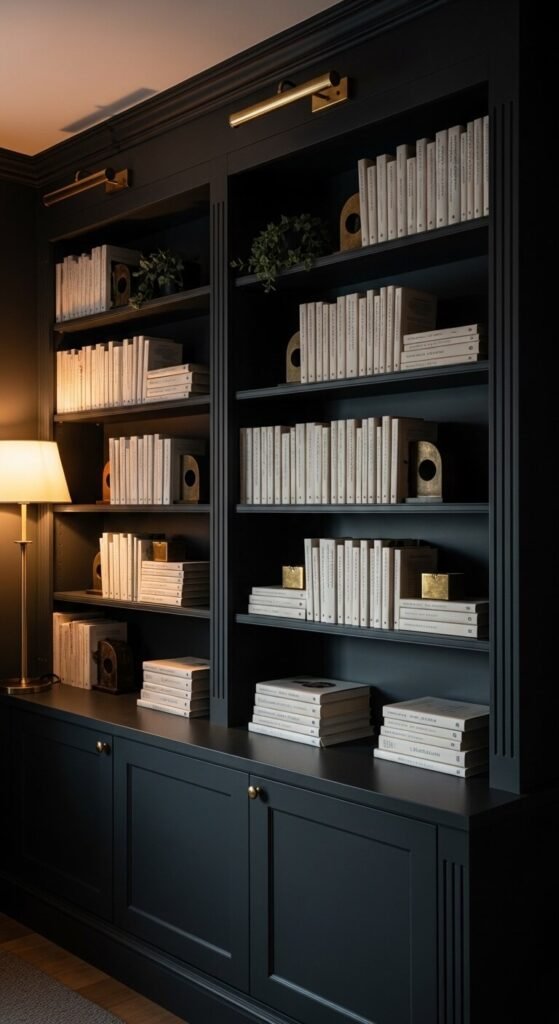
Painting the interior of a bookcase — back panel and shelves — in a deep, dark color transforms the bookcase from a neutral storage unit into a dramatic architectural feature where every book, plant, and object placed inside it is automatically highlighted against the dark background. Navy, charcoal, forest green, and black all work well as bookcase interior colors. The contrast between light-spined books and a dark background makes individual book spines significantly more visible and visually interesting than on a white or natural wood shelf. Paint a single bookcase interior for $10 to $20 in sample-pot quantities. The painting takes two to three hours and the transformation is immediate and significant.
14. The “Currently Reading” Display Shelf
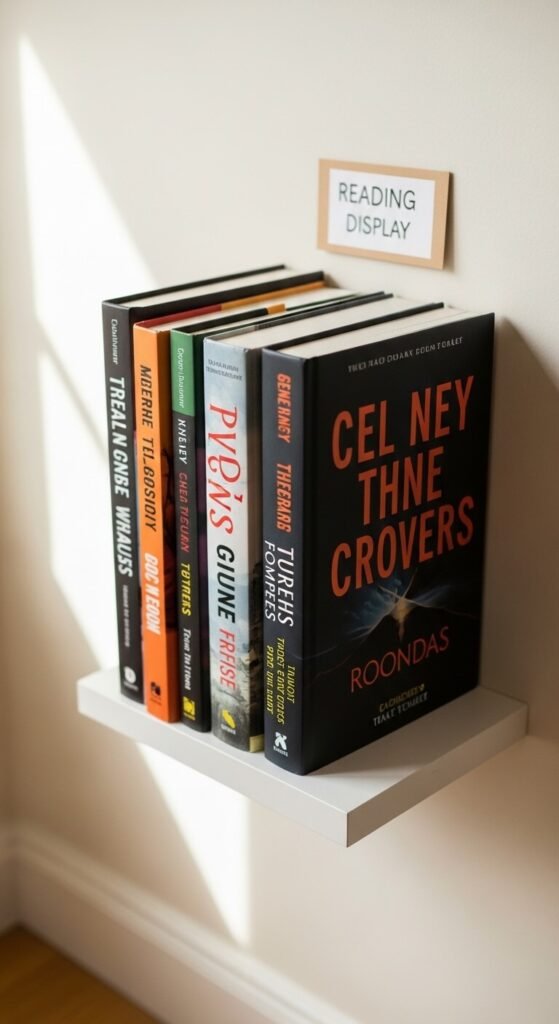
Displaying books face-out — so the full cover is visible rather than just the spine — creates a different and more personally communicative display, showing the covers as the designed objects they are rather than the narrow text of a spine. A single dedicated “currently reading” shelf with five to eight books displayed face-out communicates an active reading life and changes naturally as reading habits progress. Face-out display requires more shelf depth than spine-out display — a standard 10-inch deep shelf accommodates face-out books comfortably. Add a small handwritten card reading “currently reading” or “recently finished” for a personal touch that costs nothing but a piece of card and a pen.
15. The Staircase Bookshelf Steps
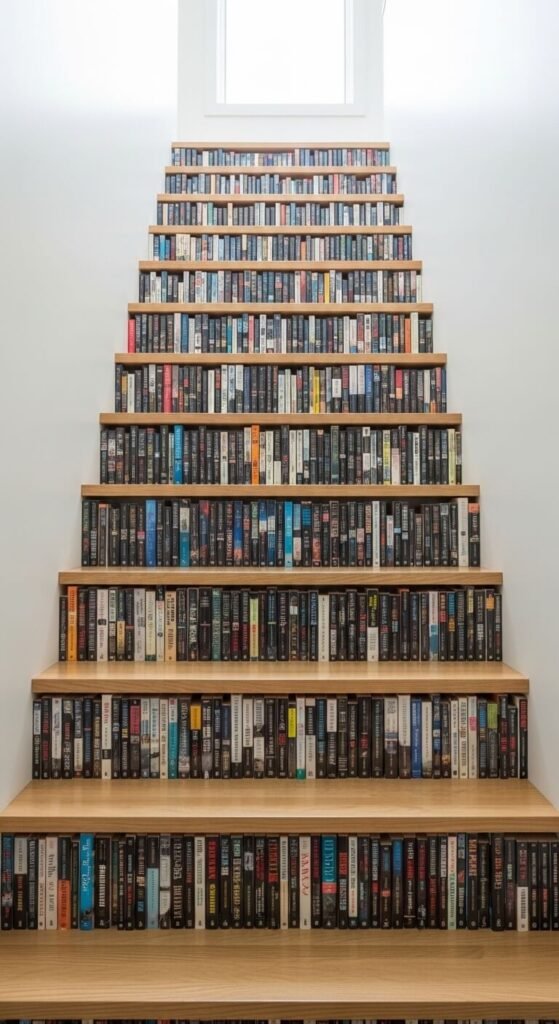
Using the vertical faces of stair risers as individual bookshelves — by fitting a shallow horizontal shelf to each riser — creates a full-height bookcase within the staircase that uses previously wasted architectural space. This is a DIY project requiring shallow shelves — 6 to 8 inches deep — cut to the width of each stair riser and fixed with L-brackets. Materials cost $30 to $80 for a full staircase in standard timber. The books fill the staircase wall as you climb, creating a constantly changing visual landscape of spines at every step. Organize books by color or subject section across the stair height for a cohesive visual result from the bottom.
16. Books as Table Leg Substitutes
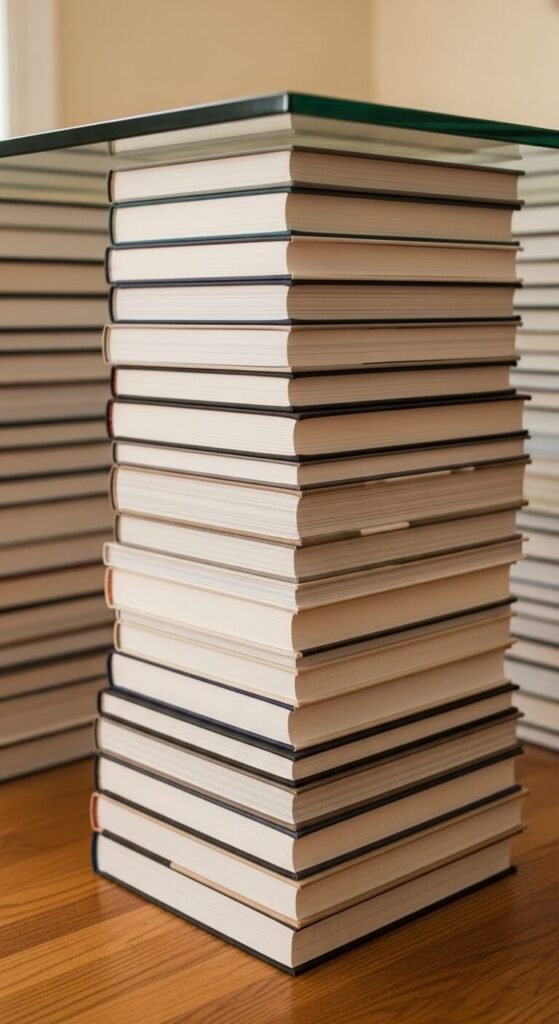
Large hardcover books stacked as legs beneath a piece of glass or a wooden board create a genuinely functional DIY table where the books themselves are the structural and decorative elements simultaneously — an approach used in interior design to create side tables, coffee tables, and display pedestals. Collect eight to sixteen large, stiff hardcovers of similar or graduated sizes and stack them in four equal columns to support a piece of glass cut to size. A glass top cut to dimension costs $20 to $50 from a glass cutting service. The books cost nothing if sourced from the existing collection or from thrift stores at $1 to $3 each. The result is a side table that is a genuine design statement.
17. The Rainbow Bookcase
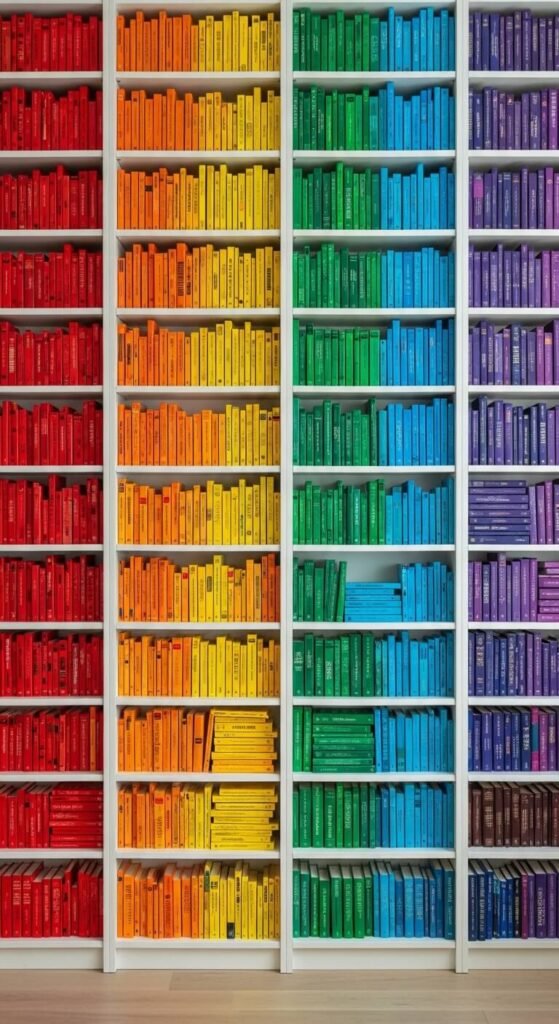
A rainbow bookcase — organized so the color spectrum runs continuously from red through violet across every shelf simultaneously — is the most maximalist and visually striking color-organization approach and creates a bookcase that functions as a full wall of color art. Organize by starting at red on the top left and moving through the spectrum — orange, yellow, green, blue, indigo, violet — ending at the bottom right corner. The spectrum should run horizontally across each shelf and continue to the next shelf below from left to right. This requires a large collection to work — at least 100 books — to produce a convincing continuous spectrum. The arrangement takes two to three hours and costs nothing.
18. Books on a Windowsill
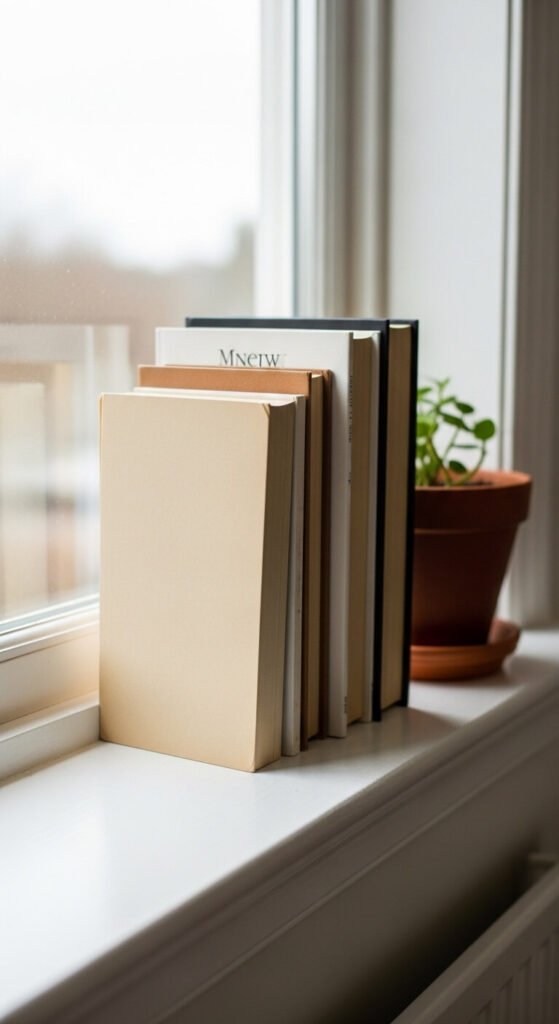
A row of books standing on a deep windowsill creates a quiet, informal reading display that sits between practical storage and decorative styling — the books are available for reading, visible to guests, and positioned near the light source most associated with reading. Use a windowsill at least 6 inches deep — the minimum depth to support standard paperback and hardback books standing upright. South or east-facing windowsills expose books to direct sunlight, which fades spines over time — choose windows with indirect or diffused light for a permanent windowsill book display. Five to eight books create a complete windowsill arrangement without crowding the sill enough to block light.
19. The Library Ladder Wall
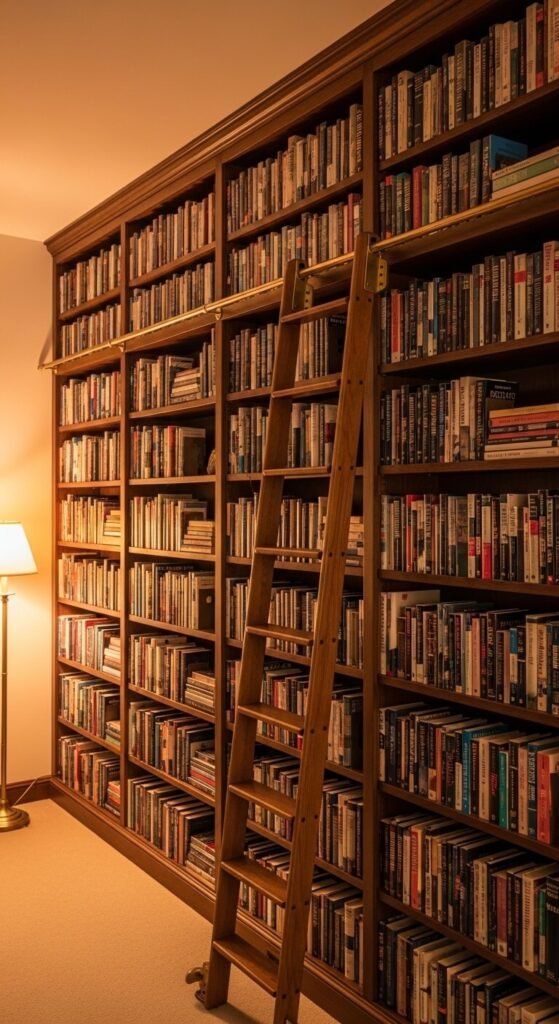
A floor-to-ceiling bookcase with a sliding library ladder is the most architecturally ambitious book display available to a home — it transforms a wall into a working personal library and communicates a relationship with books as objects that goes beyond decoration into genuine collection. A library ladder rail system costs $150 to $500 for the hardware alone and requires a solid structure to mount to. A rolling ladder with casters rather than a rail-mounted system costs $100 to $300 and requires no fixed mounting. The bookcase itself — floor-to-ceiling built-ins — costs $500 to $2,000 or more depending on whether custom-built or assembled from modular components. This is the most significant book display investment on this list and the most architecturally permanent.
20. The Nightstand Single Book Display
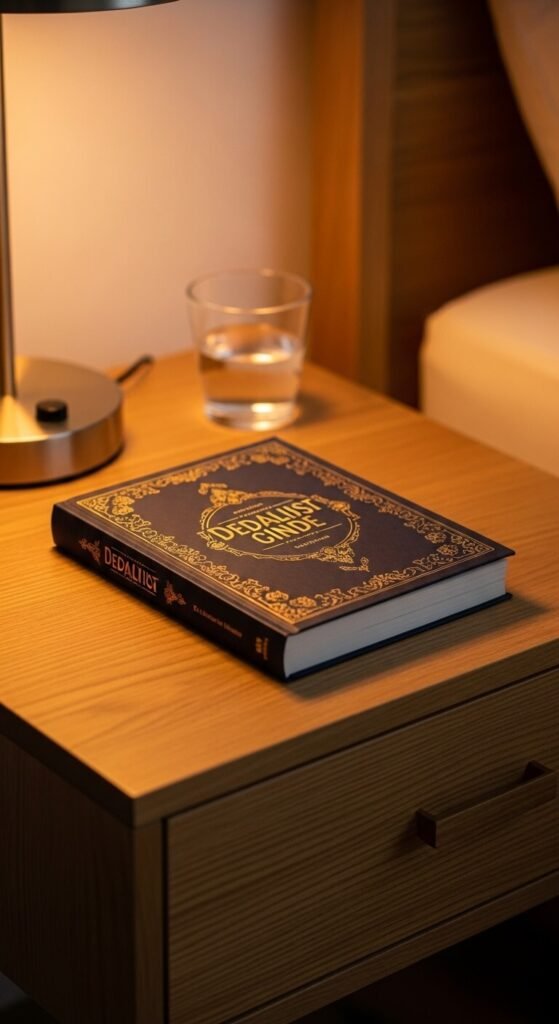
Placing a single beautiful hardcover book face-up as the primary display object on a nightstand — chosen specifically for the visual quality of its cover rather than as the current read — treats the book as a piece of surface art rather than merely a storage problem. Penguin Clothbound Classics, Folio Society editions, and many art monographs have genuinely beautiful fabric or illustrated covers that deserve to be seen rather than hidden spine-out on a shelf. Choose a book whose cover design coordinates with the room’s color palette. Replace monthly or seasonally for a constantly changing nightstand art display that costs nothing beyond the price of the books themselves.
21. The Dedicated Cookbook Kitchen Shelf
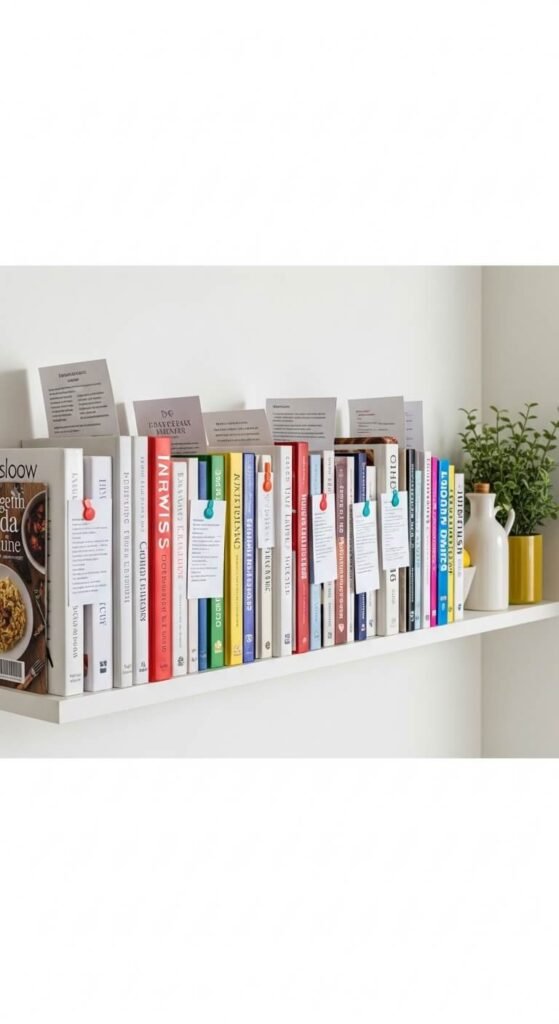
A dedicated cookbook shelf in the kitchen keeps cooking references accessible, visible, and displayed as the beautiful objects they often are — many modern cookbooks are designed with the same visual care as art books and deserve to be displayed rather than stored. Mount a single floating shelf at eye height directly beside or above the primary cooking area so cookbooks are reachable during meal preparation without moving across the kitchen. A shelf positioned too far from the stove requires crossing the kitchen repeatedly during cooking. A 36-inch floating shelf costs $15 to $30. Ten to fifteen cookbooks arranged by cuisine type or author make a complete and functional kitchen display.
22. Books Grouped by Author Collection
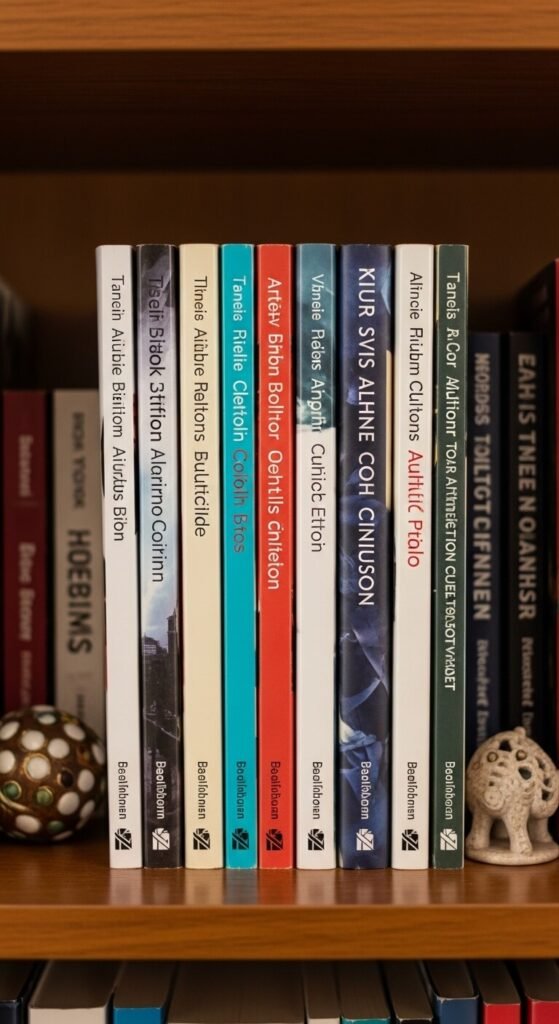
Grouping all books by a single admired author together in one bookcase section — particularly when multiple editions, different language versions, or a complete series are included — creates a personal monument to that author’s work that communicates a specific, deep, and particular reading relationship. A complete collected works of a beloved author displayed together is both a decorative statement and an intellectual one — it says something specific about who the reader is and what they value in a way that a color-sorted bookcase cannot. Collect complete author runs from thrift stores at $1 to $3 per book. First editions of significant authors from used bookshops add genuine value and rarity to the display.
23. The Children’s Book Low-Shelf Display
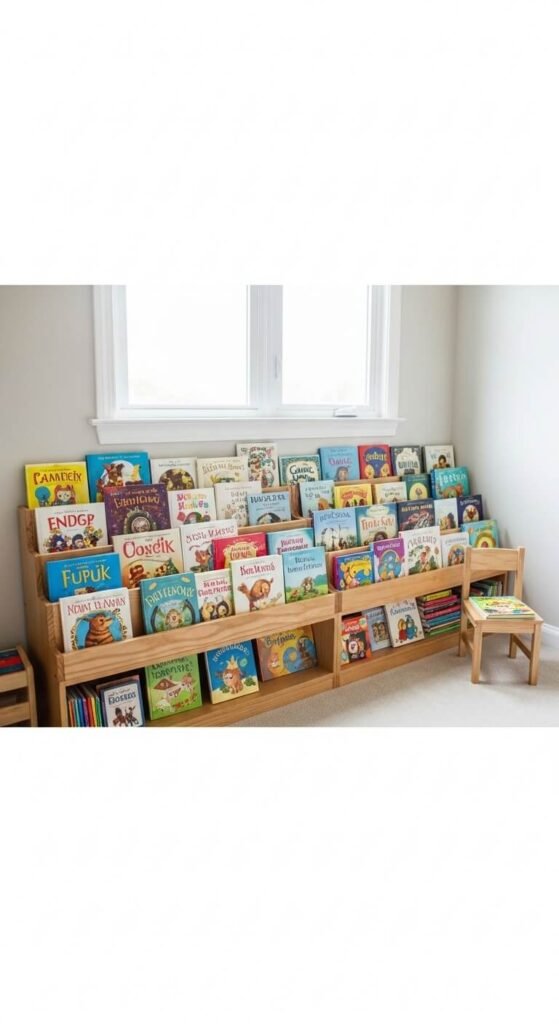
A low-height bookcase with picture books displayed face-out rather than spine-out — so the full illustrated cover is visible — makes a children’s book collection into an accessible, visually inviting display that encourages children to select and engage with books independently. Place the bookcase at the child’s eye level — approximately 18 to 24 inches from the floor for toddlers and young children. Face-out display requires a shelf with a small front lip or a forward-leaning book display insert to hold covers upright. IKEA’s FLISAT and TROFAST systems both support face-out book display at child height for $20 to $50. The colorful picture book covers themselves become the wall decor — no additional artwork needed beside the bookcase.
24. The Unexpected Room Book Display
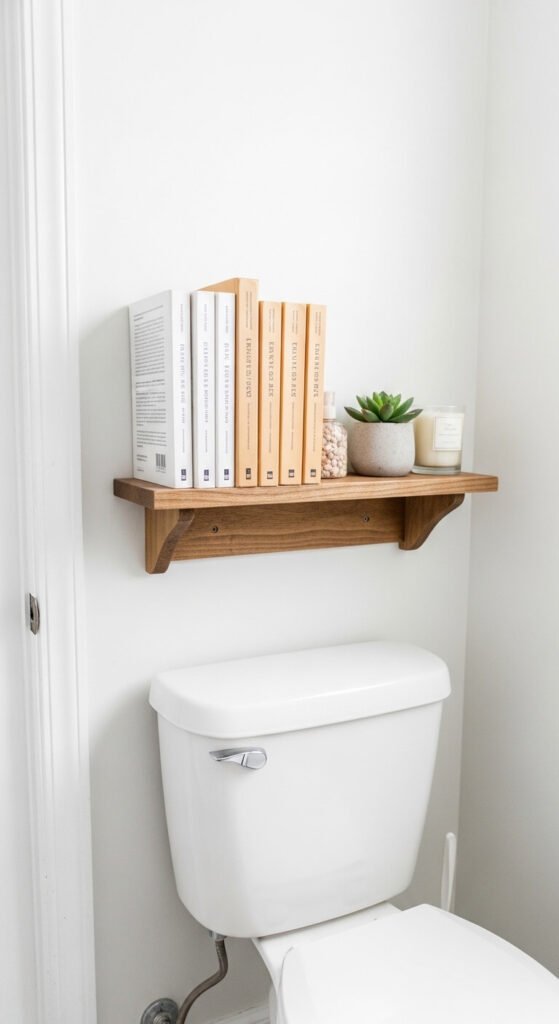
Books displayed in unexpected rooms — a bathroom shelf, a kitchen windowsill, a hallway alcove, a laundry room wall — communicate that reading and books are woven into the fabric of daily life rather than confined to a dedicated study or library. A small five-book shelf in a bathroom invites reading during a bath or a slow morning and signals a comfort with books as companions in every part of life. A narrow wall-mounted bathroom shelf costs $10 to $25 and holds five to eight standard paperbacks. Choose paperbacks over hardcovers for bathroom shelving — the humidity of a bathroom affects paper and binding over time, and a paperback is a less significant loss than a hardcover if the humidity takes a toll.
Conclusion
Books are the most personal decorative objects in any home — and the most honest. You cannot buy a styled bookcase in one transaction the way you can buy a piece of furniture or a print for the wall. A book collection is assembled over years, book by book, and the arrangement of that collection communicates something genuine about its owner that no purchased decor element can replicate. The best book decor arrangement is not the most visually dramatic or the most carefully color-sorted — it is the one that most accurately reflects the person who assembled it. Start with one shelf. Reorganize by color, by subject, or by the specific authors who have mattered most to you. Remove the books that are there by accident rather than by choice. Place three objects that you love alongside them. The bookcase that results will be the most personal and most genuinely designed surface in the room.