
A throw blanket is one of the most hardworking decorative items in any home. It adds texture, warmth, and color to a room without requiring a renovation, a significant budget, or any design experience at all. The right throw draped over a sofa arm, folded across the foot of a bed, or tumbled into a basket in the corner of a reading nook can change the entire feeling of a room in under a minute. And unlike most decor decisions, a throw blanket is reversible — you can move it, swap it for the season, wash it, and try it somewhere new without commitment. These 24 throw blanket decor styles cover every room, every aesthetic, and every budget, with practical tips on exactly how to fold, drape, display, and layer blankets in ways that look intentional rather than accidental.
1. The Classic Sofa Arm Drape
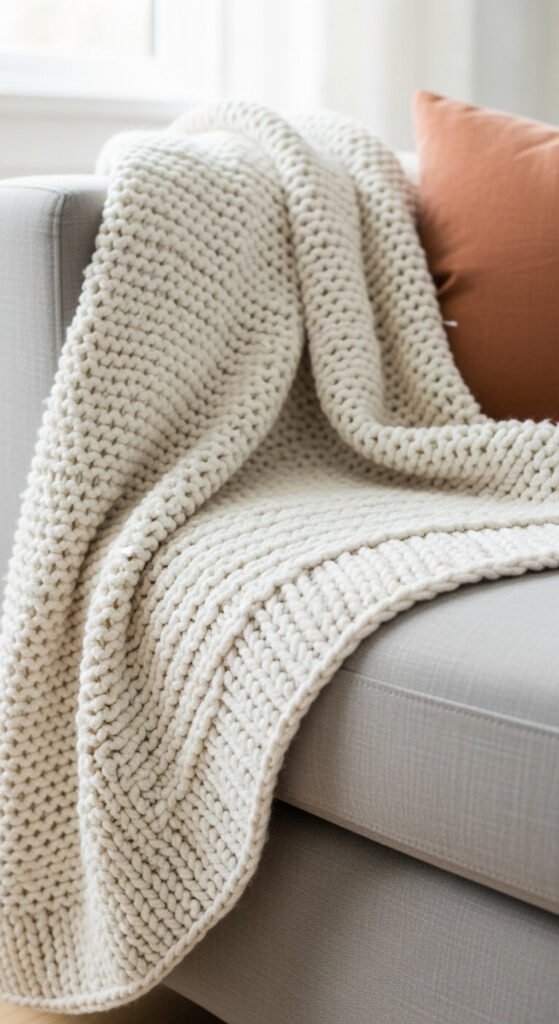
The sofa arm drape is the most classic and widely used throw blanket placement — and it works because it looks effortless while still being completely intentional. Fold the throw in thirds lengthwise, then drape it over one arm of the sofa so roughly two thirds hang toward the floor and one third sits on the cushion. Let it fold naturally rather than pressing it flat. The slight casualness is the point. A chunky knit or woven throw works best here — smooth fleece tends to slip. Throws from discount stores like HomeGoods or TJ Maxx cost $10 to $25 and look identical to designer versions. This placement works on any sofa style.
2. The Ladder Display
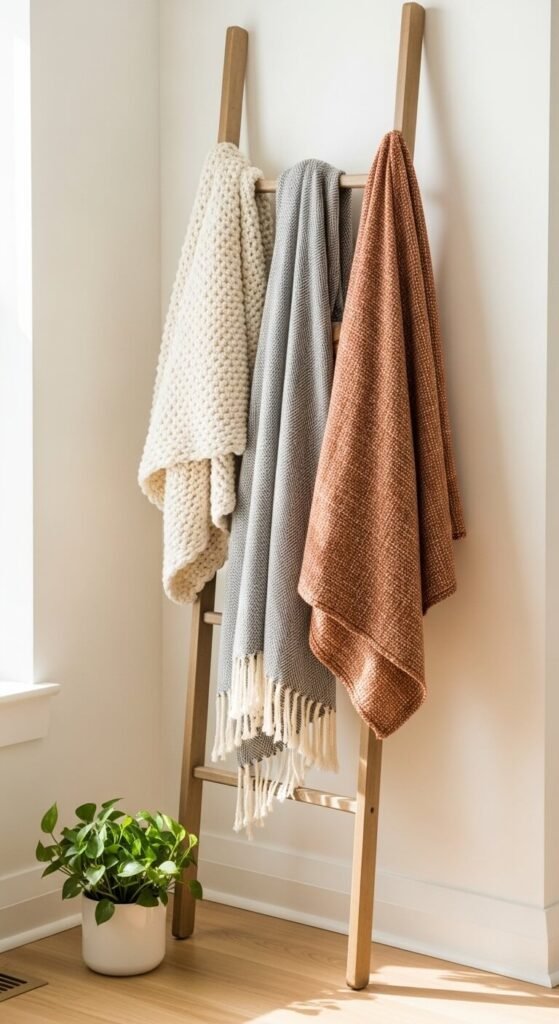
A wooden ladder leaning against a wall is one of the most functional and visually appealing ways to store and display multiple throw blankets at once. Drape one blanket per rung, folding each one differently — one folded neatly in half, one draped casually with one end trailing, one rolled loosely. The variation in fold style makes the display look curated rather than uniform. A plain wooden ladder from a hardware store costs $15 to $25 and can be sanded and stained to match your furniture. A decorative blanket ladder from a home store costs $40 to $80. Three throws in coordinating tones — same color family, different textures — look especially good together.
3. The Basket Tumble
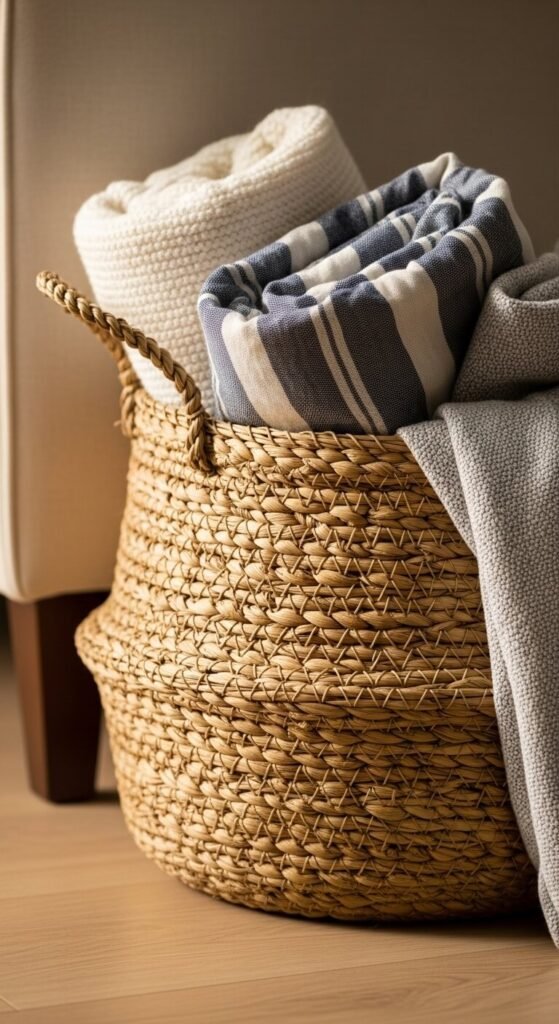
A basket filled with folded throws is practical storage disguised as decor — and it signals to guests that comfort is available and welcome in this home. Use a large woven basket — seagrass, rattan, or fabric-lined wire — and loosely fold two or three throws before placing them inside. Let the top throw spill slightly over the rim so the basket looks full and accessible rather than sealed and decorative. Large seagrass baskets cost $20 to $40 from home stores. IKEA and Target both carry good options at the lower end. Place the basket beside the sofa or armchair it serves so the connection between the blanket and the seating is obvious.
4. The Foot-of-Bed Fold
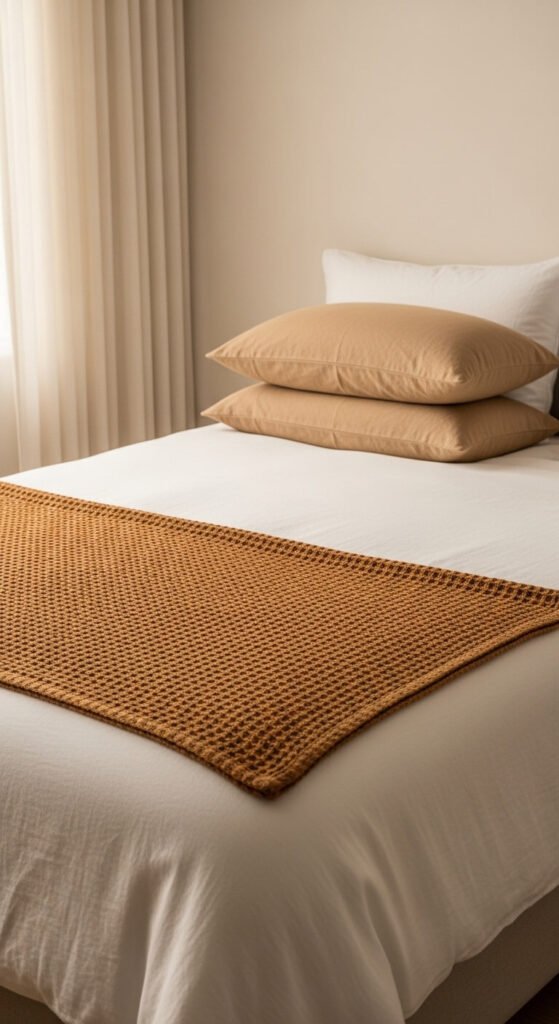
A throw blanket folded at the foot of the bed is one of the simplest ways to add layered texture and visual warmth to a bedroom without adding more pillows or changing bedding. Fold the throw into a neat, wide rectangle — roughly the width of the lower third of the bed — and lay it flat and centered at the foot. The throw should sit on top of the duvet rather than under it. Choose a throw in a complementary but contrasting color to the duvet for the best visual definition. A waffle-weave or linen throw works beautifully in this placement. Budget option: a large cotton scarf or lightweight blanket from a thrift store does the same job for $3 to $8.
5. The Armchair Cocoon
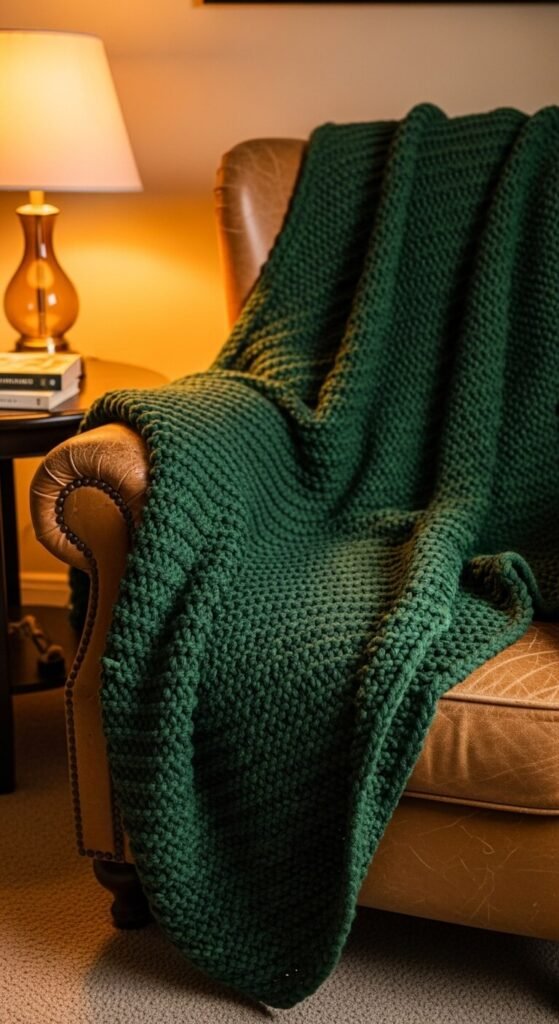
An armchair with a throw wrapped loosely around it looks like someone just got up from reading — and that sense of recent, comfortable occupation makes a room feel genuinely lived in. Tuck one end of the throw between the seat cushion and the chair side, then wrap the rest loosely around the back of the chair and let it trail over the seat. The throw should look as if it was pulled there and abandoned, not placed. Leather and velvet armchairs work especially well with this treatment — the contrast between the hard upholstery surface and the soft throw texture is very appealing. Any throw over 50 inches works for this placement.
6. The Styled Sofa Stack
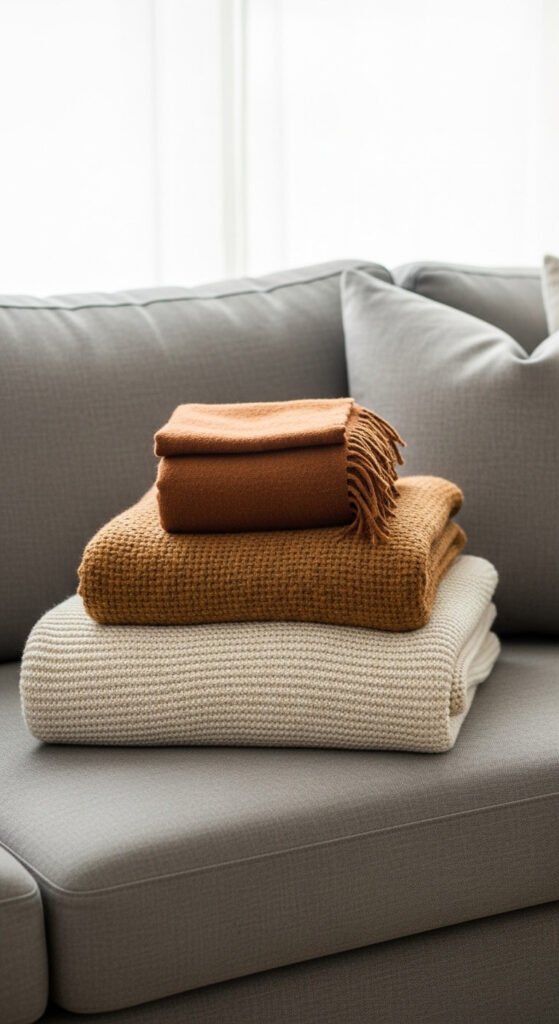
Stacking two or three folded throws at one end of a sofa creates a layered, editorial look that is commonly used in interior design photography and showroom styling. Fold the largest throw into a neat rectangle and lay it flat on the sofa cushion, fold a second slightly smaller throw on top, and a third on top of that. Alternate textures — knit, woven, fleece — rather than using the same fabric throughout. The stagger of sizes creates a visual pyramid. Use a color palette of three tones from the same color family — for example cream, camel, and rust — for a cohesive result. This works best on a wide sofa with at least three cushions.
7. The Reading Nook Wrap
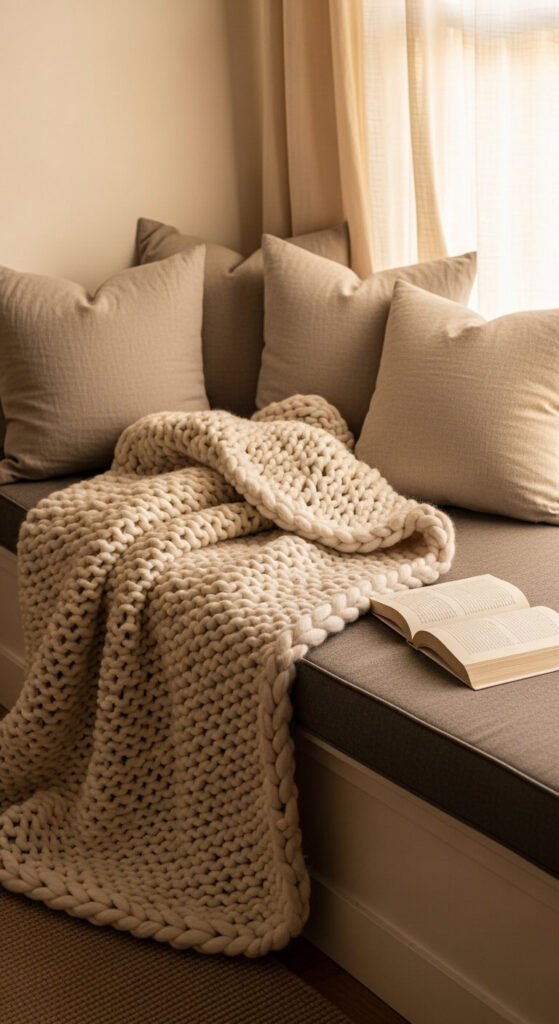
A reading nook with a generous throw already in place is an open invitation — it communicates that this corner is designed for staying a while. Use an oversized throw — at least 60 x 80 inches — so there is enough fabric to wrap around the shoulders while seated. A chunky knit, fleece, or sherpa throw works best in this placement because they are the warmest and most tactilely satisfying. Let the throw pool slightly rather than folding it neatly — a too-precise fold makes the space feel more decorative than functional. Oversized throws cost $20 to $50. Sherpa-lined options from Amazon and Target provide the best warmth-to-price ratio.
8. The Monochromatic Tone-on-Tone Look
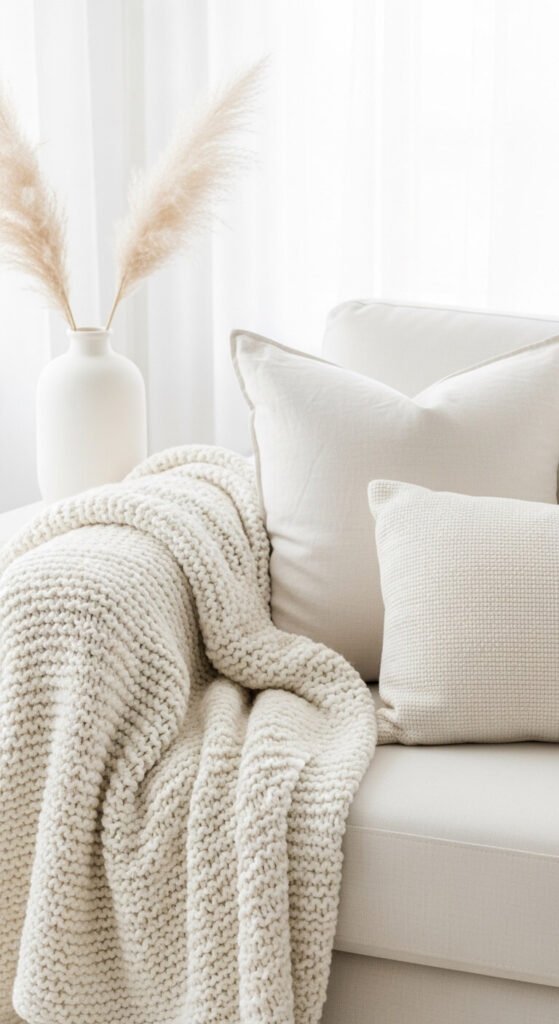
Monochromatic throw styling — using a throw that matches or closely coordinates with the sofa and pillows in the same color family — creates a calm, sophisticated look that feels intentional without being loud. Choose a throw within two shades of your sofa color and rely on texture variation rather than color contrast to create visual interest. A cream knit throw on a cream linen sofa works because the textures are completely different even though the colors are nearly identical. Pillows in the same pale palette but different fabrics — linen, velvet, cotton — complete the look. This style works best in minimalist, Scandinavian, and coastal interiors.
9. The Seasonal Rotation
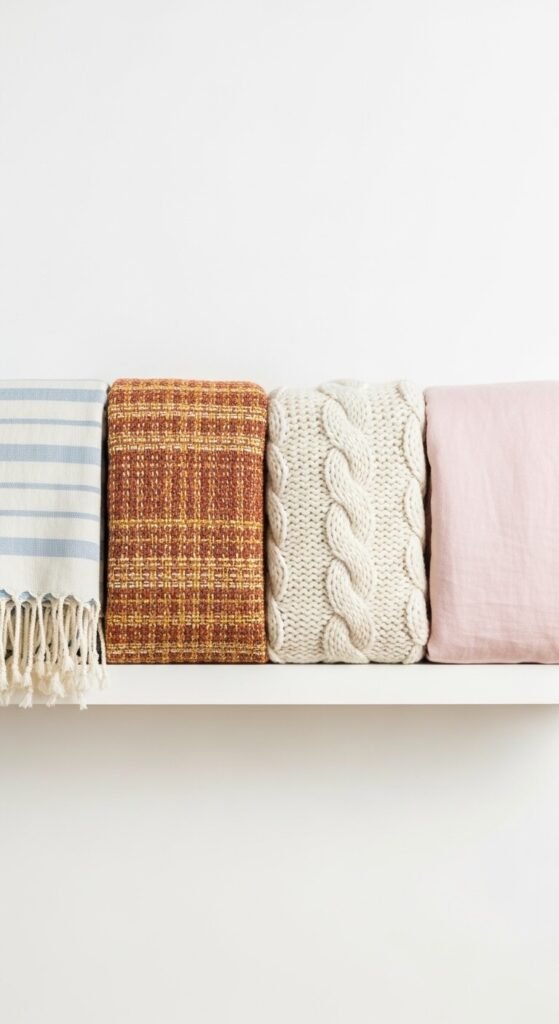
Swapping throw blankets with the seasons is one of the most cost-effective ways to refresh a living space four times a year without buying new furniture. Keep a lightweight linen or cotton throw for spring and summer and swap in a chunky knit or sherpa throw for autumn and winter. Store off-season throws in a labeled bin or basket. The cost of four seasonal throws from discount stores totals around $40 to $80 for a full year of rotation. Each swap takes two minutes. Use color to reinforce the season — warm amber and rust for autumn, pale blue and white for summer, cream and camel for winter.
10. The Boho Layered Look
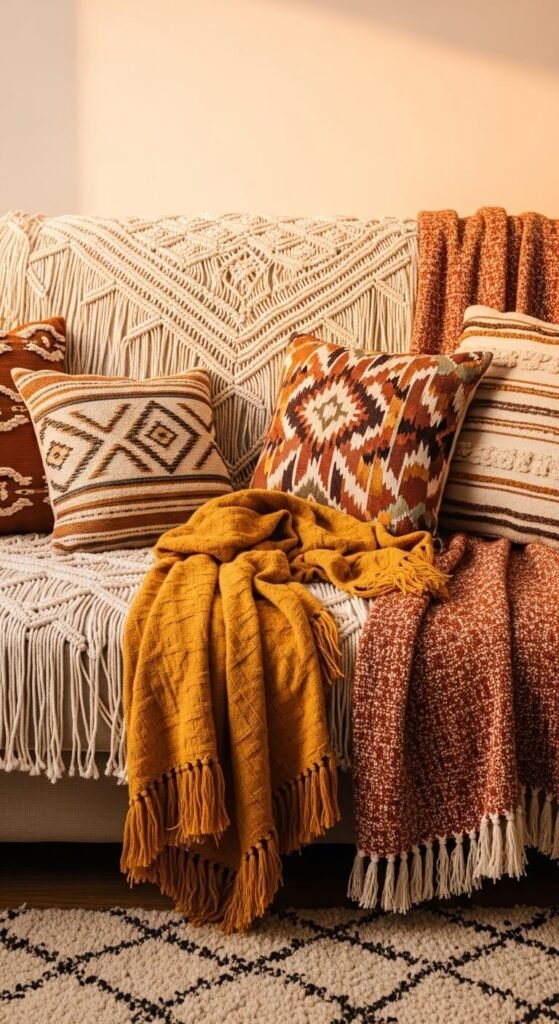
Boho throw styling is deliberately layered, textured, and slightly mismatched — the goal is abundance and tactile richness rather than precision. Use three or more throws in different textures and warm earthy tones — a macramé or woven throw for the back, a fringed blanket on the arm, and a soft solid color tumbled on the seat. Mix fringe, tassels, and open weaves. The key is keeping the color palette cohesive — stick to warm earth tones like mustard, rust, terracotta, and cream — even as the textures and patterns vary widely. Thrift stores and markets are excellent sources for woven and fringed throws at very low prices.
11. The Minimalist Single Throw
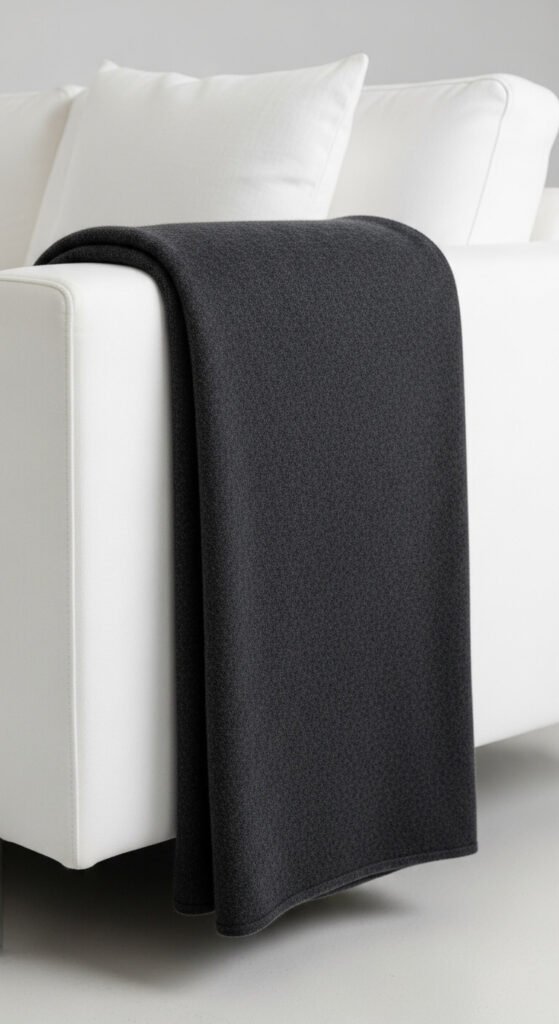
In a minimalist interior, a single carefully placed throw does more visual work than three casually draped ones. Choose one high-quality throw in a color that provides contrast against the sofa — a dark charcoal on white, a deep navy on cream — and fold it with sharp, precise edges. Drape it over the sofa arm so the folds are straight and even. Remove everything else. The restraint is the style statement. One well-chosen throw in a minimalist room costs the same as a cheap one but creates a completely different effect. A single throw from a quality brand like Pendleton or similar costs $40 to $80 but lasts many years.
12. The Bedroom Chair Drape
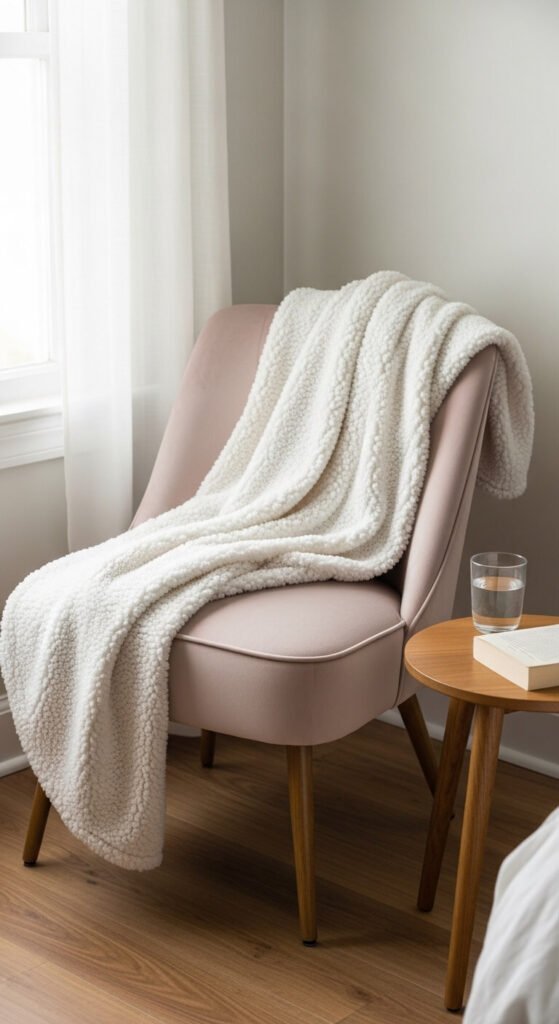
The bedroom accent chair — often the most underused piece of furniture in a home — becomes an inviting, purposeful corner when a good throw is draped across it. Use a sherpa, faux fur, or especially soft throw for a bedroom chair because the bedroom is a tactile space where materials should feel as good as they look. A pale blush, ivory, or warm grey throw on a velvet chair creates a layered, luxurious look without significant cost. Throw a throw across the seat and arm as if you just set it down. A sherpa throw from Target or Amazon costs $15 to $30 and provides excellent texture contrast with velvet upholstery.
13. The Color Accent Throw
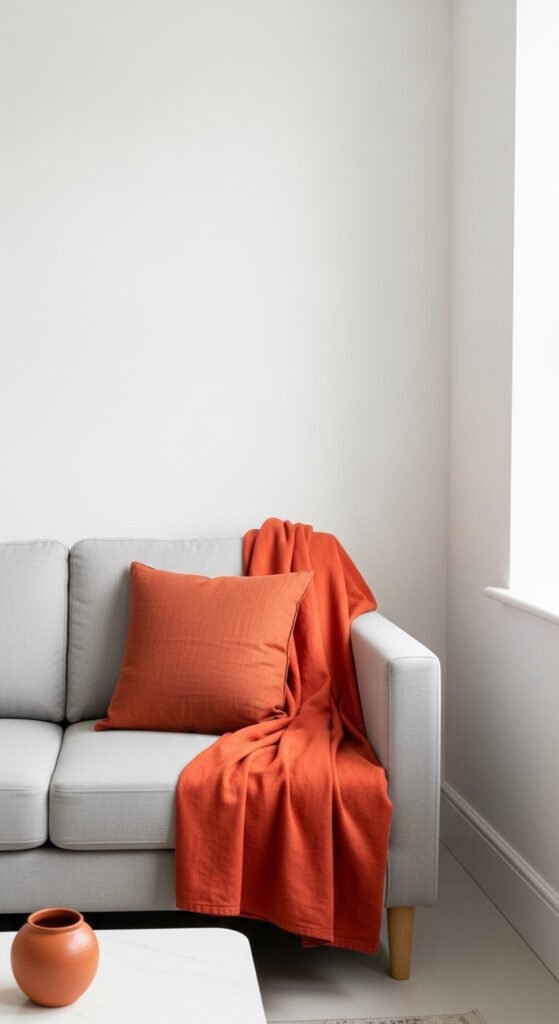
A single boldly colored throw on an otherwise neutral sofa is one of the fastest and cheapest ways to add a color accent to a room without painting a wall or buying new furniture. Choose one throw in a color that coordinates with one other object in the room — a cushion, a vase, a rug — to create a deliberate color echo throughout the space. Terracotta on grey, mustard on navy, or emerald on cream all work powerfully. One accent throw from a discount home store costs $12 to $25. This approach works in any room and can be changed out seasonally for almost no cost.
14. The Outdoor Throw Display
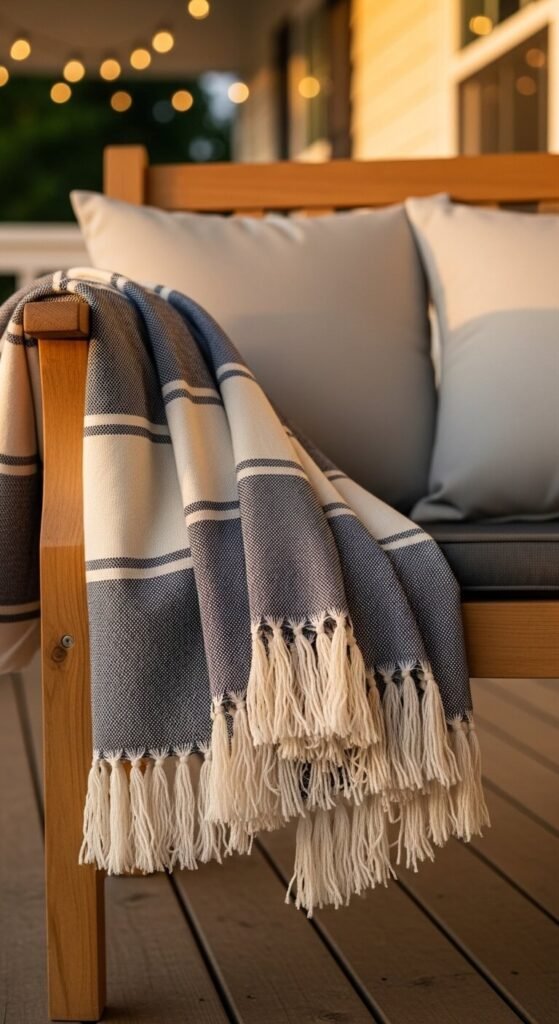
Throws are not exclusively indoor decor — weather-resistant outdoor throws used on porch benches, deck chairs, and garden furniture extend the cozy living-room feeling into outdoor spaces. Use throws specifically rated for outdoor use — acrylic or polyester outdoor throws resist moisture and fading far better than wool or cotton in exterior conditions. A waterproof outdoor throw costs $20 to $40 and transforms a plain porch bench or Adirondack chair into a destination. Fold or drape as you would indoors. Bring inside in heavy rain or store in a waterproof bin. Striped and solid color outdoor throws look especially good against natural wood and rattan furniture.
15. The Faux Fur Statement Throw
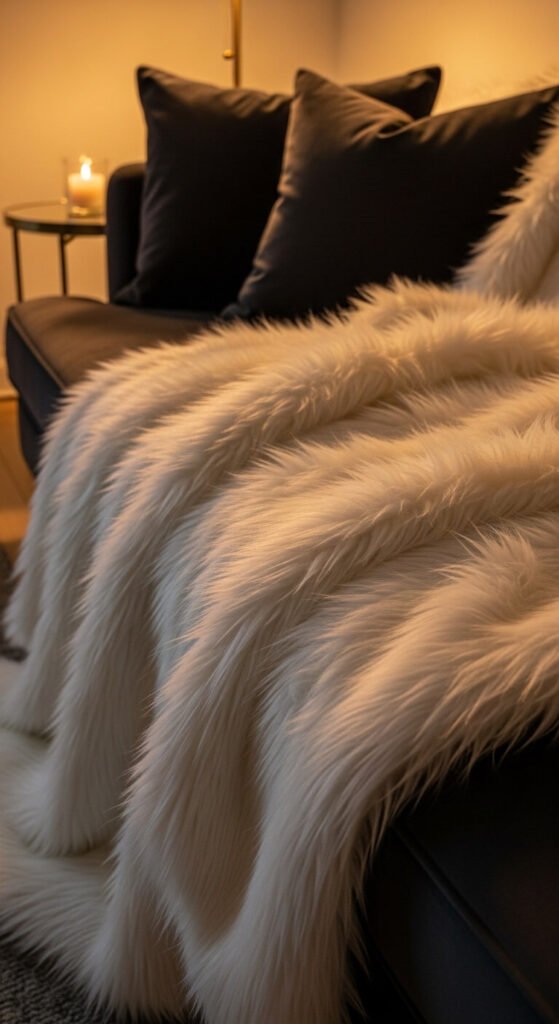
A faux fur throw is one of the most visually dramatic throw options available — the volume, the pile depth, and the light-catching texture make it look expensive and luxurious even when the actual cost is modest. Use a faux fur throw as a single statement piece rather than combining it with other throws — its visual weight is enough on its own. It works best on dark sofas where the contrast between the deep upholstery and the pale, light-catching fur is maximized. Ivory, cream, and white faux fur throws cost $20 to $50 from most home stores. Wash on a gentle cycle and air dry — tumble drying can damage the pile permanently.
16. The Knitted Throw DIY Display
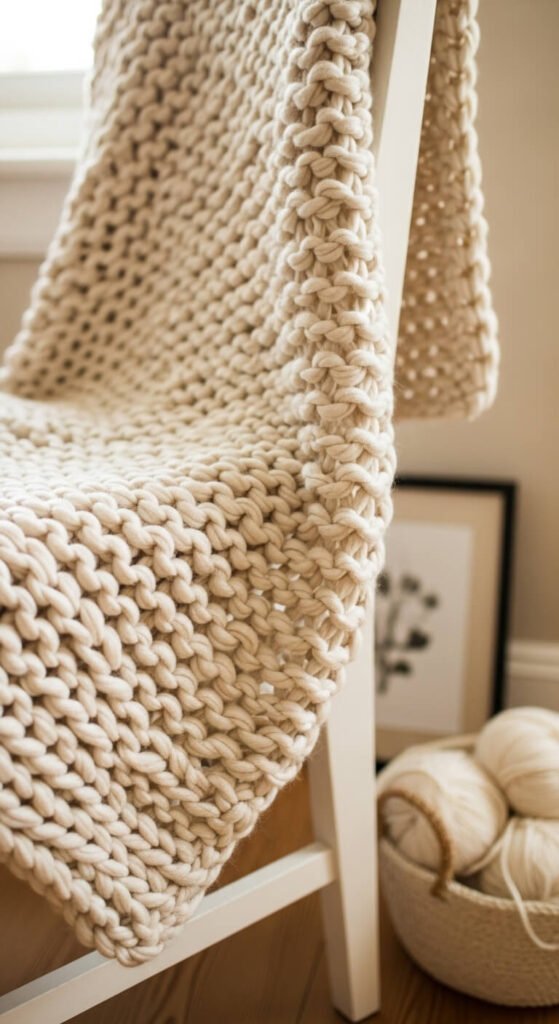
A hand-knitted or arm-knitted throw displayed prominently in a room communicates craftsmanship, warmth, and personal investment in the home — and it costs less to make than to buy. Arm-knitting a chunky throw from giant yarn takes approximately two to three hours and costs around $30 to $50 in materials for a single blanket. Chunky merino wool yarn is available from craft stores and online. The result is a genuinely beautiful, oversized knit throw that looks high-end. Display draped over a chair back or sofa arm where the large stitches are clearly visible. YouTube tutorials make the arm-knitting process accessible to complete beginners with no equipment needed.
17. The Entryway Bench Throw
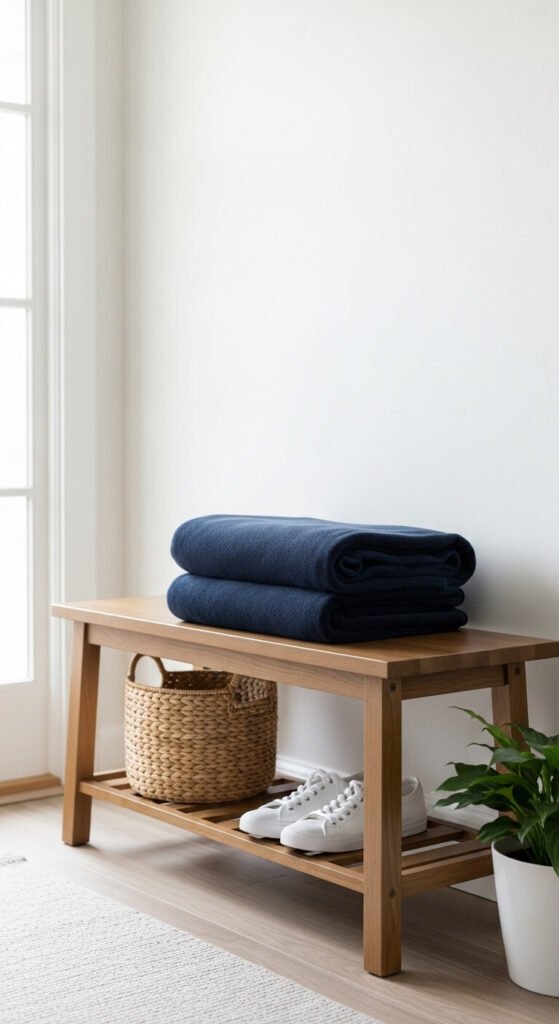
A throw blanket on an entryway bench is an unexpected and welcoming touch — it signals generosity and comfort right at the front door and adds color to an often-overlooked transitional space. Fold the throw neatly into a tight rectangle and center it on the bench seat rather than draping it. The entryway throw should look tidy rather than casual — this is a more formal placement than a living room sofa. Choose a throw in a color that coordinates with your entryway’s color palette. A dark navy, forest green, or deep burgundy throw on a natural wood bench looks especially grounded. Use a machine-washable throw here — entryway items collect dirt faster than interior pieces.
18. The Striped Throw Styling
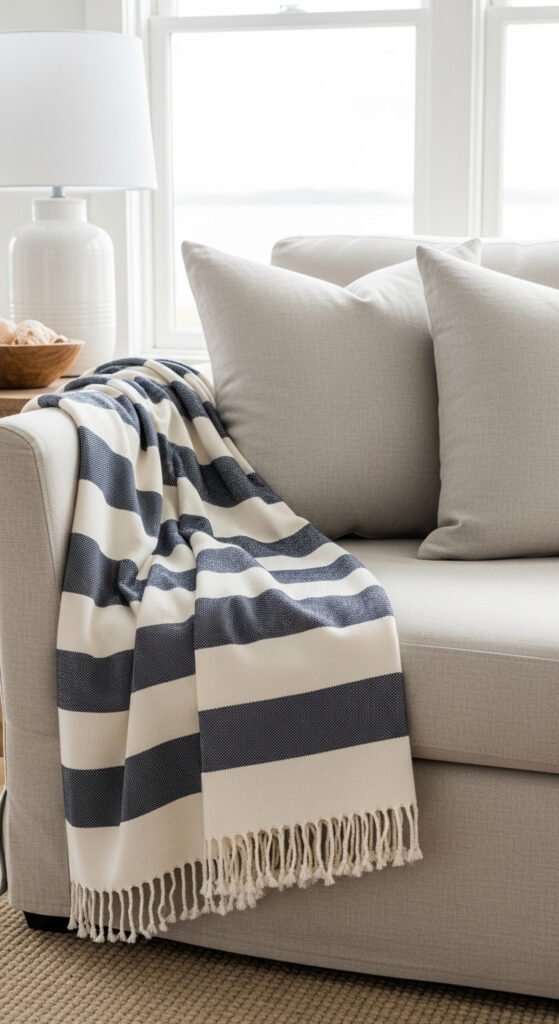
A striped throw adds pattern and visual movement to a room without introducing the complexity of a large-scale print — it is one of the safest and most universally appealing throw patterns available. Navy and cream, black and white, and rust and natural are the three most widely useful striped throw color combinations because they coordinate easily with almost any existing sofa color and room palette. Striped throws work especially well in coastal, farmhouse, and classic American interior styles. Most large retailers carry striped cotton or woven throws for $15 to $35. Display with the stripes running horizontally across the fold for the most visual impact from across the room.
19. The Nursery Throw Display
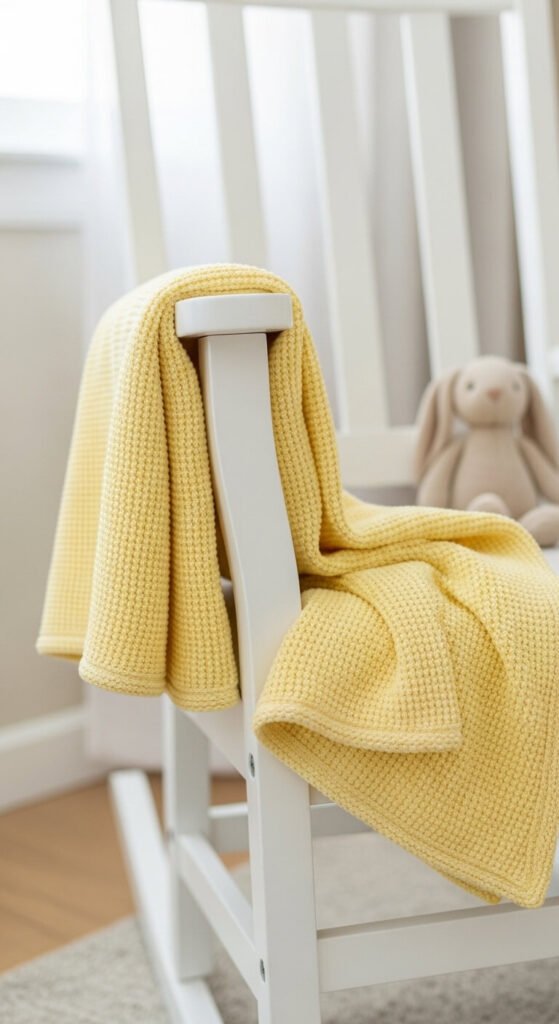
A throw or blanket draped over a nursery rocking chair is functional — it is used during night feeds — and decorative at the same time. Choose a cotton cellular baby blanket or a very soft muslin throw rather than a chunky knit for nursery use — loose-weave blankets create a risk in a baby’s sleep space but are safe when used for nursing and rocking. Drape neatly over the chair arm so it is within easy reach during nighttime use. Pale yellow, mint, or soft grey blankets coordinate with most nursery color schemes. A quality cotton cellular blanket costs $8 to $20. Keep a second one nearby for immediate access when the first needs washing.
20. The Eclectic Pattern Mix
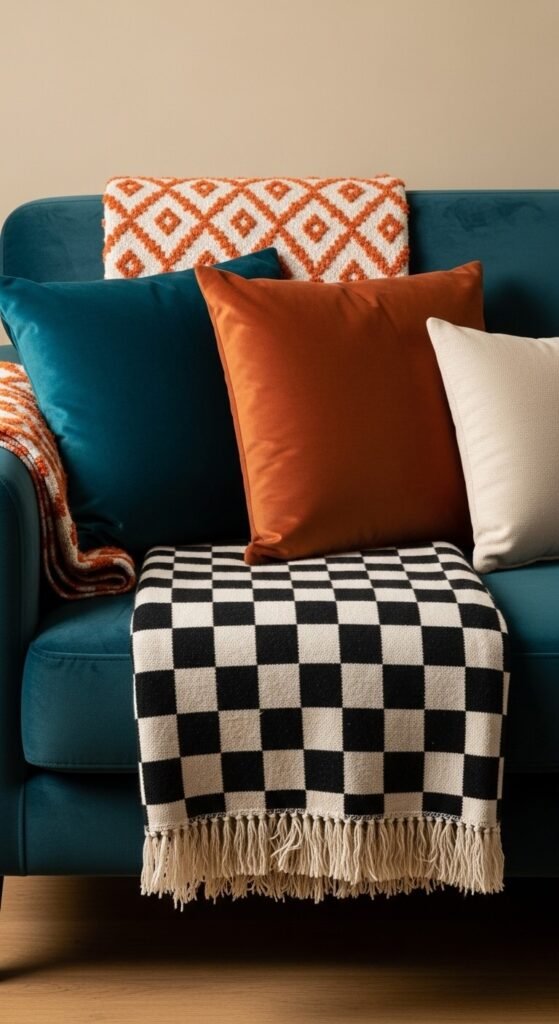
Mixing patterned throws works when the patterns operate at different scales and the color palette connects them. Use one large-scale pattern and one small-scale pattern — a large geometric and a small check, for example — rather than two patterns of the same visual weight. The colors in both patterns should share at least one common tone. A Moroccan geometric in orange and cream with a small black and white houndstooth connected by the cream tone works well. Eclectic throw combinations cost the same as matching ones — the skill is in the selection, not the price. Thrift stores and markets often have the most interesting patterned throws at the lowest prices.
21. The Floor Throw Pool
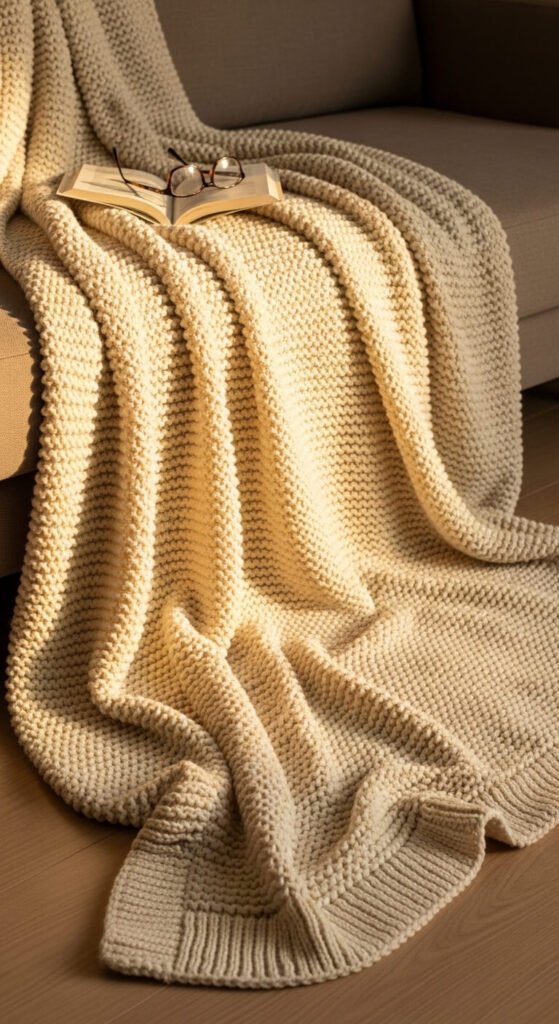
A throw pooled deliberately on the floor beside a sofa or chair is an advanced styling move — it looks casual, but the effect communicates the kind of relaxed, lived-in luxury that is very hard to fake with other decorating approaches. Use an oversized throw — at least 60 x 80 inches — and gather it loosely rather than folding it before placing it on the floor. The pooling effect only works with generous fabric. Push the gathering toward one side so the throw appears to have slid naturally from the sofa. This works best in rooms with warm-toned wood floors where the floor itself becomes part of the composition.
22. The Matching Throw and Pillow Set
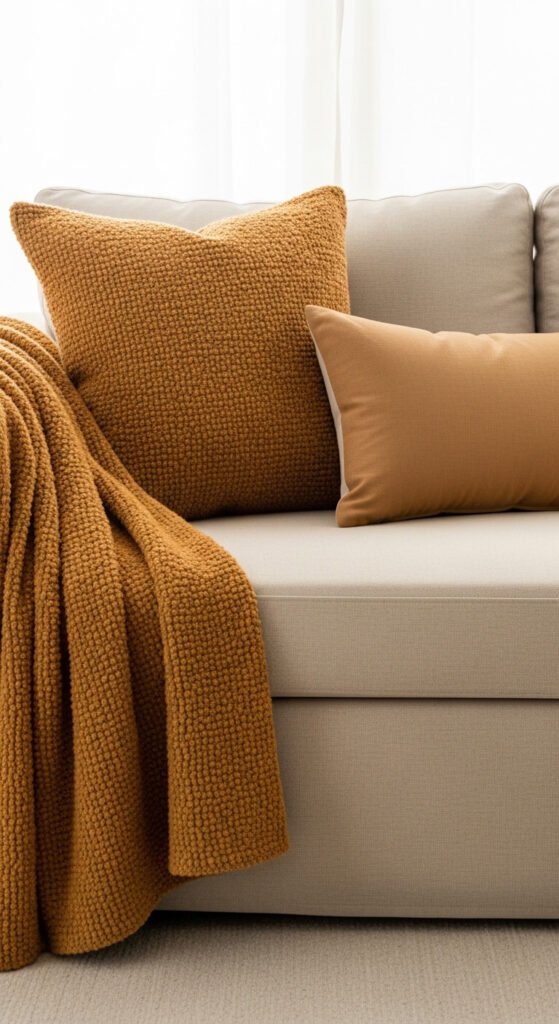
A throw and pillow set in matching or identical fabric is the easiest way to create a polished, coordinated sofa look without any styling skill — the matching takes care of the composition automatically. Boucle, waffle-weave, and linen are the three fabrics most commonly available as matched throw-and-pillow sets and all three provide excellent texture interest. Many home retailers sell these sets for $30 to $60 total for a throw plus two pillows. Alternatively, buy extra fabric and make a simple pillowcase from the same roll as the throw — a basic envelope pillowcase requires no sewing machine, just fabric glue and a fold-and-press technique.
23. The Holiday Seasonal Display
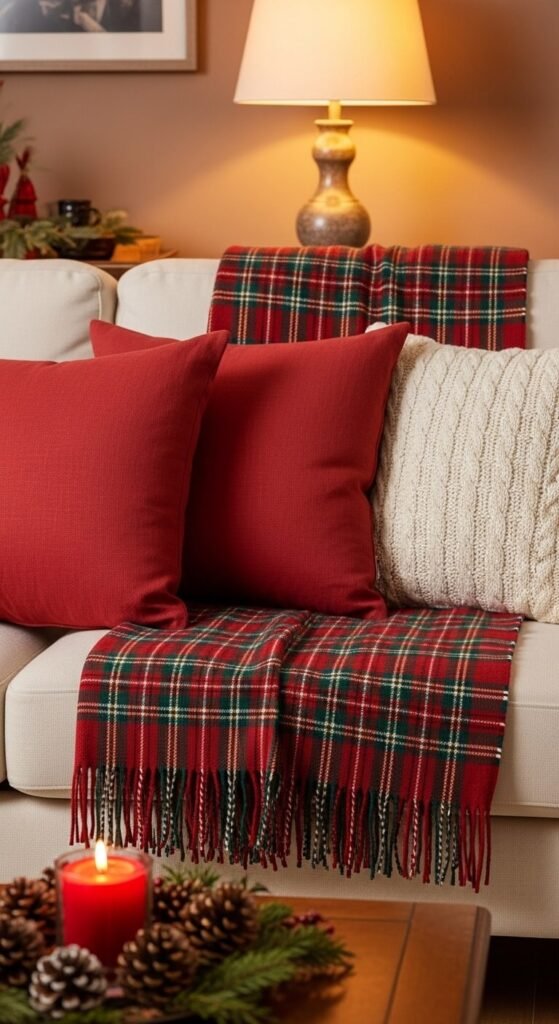
Holiday throw styling is one of the most effective and lowest-commitment ways to decorate for a season — swap one or two throws for a seasonal pattern and the entire room shifts its feeling. A classic red and green tartan or buffalo check throw transforms a neutral living room into a genuinely Christmas-feeling space without tinsel or plastic decorations. After the holiday, fold and store in a labeled bin and return the usual throw to the sofa. Tartan and plaid throws cost $15 to $35 from holiday sections at major retailers. They look best paired with simple cushions in solid red, cream, or forest green rather than competing Christmas-themed prints.
24. The Workspace Throw
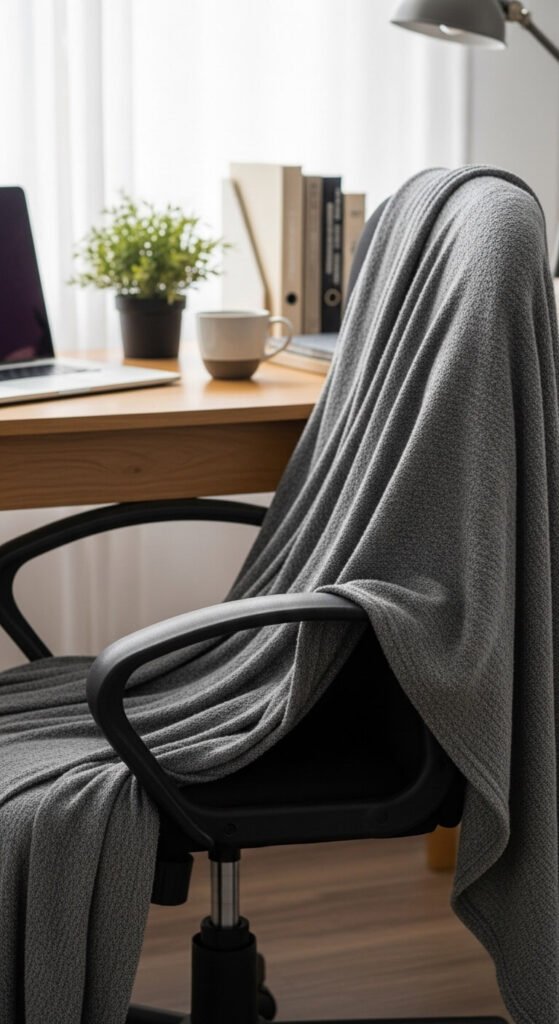
A throw draped over a home office chair is a practical and underused idea — cold offices and late working sessions are exactly the situations a throw was designed for. Use a lightweight throw rather than a chunky knit for a desk chair — something that can be pulled across the shoulders without restricting arm movement. A soft grey, navy, or dark green throw on an office chair looks deliberate and calm rather than messy. It should hang over the chair back rather than pooling on the seat. A lightweight cotton or thin woven throw costs $12 to $25. Choose a machine-washable option — office throws collect more wear than living room ones and need regular washing.
Conclusion
A throw blanket is one of the most affordable and immediate decor changes available to any home. For $15 to $40, you can shift the feeling of an entire room — add warmth to a cold corner, introduce a color accent to a neutral sofa, create a reading nook from an empty chair, or refresh a bedroom for a new season. The styling is never complicated. Drape, fold, tuck, or tumble. Let the texture do the work. Start with one throw in the room that feels the most unfinished and place it on the piece of furniture you use most. The improvement will be immediate, the cost will be minimal, and the comfort will be the kind that stays.