
A vase is one of the most misunderstood decorative objects in a home. Most people treat it as a vessel — something that holds flowers when flowers are available and sits empty on a shelf the rest of the time. But a well-chosen vase, placed correctly, is a sculptural object in its own right. Its silhouette, surface texture, material, and color carry visual weight whether or not anything sits inside it. And when you do fill it — with fresh flowers, dried botanicals, a single branch, or even a cluster of pencils — the combination of vessel and contents creates a display that anchors a surface, adds organic life, and communicates something specific about the room it sits in. These 23 vase decor displays cover every surface, every style, and every budget, with practical guidance on grouping, proportion, stem selection, and the specific choices that make a vase arrangement look curated rather than accidental.
1. The Three-Vase Cluster
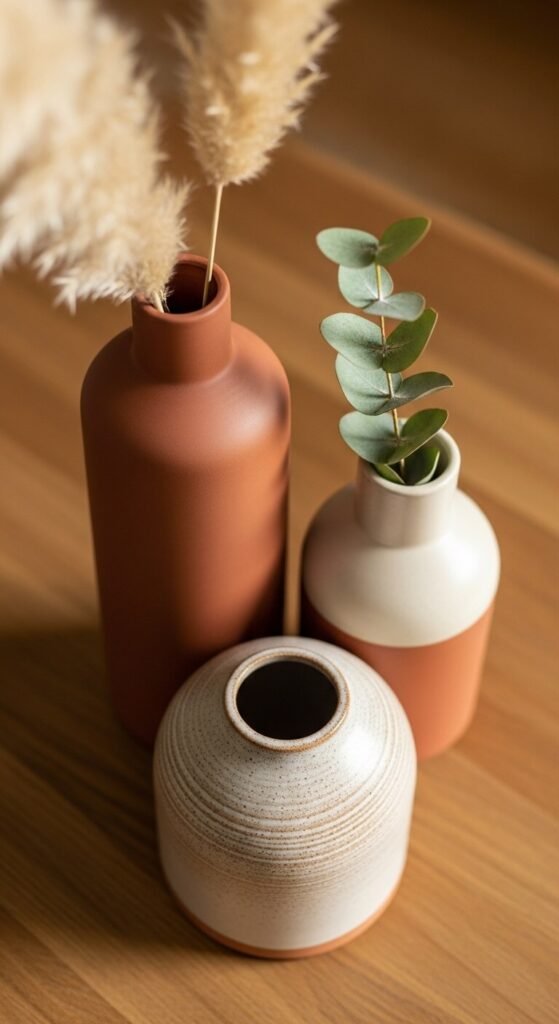
Grouping three vases of different heights together creates a layered, triangular composition that is one of the most fundamental and reliable decor styling principles. Use an odd number — three or five — and vary the heights significantly, with the tallest approximately twice the height of the shortest. Keep the color palette cohesive — same material or same color family — while varying the shape and size. Terracotta, cream, and sage green work well together. All three vases from thrift stores or discount home sections cost $3 to $15 total. The triangular height grouping creates visual movement across the surface and looks more deliberate than three vases of the same size placed side by side.
2. The Single Statement Vase
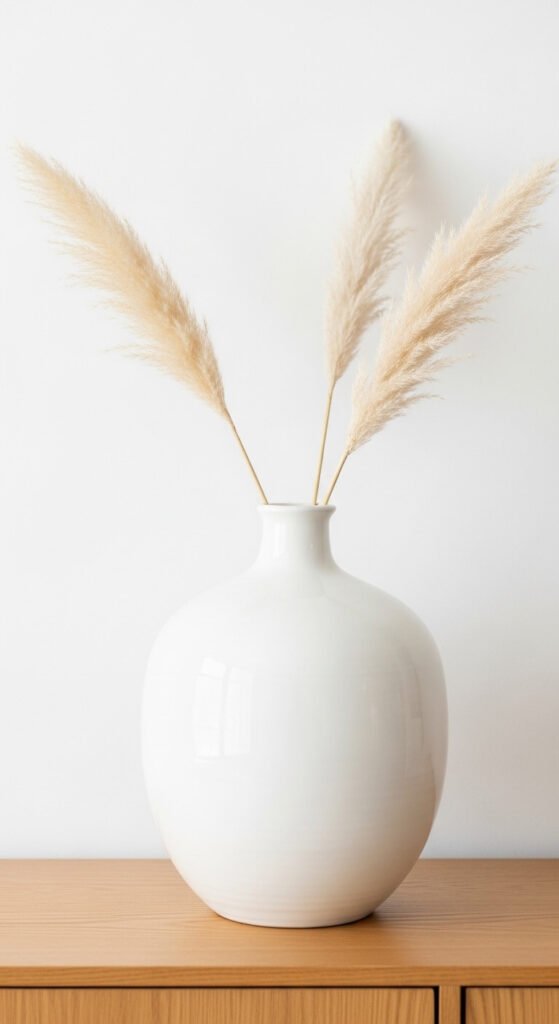
A single oversized vase — significantly larger than any other object on the surface — functions as the primary sculptural element on a shelf or sideboard without requiring a group arrangement around it. Choose a vase that is at least one-third the height of the surface it sits on for the correct visual weight. A tall white ceramic or stoneware vase filled with three stems of dried pampas grass or a few long eucalyptus branches creates a complete, minimal display that looks finished on its own. A large ceramic vase costs $20 to $60 from most home stores. Dried pampas stems cost $5 to $15 for a small bundle from craft stores or online.
3. Dried Botanicals in Bud Vases
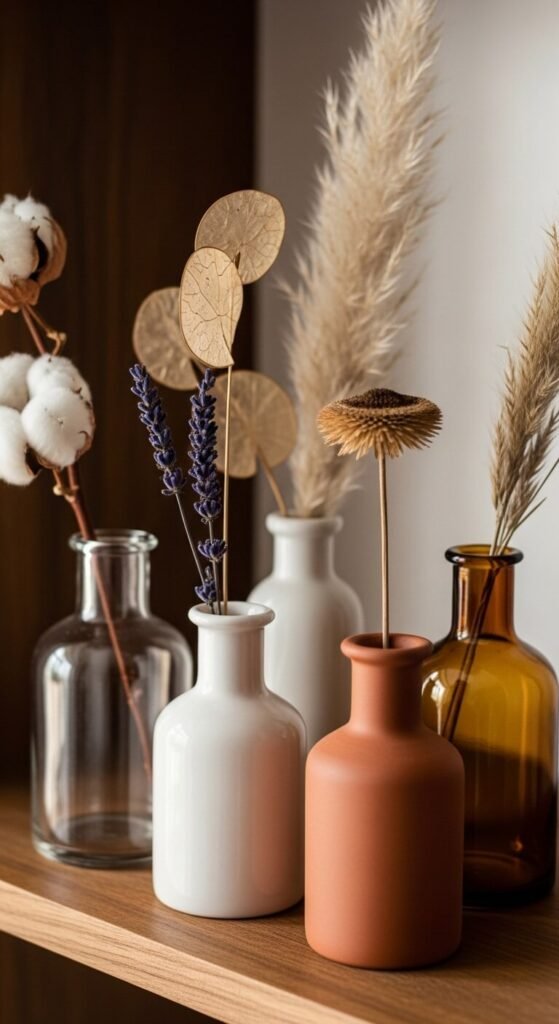
A collection of small bud vases grouped together — each holding a single dried botanical stem — creates a display that looks individually curated while remaining completely low-maintenance, since dried stems require no water changes and last indefinitely without wilting. Use five to seven bud vases in different materials and shapes but within a cohesive color range — clear glass, white ceramic, and amber glass all work together naturally. Each bud vase costs $1 to $5 from thrift stores, IKEA, or the dollar section of most home stores. Dried stems from a craft store or foraged from a garden cost almost nothing. A full five-vase dried botanical grouping costs under $25 total.
4. The Floor Vase with Tall Branches
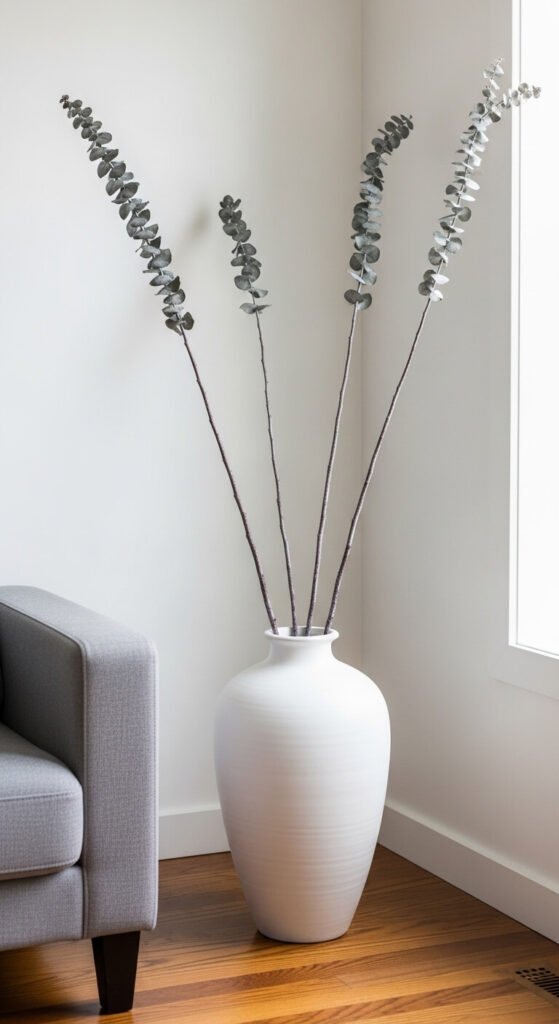
A large floor vase — 18 to 30 inches tall — placed directly on the floor in a corner or beside furniture operates at a completely different scale from shelf and table vases and creates an architectural presence in a room that no standard-height vase can match. Fill a floor vase with long branches — dried eucalyptus, pampas grass, or locally foraged bare winter branches — that extend upward to at least one and a half times the height of the vase itself. This height ratio prevents the stems from looking stubby relative to the vessel. A large ceramic floor vase costs $30 to $100. Foraged bare branches from a garden or park are free. Dried pampas grass bundles cost $10 to $25.
5. The Monochromatic White Vase Display
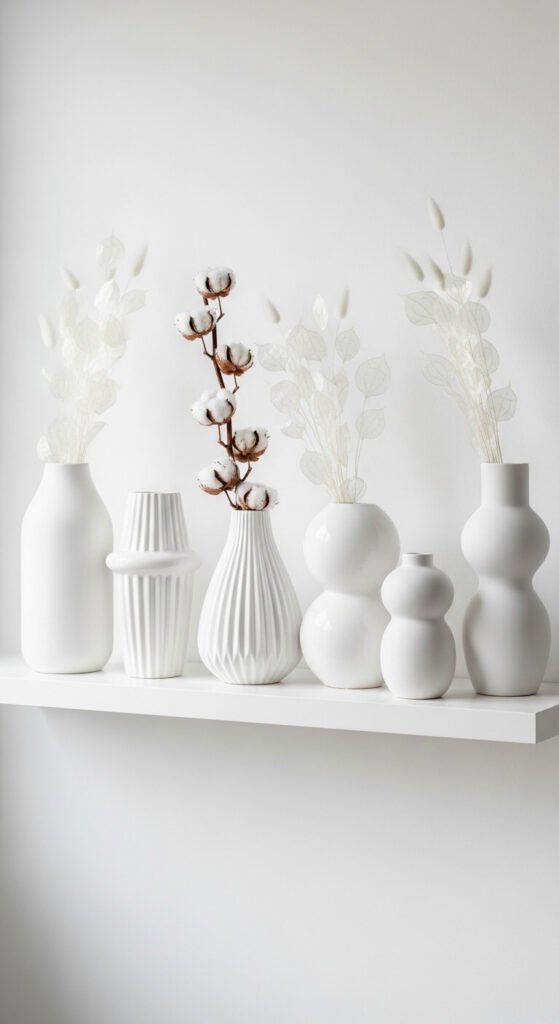
A monochromatic white vase collection — all white, all different shapes — creates a cohesive, minimal display where the variety of form provides all the visual interest without any color contrast. The effect relies entirely on shape variation, so choose vases that differ significantly in height, width, silhouette, and surface texture — a tall ribbed cylinder beside a low wide bowl beside a bulbous globular vase beside a narrow bud vase. All white ceramic vases cost $3 to $20 each from most home stores and discount retailers. Mix matte and glossy finishes for subtle texture contrast within the white palette. Add one or two dried white stems for a finishing touch without breaking the monochromatic scheme.
6. The Colorful Vintage Glass Vase Collection
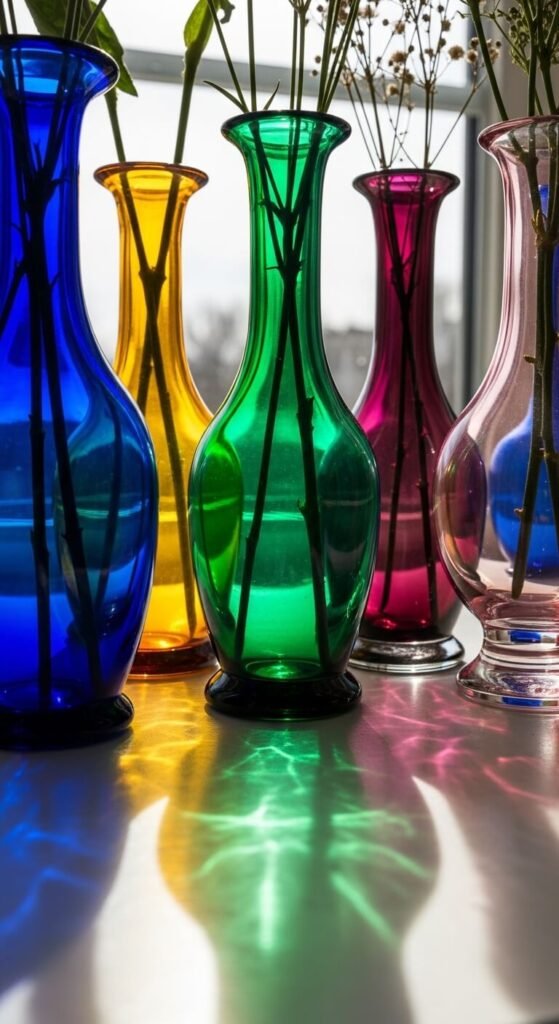
A collection of colored vintage glass vases grouped on a windowsill is one of the most spectacular uses of natural light in home decor — when backlit by daylight, each glass vase glows in its own color and casts small colored light shadows onto the surrounding surface. Position colored glass vases on a south or west-facing windowsill for the strongest backlit glow in the afternoon. Vintage glass vases in cobalt, amber, emerald, and purple are among the most common thrift store finds at $1 to $5 each. Group densely — the overlapping color glow from closely placed glass vases is more beautiful than when they are spaced apart.
7. The Propagation Vase Station
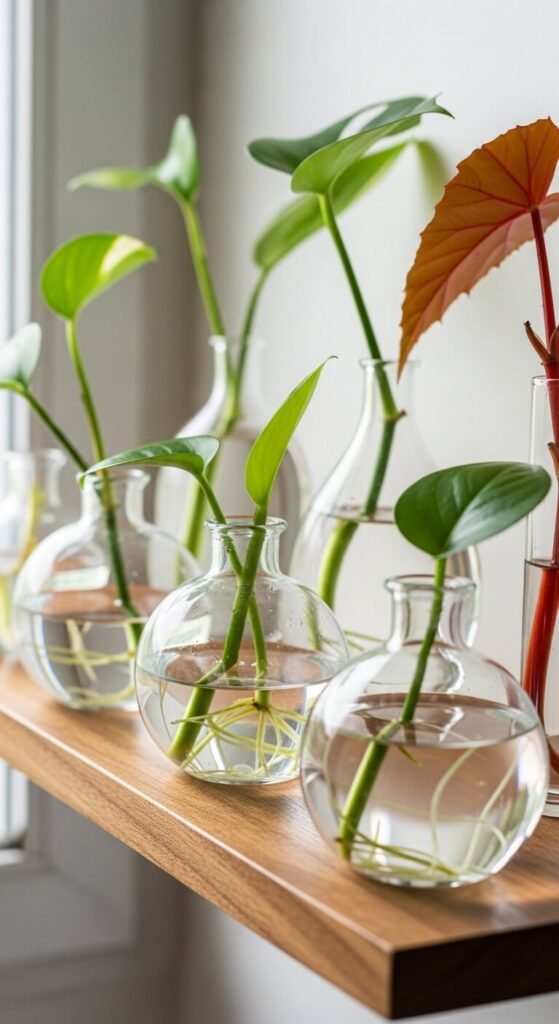
A propagation vase station — a group of small clear glass vases each holding a plant cutting in water — is functional, beautiful, and completely self-renewing because new cuttings replace old ones continuously without any additional cost. Take cuttings from existing houseplants — pothos, tradescantia, begonia, coleus, and many succulents propagate readily in water. Place in small clear glass vases on a bright shelf near natural light. The visible roots growing through the clear glass are part of the display’s appeal — they show process and growth in a way that potted plants do not. Small clear propagation vases cost $1 to $5 each from IKEA, Amazon, or most home stores. The cuttings are free.
8. The Vase with a Single Stem
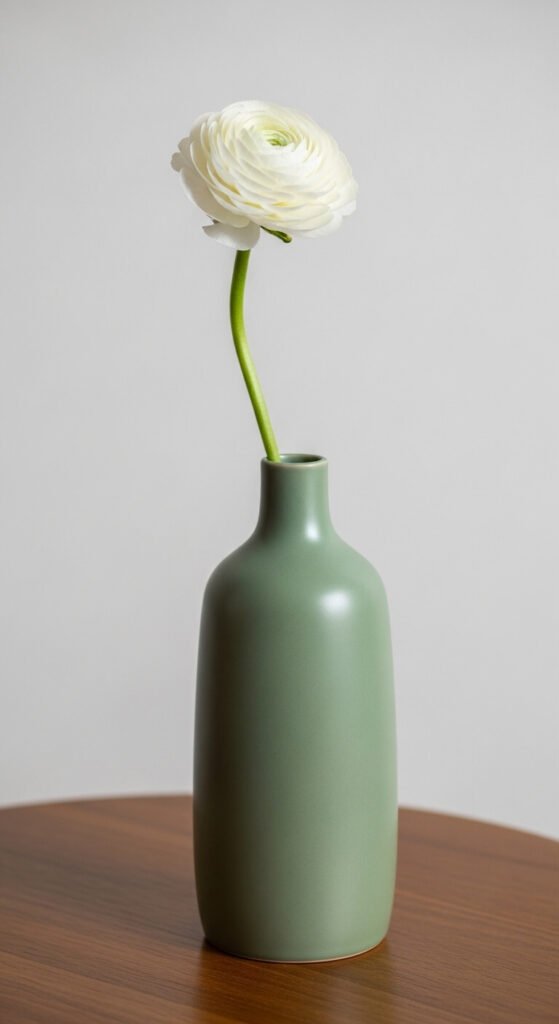
A single well-chosen stem in a well-chosen vase is often more visually impactful than a full mixed arrangement — the restraint focuses all attention on the individual stem and the vessel holding it, turning both into objects of genuine contemplation. Choose a stem with a strong silhouette — a fully open peony, a single long-stemmed tulip, a sculptural monstera leaf, or a curved branch — and position it slightly off-center rather than perfectly centered within the vase opening. This slight asymmetry looks intentional rather than accidental. A single stem from a grocery store bunch costs $1 to $3. A single exotic stem from a specialty florist costs $5 to $15. Either approach produces the same effect when the vessel is right.
9. The Mantel Vase Arrangement
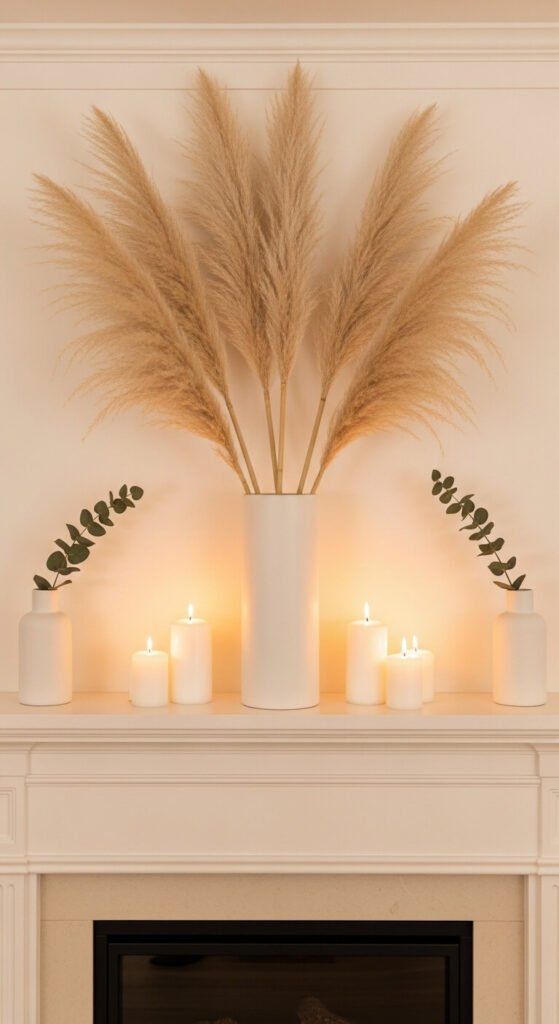
A vase arrangement centered on a fireplace mantel — with the main vase in the center and smaller complementary vases flanking it — creates a formal, symmetrical mantel display that functions as the room’s visual anchor throughout the year regardless of whether the fireplace is in use. Use the largest vase in the center as the apex of a triangular arrangement with descending height objects on each side. Dried botanicals in the central vase require no maintenance and hold their shape for months. A tall pampas grass or dried reed arrangement in a white ceramic vase costs $25 to $50 total. Pair with candles on the mantel sides at a slightly lower height than the vase.
10. The Textured Ceramic Vase Display
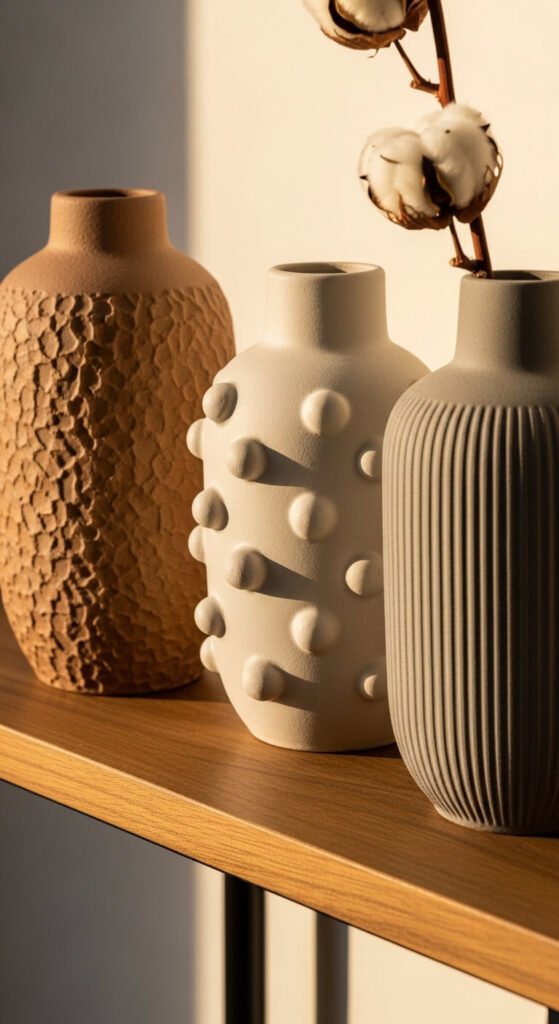
Grouping ceramic vases chosen specifically for surface texture — hammered, ribbed, dimpled, rough-fired — creates a tactile display where the physical quality of the object is the decorative point, independent of color or contents. Side lighting from a nearby lamp or window dramatically reveals surface texture, so positioning a textured vase grouping near a directional light source is the key to getting the most from the display. Handmade or artisan-textured ceramics from Etsy, local craft markets, or pottery studios cost $20 to $60 each but are genuinely unique. Budget-friendly textured options from H&M Home, Target, and TJ Maxx cost $8 to $25 each. Empty textured vases in earth tones need no floral content — the texture is sufficient.
11. The Kitchen Counter Herb Vase
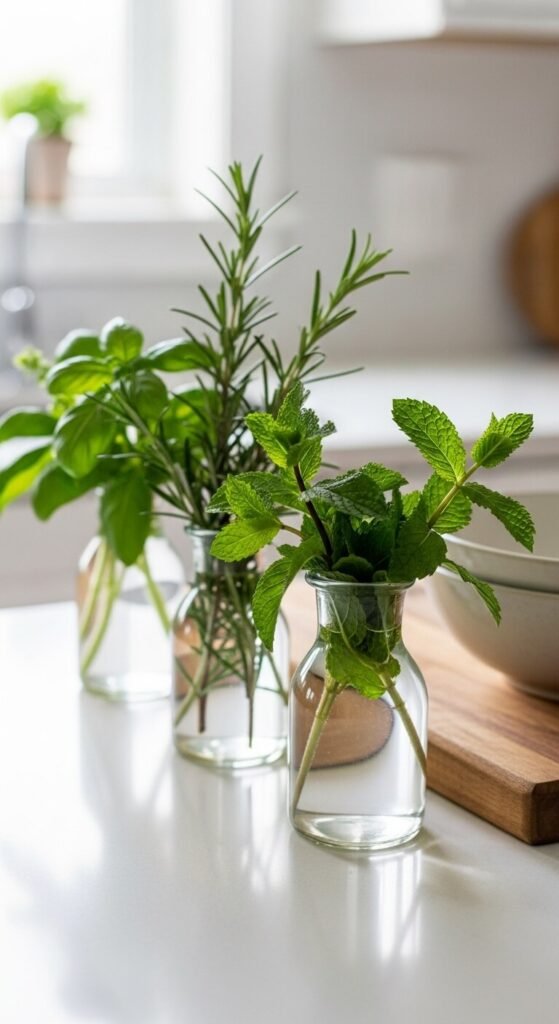
Fresh herb cuttings in small glass vases on a kitchen counter are both decorative and functional — they add living green color to the most-used room in the home while keeping frequently used herbs within arm’s reach during cooking. Cut herb sprigs about six inches long and place in shallow water, changing the water every two to three days to keep them fresh. Basil, rosemary, mint, and thyme all hold well as stem cuttings in water for five to ten days. Three small bud vases from IKEA cost $1 to $3 each. Fresh herb bunches from a grocery store cost $1 to $2 each. Total kitchen herb vase display cost: under $15.
12. The Tall Vase with Branches
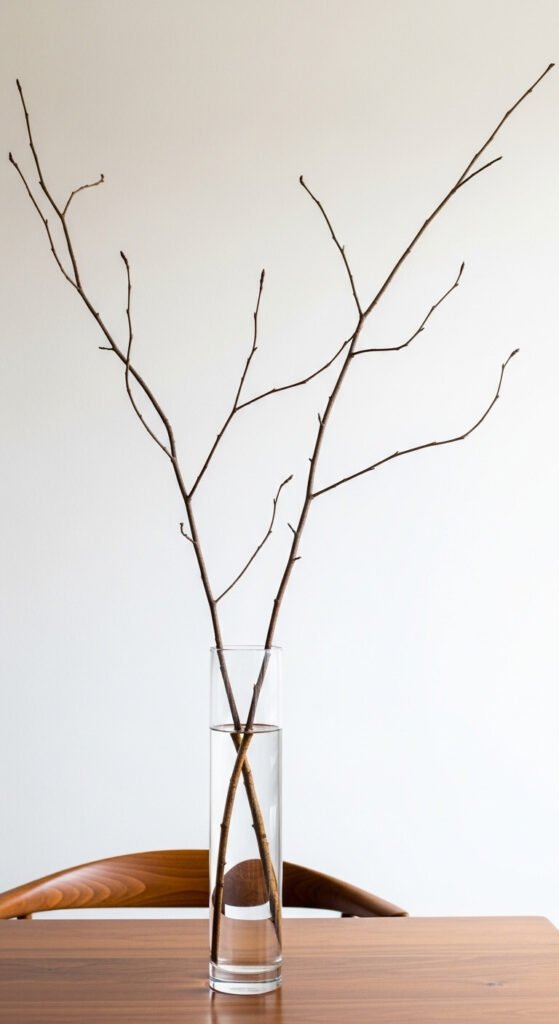
Long bare branches — cut from a garden, a park, or a florist — placed in a tall cylindrical vase create one of the most architecturally striking and lowest-cost decorative displays available. The branch arrangement requires no flower cutting skill, just the selection of branches with interesting silhouettes — curved, forked, angular, or textured bark. Cherry blossom, magnolia, quince, and birch branches are especially beautiful for this purpose. During winter, bare branches have particularly strong silhouettes. Forage from your own garden or ask a neighbor — most pruned branches would otherwise be discarded. A tall glass vase costs $5 to $20 from IKEA or most home stores. The branches themselves are free.
13. The Bathroom Counter Vase
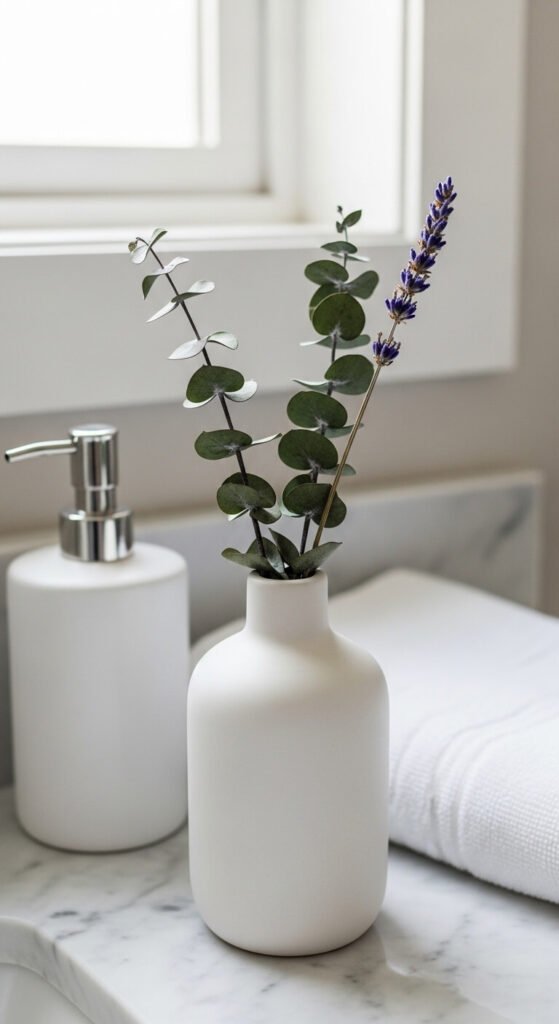
A small vase with dried botanicals on a bathroom counter creates a spa-like quality in one of the most personal rooms of the home — the organic textures and natural tones of dried eucalyptus or lavender provide a visual contrast to the hard surfaces of marble, tile, and chrome that dominate most bathrooms. Use dried rather than fresh stems in a bathroom vase — the humidity of a bathroom shortens the life of fresh flowers significantly, while dried botanicals last indefinitely and continue to release gentle fragrance as the room fills with steam. A small ceramic or glass bud vase costs $2 to $8. A bundle of dried eucalyptus costs $3 to $8 and lasts several months.
14. The Dining Table Centerpiece Vase
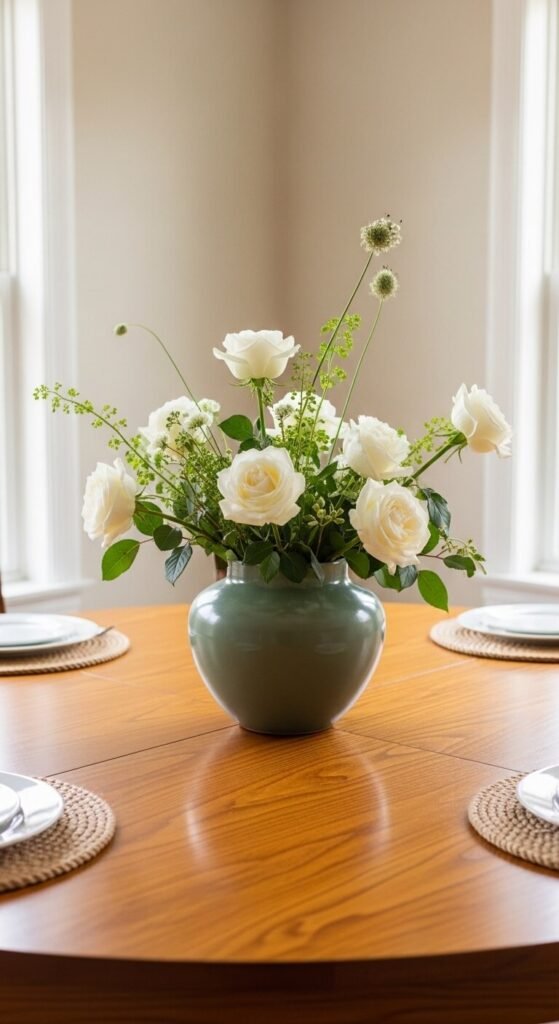
A centerpiece vase arrangement on a dining table should be wide rather than tall — a low, spreading arrangement allows conversation across the table without obstruction, which a tall narrow arrangement prevents. Use a wide-mouth, low-profile vase — a squat ceramic bowl, a wide-neck stoneware vessel, or a low glass bowl — and arrange stems loosely so they spread outward rather than upward. The arrangement should sit no higher than 10 to 12 inches from the table surface. Grocery store flowers in three coordinating shades cost $8 to $15 per bunch. Cut stems short and arrange in a tight cluster rather than long stems in a narrow vase for the most impactful low centerpiece.
15. The Bookcase Vase Accent
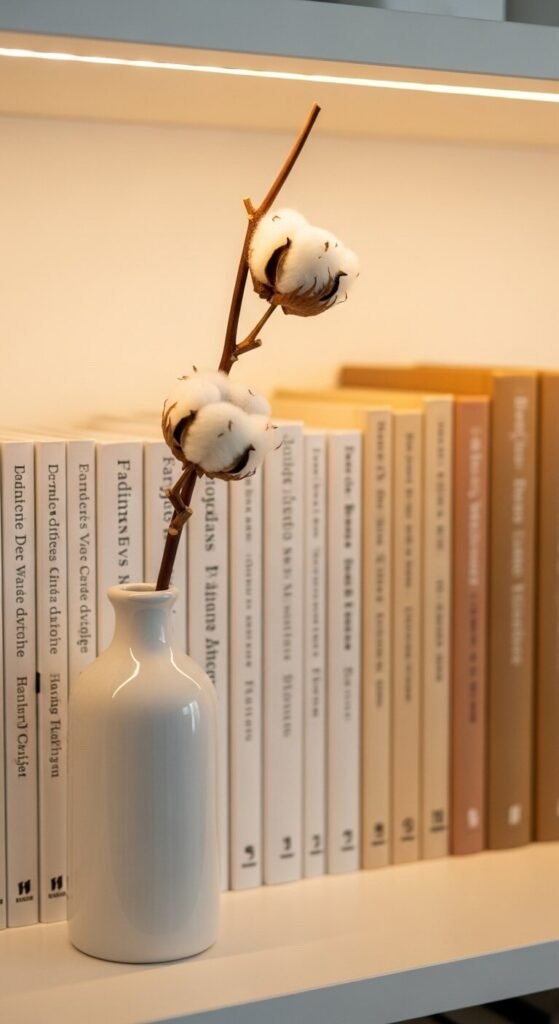
A small vase placed in front of book spines on a bookcase shelf creates a layered depth — the books form a patterned backdrop and the vase with its stem content sits in the foreground as an accent object that gives the eye somewhere to rest. Use a small, simple vase — nothing that competes too strongly with the books behind it. A single dried stem, a short sprig of eucalyptus, or a small air plant in a bud vase provides just enough organic life to make the shelf feel considered without cluttering it. Organize books by color gradient behind the vase for maximum visual harmony. A small white or clear vase from the dollar section of a home store costs $1 to $5.
16. The Entryway Console Vase Display
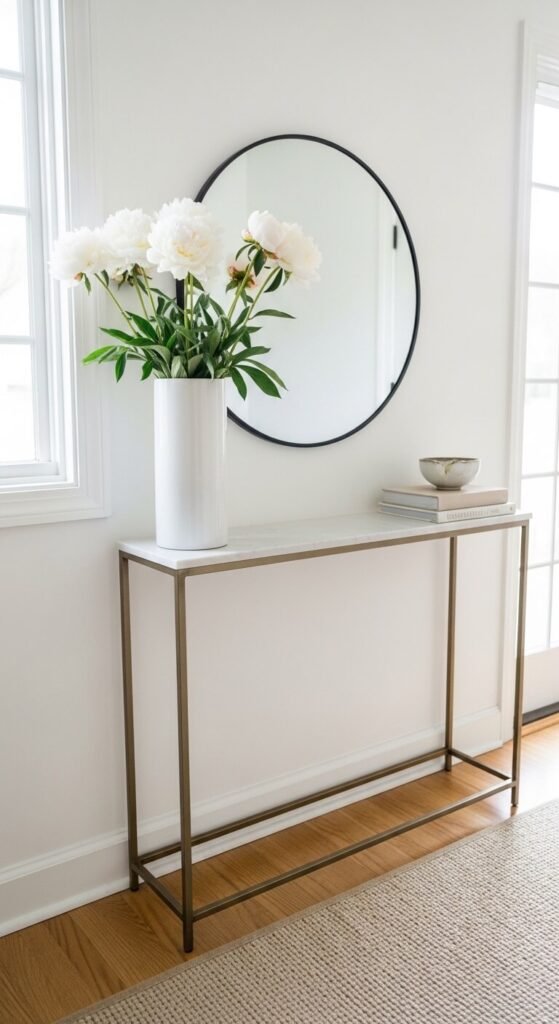
A console table in the entryway with a tall vase of flowers on one side creates the most welcoming possible introduction to a home — fresh flowers at the front door communicate generosity and care from the first step inside. Position the vase toward one end of the console rather than centered, and keep the opposite end clear or with a single low object — a small bowl, a stack of books. The asymmetric placement looks more relaxed and intentional than centering everything. Grocery store peonies, tulips, or eucalyptus cost $5 to $12 a bunch. A tall narrow vase from IKEA costs $5 to $12. Total entryway vase cost: under $25.
17. The Bedside Vase with Dried Flowers
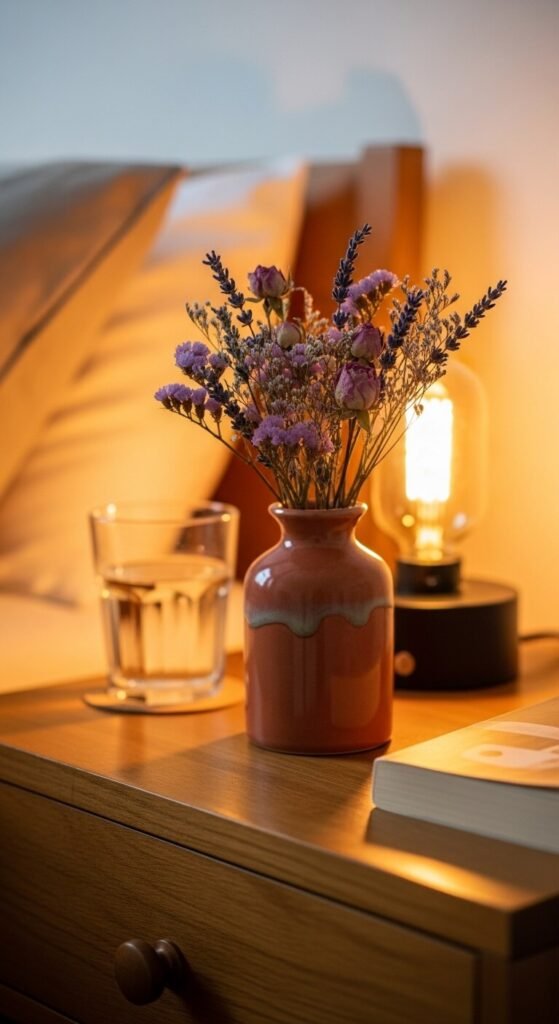
A small vase with a handful of dried flowers on a bedside table adds organic warmth and subtle fragrance to the bedroom — one of the most intimate and personal placements for a vase display. Use a low, stable vase that will not tip easily when reaching for a phone or glass of water in the dark. Dried flowers are safer than fresh in this location — no water spills, no wilting to deal with in the morning, and dried lavender releases a gentle scent that promotes sleep. A small terracotta or ceramic vase costs $3 to $10. A small bunch of dried flowers costs $5 to $15 from a craft store or market. The arrangement lasts months without any maintenance.
18. The Seasonal Vase Swap
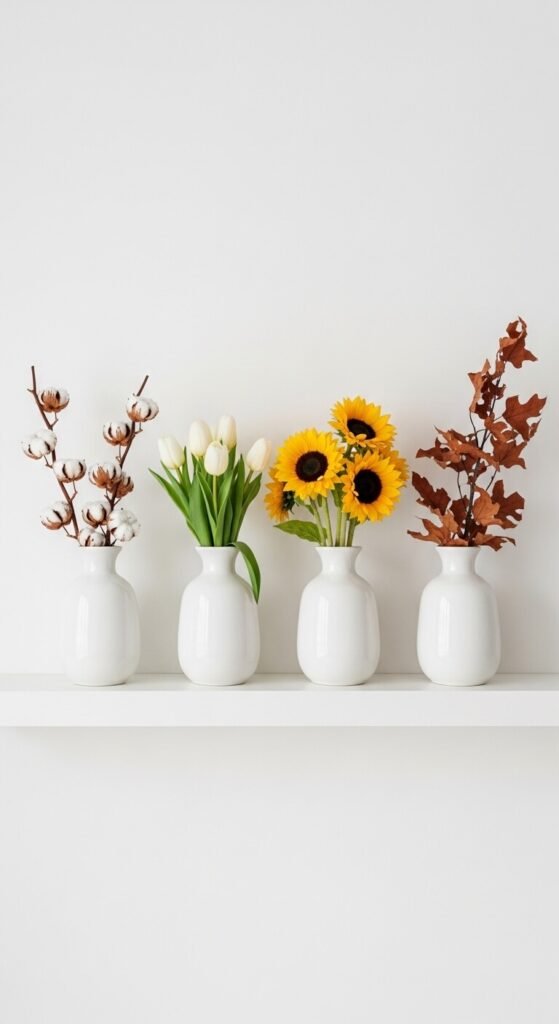
Using the same vase year-round but changing its contents with the season is the most cost-effective way to keep a decor display feeling current — the vessel stays constant while the botanical content changes four times a year. Keep a single high-quality ceramic vase in a neutral color — white, cream, or terracotta — as the permanent fixture on a shelf or console, and plan four seasonal fills: tulips or cherry blossom branches for spring, sunflowers or zinnias for summer, dried autumn leaves or seedheads for fall, and pine or cotton stems for winter. Seasonal flowers from a grocery store cost $5 to $10 per bunch. The vase itself is a one-time purchase of $15 to $40.
19. The Cluster of Matching Vases
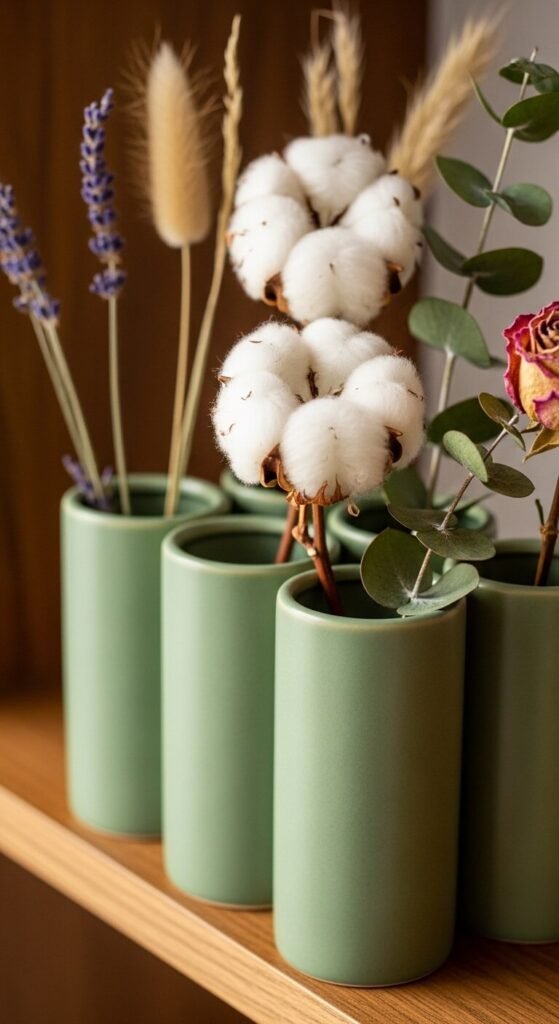
Grouping five identical vases with different botanical contents creates a repetition-with-variation display — the eye is drawn to the consistent vessel shape and then moves along the group discovering the different stem in each vase. Use five identical bud vases or small cylinders and place a different dried botanical in each one — lavender, dried grass, cotton stem, eucalyptus, dried rose. The identical vessels create cohesion; the different stems create interest. Five identical ceramic bud vases from IKEA cost $10 to $15 total. The botanical stems cost $5 to $15 for a small assorted dried flower bunch. This display is especially effective when all five stems are in the same color family — all white, all terracotta, all grey-green.
20. The Tall Pampas Grass Floor Vase
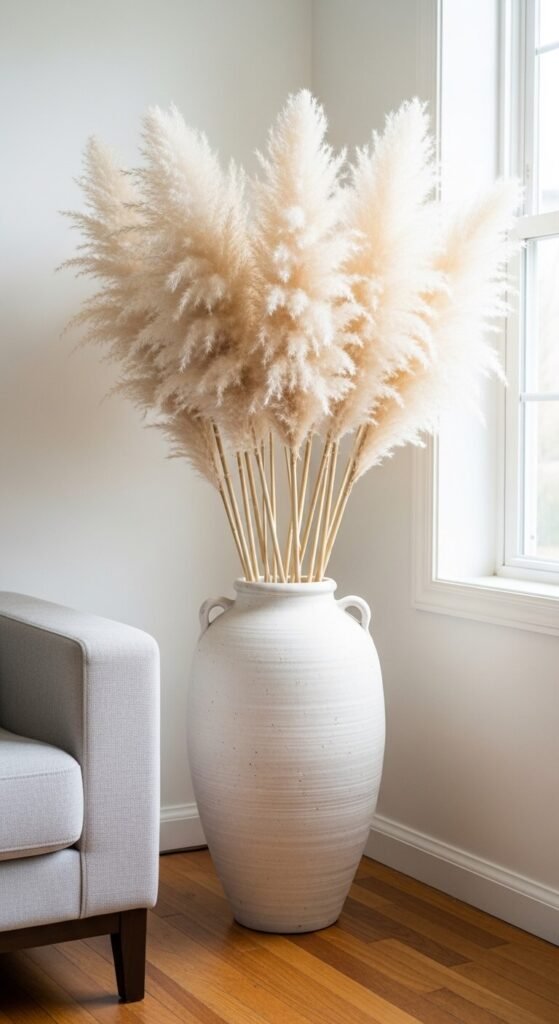
A large floor vase filled with a generous bundle of dried pampas grass is one of the most widely popular and consistently effective corner-filling decor moments in contemporary interior styling — the combination of sculptural vessel and dramatically tall organic material fills vertical space beautifully without requiring any ongoing maintenance. Buy dried pampas grass in bundles of five to ten stems rather than individually — a full, generous arrangement requires volume to look impactful rather than sparse. A bundle of ten dried pampas stems costs $15 to $30 online or from a craft store. A large ceramic or stoneware floor vase costs $25 to $80. The arrangement lasts one to two years before the plumes begin to shed noticeably.
21. The Vase and Book Stack Display
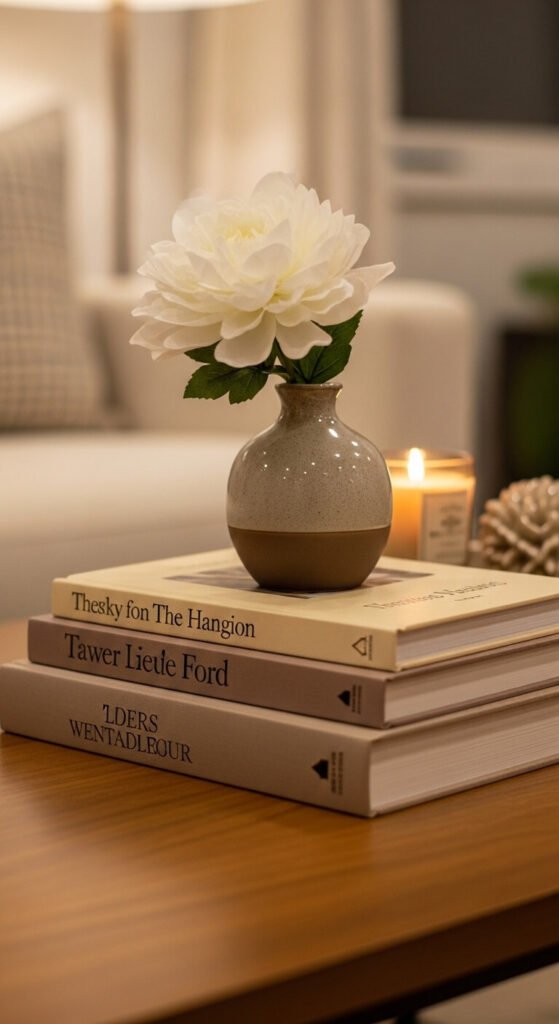
Using a stack of hardcover books as a riser beneath a small vase creates a two-element display with layered height — the books provide visual interest at the base while the vase and its stem content provides the decorative focal point above. Stack two to three hardcover books with coordinating spine colors and place a small, lightweight vase on top. The book spines become part of the display composition. This is one of the most budget-friendly styling techniques available because it uses objects already in the home. A small vase from a thrift store costs $1 to $5. The books are free. This approach works equally well on coffee tables, bedside tables, and entry consoles.
22. The Wabi-Sabi Asymmetric Arrangement
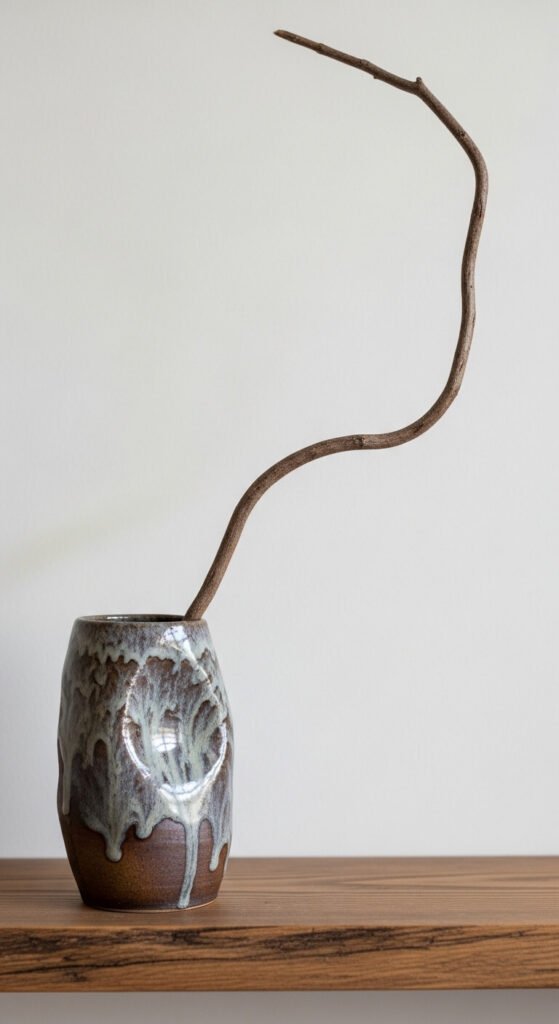
Wabi-sabi vase styling embraces imperfection, asymmetry, and the beauty of natural forms — a single curved branch in an irregular handmade vessel, positioned so the arrangement leans deliberately to one side rather than standing centered and upright. Choose a handmade or visibly imperfect ceramic — uneven glazing, organic form, slight warping — as the vessel. Place one dramatically curved branch or stem so it extends well beyond the vase opening in one direction. The asymmetry is intentional and deliberate. Handmade ceramic vases from pottery studios and craft markets cost $20 to $80 and are genuinely unique. Foraged curved branches are free. The restraint and imperfection of this style is harder to achieve than it looks — resist the urge to add more.
23. The Vase Gallery Wall Shelf
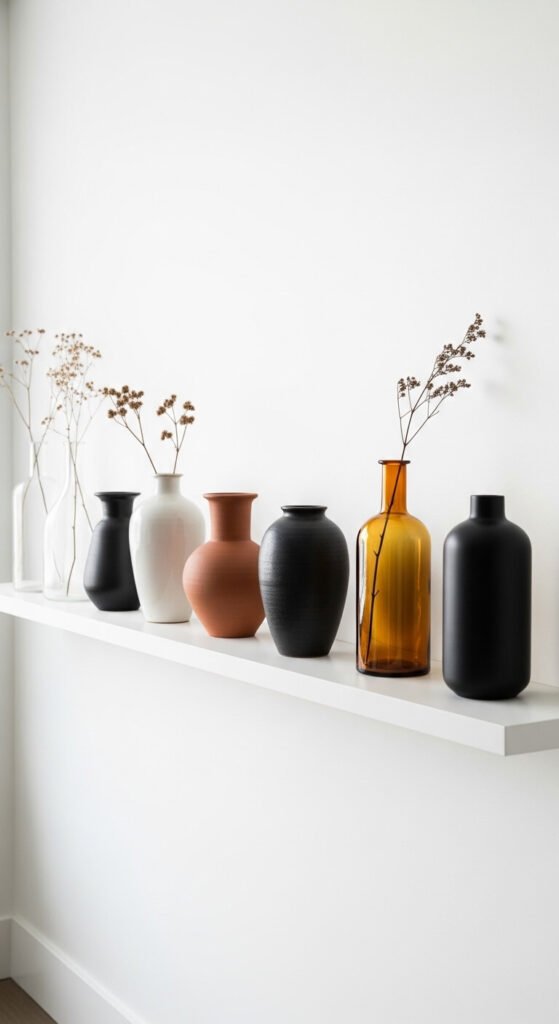
A long floating shelf dedicated entirely to a curated vase collection — displayed like objects in a gallery — communicates a personal relationship with the vessels themselves as objects worth looking at, not just as containers for flowers. Space the vases unevenly rather than at equal intervals — irregular spacing looks collected and intentional while even spacing looks like retail display. Mix materials deliberately — clear glass beside terracotta beside dark stoneware beside amber glass — for the maximum textural and visual range. Some vases should hold stems; some should be empty. An empty vase shown with intention signals confidence in the object itself. Build the collection gradually — one good vase at a time — from thrift stores, craft markets, and travels.
Conclusion
A vase is one of the most immediate and affordable ways to add a designed quality to any surface in a home. A single well-chosen vase in the right location — at the right height, with the right contents, positioned with intention rather than placed by default — changes the character of an entire surface. The rules are few and simple: vary the heights in any grouping, choose odd numbers, keep materials cohesive while varying shapes, and match the scale of the vase to the scale of the surface. A $5 thrift store find and a few foraged branches from the garden can produce a display that looks as considered as anything in a design magazine. Start with one surface that feels unfinished. Add one vase. Put something in it that has a strong silhouette. Step back and look. Then build from there.