
Mirrors do one thing no paint color or furniture arrangement can fully replicate — they multiply light and space without adding a single square foot to your home. Whether you live in a 400-square-foot studio or a sprawling open-plan house, the right mirror in the right spot changes everything. It can make a dark hallway feel sunny, a tiny bedroom feel roomy, and a plain wall feel intentional. This guide walks you through 23 specific, actionable placements that real people use to make their homes look and feel bigger, brighter, and more put-together — all without a major renovation.
1. Lean an Oversized Mirror Against the Living Room Wall
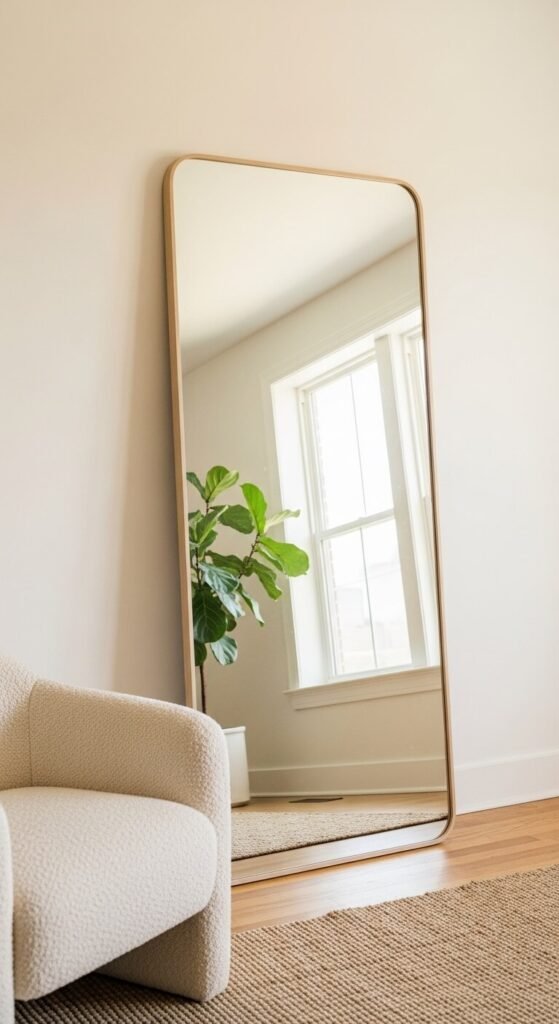
Leaning mirrors are the easiest way to add scale without drilling a single hole.
Skip the hardware. Just place a large mirror — at least 60 inches tall — directly on the floor against your main living room wall. It reflects the entire room back at you, doubling the sense of space instantly.
Look for affordable leaning mirrors at IKEA, TJ Maxx, or Facebook Marketplace. A simple wood or black metal frame costs under $80 used. This works especially well on a wall opposite a window.
2. Hang a Mirror Directly Across From a Window
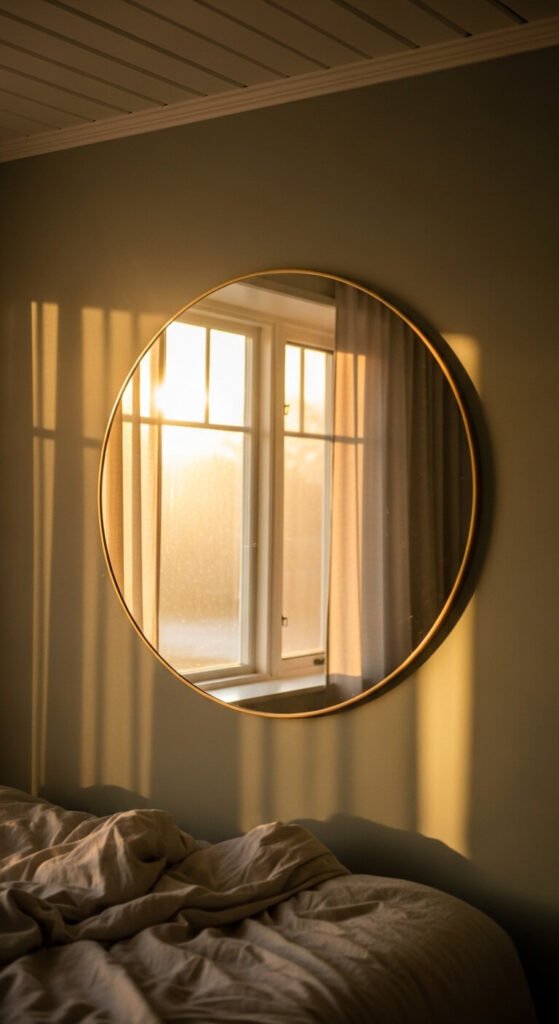
This is the single most effective trick for brightening a dark room.
When a mirror faces a window, it catches natural light and bounces it deeper into the space. The room feels twice as bright — without adding a single light fixture.
For small rooms, a round mirror 24–30 inches wide is enough. Hang it at the same height as the window’s center for maximum reflection. You can find simple brass or matte black round mirrors for $30–$60 at most home stores.
3. Place a Mirror at the End of a Narrow Hallway
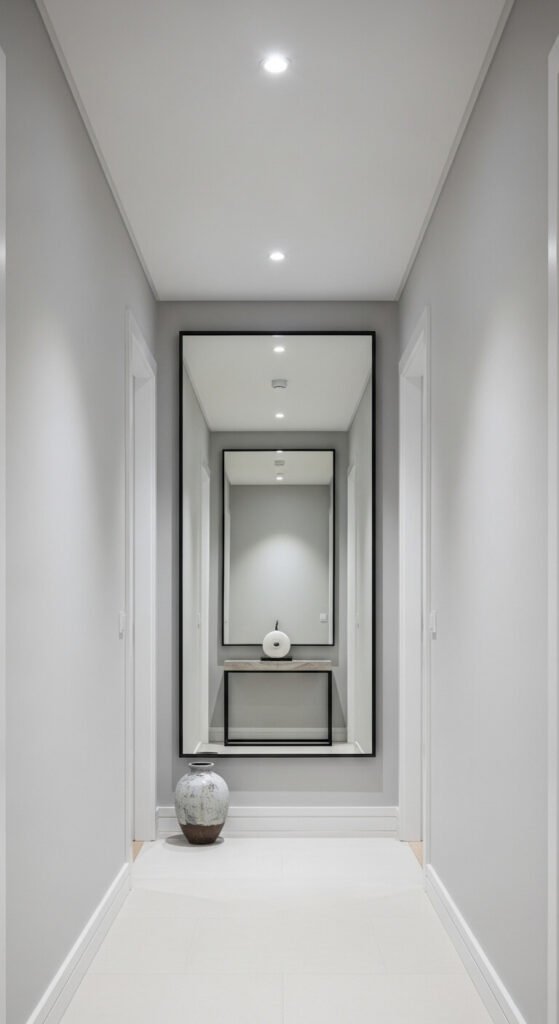
A dead-end hallway feels like a wall — until you put a mirror there.
Mounting a large mirror at the end of a hallway creates the illusion that the corridor keeps going. It visually doubles the length of the space and makes the whole passage feel less cramped.
Use a full-length mirror or one that fills most of the wall from the console table up. A simple frameless mirror or one with a slim metal frame works great here. Budget option: repurpose a closet door mirror with adhesive strips for under $40.
4. Create a Mirror Gallery Wall in the Dining Room
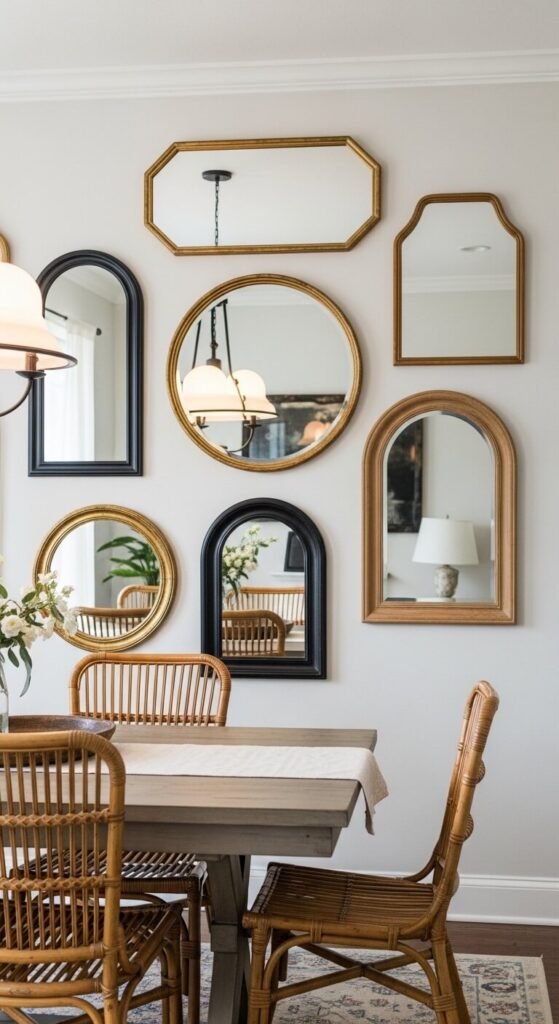
A gallery wall of mixed mirrors is both art and architecture at once.
Instead of hanging one large mirror, group five to nine mirrors of different shapes and sizes on one dining room wall. The arrangement acts like a mosaic of light, catching reflections from every angle.
Shop thrift stores and estate sales for mismatched frames. Spray paint them all one color for a cohesive look, or leave them mixed for an eclectic feel. The whole project can cost under $60 if you source secondhand.
5. Mount a Floor-to-Ceiling Mirror Panel in a Small Bedroom
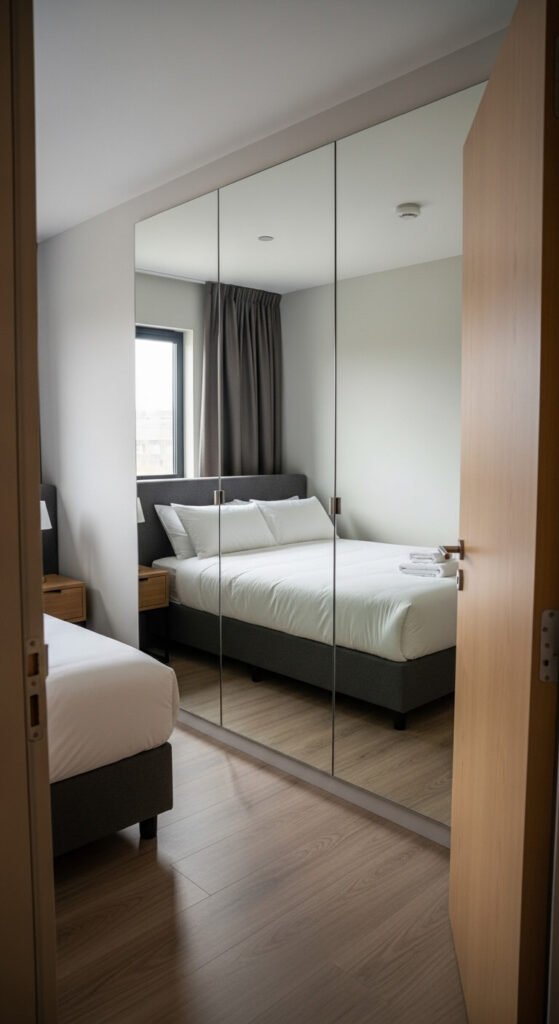
One mirrored wall in a small bedroom is the closest thing to doubling your square footage.
This doesn’t require expensive custom glass. You can use multiple inexpensive frameless mirrors side by side, or install pre-cut mirror tiles from a home improvement store. The effect is seamless from a distance.
Focus on the wall opposite the bedroom door or across from the bed. Keep the surrounding décor simple so the mirror doesn’t feel overwhelming. Total cost with frameless panels: around $100–$150.
6. Use a Mirrored Tray on the Coffee Table
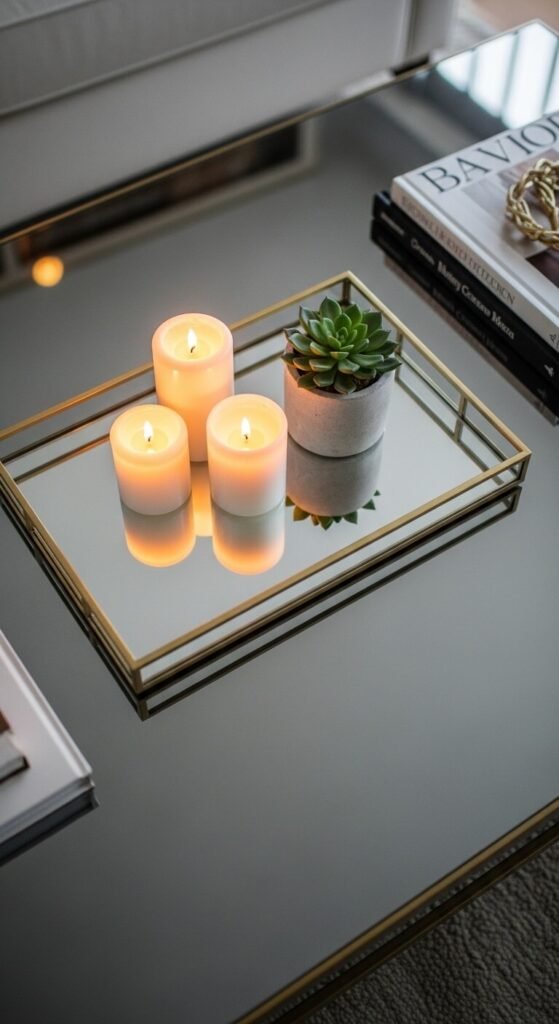
Mirrored trays add glamour and light reflection right at eye level.
Place a mirrored tray on your coffee table and use it to display candles, small plants, or decorative objects. The reflective surface bounces light upward and makes your styling look more polished and intentional.
You can find mirrored trays at HomeGoods, Amazon, or Target for $15–$35. A rectangular tray with a small lip works best for keeping items in place. This is one of the fastest, cheapest décor upgrades you can make.
7. Hang a Round Mirror Above the Fireplace Mantel
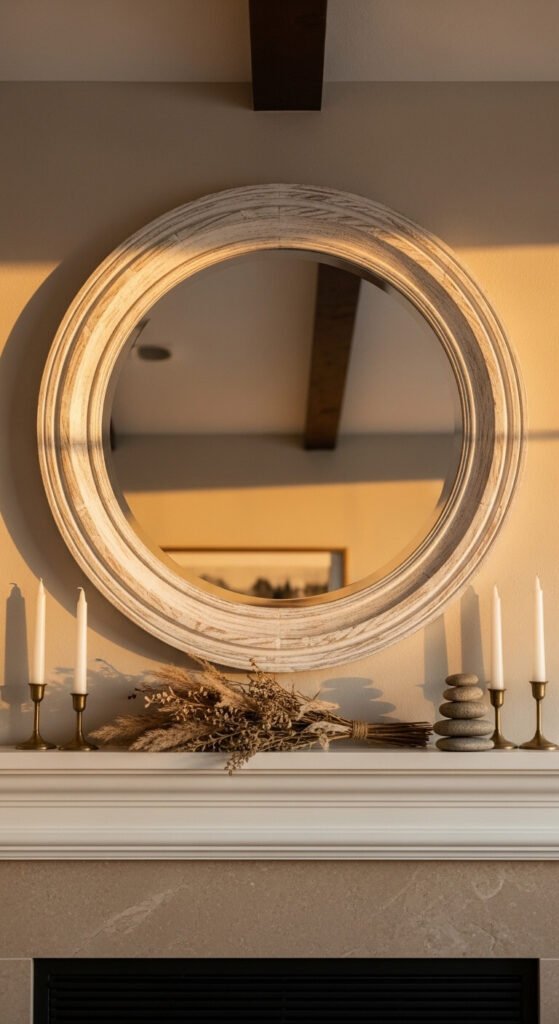
A round mirror above a fireplace anchors the room and gives it a finished, classic look.
The mantel is the natural focal point of most living rooms. A mirror above it fills the wall space with purpose and reflects the warmth and light from the fire below.
Round mirrors with chunky frames look especially good here — think 30–36 inches wide. Wood frames in white, black, or natural tones are widely available at big box stores for $50–$120. Hang it centered, about 4–6 inches above the mantel shelf.
8. Install a Mirrored Backsplash in the Kitchen
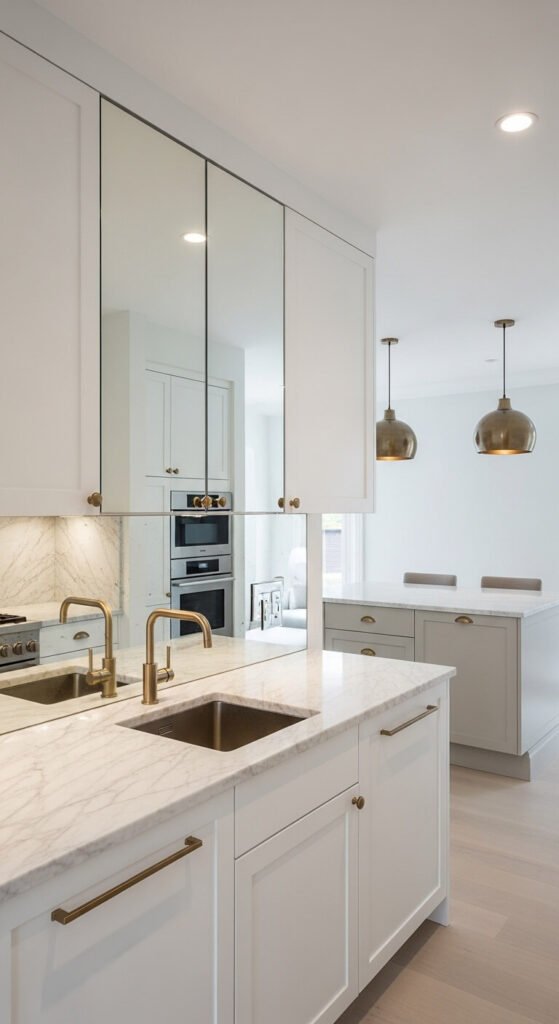
A mirrored backsplash turns a tight kitchen into a visually open cooking space.
Mirror tiles used as a backsplash reflect pendant lights and natural light from nearby windows, making even a narrow galley kitchen feel airy. The effect is elegant without feeling overdone.
Self-adhesive mirror tiles from home improvement stores run about $20–$40 for a standard backsplash area. Clean them regularly with streak-free glass cleaner. This is a renter-friendly option if you use removable adhesive.
9. Place a Mirror Behind Open Shelving
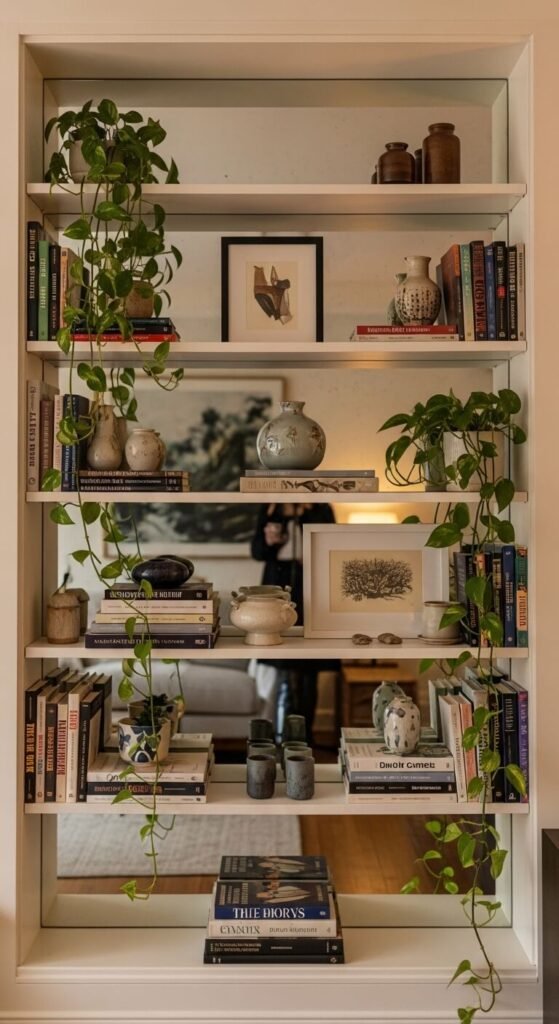
Mounting a mirror behind open shelves adds serious depth to a flat wall.
The mirror sits behind your books and objects, reflecting them back and making the display look richer and deeper. It also bounces ambient light through the shelves, brightening the whole wall.
This works well for built-ins or freestanding bookshelves. Cut a mirror to size at a local glass shop (usually $30–$60) or use a large frameless mirror leaned against the back of the unit. It takes five minutes to set up.
10. Use a Tall Arched Mirror in an Entryway
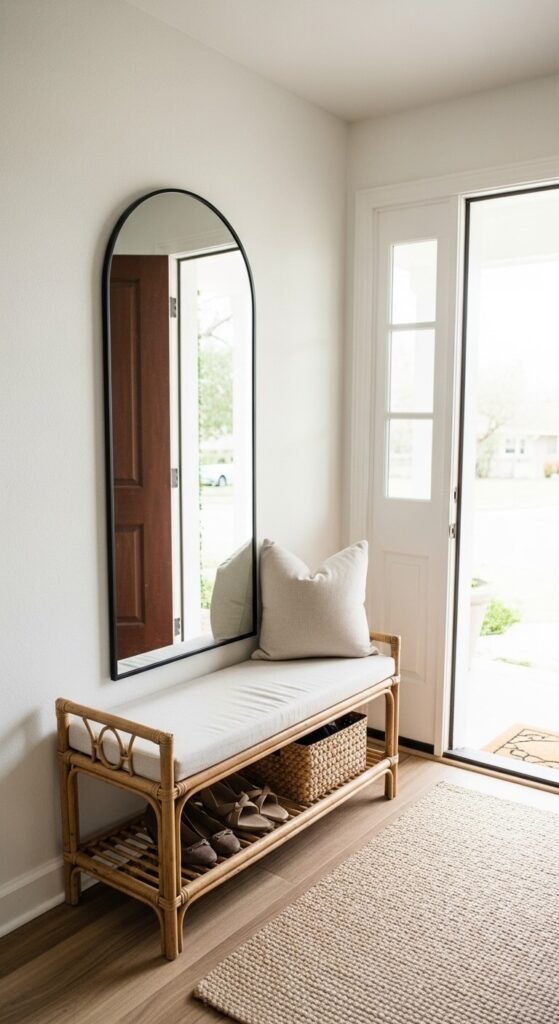
An arched mirror at the front door sets a great first impression and makes the entryway feel bigger.
Entryways are usually narrow and dark. A tall arched mirror — especially one that leans against the wall — adds height and reflects whatever light comes in from the door or nearby window.
Arched mirrors are widely available right now for $60–$150. Look at Amazon, Urban Outfitters, or IKEA. A rattan bench below it creates a practical, stylish vignette that works in almost any home style.
11. Hang Multiple Small Mirrors in a Stairwell
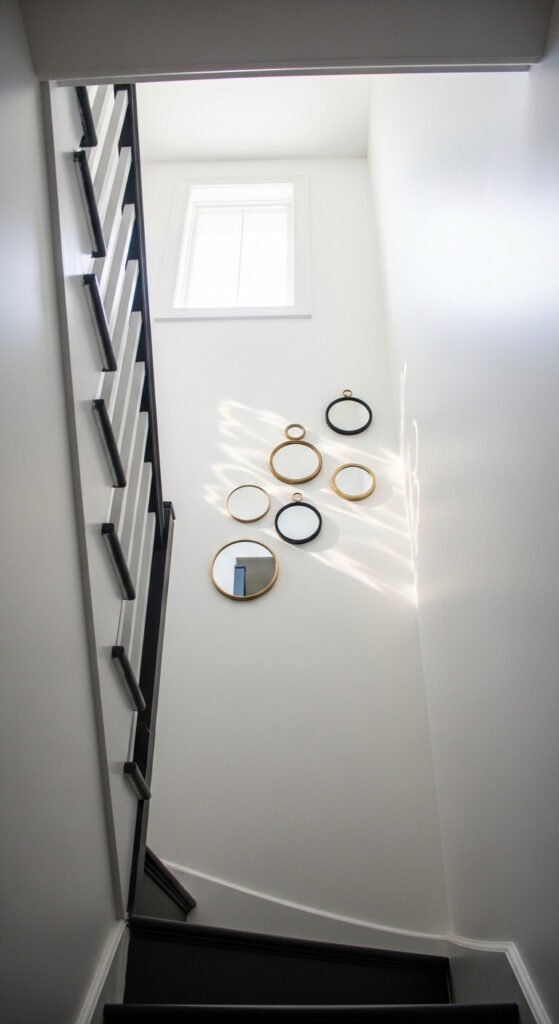
Stairwells are dead zones — small mirrors turn them into a design moment.
Following the diagonal line of the staircase, hang a series of small mirrors in a loose cluster or a straight line. The repetition creates visual rhythm, and each mirror catches a different slice of light.
Source small mirrors from dollar stores, thrift shops, or the IKEA KNAPPER collection. Spray paint mismatched frames the same color for a curated look. The full stairwell installation can cost under $40 with thrifted finds.
12. Put a Mirror Inside a Dark Closet or Alcove
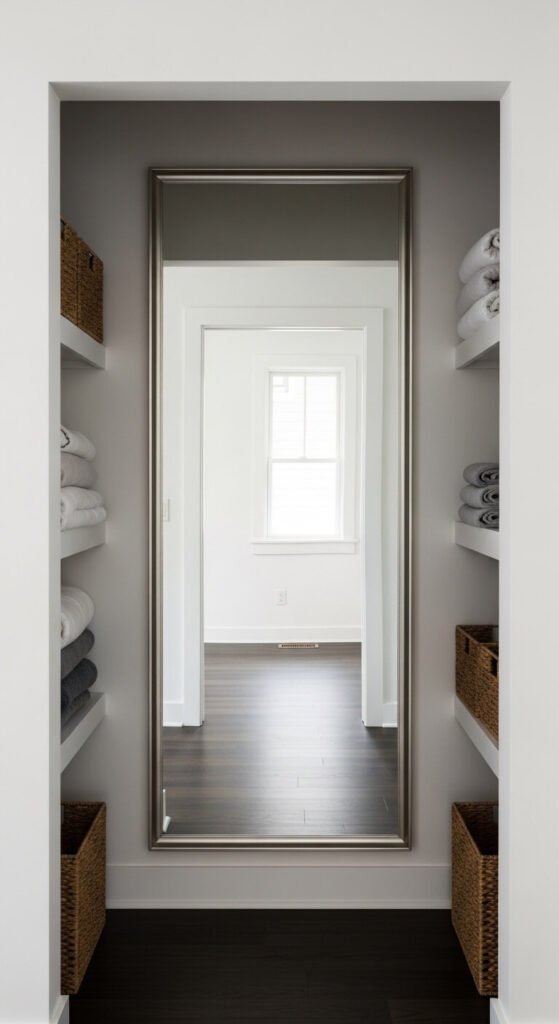
Dark alcoves and closets borrow light when a mirror is placed inside them.
A frameless mirror on the back wall of a closet or built-in niche reflects whatever light exists outside it, making the recess feel less cave-like. It also helps you see what’s stored inside more clearly.
For built-in closets, a simple adhesive mirror panel works perfectly. For open alcoves, consider framing the mirror with simple painted wood molding for a built-in, polished look. Cost: $25–$55.
13. Lean a Mirror Against the Bathroom Vanity Wall
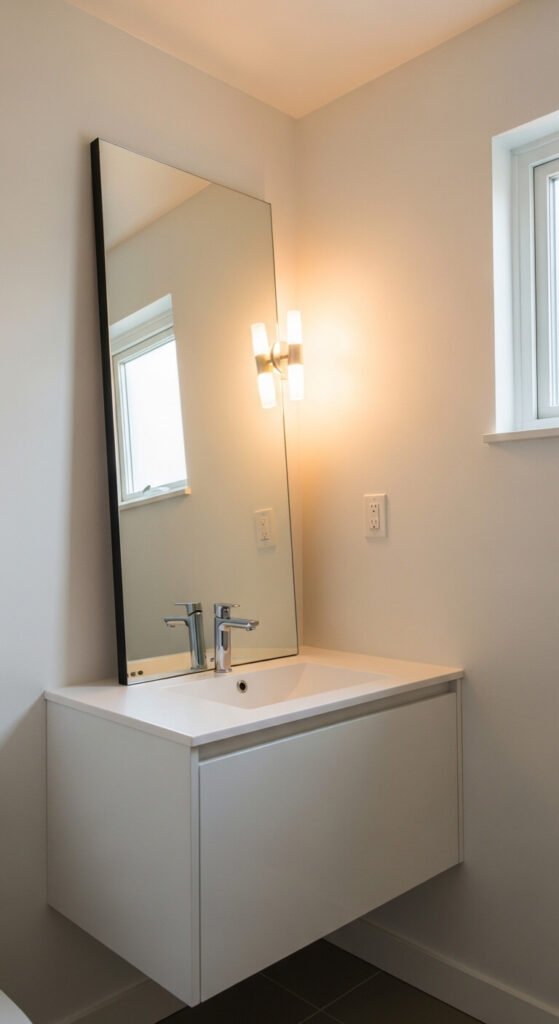
Going bigger than expected with a bathroom mirror changes the entire feel of the space.
Most bathrooms have a mirror that’s just big enough. Swap it for one that nearly fills the wall above the vanity — ideally reaching from the countertop to the ceiling. The difference is dramatic.
Frameless bathroom mirrors can be cut to size at most glass shops. IKEA’s HOVET or NISSEDAL mirrors are popular budget-friendly options. A mirror that spans the full vanity width makes even a tight bathroom feel like a spa.
14. Use a Convex Mirror as a Decorative Accent
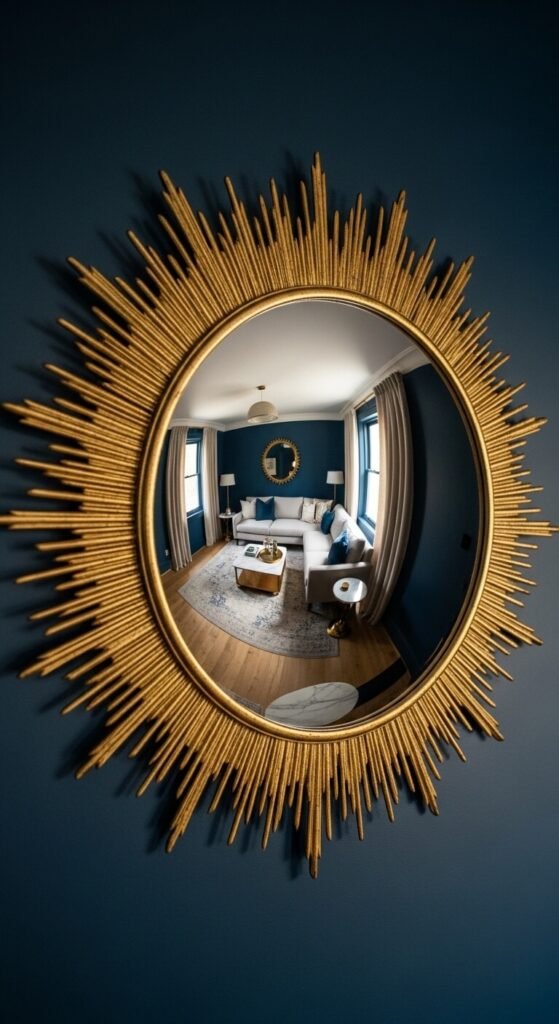
Convex mirrors are functional art — they reflect a wide-angle view of the entire room.
A convex mirror captures more of its surroundings than a flat one, giving a fish-eye view of the room that’s genuinely interesting to look at. It works as a statement piece on any accent wall.
Sunburst convex mirrors are classic but also trendy. Look for them on Etsy, at antique markets, or at HomeGoods. Prices range from $30 for simple styles to $150+ for decorative ones. A 20-inch convex mirror does a lot of visual work in a small package.
15. Line a Dining Room Buffet With a Large Mirror
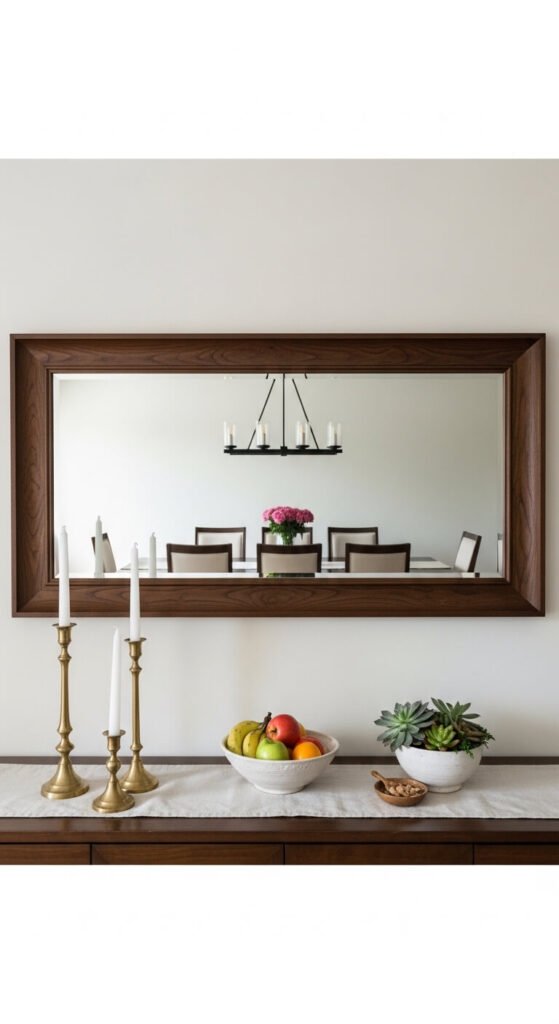
A mirror above a buffet creates symmetry and makes the dining room feel more formal and spacious.
The buffet wall is often underused. A horizontal mirror hung above it ties the space together, reflects the chandelier or pendant light, and makes the dining area feel longer and more open.
Match the mirror’s width to about two-thirds of the buffet’s length for balanced proportions. A simple dark wood or gold frame works in almost any dining room style. Budget: $50–$100 at HomeGoods or World Market.
16. Install Mirror Tiles on a Powder Room Ceiling
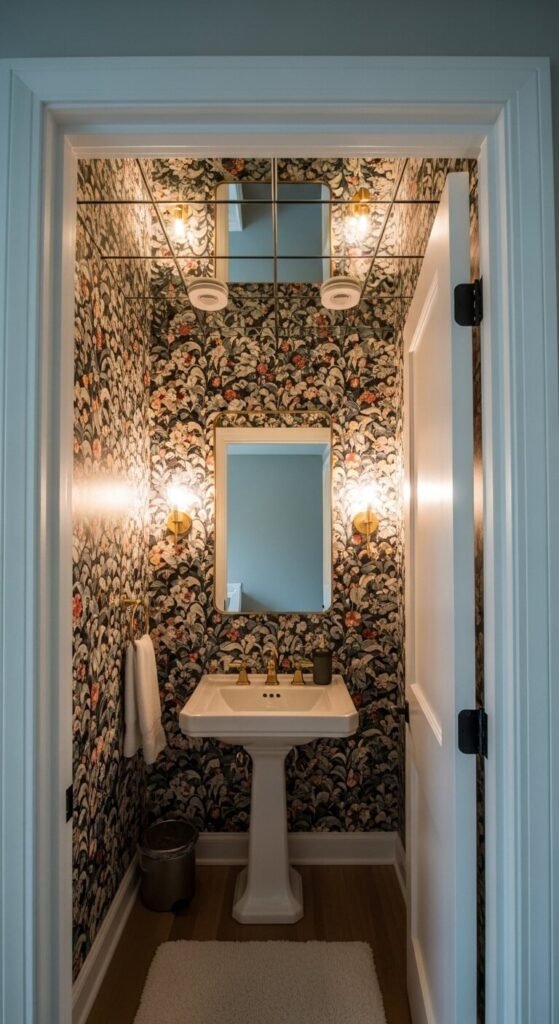
A mirrored ceiling in a powder room is dramatic, unexpected, and makes the tiny room feel palatial.
Powder rooms are so small that bold choices actually work well. Mirror tiles on the ceiling reflect the walls and floor below, making the room feel like it extends upward.
Self-adhesive 12×12-inch mirror tiles from home improvement stores cost about $2–$4 each. A standard powder room ceiling needs 15–25 tiles, so the total is under $60. Clean them the same way you’d clean any glass surface.
17. Place a Mirror Beside — Not Above — the Bed
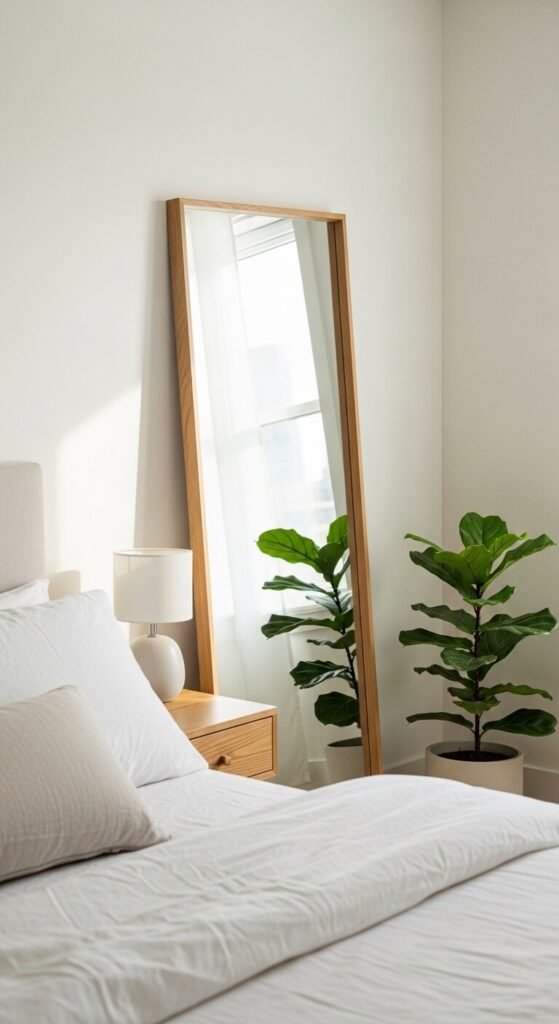
Moving your mirror next to the bed instead of above it changes how the room feels entirely.
Most people hang mirrors above dressers out of habit. But placing a tall mirror beside the bed — especially near a window — reflects light sideways across the room, making the space feel wider rather than just taller.
A leaning mirror here also adds an effortlessly styled quality to the room. No drilling required. Look for a simple floor mirror at IKEA for $50–$80. This placement works especially well in narrow bedrooms.
18. Frame a View With Matching Mirrors on Either Side of a Window
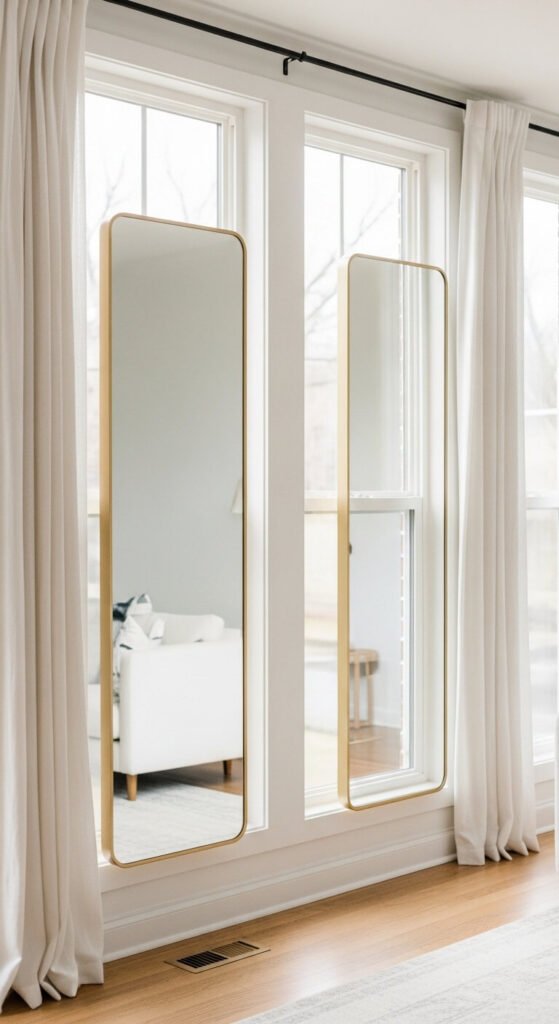
Flanking a window with matching mirrors multiplies natural light across the room.
When you place identical mirrors on both sides of a window, they work together to spread incoming light in multiple directions. The room feels sunnier throughout the day.
This placement works best in living rooms or bedrooms with a central window. Mirrors should be roughly the same height as the window. Two matching mirrors from IKEA’s NISSEDAL line run about $100 total — a small investment for a big visual payoff.
19. Use a Vintage Trumeau Mirror Over a Console Table
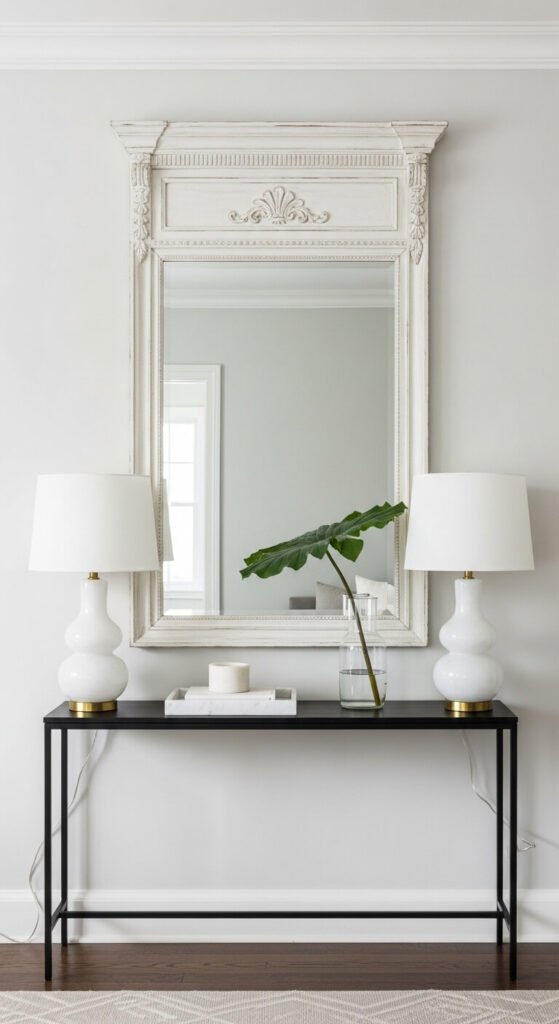
Trumeau mirrors are tall, dramatic, and do serious work on a high wall.
A trumeau mirror — typically tall with a decorative panel above the mirror glass — fills a large wall space the way few other pieces can. It’s especially useful in rooms with high ceilings where standard mirrors look small.
Find antique trumeau mirrors at estate sales or reproductions at furniture stores for $150–$400. They work over consoles, in entryways, and above fireplaces. The height they add to a room is unmatched by almost any other single decor piece.
20. Create a Mirrored Accent Wall With Antiqued Mirror Panels
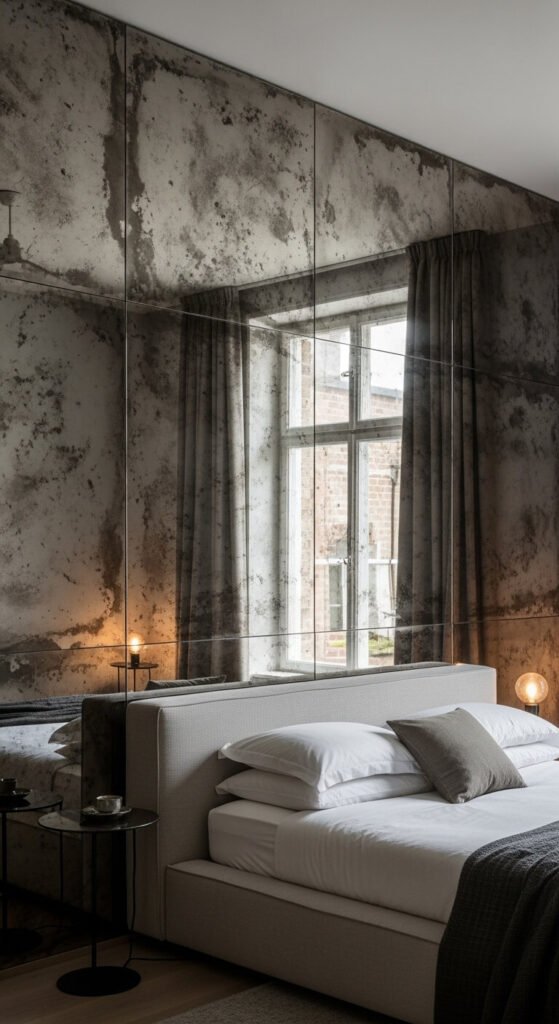
Antiqued mirror panels add depth and atmosphere without the harshness of clear mirror.
Regular mirror can feel clinical on a large wall. Antiqued or smoked mirror panels have a soft, slightly distressed look that reflects light gently, adding dimension without a stark effect.
You can order custom antiqued mirror panels from glass suppliers or find pre-cut options online. Use construction adhesive or mirror mastic to mount panels directly to drywall. For a bedroom, this creates a moody, hotel-like feel on a DIY budget of $150–$250.
21. Hang a Sunburst Mirror in the Center of a Plain Ceiling Medallion
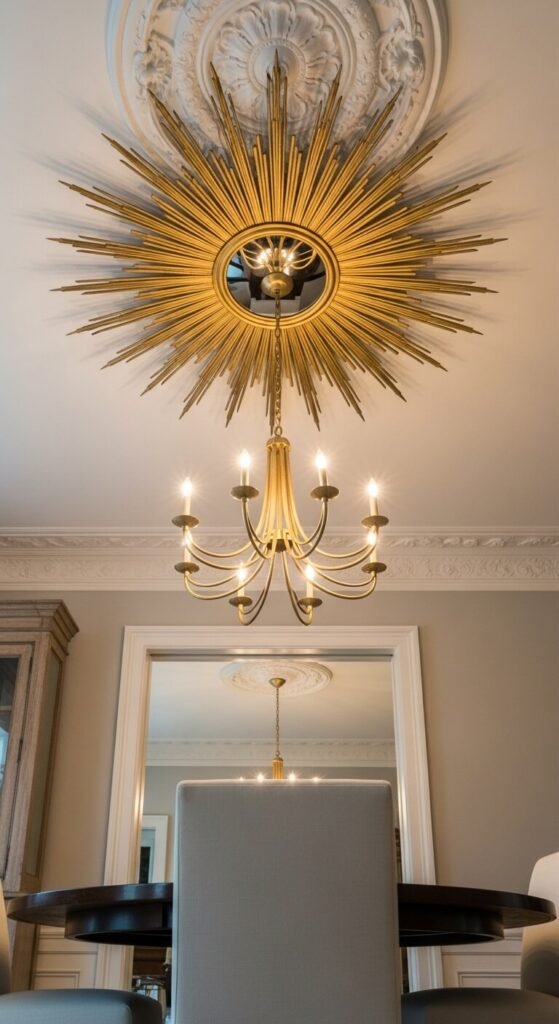
Pointing attention upward with a ceiling-level mirror installation adds height to any room.
Most people never look at the ceiling as a design surface. A sunburst mirror mounted on or near the ceiling medallion creates an eye-catching focal point that draws the eye upward — making the room feel taller.
This works especially well in dining rooms with a chandelier. Mount the mirror on the ceiling medallion using mirror-safe adhesive or screws. A 24–30-inch sunburst mirror costs $40–$100 on Amazon or at HomeGoods.
22. Use a Mirrored Cabinet Door to Double a Small Home Office
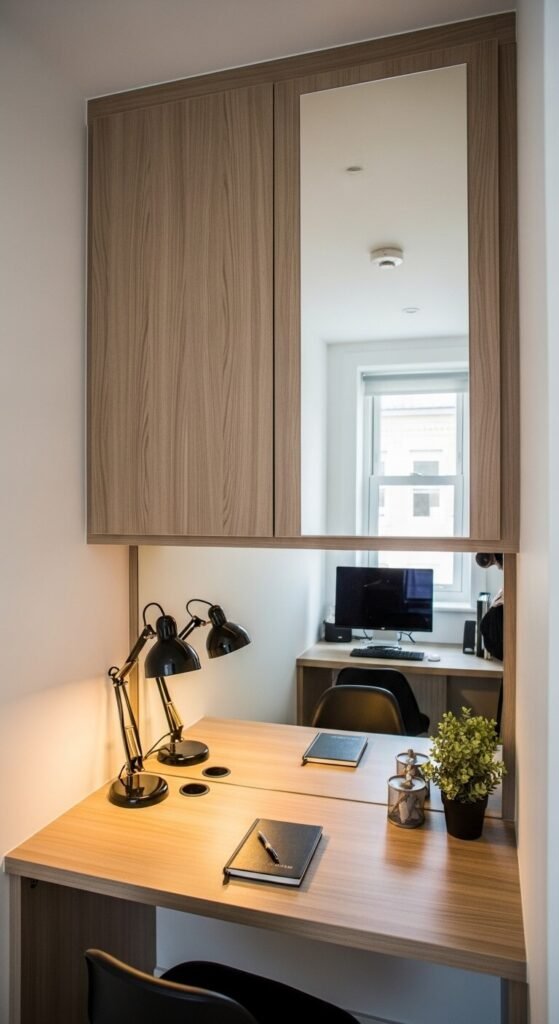
Mirrored cabinet doors turn storage into a space-opening feature.
If your home office or spare room has built-in or freestanding cabinetry, replacing solid doors with mirrored ones is a high-impact swap. The mirror reflects the workspace back, making the room feel open even when you’re surrounded by storage.
IKEA PAX wardrobe doors with mirror inserts are a popular option. You can also have local glass shops cut custom mirror panels to replace existing cabinet doors. Cost varies: $50–$200 depending on size.
23. Layer Mirrors at Different Heights in an Open-Plan Space
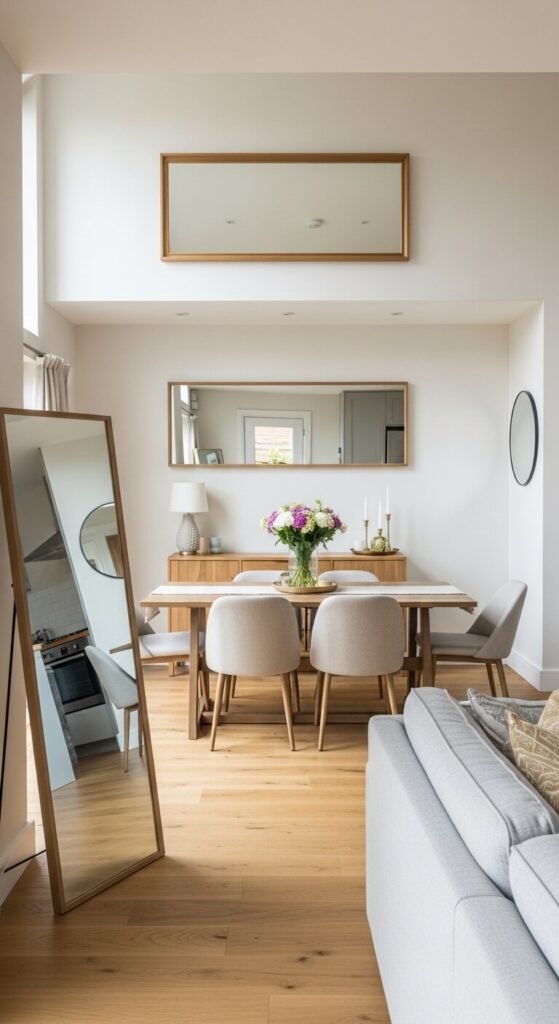
In open-plan homes, mirrors placed throughout the space at different heights create a continuous flow of light and depth.
One mirror in a large open space can feel lost. But when you place several mirrors strategically at different heights — one floor-level, one at mid-wall, one at eye level — they work together to pass light across the room in layers.
The key is variety in scale and placement, not just repetition. Use one large statement mirror and two smaller accent mirrors for balance. This layered approach makes open-plan spaces feel warm and intentional rather than cavernous.
Conclusion
Mirrors are one of the most affordable, practical tools in home decorating — and most people use only a fraction of their potential. The placements in this guide aren’t complicated. They don’t require a contractor, a big budget, or a style overhaul. Each one targets a specific problem — a dark corner, a cramped hallway, a flat wall, a low ceiling — and solves it with a single well-placed piece of reflective glass. Start with the room that bothers you most. Pick one placement. Try it this weekend. You’ll quickly see why decorators reach for mirrors before almost anything else when they want a space to feel bigger, brighter, and more alive.