
Monochrome decorating is the design approach most commonly misunderstood as limiting — and most frequently proven, when done well, to be the opposite. A room built around a single color — or around the full tonal range between its lightest and darkest values — does not lack variety. It simply concentrates variety entirely in texture, material, pattern, and form rather than distributing it across a palette of competing colors. The result is a room where every surface communicates the same visual language and the differences between objects become more perceptible rather than less. A cream linen sofa, a cream knit throw, a cream ceramic vase, and a cream sheer curtain in the same room are all cream — but they are completely different objects, completely different surfaces, and the eye moves between them with a focused attention that a color-saturated room never demands. These 22 monochrome decor looks cover every color from white to black, every room, and every budget — with practical guidance on building, layering, and maintaining the tonal discipline that makes monochrome interiors work.
1. The All-White Living Room
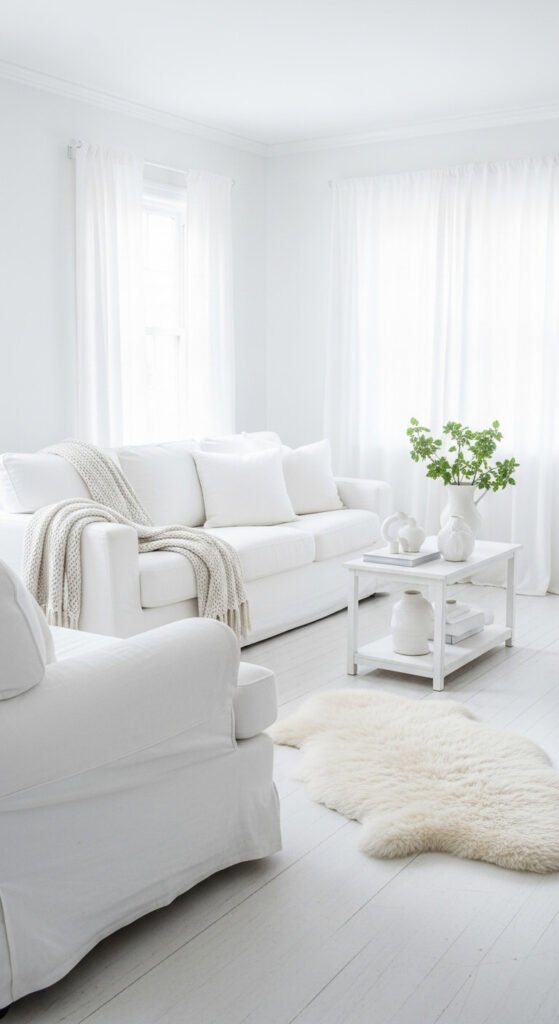
An all-white living room is the most demanding monochrome choice because every material decision is immediately visible — there is no color contrast to distract from surface quality. The rule is texture variation, not color — a matte plaster wall, a glossy lacquered side table, a chunky knit throw, a sheer linen curtain, and a smooth ceramic vase can all be white while creating enormous visual richness through their surface differences. Keep one living green plant as a single organic accent. White paint, white soft furnishings, and white accessories are available at every price point. Layering five or six different white textures in one room costs no more than any other decorating approach.
2. The All-Black Drama Room
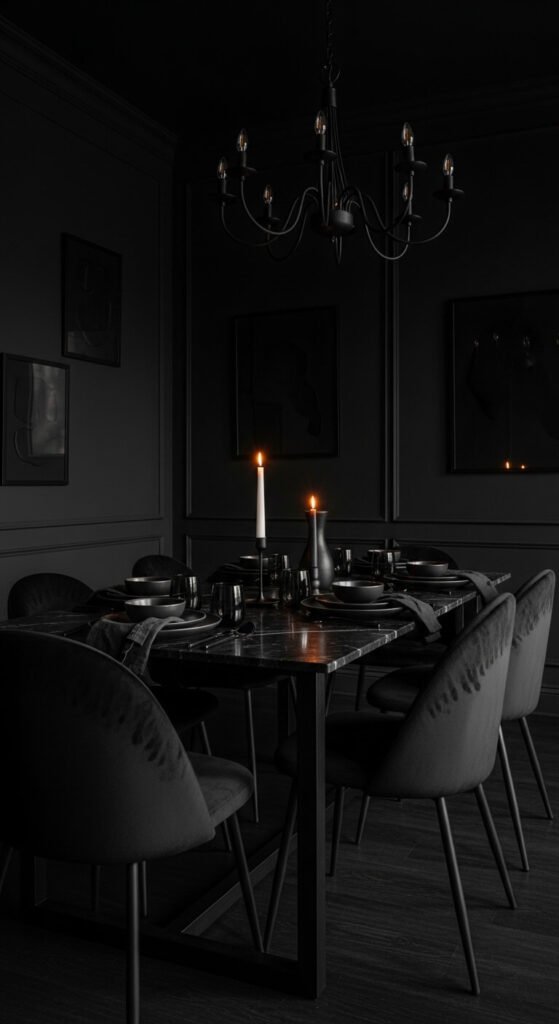
An all-black room is the boldest and most confident monochrome statement — and the one that most surprises people with how warm and enveloping it feels in person rather than cold and oppressive as anticipated. Black works best in rooms used primarily at night — a dining room, a home bar, a bedroom — where the darkness is an asset rather than a detraction from natural light. Matte black walls, velvet upholstery, black lacquer, and black marble all read as different values of black in candlelight and lamp light. A single white candle or a white ceramic provides contrast without breaking the palette. Paint a dining room in matte black for $30 to $50 in paint costs.
3. Cream and Ivory Bedroom
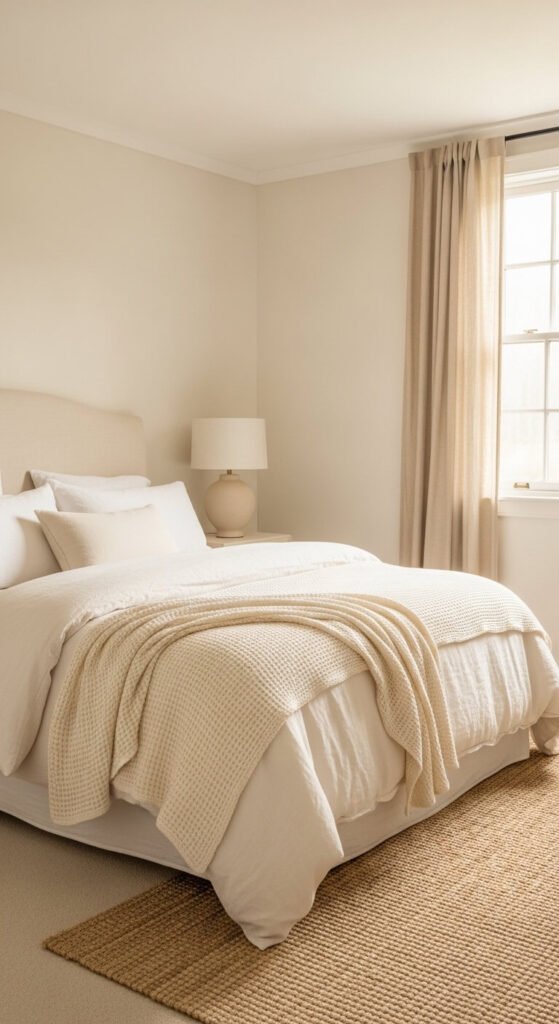
A cream and ivory bedroom is the monochrome approach that produces the most calming, restful atmosphere — because the narrow tonal range removes visual stimulation and allows the room to feel genuinely quiet in a way that color-accented rooms cannot achieve. Layer materials in the cream-to-ivory spectrum with subtle warm and cool shifts — a warm-toned natural jute rug, cool ivory cotton bedding, a golden linen curtain, and a greige waffle throw all exist in the same tonal range while creating visible differences that prevent the room from feeling flat. Cream and ivory soft furnishings from IKEA, H&M Home, and Zara Home are widely available and affordable — a complete cream bedroom from these retailers costs $150 to $400.
4. Charcoal Grey Living Room
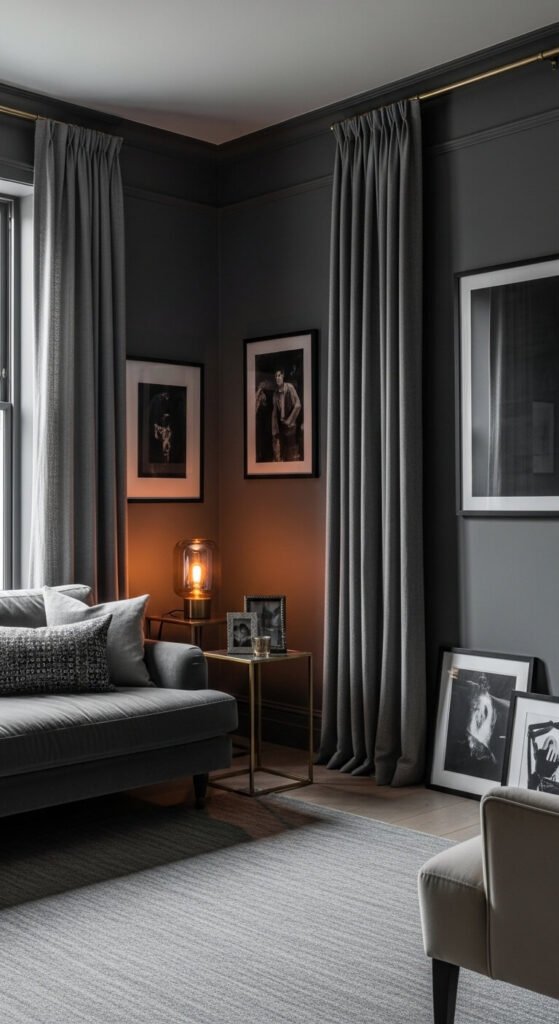
Charcoal grey is the most sophisticated and widely applicable neutral monochrome palette — it works in both warm and cool lighting conditions, suits both masculine and gender-neutral interiors, and provides a background against which brass, gold, and natural wood tones appear particularly warm and luminous. Layer multiple grey tones — a near-black charcoal wall, a medium grey sofa, a pale silver-grey rug, and a stone-grey curtain — for the tonal variation that prevents the room from feeling one-dimensional. Add brass or gold hardware and accessories as warm metallic accents without breaking the grey palette. Grey paint in a dark charcoal tone costs $30 to $60 per room. The Farrow & Ball equivalent “Down Pipe” or “Railings” are widely copied in lower-priced paint ranges.
5. Navy Blue Monochrome Bedroom
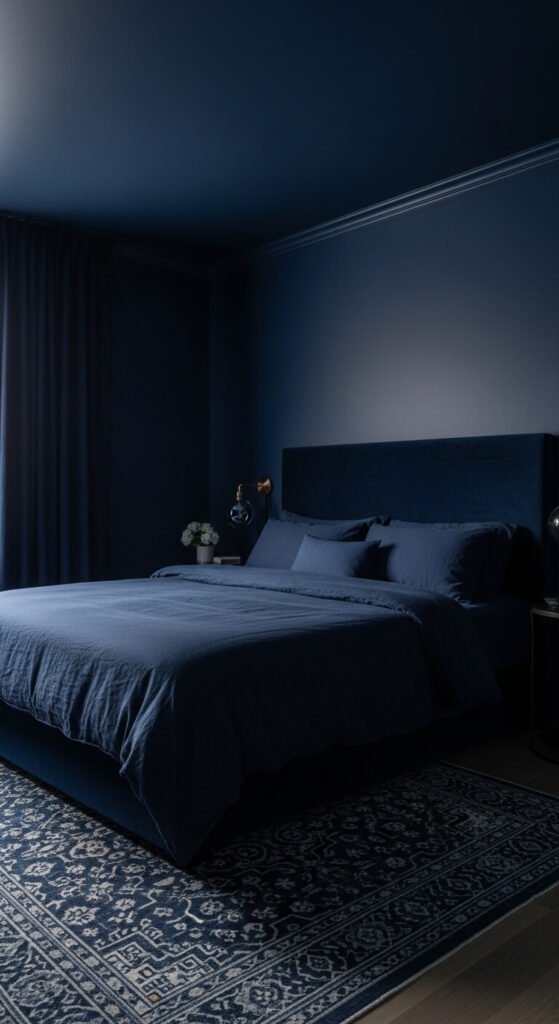
Navy blue is the warmest and most cocooning of all dark monochrome palettes for a bedroom — it references the night sky and creates a deeply restful, intimate atmosphere that encourages the psychological separation from the day that good sleep requires. Paint both walls and ceiling in the same navy for the most immersive, tent-like effect — a painted ceiling in the same color as the walls removes the visual break between wall and ceiling and makes the room feel deliberately enclosed rather than accidentally dark. Navy paint costs $30 to $60. Navy bedding from most major retailers costs $40 to $120 for a complete set. Brass hardware and one small white plant are the only accent requirements.
6. Terracotta Monochrome Living Room
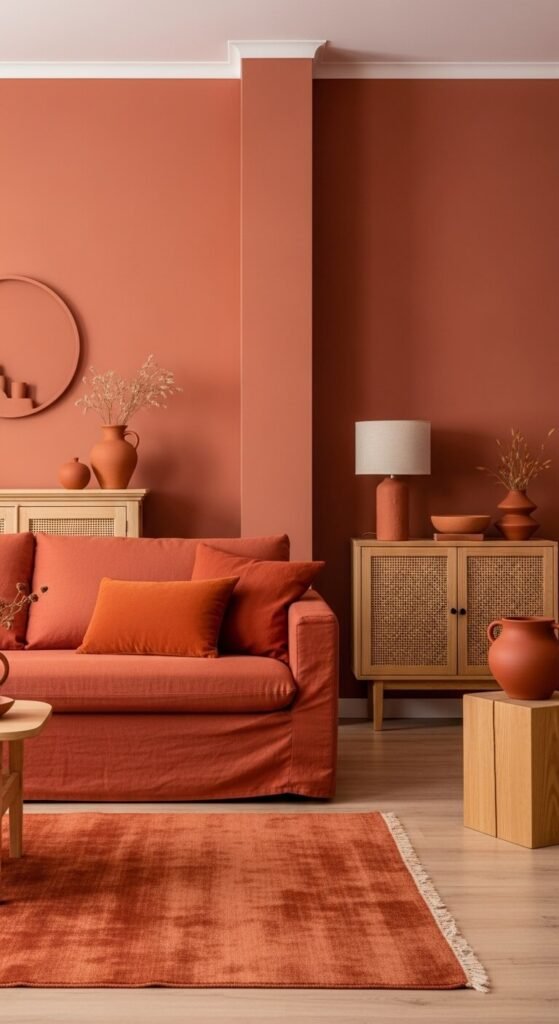
Terracotta monochrome is the warmest and most earthy single-color interior approach — the palette of dusty clay, burnt sienna, and russet orange creates a room that feels naturally warm even in winter and responds beautifully to both natural daylight and amber lamp light at different times of day. Span the full terracotta range — from pale dusty clay paint on the walls to a deep rust-colored rug to burnt orange cushions — for maximum tonal depth within the single color family. Natural wood furniture, dried botanicals, and jute textiles work as neutral complements that do not break the orange-terracotta palette. Terracotta paint is available from most major paint ranges for $25 to $50 per room.
7. Sage Green Monochrome Kitchen
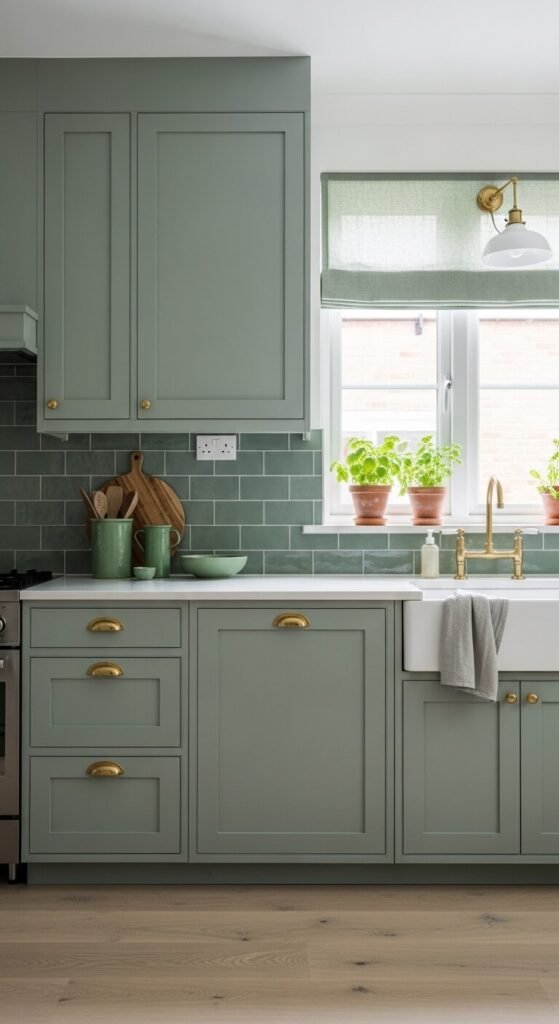
Sage green is the most calming and kitchen-appropriate single-color palette — its grey-green tone references both natural herbs and the muted heritage kitchen colors of traditional country homes, and it has been the dominant kitchen color trend across professional interior design for the past several years. Paint kitchen cabinets in sage green rather than replacing them — a can of chalk or eggshell paint and a foam roller costs $25 to $50 and transforms flat-pack or previously painted cabinets completely. Farrow & Ball “Mizzle,” Little Greene “Sage,” and Valspar’s “Aged Sage” all provide excellent reference tones. Brass hardware on sage green cabinets is the combination that appears most frequently in professionally designed kitchens at every budget level.
8. White and Natural Linen Bedroom
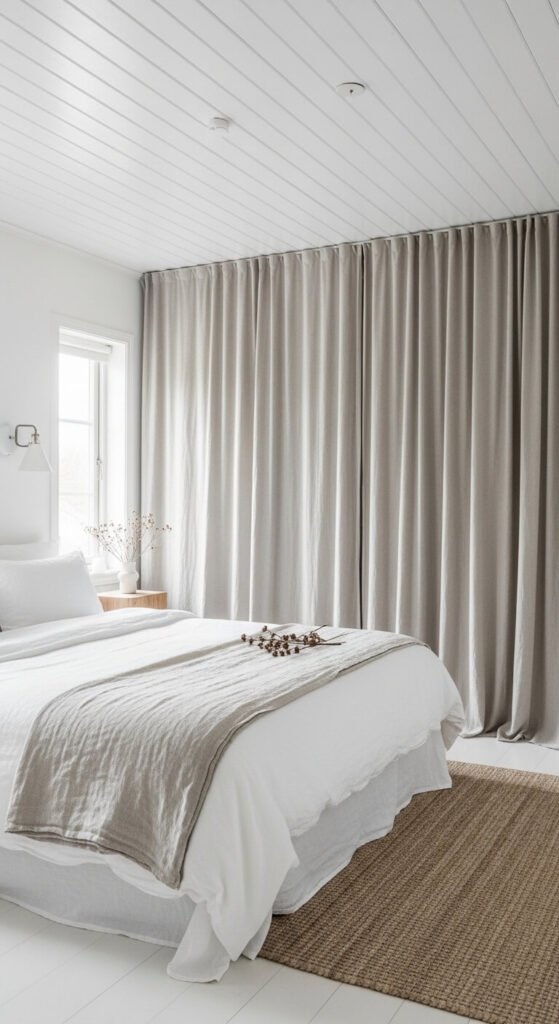
White and natural undyed linen together create a monochrome palette that sits in the warmest and most organic part of the white spectrum — the slight golden tone of natural linen prevents the all-white palette from reading as clinical or cold. Use natural undyed linen for every textile in the room — bedding, curtains, and a throw — and keep all other elements white or raw natural material. The contrast between the crisp white painted walls and the warm, slightly irregular texture of natural linen provides all the visual interest the room requires. IKEA’s natural linen ranges provide the most budget-accessible options — a full set of natural linen bedding costs $40 to $80.
9. Blush Pink Monochrome Bedroom
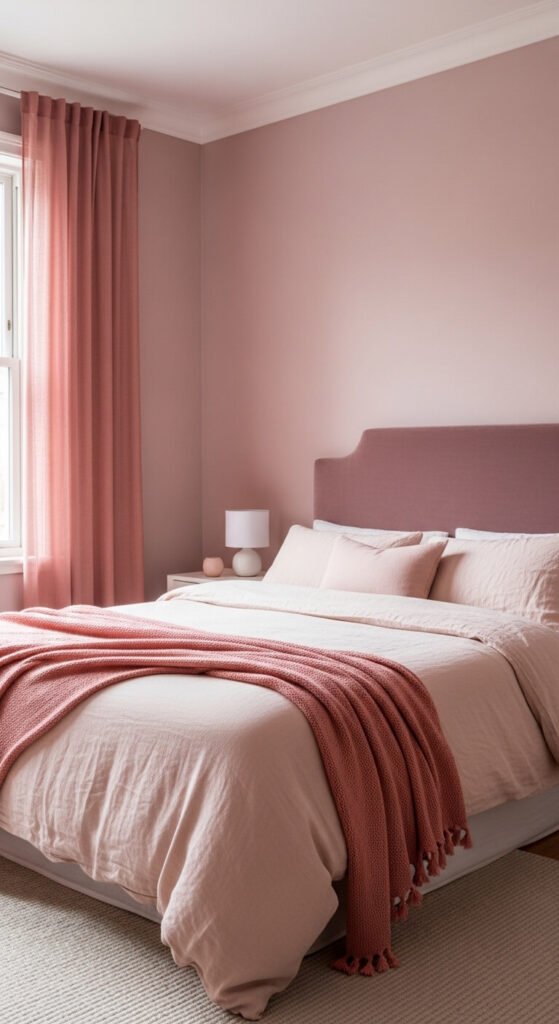
A blush pink monochrome bedroom — spanning from the palest barely-pink white to a deep dusty mauve in the same palette — creates one of the most romantic and overtly feminine single-color room approaches available. The key distinction between blush pink rooms that look sophisticated and those that look juvenile is tone — dusty, grey-tinged blush and dusty mauve are adult and considered, while bright or candy pink moves the palette into a very different emotional register. Farrow & Ball “Setting Plaster” and “Sulking Room Pink” are the two most widely referenced dusty pink tones in professional interior design. High-street equivalents are available from most paint retailers.
10. Black and White Graphic Bathroom
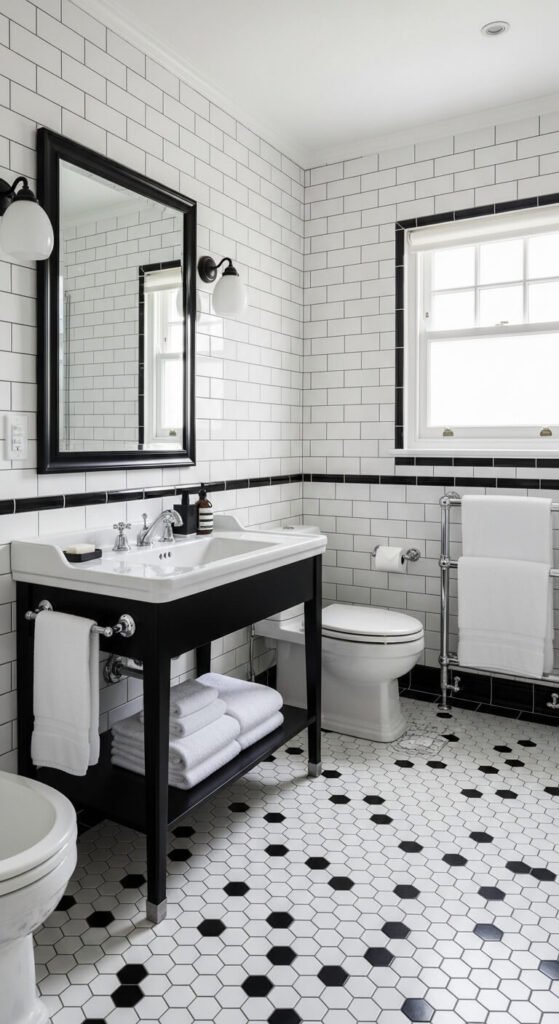
Black and white monochrome in a bathroom is the most timeless and historically proven single-color combination in interior design — it has been the dominant bathroom palette from Victorian tile work through Art Deco geometric patterns to contemporary minimalist bathrooms because it simply always works. Use pattern and texture variation within the strict black and white palette — hexagonal floor tile, subway wall tile, glossy ceramic fixtures, and matte black metal hardware all read as the same two colors while providing enormous surface variety. Black grout in white tile creates a different effect than white grout — choose based on the overall level of graphic contrast desired. Retile a small bathroom floor in black and white hex tile for $80 to $200 in materials.
11. Moody Forest Green Living Room
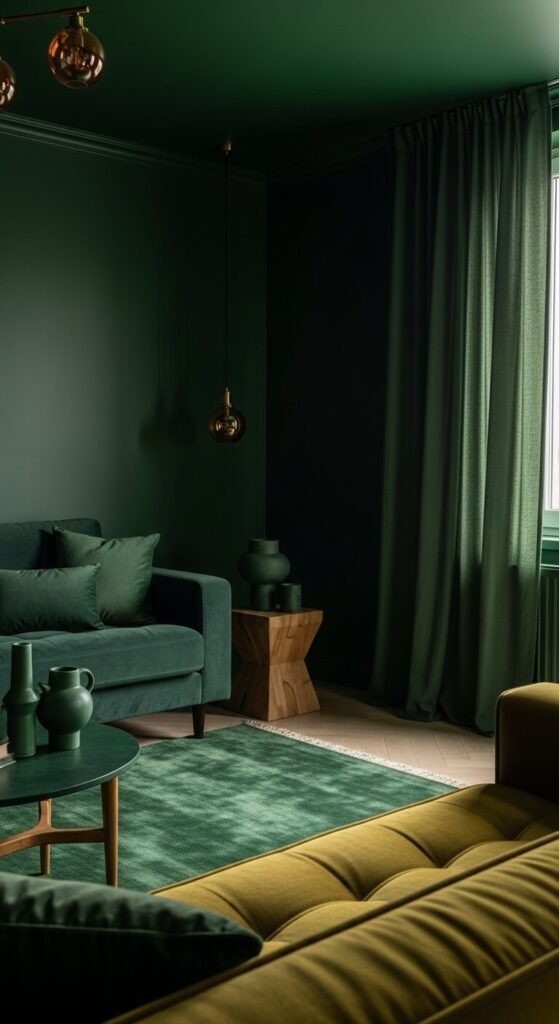
Forest green is the monochrome color most associated with the “jewel box” interior approach — a room where the dark, saturated color creates an enclosing, intimate atmosphere that feels more like being inside a piece of jewelry than inside a domestic room. Paint walls, ceiling, and even woodwork in the same deep green for the most immersive effect — when all architectural elements share the color, the room reads as a complete environment rather than a painted box. Warm brass fixtures and accessories are the natural complement to deep green — the warm gold against the cool deep green creates a richness that both colors amplify in combination. Forest green paint costs $30 to $60 per room.
12. Stone and Greige Neutral Living Room
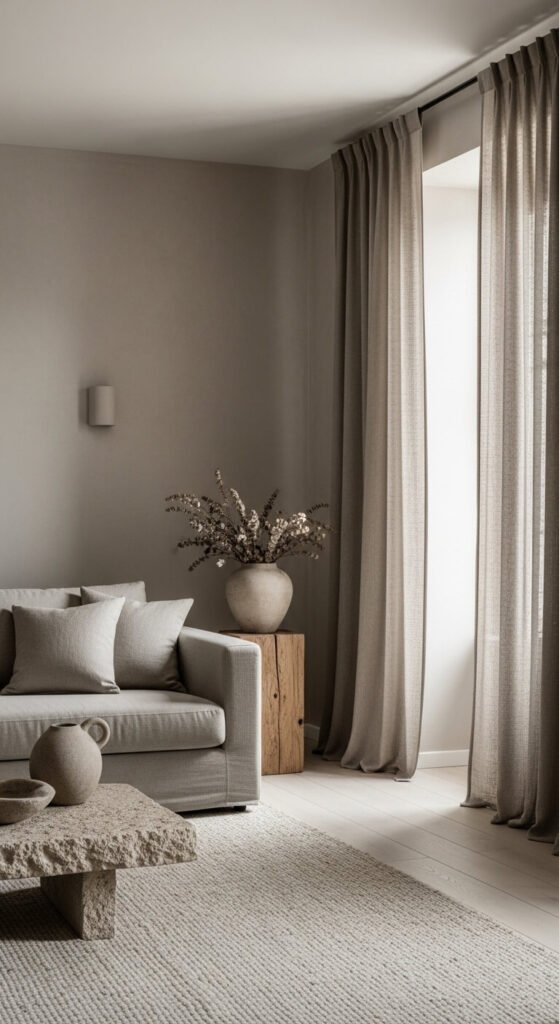
Stone and greige — the warm grey-beige that sits between cool grey and warm beige — is the most commercially dominant neutral monochrome palette and the one found most frequently in new-build homes and professionally staged properties because it works with the widest range of natural light conditions and personal styling preferences. Greige is not a single paint color but a spectrum — warm greige leans toward beige and suits south or west-facing rooms with warm afternoon light. Cool greige leans toward grey and suits north-facing rooms where the warmth prevents the space from reading as cold. Farrow & Ball “Elephant’s Breath” and Dulux “Natural Calico” are two of the most widely specified greige tones in interior design.
13. Rust and Amber Monochrome Study
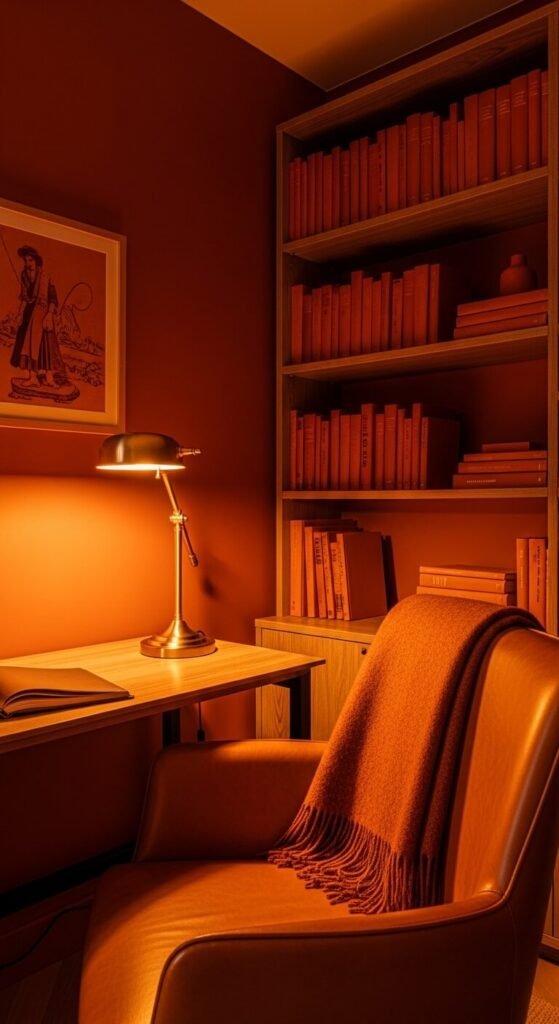
A rust and amber monochrome study creates the warmest and most intellectually focused single-color environment — the amber tones reference candlelight and firelight, two of the historically most productive reading and thinking light sources, and create an atmosphere where concentration and focus feel natural. Select books with rust, amber, and orange-toned spines and group them together on one or two prominent shelves to reinforce the monochrome palette within the book collection itself. Amber leather and rust wool textiles work together naturally without careful matching. A leather desk chair in cognac or amber costs $150 to $400. Warm amber desk lamp light from a simple brass lamp completes the palette at minimal additional cost.
14. Monochrome Entry Hall in Midnight Blue
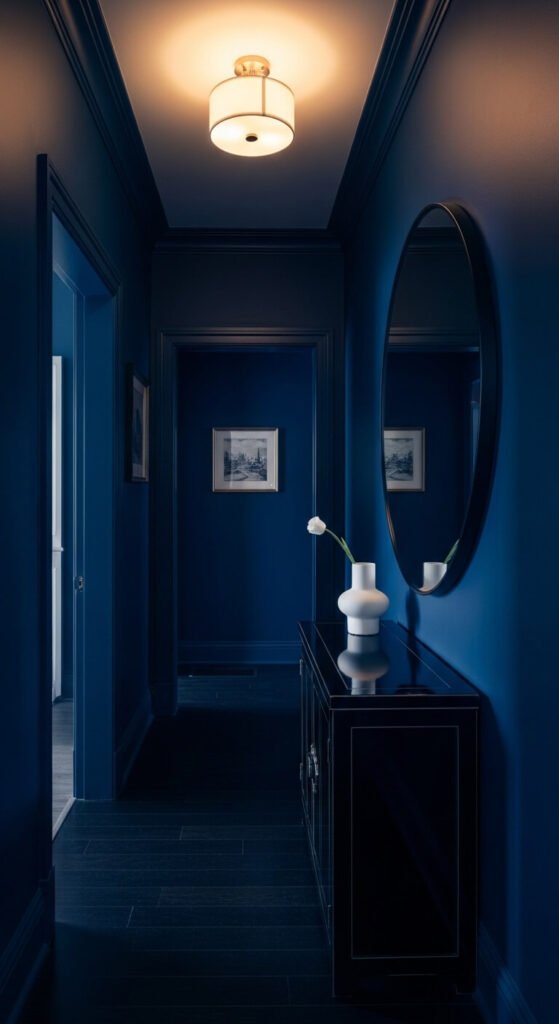
A narrow entry hallway painted entirely in midnight blue — walls, ceiling, woodwork, and all — creates a dramatic transitional passage that signals the character of the home immediately on entry. The enclosed dark blue space feels intentional and confident in a way that a neutrally painted hallway never quite achieves. Painting the ceiling the same color as the walls removes the visual break between the two surfaces and makes the hallway feel like a deliberately enclosed space rather than a corridor between rooms. A single large mirror in a dark frame multiplies the depth of the space. One white ceramic object on the console provides the single visual anchor point. Midnight blue paint costs $25 to $50 for a standard hallway.
15. Warm Sand and Camel Living Room
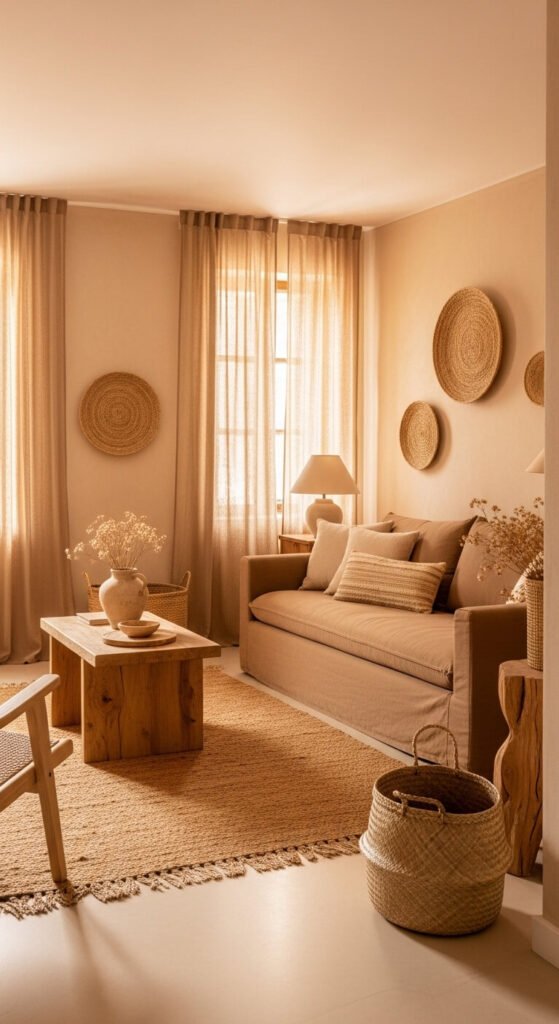
Sand and camel monochrome creates the warmest and most naturally golden single-color interior — the palette of pale sand, warm honey, and deep camel references desert landscapes, natural materials, and the golden tone of afternoon sunlight in a way that looks both worldly and domestically comfortable. Layer natural materials within the camel palette — undyed linen, raw jute, natural rattan, and dried botanicals all exist in the camel-to-sand range and provide organic texture variation without introducing artificial color. Camel and sand soft furnishings from most home retailers cost $30 to $150 per piece. The palette works especially well in rooms with warm natural wood floors that echo the golden tone.
16. Dusty Mauve Bedroom
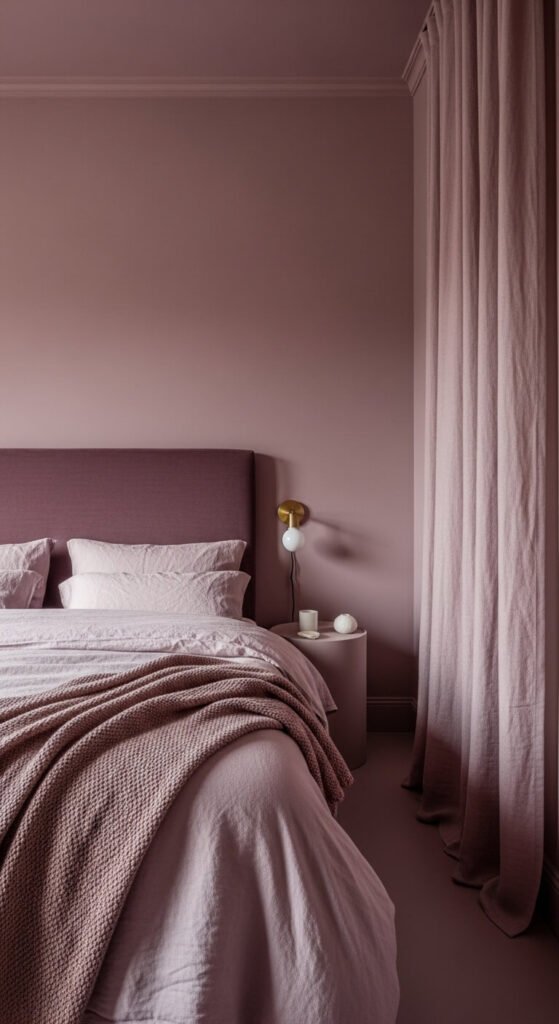
Dusty mauve occupies the exact tonal space between pink and purple where neither color dominates — the grey undertone of dusty mauve prevents it from reading as pink in the day or purple at night, making it one of the most light-stable monochrome bedroom palettes available. The sophistication of a dusty mauve room depends entirely on keeping the tones grey-dusty rather than saturated — a vivid pink-purple bedroom reads very differently from a grey-mauve one and the distinction comes down to the grey content of the color. Farrow & Ball “Brassica” and Little Greene “Livid” are two benchmark dusty mauve tones. Both are available in lower-priced equivalent ranges from major paint retailers.
17. Dark Olive Monochrome Bathroom
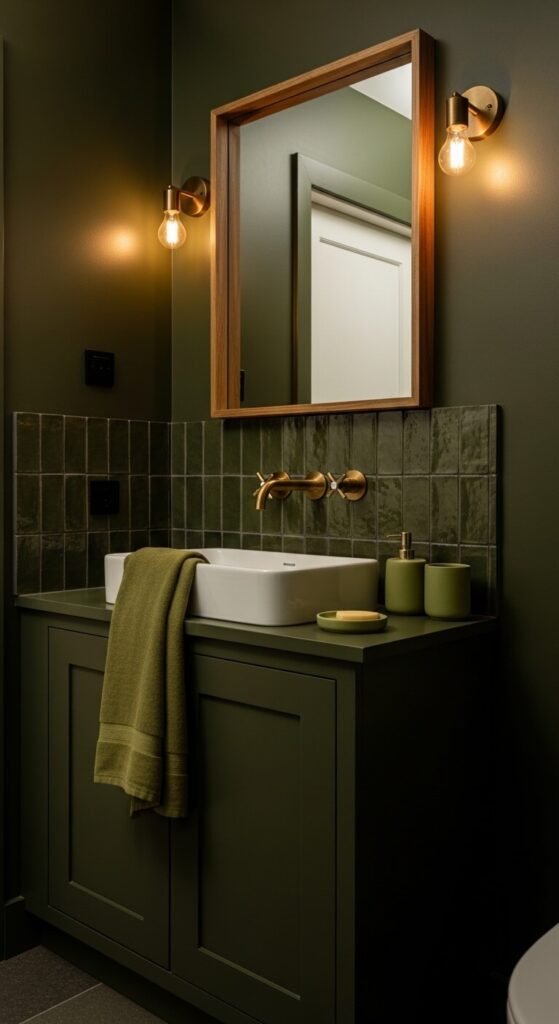
Dark olive green in a bathroom creates the most unexpected and most talked-about monochrome bathroom palette — it references the tones of antique pharmacy bottles, botanical gardens, and Victorian tile work simultaneously, and it looks far more sophisticated than any conventional bathroom color. Paint walls and even ceiling in the same dark olive for the fully immersive effect — half-tiled walls in olive tile above painted wainscoting in the same tone creates a fully enveloped bathroom environment. Brass taps and fixtures are the strongest accent choice with olive green — the warm gold against the cool deep olive creates the same complementary contrast as forest green. Dark olive bathroom paint costs $25 to $50 per room.
18. Pale Blue Monochrome Child’s Bedroom
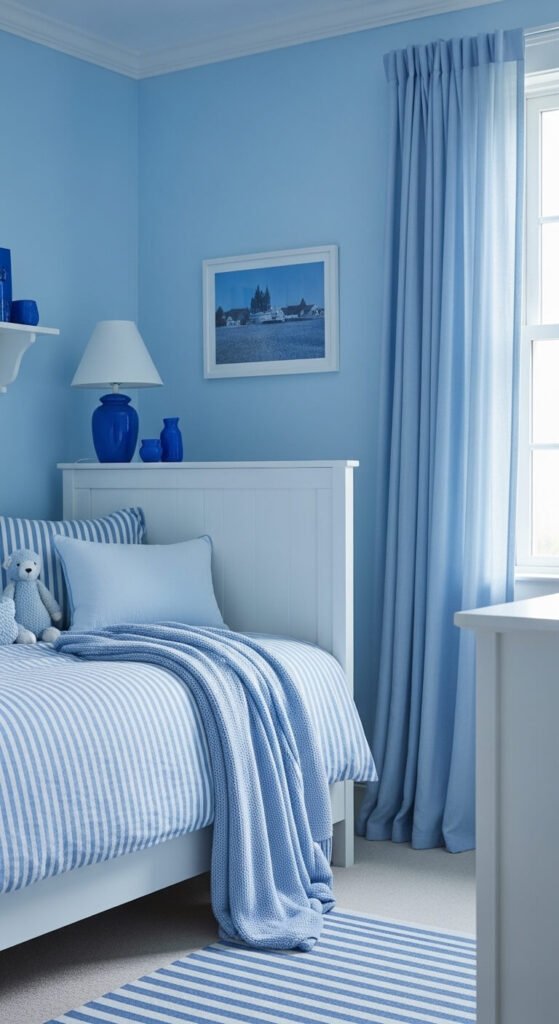
Pale blue is the most calming monochrome choice for a child’s bedroom — significantly calmer than the multicolor primary palettes most commonly associated with children’s spaces, and age-appropriate from infancy through early teenage years without feeling either baby-targeted or overly adult. Keep the range within the pale-to-mid blue spectrum — sky blue walls with cornflower bedding and a pale aqua throw create enough tonal variety without moving toward saturated navy, which reads as a very different atmosphere at child scale. White painted furniture provides a clean neutral backdrop that works at every age stage and makes the blue palette feel lighter. Pale blue paint costs $25 to $50 for a standard bedroom.
19. Warm Rust Monochrome Kitchen
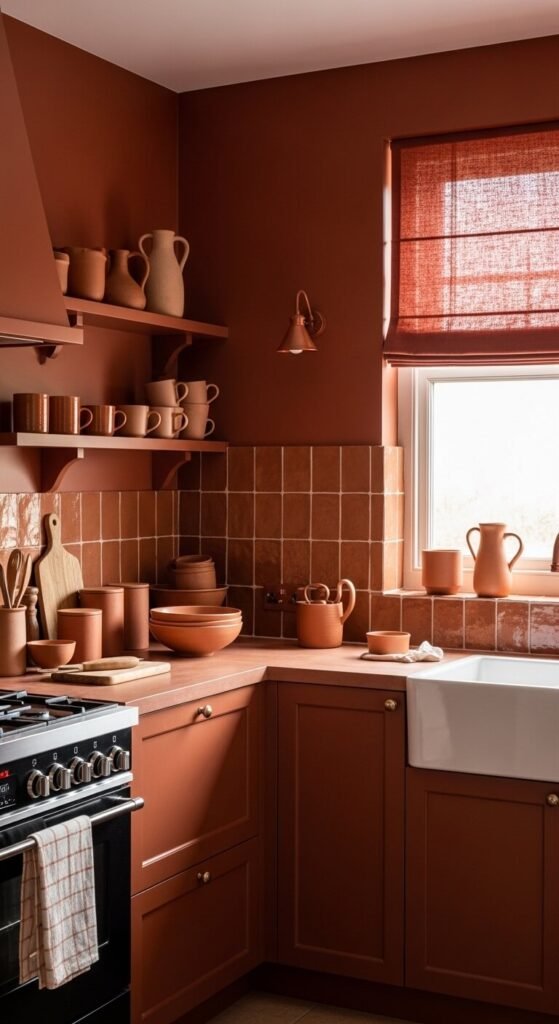
A rust and terracotta monochrome kitchen creates a warm, earthy, and deeply Mediterranean atmosphere that makes cooking feel like an activity in a genuinely beautiful room rather than a utilitarian task in a utilitarian space. Group terracotta ceramics, clay vessels, and rust-toned textiles throughout the kitchen so the monochrome palette is reinforced by every object on every surface — a rust linen blind, terracotta plant pots on the windowsill, clay ceramic storage jars on open shelves, and a rust-toned rug in front of the stove. Terracotta ceramic accessories are widely available and affordable — a set of clay storage jars costs $15 to $40 from most home stores.
20. Silver and Cool Grey Bathroom
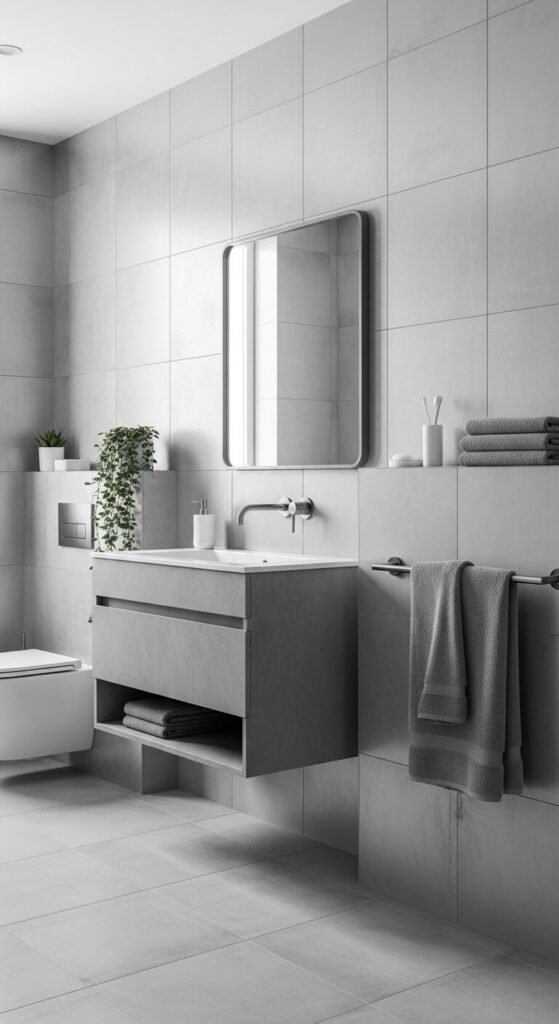
Silver and cool grey creates the most contemporary and most photogenic monochrome bathroom palette — the combination of large-format grey tiles, brushed steel fixtures, and a concrete-look vanity surface creates a bathroom aesthetic that reads as deliberately architectural and premium without requiring significant budget if material choices are made carefully. Large-format pale grey porcelain tiles — available from tile retailers for $2 to $6 per square foot — read as a luxury material at a budget price point because their scale reduces grout lines and creates a cleaner, more expansive visual effect than smaller tiles. Pair with brushed steel fixtures rather than chrome — brushed steel is warmer and more contemporary than the cooler shine of chrome.
21. Warm White Scandi Living Room
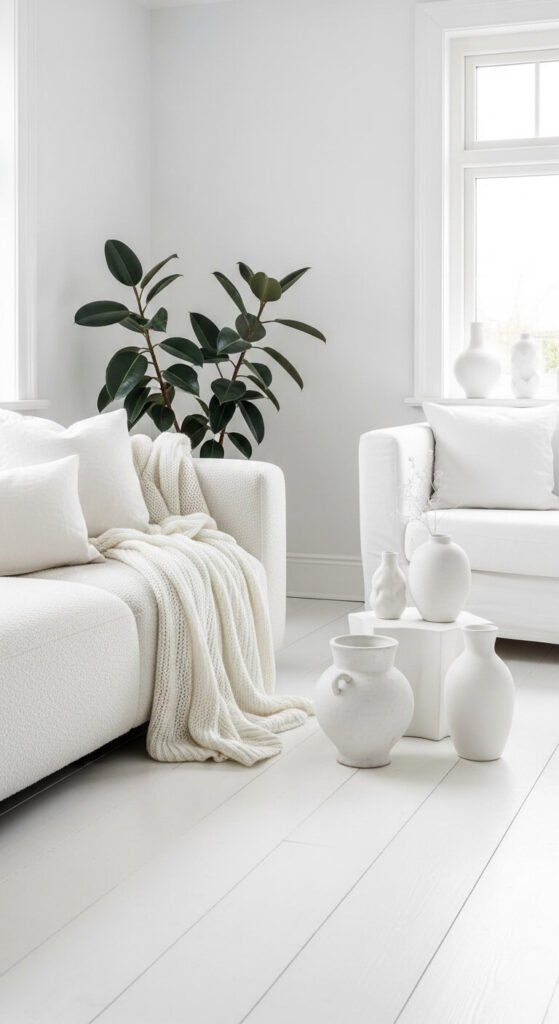
The Scandinavian white interior is not an absence of design — it is the most disciplined and demanding design approach, requiring maximum attention to material quality and texture variation because there is nowhere for poor material choices to hide behind color. Bouclé, waffle-weave, linen, and knit textiles in white provide the textural richness that replaces color contrast in this approach. One large dark plant — a fiddle-leaf fig, an olive tree, or a large monstera — provides the single color accent that prevents the all-white palette from reading as a showroom rather than a home. A white bouclé sofa from most retailers costs $400 to $900 and is the statement investment that anchors this look.
22. Deep Plum Monochrome Dining Room
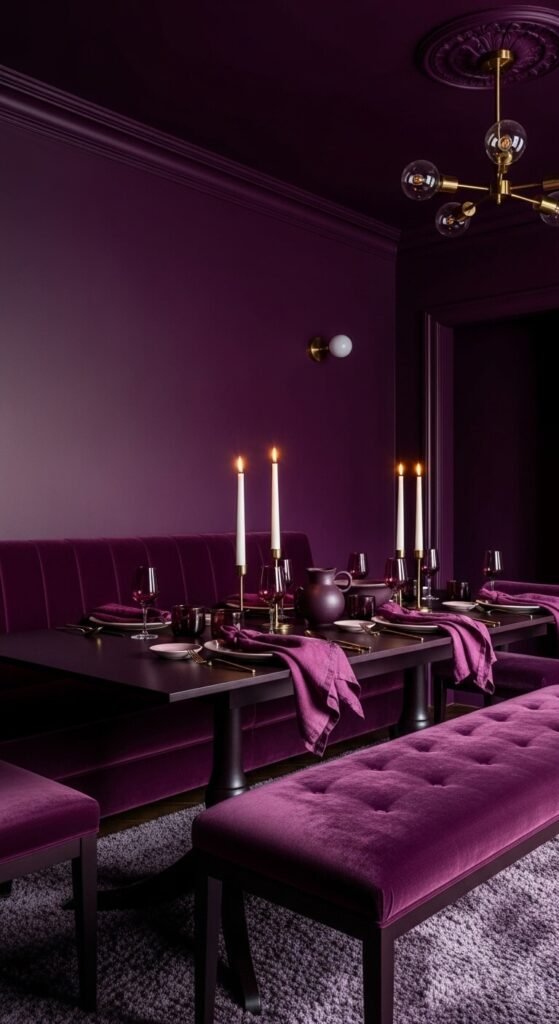
Deep plum is the most glamorous and overtly theatrical monochrome dining room palette — the combination of near-black aubergine walls, plum velvet upholstery, and deep purple-grey textile layers creates an enveloping dining environment where candlelight produces extraordinarily flattering warm tones across every surface. Paint walls and ceiling the same deep plum to create the fully immersed, jewel-box dining atmosphere — a plum-painted room with a white ceiling reads as a painted room, while an all-plum room reads as a designed environment. Tall white taper candles in brass candlesticks are the only accent required. Deep plum paint costs $30 to $60 for a standard dining room. Velvet dining chairs in plum cost $80 to $200 each.
Conclusion
Monochrome decorating is not a limitation — it is a choice to concentrate design intelligence in one direction rather than distributing it across a palette of competing colors. Every room on this list works because the restraint of a single color or tonal family forces attention onto the things that matter most in interior design: material quality, texture variety, proportion, and the specific way light interacts with surfaces across the hours of a day. The all-white room is as much a design statement as the all-black room. The dusty mauve bedroom makes exactly as strong a statement as the forest green study. The color is almost beside the point — the commitment is the statement. Choose the single color that genuinely speaks to the atmosphere you want the room to feel. Go all in on it. Let the textures do the rest.